
Best Time to Visit South Africa: Monthly Guide
The best time to visit South Africa is generally from May to September for safaris, while September is one of the strongest all-around months for travelers who want to combine wildlife, pleasant weather, spring landscapes, and whale watching. However, the ideal month depends heavily on where you plan to go and what you want to do.
South Africa is a year-round destination because its climate varies considerably between regions. Cape Town and the Western Cape have warm, dry summers and wetter winters, while areas around Kruger National Park generally have hot, rainy summers and dry winters.
For a safari, the dry months are particularly rewarding. Travelers interested in Cape Town’s beaches may prefer December through February, while whale watchers should consider the middle of the year through spring.
What Is the Best Month to Visit South Africa?
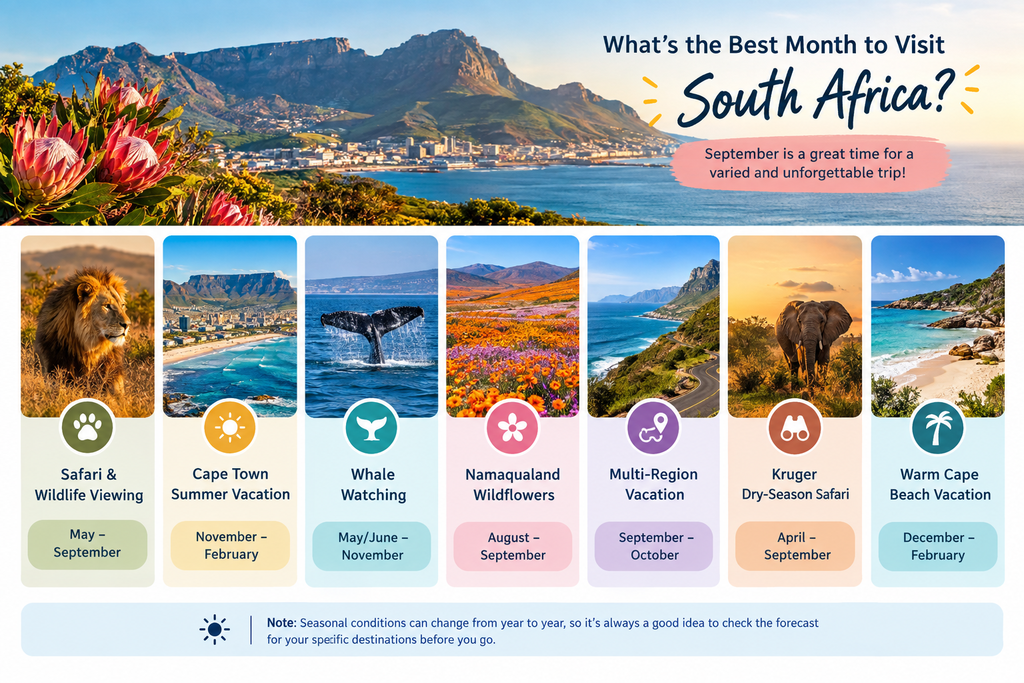
September is one of the best months to visit South Africa if you want a varied vacation covering multiple regions. Spring is beginning, temperatures are rising, safari conditions remain favorable, whales can be seen along parts of the coast, and Namaqualand’s famous wildflowers may still be on display.
The Audley Travel reference also highlights September for combining different regions and wildlife experiences.
Here is a quick guide based on different travel interests:
| Travel Experience | Recommended Period |
| Safari and wildlife viewing | May–September |
| Cape Town summer vacation | November–February |
| Whale watching | Roughly May/June–November |
| Namaqualand wildflowers | August–September |
| Multi-region vacation | September–October |
| Kruger dry-season safari | April–September |
| Warm Cape beach vacation | December–February |
Note: Seasonal conditions can shift from year to year, so travelers should check the forecast for their specific destinations before departure.
When Are the Seasons in South Africa?
South Africa is in the Southern Hemisphere, so its seasons are opposite those in North America and Europe.
- Spring: September to November
- Summer: December to February
- Autumn: March to May
- Winter: June to August
The differences between regions are just as important as the seasons themselves. The Western Cape has a Mediterranean-style climate and receives much of its rainfall during winter. KwaZulu-Natal and much of the northeastern part of the country, meanwhile, receive more rain during summer.
Therefore, checking the nationwide season alone is not enough. Someone planning a Cape Town city break may have a completely different ideal travel period from someone planning a safari in Kruger National Park.
Best Time to Visit South Africa for Safari
The dry season, particularly from May through September, is generally the best period for a South African safari in northern wildlife areas.
Kruger National Park’s dry season runs approximately from April to September. Days tend to be warm and dry, while nights can become cold. More importantly for wildlife enthusiasts, vegetation becomes thinner and water becomes concentrated around rivers and waterholes, which can make animals easier to spot.
In contrast, October through March is Kruger’s rainy season. The rainfall transforms the landscape into a lush, green environment, but denser vegetation can make wildlife viewing more challenging.
That does not mean travelers should automatically avoid summer. The greener scenery can be beautiful, and travelers interested in birds may appreciate the wetter months.
Is June a Good Time for a South African Safari?
Yes. June falls within the dry season in major northern safari regions. Lower rainfall and increasingly sparse vegetation make it a favorable period for spotting wildlife.
However, morning and evening game drives can feel surprisingly cold. Pack layers rather than assuming that every part of South Africa will be hot throughout the year.
Is September Good for Safari?
September is particularly appealing because the dry safari conditions continue while spring begins elsewhere in the country. Travelers can potentially combine a safari with wildflowers and coastal whale watching during one vacation.
Best Time to Visit Cape Town
November through February is an excellent period for travelers seeking warm, relatively dry weather in Cape Town and the surrounding Western Cape.
South Africa Tourism identifies November through February as the country’s broad summer period, while regional climate patterns make the Cape particularly attractive during these months.
Cape Town’s summer is ideal for travelers interested in:
- Beaches
- Outdoor dining
- Coastal drives
- Hiking
- Sightseeing
- Cape Winelands trips
- Exploring the Cape Peninsula
December and January are also popular holiday months, so accommodation and major attractions can become busier. Travelers planning a peak-summer trip should consider arranging important accommodation and activities in advance.
June through August brings cooler conditions and more rainfall to Cape Town. Nevertheless, winter can still suit travelers who prefer fewer peak-season crowds and do not mind variable weather.
When Is the Best Time for Whale Watching in South Africa?
June through November is a particularly favorable period for whale watching along the Western Cape coast.
South Africa Tourism lists June to November among the best months for the Cape Whale Route, while another official tourism guide notes that whales can be present from May into November.
Hermanus is one of the country’s best-known whale-watching destinations. Southern right whales migrate toward South Africa’s coastal waters during this part of the year, and sightings can sometimes be made from shore.
For southern right whales specifically, August, September, and October can be particularly rewarding months.
Combining Hermanus with Cape Town can therefore make September or October especially attractive for travelers who want both city sightseeing and wildlife experiences.
When Can You See Wildflowers in South Africa?
August and September are generally the prime months for seeing Namaqualand’s seasonal wildflowers.
During spring, parts of the otherwise arid Northern Cape can transform into colorful landscapes filled with flowering plants. South Africa Tourism identifies early August through the end of September as the main period for the Northern Cape’s Wild Flower Route.
The precise timing and quality of the flowers depend on seasonal rainfall and weather, so the display does not occur on an identical schedule every year.
Travelers visiting for the flowers should remain somewhat flexible and check local conditions shortly before their trip.
South Africa Month-by-Month Travel GuideVisiting South Africa in January
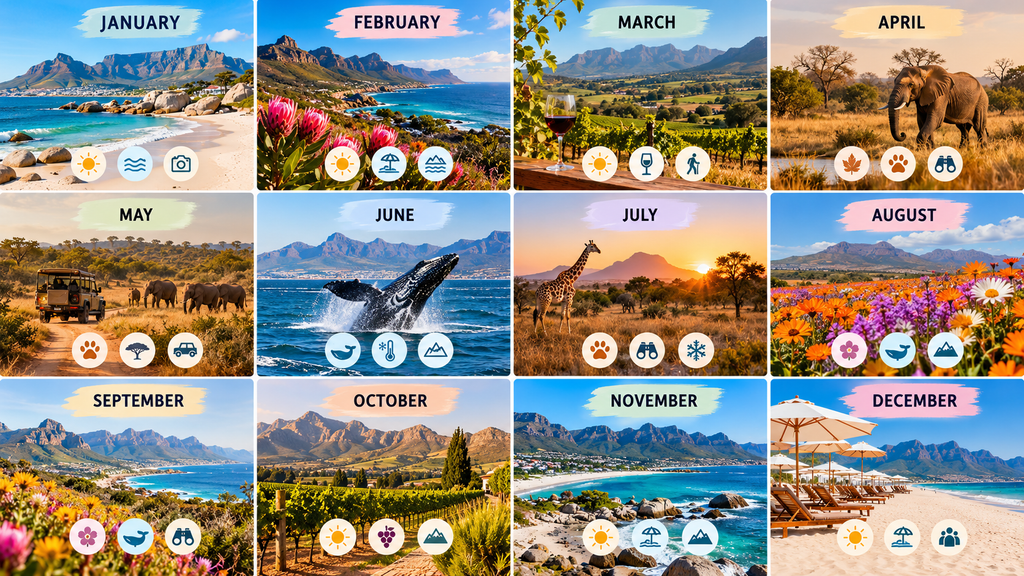
January is midsummer in South Africa. Cape Town and the Western Cape are generally warm and comparatively dry, making this a popular time for beaches, sightseeing, and road trips.
Northern regions are hotter and can receive summer rainfall. Kruger is green and lush, although thicker vegetation may make some wildlife harder to spot.
Visiting South Africa in February
February remains hot, especially in the Cape. It can be an excellent choice for travelers who want warm-weather activities, coastal scenery, and time around Cape Town.
Northern safari regions remain within their rainy season, so travelers should prepare for occasional storms and humid conditions.
Visiting South Africa in March
March marks the transition toward autumn. Temperatures generally remain warm, making it useful for travelers who want to combine sightseeing with outdoor activities.
Rain can still occur in the northeast, while Cape Town generally remains pleasant.
Visiting South Africa in April
April is a useful transitional month. Temperatures become milder, and rainfall starts decreasing in many northern safari areas.
Kruger officially enters its dry-season period around April, although landscapes may remain relatively green following the summer rains.
Visiting South Africa in May
May is one of the better months for travelers interested in safaris. Rainfall has decreased considerably in many wildlife regions, temperatures are more comfortable, and vegetation gradually begins thinning.
It is also outside the height of Cape Town’s summer season.
Visiting South Africa in June
June marks winter in South Africa. Kruger and other northeastern wildlife regions become increasingly dry, creating good safari conditions.
Cape Town is cooler and wetter at this time. Along the coast, however, June also brings the beginning of an important period for whale watching.
Visiting South Africa in July
July is another strong safari month. Dry conditions mean wildlife increasingly gathers around reliable water sources. Travelers should nevertheless prepare for chilly mornings and nights, particularly when heading out on early game drives.
The Western Cape can be cool and rainy, while whale-watching opportunities continue along the coast.
Visiting South Africa in August
August offers a combination of dry-season wildlife viewing and the beginning of spectacular spring scenery. It is also one of the key months for Namaqualand wildflowers, although their appearance depends on rainfall and other weather conditions.
Whale-watching conditions can also be favorable around Hermanus and elsewhere along the southern coast.
Visiting South Africa in September
September is arguably one of South Africa’s most versatile travel months. Safari conditions remain favorable, temperatures begin rising, wildflowers can still be visible, and southern right whale sightings can be particularly rewarding.
This variety makes September especially convenient for travelers planning a longer itinerary covering several parts of the country.
Visiting South Africa in October
October is another good option for a multi-region vacation. Temperatures become warmer, while the summer rains in northern areas may not yet have fully developed. Whale watching can still be excellent, particularly around the Western Cape.
Visiting South Africa in November
November marks the transition into summer. Cape Town becomes warmer and drier, making outdoor sightseeing increasingly appealing.
Meanwhile, rainfall begins increasing around Kruger and some northeastern destinations, resulting in greener landscapes.
Visiting South Africa in December
December brings warm summer weather and the holiday season. Cape Town and other coastal destinations can become particularly busy.
Travelers visiting during the festive period should arrange popular accommodation and activities well ahead of departure where possible.
When Is the Cheapest Time to Visit South Africa?
There is no single guaranteed cheapest month to visit South Africa, because accommodation and transportation prices depend on destination, local events, school holidays, and demand.
Instead of choosing dates based only on the nationwide season, look at the peak period for the particular destination you want to visit.
For example, Cape Town receives strong summer demand, especially around the December holiday period. A safari lodge, meanwhile, may follow a different seasonal pricing structure.
To control travel costs:
- Compare several departure dates.
- Avoid major holiday periods when possible.
- Check accommodation before purchasing transportation.
- Compare weekday and weekend travel dates.
- Consider shoulder-season travel.
- Book popular safari properties early.
- Check cancellation conditions before paying.
A slightly less popular month can sometimes provide a better balance between weather, availability, and overall trip cost.
What Is the Best Time to Visit Johannesburg?
Johannesburg can be visited throughout the year, although spring and autumn provide particularly appealing conditions. October and November bring spring weather and flowering jacaranda trees, while March and April offer mild autumn conditions. Summer can bring afternoon thunderstorms, whereas winter nights and mornings are considerably cooler.
Johannesburg is also an important starting point for travelers heading toward safari destinations in northeastern South Africa.
Best Time to Visit the Garden Route
The Garden Route can be visited year-round, but your preferred month should depend on the activities you have planned. January through March can work well for warm-weather road trips, while spring provides colorful landscapes and cooler conditions. October and November are particularly interesting for travelers hoping to combine the route with marine wildlife experiences.
Popular stops can include Knysna and Plettenberg Bay, while travelers often combine the route with Cape Town and the Winelands.
Is South Africa Worth Visiting in Winter?
Yes. South African winter, from roughly June through August, can be an excellent travel period—especially for safari enthusiasts. The biggest advantage is the dry weather across major northern wildlife regions. Reduced vegetation and limited water availability can improve game-viewing opportunities.
Winter also coincides with whale season along parts of the coast and leads into the famous spring wildflower displays. The trade-off is regional weather. Cape Town experiences its wetter season during winter, while nights in inland and high-altitude locations can become quite cold.
What Is the Rainy Season in South Africa?
There is no nationwide rainy season that applies equally to every destination. In Kruger National Park, the rainy season generally extends from October through March.
The Western Cape, on the other hand, follows a Mediterranean climate pattern and receives much of its rainfall during winter. KwaZulu-Natal receives more of its rainfall during the summer months. This regional difference is one of the most important things to understand when planning a South African vacation.
When Should You Avoid Visiting South Africa?
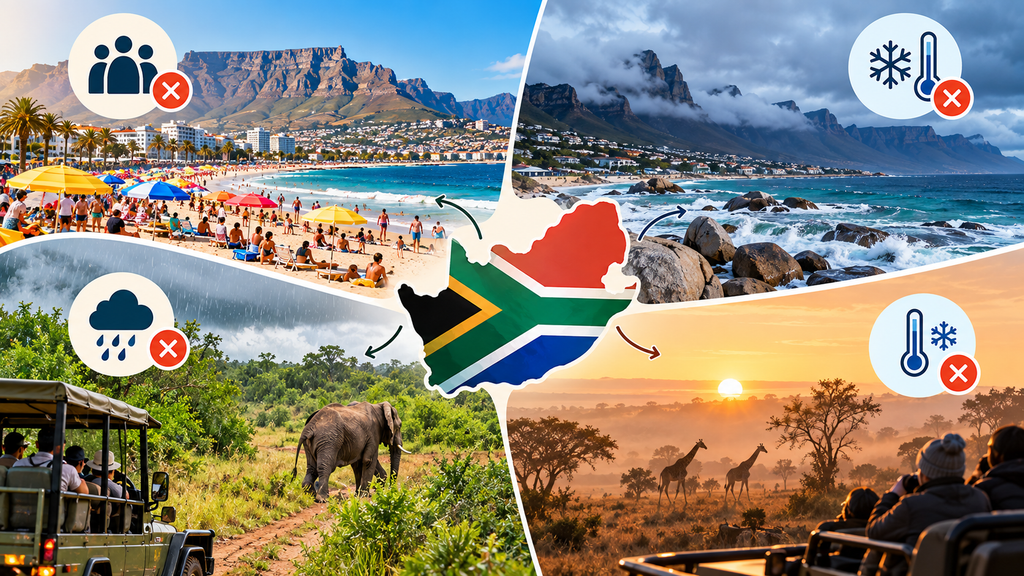
There is no month when travelers universally need to avoid South Africa. Instead, certain periods may be less suitable for particular activities.
You may want to reconsider:
- December holiday weeks if you want to avoid busy tourist periods.
- June–August in Cape Town if consistently warm, dry beach weather is your priority.
- Peak summer in Kruger if your main objective is easier wildlife spotting.
- Winter mornings on safari if you dislike cold temperatures and are not prepared to pack layers.
Rather than avoiding an entire season, match your destination and activities with the appropriate regional climate.
How Many Days Are Enough for South Africa?
For first-time visitors, 10 to 14 days can provide enough time for a well-rounded trip, although the ideal duration depends on how many regions you want to include.
A shorter itinerary might concentrate on Cape Town and the surrounding Winelands. With additional time, travelers could add a safari or explore the Garden Route.
South Africa is geographically large, so trying to fit Cape Town, Johannesburg, Kruger, Durban, the Garden Route, and other distant destinations into a short trip can result in too much time spent in transit. It is usually better to select a few complementary destinations and experience them properly.
How to Choose the Best Month for Your South Africa Trip
Start with the experience that matters most to you rather than simply searching for the country’s warmest month. Choose May through September if a safari is the main purpose of your trip. Consider December through February if warm Cape Town weather and outdoor activities are the priority.
For travelers who want to experience several sides of the country during one vacation, September is particularly compelling. You can potentially combine dry-season safari conditions with whale watching and seasonal wildflowers.
Whatever month you choose, remember that weather can vary significantly between Cape Town, Johannesburg, Kruger, Durban, and other regions. Check local forecasts and seasonal conditions for every destination on your itinerary before finalizing plans.
Final Thoughts
The best time to visit South Africa depends primarily on the experiences you want from your vacation. May to September is particularly favorable for safaris, while November to February offers warmer, drier conditions around Cape Town. For travelers hoping to combine wildlife, spring landscapes, whales, and several regions, September stands out as an especially versatile month. Instead of choosing dates based on a single nationwide weather forecast, consider each stop on your itinerary separately. South Africa’s regional climate differences mean the right timing can make a major difference to everything from wildlife viewing to beach days and road trips.
Frequently Asked Questions
September is one of the best all-around choices because it combines favorable safari conditions with spring weather, whale-watching opportunities, and seasonal wildflowers in certain regions.
May through September is generally excellent for safari trips, particularly in northern wildlife areas. Kruger’s dry season officially runs approximately from April through September.
The hottest period varies by location, but January and February fall within the country’s summer and can bring high temperatures to many regions.
Yes, especially for Cape Town and the Western Cape. However, December coincides with the summer holiday season, so popular destinations can become busy.
November through February is particularly attractive for travelers looking for warm, dry summer conditions. Cape Town can still be visited throughout the year.
Winter runs from June through August because South Africa is located in the Southern Hemisphere.
Whale-watching opportunities are generally strongest between roughly June and November along the Cape coast, with August through October especially favorable for southern right whale sightings.
August and September are the main months for Namaqualand’s famous wildflower displays, although exact timing depends on weather and rainfall.
Yes. September is excellent for travelers combining several regions because dry-season safari conditions continue while spring flowers and whale-watching opportunities can also be available.
Yes. South Africa is a year-round destination, but the best region to visit changes with the seasons. Travelers should choose dates according to the activities and destinations they prioritize.