
Best Time to Visit Chile: Seasons, Weather & Travel Tips
The best time to visit Chile is generally from October to March, especially if Patagonia is part of your itinerary, but the ideal month depends heavily on where you plan to travel. Chile stretches across dramatically different climatic regions, from the Atacama Desert in the north to Santiago and the wine valleys in central Chile and the mountains and glaciers of Patagonia in the south.
For Patagonia, October through March brings milder conditions, longer daylight hours, and greater access to hiking trails and tourism services. Santiago and Chile’s wine country are particularly attractive during spring from September to November and autumn from March to May. Northern destinations such as the Atacama Desert can be visited throughout the year.
That geographical variety means there is almost always somewhere worth visiting in Chile, regardless of the month. The key is matching the season to the places and experiences you want.
What Is the Best Time of Year to Visit Chile?
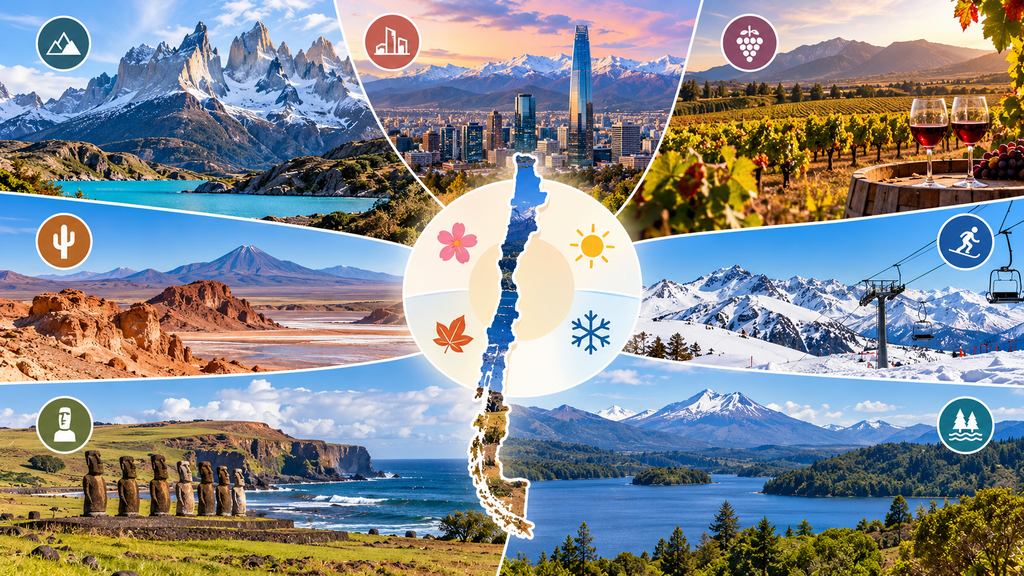
For travelers planning a broad Chile itinerary, October through March offers some of the most favorable conditions, primarily because southern Chile and Patagonia become easier to explore during the Southern Hemisphere’s spring and summer.
However, there is no single season that is perfect for the entire country.
| Region/Experience | Recommended Period | What to Expect |
| Patagonia | October–March | Milder weather, longer days, better trail access |
| Santiago | September–November and March–May | Comfortable spring or autumn conditions |
| Chilean wine valleys | March–May | Harvest season, autumn scenery and wine events |
| Atacama Desert | Year-round; April–June is particularly appealing | Dry landscapes, clearer conditions and fewer visitors |
| Ski resorts | June–September, depending on snowfall | Snow sports in the Andes |
| Rapa Nui (Easter Island) | Year-round | Warm subtropical climate |
| Lake District | Spring through early autumn | Outdoor activities and greener scenery |
Chile Travel recommends October through March for Patagonia, while Santiago and the wine valleys are particularly suitable during spring and autumn. Northern Chile can generally be explored throughout the year.
October to March: Best for Patagonia and Outdoor Adventures
October through March is an excellent period for travelers whose itinerary centers on Patagonia. In Torres del Paine National Park, December through February represents the busiest season. Longer days and relatively pleasant weather make outdoor exploration easier, while most trails are normally accessible.
The advantages come with a trade-off: demand is high. Popular accommodations and guided excursions can fill well in advance, particularly during December, January, and February. Travelers wanting Patagonia with somewhat fewer visitors may therefore prefer October, November, or March.
March to May: Best for Wine and Autumn Scenery
Autumn arrives in Chile between March and May, bringing changing foliage to parts of central and southern Chile. It is also an important period in Chile’s wine calendar. Grapes generally reach harvest season between March and May, and wine-producing areas host vendimia, or harvest festivals. These celebrations can include vineyard activities, tastings, local food, music, and traditional festivities.
For travelers interested in combining Santiago with destinations such as the Maipo, Casablanca, or Colchagua valleys, autumn can be especially rewarding.
June to September: Best for Skiing
Chile’s winter turns the Andes into a snow-sports destination.
Ski areas around Santiago typically begin their seasons around late May or June, although exact opening dates depend on snowfall, temperatures, and mountain conditions. Seasons can continue into September, with some areas potentially operating longer when snow conditions permit.
Travelers visiting specifically for skiing or snowboarding should therefore consider June through September, while checking current resort conditions before booking.
Best Time to Visit Chile by Region
Chile’s unusual geography makes regional planning more useful than simply choosing a month based on the country’s average weather.
Best Time to Visit Patagonia
October through March is generally the most convenient time to visit Chilean Patagonia.
Warmer conditions, extended daylight, and greater availability of tourism services make these months particularly suitable for trekking, sightseeing, boat excursions, and visiting destinations such as Torres del Paine.
December through February is peak season in Torres del Paine. Most trails are accessible, but visitor numbers are also at their highest.
March can provide an attractive alternative for travelers looking for a quieter experience toward the end of the main season.
Patagonia can still be visited outside summer. However, travelers should expect colder temperatures, possible snow, fewer services, and greater restrictions on certain activities.
Good for: Hiking, glaciers, wildlife, photography, national parks
Preferred period: October–March
Peak period: December–February
Best Time to Visit the Atacama Desert
The Atacama Desert can be visited throughout the year, but April through June is an especially attractive period for San Pedro de Atacama.
Chile’s official tourism organization recommends this autumn period because summer rains have ended, skies are generally clear, visitor numbers decrease, and conditions are comfortable for exploring the surrounding landscape.
This timing is significant because northern Chile can experience the phenomenon commonly called the Altiplanic winter during the Southern Hemisphere summer. Between roughly December and March, humid air can produce rain and high-altitude storms, sometimes affecting roads and access to attractions. By April, rainfall probability drops significantly.
Travelers should still prepare for substantial temperature changes. High-altitude desert environments can feel warm under the daytime sun but become very cold after sunset.
Good for: Stargazing, salt flats, geysers, lagoons and desert landscapes
Especially appealing: April–June
Possible weather disruption: Parts of December–March
Best Time to Visit Santiago
Santiago can be visited throughout the year, but spring and autumn provide an appealing balance of weather and sightseeing conditions.
Consider:
- September to November for spring temperatures and outdoor sightseeing.
- March to May for autumn conditions and easy access to wine country.
- June to September if skiing in the nearby Andes is part of the trip.
- December to February for warm, dry summer weather.
September is particularly appealing for travelers who want warming spring conditions before the busiest summer period.
Best Time to Visit Chile’s Wine Country
March through May is one of the most interesting periods to experience Chile’s wine regions because it coincides with grape harvesting and numerous vendimia celebrations.
Wine destinations near Santiago include the Maipo, Casablanca, and Colchagua valleys, while wine-producing areas extend much farther through central Chile.
Harvest celebrations occur on different dates depending on the valley and year. If attending a specific festival is important, verify its official dates before arranging flights and accommodation.
For visitors less interested in harvest festivities, spring is another attractive period for touring vineyards.
Best Time to Visit Rapa Nui
Rapa Nui, commonly known as Easter Island, has a subtropical climate with warm temperatures throughout the year, making it a year-round destination.
January through March can be particularly appealing. Chile Travel notes the relatively dry conditions during this period, and February normally brings the island’s famous Tapati festival, an important celebration of Rapa Nui culture.
Because the island is remote and flight options are more limited than mainland Chile, travelers should arrange transportation and accommodation well in advance, particularly around major festivals.
What Are the Seasons in Chile?
Because Chile is in the Southern Hemisphere, its seasons are opposite those of the United States, Canada, and Europe.
| Season | Approximate Months | Travel Highlights |
| Summer | December–February | Patagonia, beaches, hiking, long daylight |
| Autumn | March–May | Wine harvests, fall foliage, fewer peak-season crowds |
| Winter | June–August | Skiing and snow activities |
| Spring | September–November | Patagonia reopening, pleasant central Chile weather |
These seasons are only a starting point. Weather varies dramatically according to latitude, altitude, and proximity to the coast.
Chile Month-by-Month Travel Guide
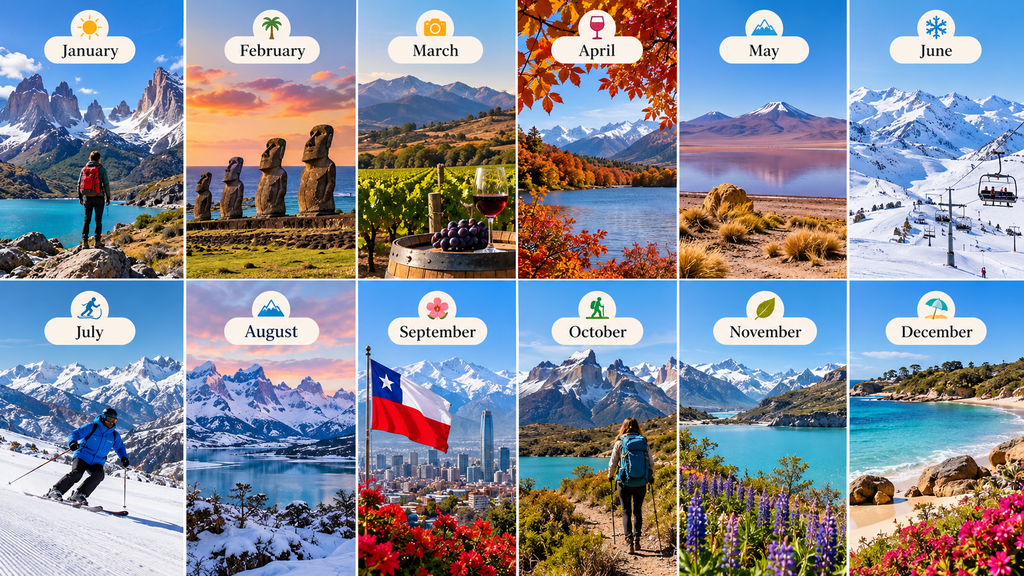
Visiting Chile in January
January is midsummer and one of the busiest periods in Patagonia. Long daylight hours make it excellent for hiking and outdoor exploration. Torres del Paine accommodation can be in high demand, so reservations should be made well ahead of arrival. Northern Chile may experience occasional summer rainfall at higher elevations.
Visiting Chile in February
February remains part of the summer peak. Patagonia continues to attract hikers and outdoor travelers, while Rapa Nui becomes particularly interesting because of the Tapati cultural festival. Expect strong demand at popular destinations.
Visiting Chile in March
March is one of the most versatile months for visiting Chile.
Patagonia remains accessible as peak-season crowds begin to decline, while the wine harvest season starts bringing events to central Chile. Early autumn colors also begin appearing in parts of the country.
Visiting Chile in April
April works particularly well for travelers interested in wine, autumn landscapes, and the Atacama Desert. Wine harvest celebrations continue across central Chile, while autumn foliage adds color to forests farther south.
April also marks the beginning of a particularly favorable period for visiting San Pedro de Atacama after the summer’s higher chance of rain.
Visiting Chile in May
May brings cooler weather to central and southern Chile. The main Patagonia season is winding down, while the Atacama remains an attractive option. Some wine harvest activities may continue into May. Travelers heading south should prepare for shorter days and colder conditions.
Visiting Chile in June
June marks the transition into Chile’s winter. It is not the prime trekking season in Patagonia, but it becomes increasingly attractive for travelers interested in snow and winter sports. Ski resorts begin opening according to local snowfall and mountain conditions.
Visiting Chile in July
July is a popular month for skiing and snowboarding in the Andes. Travelers can combine Santiago with nearby ski destinations, although winter demand can make popular resorts busy. The Atacama also remains an option, but high-altitude desert nights can become extremely cold.
Visiting Chile in August
August continues Chile’s winter season. Skiing remains a major attraction, while Patagonia is considerably colder than during the main visitor season.
Those who do travel south can encounter dramatic winter scenery but should prepare for weather-related restrictions.
Visiting Chile in September
September brings the beginning of spring and warming conditions. It is an attractive month for Santiago, central Chile, and the Atacama. Travelers can also experience Fiestas Patrias, Chile’s major national celebrations centered around September 18. Patagonia is gradually transitioning toward its main travel season.
Visiting Chile in October
October marks an important shift for southern Chile. Spring conditions make Patagonia increasingly attractive, while tourism services and outdoor activities become more widely available.
Travelers who want to experience Patagonia before the summer peak may find October worth considering.
Visiting Chile in November
November is another strong month for Patagonia. Days become longer and warmer as summer approaches, but the heaviest December-to-February crowds have not necessarily arrived yet. Spring is also pleasant for visiting Santiago and central Chile.
Visiting Chile in December
December marks the beginning of summer and the high season in many popular Chilean destinations. Patagonia becomes particularly busy, and coastal destinations can also experience increased demand during Chile’s summer holiday period. Book popular accommodations, tours, and transportation early.
When Is the Cheapest Time to Visit Chile?
There is no single cheapest month for every destination because Chile’s peak and low seasons vary by region. For example, Patagonia is busiest during the Southern Hemisphere summer, particularly from December through February. Traveling during shoulder periods such as March or parts of spring may provide more accommodation availability than the peak summer period.
Winter can be quieter for conventional sightseeing in some areas, but destinations associated with skiing can experience increased seasonal demand. Instead of selecting a month solely by nationwide averages, compare prices for your exact route.
When Is the Best Time to Visit Chile With Fewer Crowds?
March, April, September, October, and parts of November can offer a useful compromise between favorable conditions and lower visitor numbers, depending on the region.
March is particularly worth considering if Patagonia is important because the main summer rush starts easing while outdoor travel may still be practical.
September can work well for Santiago and northern Chile, while October and November provide spring conditions as Patagonia moves toward summer.
When Should You Visit Chile for Specific Activities?
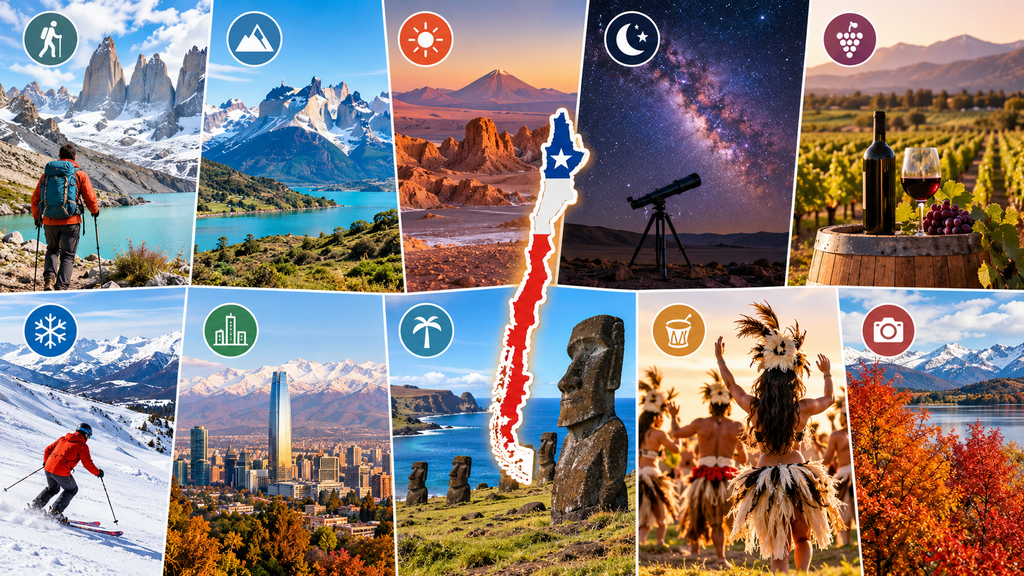
Choosing the month according to your main activity can simplify trip planning.
| Activity | Suggested Time |
| Patagonia trekking | October–March |
| Torres del Paine hiking | Spring and summer, especially December–February for maximum trail availability |
| Atacama sightseeing | Year-round; April–June particularly attractive |
| Stargazing in Atacama | Much of the year; consider moon phase as well as weather |
| Wine harvest experiences | March–May |
| Skiing | June–September, subject to snow |
| Santiago sightseeing | Spring and autumn |
| Rapa Nui | Year-round |
| Tapati festival | February |
| Autumn photography | March–May |
Is Summer a Good Time to Visit Chile?
Yes. December through February is one of the most popular periods for visiting Chile, particularly for Patagonia. Summer offers long daylight hours and improved access to hiking areas. It also works well for coastal travel.
The disadvantages are demand and crowds. Patagonia accommodation can fill quickly, and travelers may encounter higher prices in heavily visited destinations. If summer is your only option, early reservations are advisable.
Is Winter a Good Time to Visit Chile?
Winter can be an excellent time to visit Chile if your itinerary matches the season.
June through August is particularly attractive for:
- Skiing and snowboarding
- Visiting Santiago and combining the city with the Andes
- Exploring the Atacama
- Travelers who prefer avoiding Chile’s main summer tourism period
Winter is less convenient for a conventional Patagonia hiking itinerary because colder weather, snow, reduced services, and trail restrictions can affect travel plans.
How Many Days Do You Need in Chile?
For a first visit, 10 to 14 days provides enough time to combine two or three major regions without rushing excessively.
For example, a two-week trip could combine:
Santiago → Atacama Desert → Patagonia
Alternatively:
Santiago → Wine Valleys → Lake District → Patagonia
Travel distances are significant. Chile stretches thousands of kilometers from north to south, so domestic flights are often necessary when combining distant regions.
A trip focused on just one region can be shorter. Five to seven days may work for Santiago and the wine valleys or for a focused Atacama itinerary.
Tips for Choosing the Best Month to Travel to Chile
Before settling on travel dates, decide which destinations matter most. For a Patagonia-focused trip, prioritize October through March. For wine tourism, consider the autumn harvest period. Ski travelers should look toward winter, while the Atacama gives travelers much more flexibility throughout the year.
Also consider these points:
- Reserve Patagonia accommodation early for December through February.
- Pack layers because temperature differences can be substantial.
- Check weather conditions immediately before outdoor activities.
- Verify ski-resort opening dates because snowfall determines operations.
- Check individual wine festival dates each year.
- Consider altitude when visiting high-elevation areas around San Pedro de Atacama.
- Allow enough travel time when combining northern and southern Chile.
Final Thoughts
The best time to visit Chile ultimately depends on where you want to go and what you want to do. For a classic trip involving Patagonia, October through March offers the most practical conditions. For Santiago and the wine valleys, spring and autumn provide comfortable sightseeing weather, while March through May adds the attraction of grape harvest season. The Atacama remains accessible throughout the year, with April through June standing out as an especially appealing period.
If your itinerary covers several regions, March or November can provide a useful middle ground, combining favorable conditions in multiple parts of the country without placing the entire trip in the busiest weeks of summer.
FAQs
There is no single best month for every region, but March and November are particularly versatile for travelers combining several parts of Chile. Patagonia remains accessible while some peak-summer crowd pressure can be avoided.
October through March is generally the preferred period for Patagonia because conditions are milder and tourism services and trails are more accessible. December through February is the busiest part of this period.
December, January, and February are Chile’s summer months and generally bring the warmest conditions, although temperatures vary substantially from the Atacama and central valleys to Patagonia.
There is no nationwide rainy season because Chile has several distinct climate zones. Central Chile receives more rainfall during winter, while parts of the high-altitude north can experience summer precipitation associated with the Altiplanic winter.
Spring from September through November and autumn from March through May are attractive periods for visiting Santiago. Summer is warmer and drier, while winter provides access to nearby ski areas.
The Atacama can be visited year-round. April through June is particularly appealing for San Pedro de Atacama, with very low rainfall probability and fewer visitors following the summer period.
March through May is particularly interesting because it coincides with grape harvesting and numerous vendimia celebrations. Exact festival dates vary by location and year.
Ski areas generally begin opening around late May or June and can operate through September or later. Exact dates vary according to snowfall, temperature, and safety conditions.
Yes. December is particularly good for Patagonia because summer brings long days and increased access to outdoor activities. However, it is also a popular travel period, so advance reservations are recommended.
Yes. October can be an attractive shoulder-season month, especially for travelers interested in Patagonia. Spring is underway, days are getting longer, and the busiest summer period has not yet arrived.