
Best Things to Do in Grenada for First-Time Visitors
The best things to do in Grenada include relaxing on Grand Anse Beach, walking through colorful St. George’s, hiking in Grand Etang National Park, swimming beneath waterfalls, touring cocoa and spice estates, snorkeling at the Underwater Sculpture Park, and visiting the quieter island of Carriacou. Grenada may be best known for beaches, but limiting a trip to the coastline means missing much of what makes the country distinctive.
Known as the Spice of the Caribbean, Grenada combines tropical rainforest, waterfalls, cocoa and nutmeg production, historic forts, reefs, wreck diving, small coastal communities, and Caribbean cuisine within a relatively compact destination.
Grenada is also more than one island. The country includes the main island of Grenada along with Carriacou and Petite Martinique, each offering a different pace and atmosphere.
Here are the experiences worth building into a Grenada itinerary, along with practical advice on beaches, hiking, snorkeling, food, weather, and getting around.
Quick Glance: Best Things to Do in Grenada
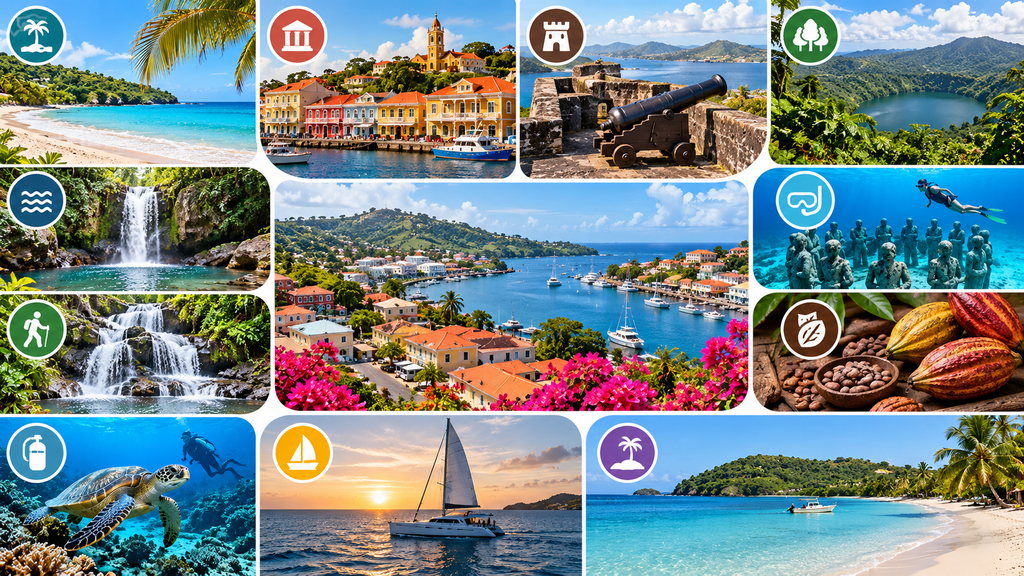
A first visit does not need to include every attraction. Combining several different experiences—beach, rainforest, culture, and food—usually gives a more complete picture of the island.
| Experience | Best For | Location |
| Grand Anse Beach | Swimming, sunsets, beach days | Southwest Grenada |
| St. George’s | History, architecture, markets | Southwest coast |
| Fort Frederick | History and panoramic views | St. George’s |
| Grand Etang | Hiking, rainforest, wildlife | Central Grenada |
| Annandale Falls | Waterfall swimming | St. George Parish |
| Seven Sisters Falls | Hiking and waterfalls | Central Grenada |
| Underwater Sculpture Park | Snorkeling and diving | Molinere |
| Belmont Estate | Cocoa, chocolate, spices | Northern Grenada |
| Local spice experiences | Food and culture | Across Grenada |
| Diving | Reefs, wrecks, marine life | Around Grenada |
| Sailing | Coastline and island views | Various marinas |
| Carriacou | Beaches and quieter island life | North of Grenada |
1. Spend Time on Grand Anse Beach
Grand Anse Beach is Grenada’s best-known beach and stretches for approximately 2 miles along the island’s southwestern coast. The Grenada Tourism Authority describes it as a white-sand beach with generally calm turquoise water, surrounded by hotels, restaurants, beach bars, water sports, and a craft and spice market.
The beach is long enough that the atmosphere changes depending on where you settle.
Travelers can spend the day:
- Swimming
- Sunbathing
- Paddleboarding
- Trying water sports
- Visiting beach bars
- Shopping for crafts and spices
- Watching the sunset
Grand Anse is particularly convenient for first-time visitors because many of Grenada’s larger hotels and tourism services are concentrated around the southern part of the island.
You do not necessarily need to dedicate an entire day to it. A morning exploring St. George’s followed by an afternoon and sunset at Grand Anse can work well.
2. Discover St. George’s
St. George’s is Grenada’s capital and one of the best places to understand the island beyond its resorts and beaches.
The town wraps around a natural harbor and is known for its steep streets, historic buildings, markets, churches, and waterfront.
The Carenage, which curves around the inner harbor, is a particularly recognizable part of the city.
Rather than rushing through St. George’s simply to buy souvenirs, allow time to walk around and observe everyday city life.
Points of interest can include:
- The Carenage
- Market Square
- Historic streets
- Fort George
- Local shops
- Restaurants and cafés
- Views across the harbor
The terrain is hilly, so comfortable shoes are useful.
3. See Grenada From Fort Frederick
Fort Frederick is one of the best viewpoints around St. George’s, sitting roughly 800 feet above sea level and overlooking the harbor and surrounding landscape.
Construction began under the French in 1779 and was completed by the British in 1783.
Its elevated location provides views toward:
- St. George’s
- The Carenage
- Caribbean Sea
- Mountainous interior
- Surrounding communities
The fort also provides context for Grenada’s colonial and more recent political history.
Fort Frederick can be combined with other attractions around St. George’s rather than treated as a full-day excursion.
4. Visit Historic Fort George
Fort George is another important historical landmark overlooking St. George’s and its harbor.
Originally called Fort Royal, the structure was built between 1706 and 1710 and renamed Fort George after Britain took possession of Grenada in 1763.
Its importance extends beyond the colonial period. The fort also played a role in Grenada’s modern political history, including the events surrounding the 1983 Grenada Revolution.
Visitors can see surviving fortifications and enjoy broad views over St. George’s, the harbor, coastline, and Caribbean Sea.
Travelers particularly interested in history can visit both Fort George and Fort Frederick to see the capital from different perspectives.
5. Hike Through Grand Etang National Park
Grand Etang National Park and Forest Reserve is one of Grenada’s principal destinations for hiking, rainforest scenery, birdlife, and nature.
Located in the mountainous interior, Grand Etang has varied elevations and ecological zones, with dense tropical vegetation replacing the coastal scenery found around much of southern Grenada.
Visitors may encounter:
- Tropical plants
- Forest trails
- Mountain views
- Grand Etang Lake
- Birds
- Monkeys
- Waterfall trails
The weather in the interior can be wetter and cooler than on the coast.
Bring:
- Comfortable walking shoes
- Water
- Lightweight rain protection
- Insect repellent
- A small towel
- Dry clothes if combining the hike with a waterfall
A rainforest outing is one of the easiest ways to see how geographically diverse Grenada is despite its relatively small size.
6. Swim at Annandale Falls
Annandale Falls is a 30-foot waterfall surrounded by tropical vegetation about a 20-minute drive from St. George’s.
Water tumbles over the rock face into a pool below, where swimming may be possible depending on current conditions.
Annandale is relatively accessible compared with waterfalls requiring substantial hiking, which can make it a useful choice for:
- Families
- Short excursions
- Travelers with limited time
- Visitors who do not want a long trek
The surrounding area also has tropical gardens and visitor facilities.
Because it is one of Grenada’s more accessible waterfalls, it can become busier when cruise ships or organized tours are on the island.
7. Hike to Seven Sisters Waterfalls
Travelers who want more activity than a short waterfall stop can consider Seven Sisters, a series of cascades in Grenada’s lush interior.
The experience combines hiking through tropical vegetation with waterfall scenery.
Trail conditions can become slippery, particularly after rain, so appropriate footwear is much more useful than sandals or ordinary beach shoes.
The amount of water and difficulty of the trail can also vary with recent weather.
A local guide can add value for travelers who are unfamiliar with the route or want to learn more about the surrounding vegetation.
Grenada’s tourism authority says the country has 15 waterfalls, so Annandale and Seven Sisters are only 2 of the available options.
8. Snorkel at the Underwater Sculpture Park
Grenada’s Underwater Sculpture Park is an underwater art installation in the Molinere Beauséjour Marine Protected Area that can be visited by snorkelers and divers.
Created by sculptor Jason deCaires Taylor and installed in 2006, the sculptures were designed using materials that allow marine life to develop around them.
Over time, the works have become part art installation and part artificial reef.
That means the experience changes as marine organisms grow around the sculptures.
Visitors can encounter submerged human figures and other installations while also observing fish and marine life.
Should You Snorkel or Dive at the Sculpture Park?
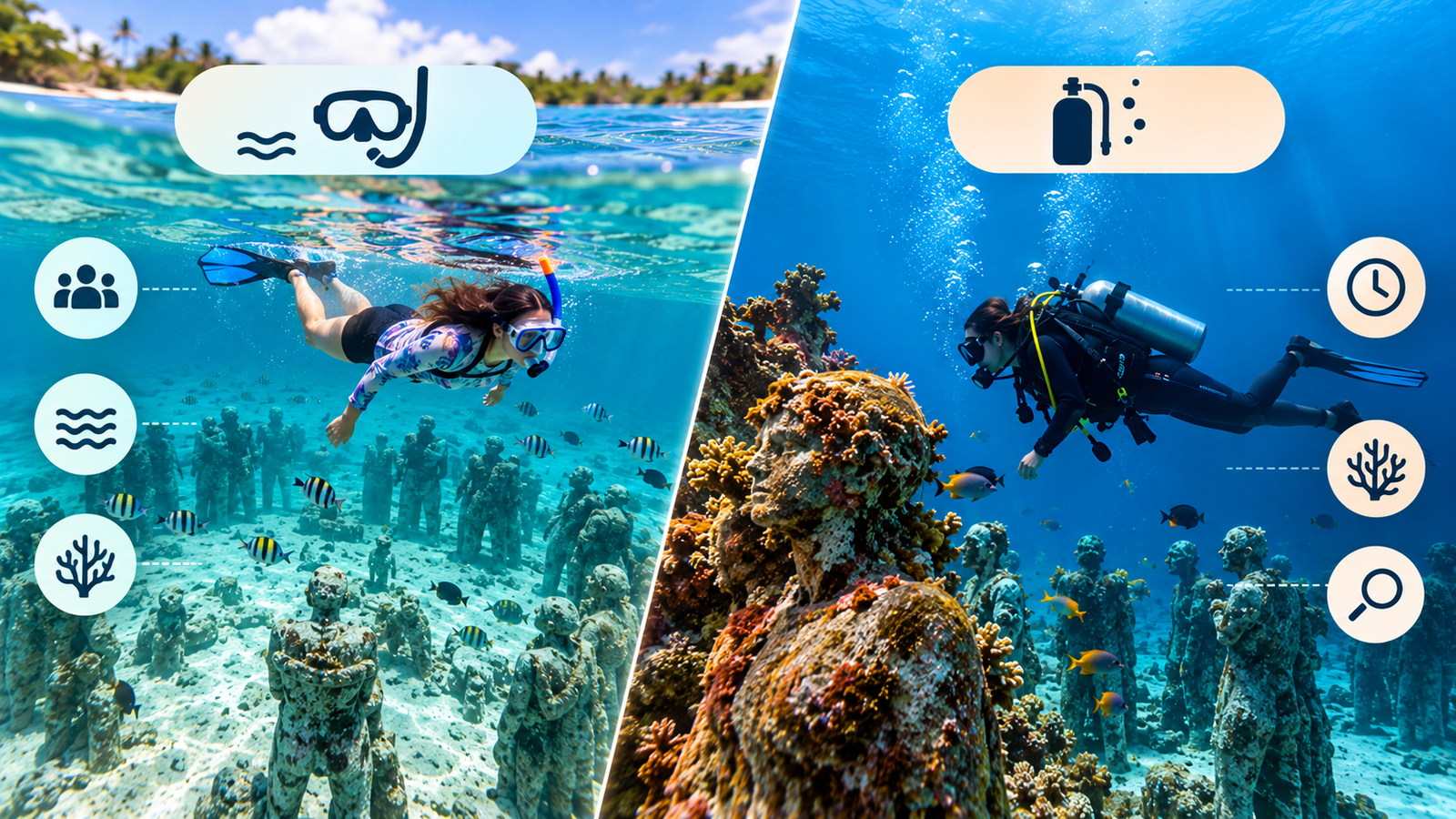
Both are possible, but the experience differs.
Snorkeling works well for travelers who want a relatively accessible introduction to the site.
Scuba diving allows visitors to spend more time below the surface and view individual sculptures and marine growth more closely.
Conditions can vary according to weather, visibility, currents, and sea state, so use a reputable local operator.
9. Go Scuba Diving
Grenada deserves consideration as a diving destination even for travelers who are not primarily visiting for scuba.
The Grenada Tourism Authority promotes more than 30 underwater dive sites around Grenada and Carriacou, including reefs, drift dives, shipwrecks, and the Underwater Sculpture Park.
One of the island’s best-known wreck dives is the Bianca C.
Experienced divers may particularly appreciate Grenada’s combination of:
- Wrecks
- Reefs
- Drift diving
- Coral
- Marine life
- Underwater sculptures
Beginners can also find operators offering introductory experiences and certification courses.
Always match the dive site to your training, certification, comfort level, and current sea conditions.
10. Learn Why Grenada Is Called the Spice Island
Grenada is closely associated with spices, particularly nutmeg and mace, making spice experiences one of the most distinctive things to include in a visit.
Travelers may encounter locally grown:
- Nutmeg
- Mace
- Cinnamon
- Cloves
- Ginger
- Turmeric
- Bay leaves
Spices appear not only in cooking but also in chocolate, beverages, sauces, beauty products, and souvenirs.
Visiting a spice producer or agricultural estate gives more context than simply purchasing a bag of nutmeg from a market.
It also helps explain why the phrase Spice of the Caribbean appears so frequently in Grenada’s tourism identity.
11. Tour Belmont Estate
Belmont Estate combines Grenada’s cocoa, agriculture, food, history, and spice traditions in one attraction.
The estate is in the northern part of Grenada, roughly an hour’s scenic drive from St. George’s according to the tourism authority.
Experiences can include:
- Cocoa production
- Chocolate making
- Tropical gardens
- Agricultural traditions
- Local food
- Estate history
- Farm animals
- Spice cultivation
Grenada has developed a strong bean-to-bar chocolate identity, and Belmont provides a useful opportunity to see how cocoa moves from the tree toward the finished product.
Instead of treating chocolate as only a souvenir, visitors can learn about growing, harvesting, fermenting, drying, and processing cocoa.
Because tours and opening arrangements can change, confirm current operating hours and reservation requirements before making the drive north.
12. Taste Grenadian Chocolate
Chocolate deserves its own place in a Grenada itinerary.
Cocoa has a long history on the island, and Grenada now has several local chocolate producers. The Grenada Tourism Authority has previously highlighted producers including Belmont Estate, Grenada Chocolate Company, Crayfish Bay Organic Chocolate, Tri-Island Chocolate, and others.
Travelers can compare bars made with different percentages of cocoa and combinations incorporating Grenadian ingredients such as:
- Nutmeg
- Cinnamon
- Ginger
A chocolate or cocoa tour also pairs naturally with a trip through Grenada’s northern agricultural areas.
13. Try Grenadian Food
A good Grenada itinerary should leave time for local food rather than treating meals only as breaks between attractions.
One dish to look for is oil down, widely regarded as Grenada’s national dish.
Recipes vary, but it is traditionally a hearty one-pot preparation built around local ingredients.
Other foods and flavors travelers may encounter include:
- Fresh seafood
- Callaloo
- Plantain
- Breadfruit
- Coconut
- Local fruit
- Cocoa
- Nutmeg
- Spice-seasoned meat and fish
Eating at a small local restaurant or community event can provide a different experience from dining exclusively inside a resort.
14. Experience Gouyave Fish Friday
Gouyave Fish Friday is one of Grenada’s better-known community food experiences.
Gouyave lies on the island’s western coast and has a strong fishing tradition.
On Fish Friday, visitors can sample seafood and local dishes in a more social street-food atmosphere. Grenada’s tourism authority specifically recommends Gouyave Fish Friday as part of experiencing village life and local cuisine.
Availability can be affected by public holidays, special events, weather, or local arrangements, so confirm that the event is operating during your visit before making a dedicated journey.
15. Take a Sailing or Boat Trip
Seeing Grenada from the water provides a different perspective on its mountainous coastline.
Boat excursions can range from short sunset sails to snorkeling trips and longer journeys around the island.
Depending on the operator and itinerary, trips may involve:
- Snorkeling
- Swimming
- Coastal sightseeing
- Sunset sailing
- Marine-life viewing
- Trips to smaller bays
- Visits to nearby islands
A boat excursion can be particularly useful for combining the Underwater Sculpture Park with other snorkeling areas.
Sea conditions matter, especially for travelers prone to motion sickness.
16. Visit Morne Rouge Beach
Travelers who enjoy Grand Anse but want another beach option can visit Morne Rouge, also known locally as BBC Beach.
It lies close to Grand Anse but generally feels more enclosed because of its bay setting.
Morne Rouge can work well for:
- Swimming
- Relaxing
- Families
- A quieter beach afternoon
The Grenada Tourism Authority includes Morne Rouge among the island’s recognized beaches and visitor attractions.
Visiting both Grand Anse and Morne Rouge also demonstrates why travelers do not necessarily need to choose only one beach for an entire trip.
17. Spend Time in Carriacou
Carriacou is part of Grenada but offers a noticeably quieter island experience than the main island.
It lies north of Grenada and is known for beaches, small communities, sailing traditions, reefs, and a slower pace.
Carriacou can appeal particularly to travelers who want:
- Fewer crowds
- Snorkeling and diving
- Sailing
- Quiet beaches
- Small-island culture
- A break from resort areas
It deserves more than a rushed visit if your itinerary allows.
Travel connections are available by sea and air, but schedules can change, so confirm current ferry or flight arrangements before planning a day trip around an old timetable.
18. See Carriacou Underwater Art
Carriacou now has an underwater attraction of its own.
A World Adrift, launched in 2023, consists of 30 boat sculptures, each featuring a figure based around local schoolchildren and themes related to climate change and the vulnerability of small island states.
The installation lies approximately 4 meters underwater and is accessible to both snorkelers and divers.
This makes it distinct from Grenada’s older Molinere Underwater Sculpture Park and gives underwater-art enthusiasts another reason to include Carriacou.
19. Leave Time for the Island Smaller Places
Some of Grenada’s most memorable moments do not require a major attraction.
Driving through the island brings travelers past:
- Fishing communities
- Mountain roads
- Small beaches
- Agricultural areas
- Roadside fruit stands
- Coastal viewpoints
- Villages
This is one reason a guided island tour or private driver can be worthwhile for first-time visitors.
A direct drive from one attraction to another may save time, but stopping occasionally provides more context about everyday life on the island.
How Many Days Do You Need in Grenada?
Around 5 to 7 days gives a first-time visitor enough time to combine beaches, St. George’s, rainforest, waterfalls, food, and at least one marine activity without making every day feel rushed.
A shorter 3- or 4-day trip is possible, but priorities become more important.
For example:
| Trip Length | Practical Focus |
| 3 days | Grand Anse, St. George’s, rainforest/waterfall |
| 5 days | Add sculpture park, cocoa/spice experience and island tour |
| 7 days | Add diving/sailing and more beach time |
| 8+ days | Consider Carriacou and a slower itinerary |
Travelers interested in diving or Carriacou may benefit from staying longer.
Sample 5-Day Grenada Itinerary
Day 1: Grand Anse and Southern Grenada
Settle in and spend the first day around Grand Anse.
Swim, walk along the beach, visit the craft and spice market, and stay for sunset.
Day 2: St. George’s and the Forts
Spend the morning around the Carenage and central St. George’s.
Visit Fort George or Fort Frederick, then return toward Grand Anse or Morne Rouge for the afternoon.
Day 3: Rainforest and Waterfalls
Head into Grenada’s interior for Grand Etang National Park.
Combine the rainforest with Annandale Falls or, for a more active day, a hike toward Seven Sisters.
Day 4: Underwater Grenada
Book a snorkeling or diving excursion to the Underwater Sculpture Park.
Experienced divers can consider adding another reef or wreck site.
Day 5: Cocoa, Chocolate and Spices
Travel north toward Belmont Estate for a closer look at cocoa and Grenadian agriculture.
Combine the trip with additional viewpoints, communities, or food stops along the route.
With additional days, consider Carriacou, a sailing trip, or simply leaving time for the beach.
When Is the Best Time to Visit Grenada?
Grenada is warm throughout the year, but January through May generally falls within its drier season, while June through December is the wetter season.
Average temperatures generally range from approximately 75°F to 85°F (24°C to 30°C).
| Period | General Conditions |
| January-May | Drier season |
| June-December | Wetter season |
| November-February | Typically somewhat cooler temperatures |
| Year-round | Warm tropical climate |
“Rainy season” does not necessarily mean continuous rain every day. Tropical showers can be brief and localized.
However, travelers planning hiking, sailing, or diving should consider weather conditions more carefully because heavy rain and rough seas can affect outdoor activities.
How Do You Get Around Grenada?
Visitors generally use a combination of:
- Taxis
- Rental cars
- Local buses
- Private drivers
- Organized tours
Driving provides flexibility but Grenada’s roads can be narrow, steep, winding, and unfamiliar to visitors.
Travelers who want to cover several attractions in one day may find a private driver or guided tour more relaxing, particularly when visiting the mountainous interior.
Local minibuses can be economical for some journeys but are less convenient when trying to follow a tightly planned sightseeing itinerary.
Is Grenada Good for Families?
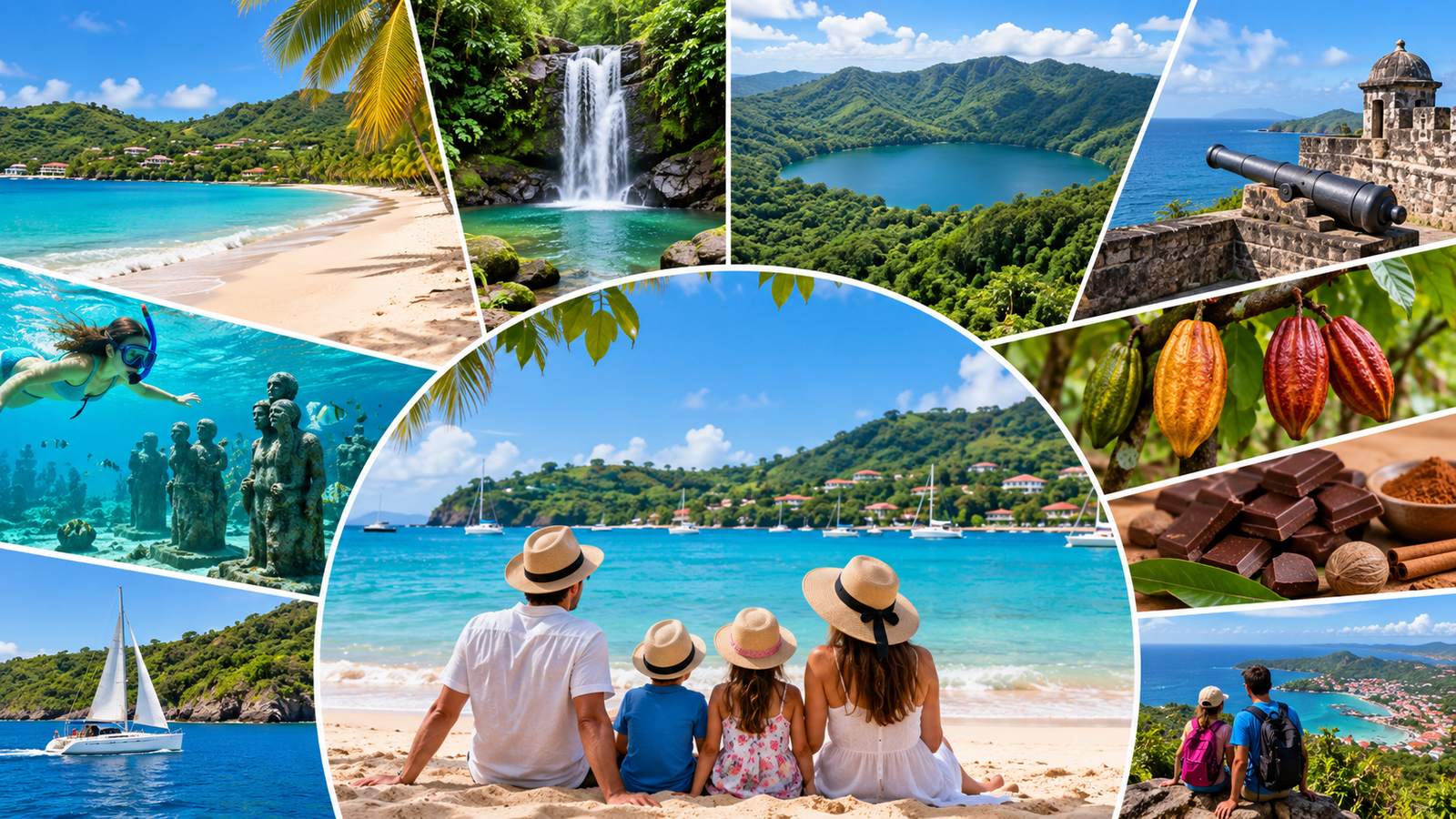
Yes. Grenada offers several activities suitable for families, including Grand Anse Beach, rainforest trips, Grand Etang Lake, snorkeling, and the Underwater Sculpture Park.
The best activities depend on childrens ages and swimming ability.
Families with younger children may prefer accessible attractions such as Grand Anse and Annandale Falls, while older children may enjoy hiking, snorkeling, sailing, or introductory diving experiences where age and operator requirements permit.
Is Grenada Only for Beach Vacations?
No. Beaches are one of Grenada’s strongest attractions, but the interior is equally important to understanding the island.
Within one trip, travelers can experience:
- Caribbean beaches
- Tropical rainforest
- Mountain landscapes
- Waterfalls
- Historic forts
- Cocoa farms
- Spice production
- Chocolate making
- Underwater art
- Shipwreck diving
- Local food
- Small-island culture
That variety is what makes Grenada particularly suitable for travelers who enjoy beach time but do not want to spend an entire Caribbean vacation inside a resort.
What Should You Pack for Grenada?
A practical packing list includes:
- Lightweight clothing
- Swimwear
- Reef-conscious sun protection
- Hat and sunglasses
- Comfortable walking shoes
- Sandals
- Lightweight rain jacket
- Insect repellent
- Reusable water bottle
- Dry bag for boat trips
- Snorkeling gear if you prefer your own
- Small daypack
Hiking shoes are particularly useful if you plan to visit rainforest trails or waterfalls.
Grenada’s interior can be wetter than its beaches, so a sunny morning near Grand Anse does not guarantee dry conditions in Grand Etang.
What Should Travelers Know Before Visiting Grenada?
Entry rules depend on nationality, so travelers should check the requirements applicable to their passport before departure.
For U.S. travelers specifically, the State Department’s current Grenada guidance says a passport should have at least 6 months’ validity beyond arrival, and tourist visits of 90 days or less do not require a visa.
There is also an important 2026 safety update. The U.S. State Department currently places Grenada at Level 2: Exercise Increased Caution due to crime, an advisory issued January 5, 2026. Travelers should check the latest advisory rather than relying on older descriptions of the destination’s safety situation.
Other sensible precautions include:
- Avoid leaving valuables unattended on beaches.
- Use reputable transportation providers.
- Check weather before hiking or boating.
- Carry appropriate travel insurance.
- Confirm tour schedules in advance.
- Avoid wearing camouflage clothing, which U.S. government guidance notes is prohibited for civilians in Grenada.
Conclusion
Grenada rewards travelers who divide their time between the coast and the interior. Grand Anse provides the classic Caribbean beach experience, while Grand Etang, waterfalls, cocoa estates, spice production, St. George’s, and underwater attractions reveal a much broader destination.
For a first visit, aim to combine at least one beach day, one rainforest or waterfall outing, a cultural or food experience, and a snorkeling, diving, or sailing trip. Travelers with additional time can extend the journey to Carriacou rather than trying to fit every experience into the main island.
Weather, attraction hours, transport schedules, and entry requirements can change, so verify the details that affect your itinerary shortly before traveling.
Frequently Asked Questions
Grenada is known for its beaches, nutmeg and other spices, cocoa and chocolate, tropical rainforest, waterfalls, diving, historic St. George’s, and the Underwater Sculpture Park.
There is no single activity that suits every traveler, but Grand Anse Beach is the island’s most recognized attraction and is an easy starting point for a first visit. The beach stretches for about 2 miles and combines swimming, restaurants, hotels, water sports, and sunset views.
Yes. Diving is only one part of Grenada’s appeal. Beaches, rainforest hiking, waterfalls, historic forts, cocoa estates, spice experiences, sailing, food, and Carriacou provide plenty to do without scuba diving.
Yes. The Molinere Underwater Sculpture Park is accessible to snorkelers as well as scuba divers.
Yes. Grand Etang National Park and Forest Reserve is one of the country’s main hiking and trekking areas, with tropical vegetation, varied elevations, wildlife, and trails leading through the mountainous interior.
Yes. The Grenada Tourism Authority says the destination has 15 waterfalls. Annandale Falls and Seven Sisters are among the better-known options.
Grand Anse is a public beach. Individual services such as loungers, food, water sports, or other commercial facilities may have separate charges.
Yes. Carriacou can be reached from Grenada by sea or air. Because transport schedules can change, travelers should verify current ferry or flight times before planning the trip.
Look for oil down, seafood, callaloo, breadfruit, plantain, locally grown fruit, Grenadian chocolate, and dishes incorporating the island’s spices.
Yes. Grenada offers reefs, marine life, and the Molinere Underwater Sculpture Park. Carriacou also provides snorkeling opportunities, including its newer underwater art installation.