
New York City to Boston: Best Ways to Travel Between Cities
The best ways to travel from New York City to Boston are by Amtrak train, intercity bus, nonstop flight, or car, with the train often providing the most convenient downtown-to-downtown journey. The two cities are close enough that travelers have several practical choices, and the right one depends on budget, schedule, luggage, traffic, and where the trip begins and ends.
For many travelers, Amtrak’s Northeast Regional offers a useful balance between travel time and convenience, while Acela provides a more premium rail experience. Buses can be among the most economical options, driving offers flexibility, and flying may work well for passengers connecting through an airport or finding a particularly convenient airfare. Here is how the main New York City-to-Boston transportation options compare in 2026.
New York City to Boston Travel Options at a Glance
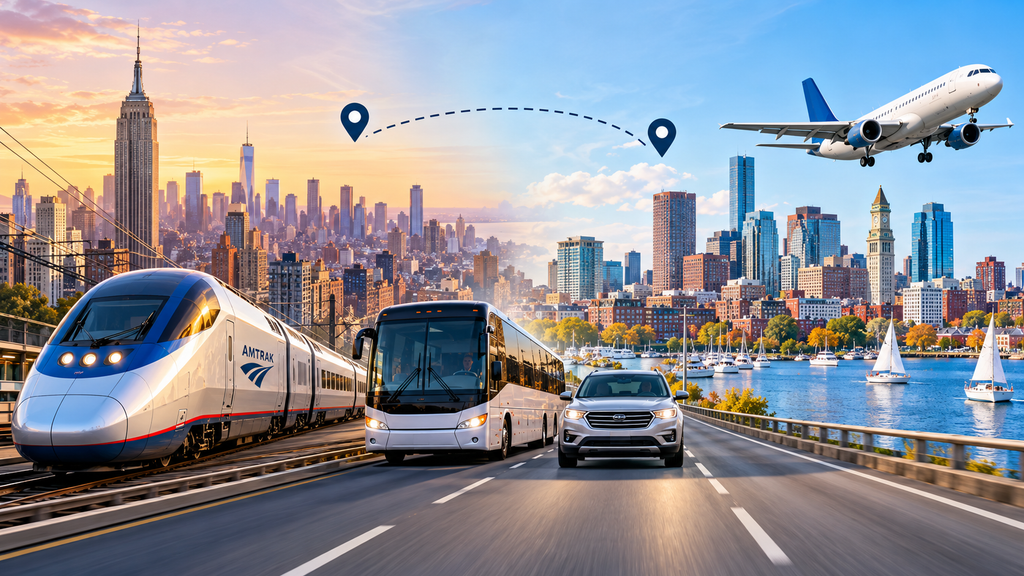
Travel times vary considerably by departure, traffic, weather, operating conditions, and exact origin and destination.
| Transportation | Typical/Published Travel Time | Main Advantage | Important Consideration |
| Amtrak Acela | Roughly 3.5–4 hours on many schedules | Premium downtown-to-downtown travel | Usually priced above standard rail |
| Northeast Regional | Roughly 3.25–4.5 hours, depending on train | Convenient city-center stations | More stops than Acela |
| Bus | Fastest scheduled trips around 3 hr. 5 min.; many take longer | Often economical | Traffic can cause delays |
| Driving | Around 3 hr. 45 min. without major delays | Maximum flexibility | Traffic, tolls, fuel and parking |
| Flying | Around 1–1.5 hours in the air | Short flight time | Airport transfers and security add time |
How Far Is Boston From New York City?
New York City and Boston are roughly 200 to 220 miles apart by road, depending on the exact starting point and route. FlixBus lists its New York–Boston route at approximately 207 miles, while driving routes can vary slightly. The relatively short distance gives travelers an important advantage: flying is not the only practical way to make the journey.
Train, bus, and car trips can all be completed in a few hours under favorable conditions, making this one of the Northeast’s most competitive intercity travel corridors.
Traveling From New York City to Boston by Train
For many travelers, Amtrak is one of the most convenient ways to travel between New York and Boston because trains operate directly between central-city stations. Passengers typically depart from Moynihan Train Hall at New York Penn Station and can arrive at Boston Back Bay or South Station, depending on the train.
Amtrak operates 2 principal services on this corridor:
- Acela
- Northeast Regional
Both eliminate the need to travel from Manhattan to an airport before departure.
Taking Acela From New York to Boston
Acela is Amtrak’s premium high-speed service on the Northeast Corridor. It connects New York with Boston, New Haven, Philadelphia, Baltimore, Washington, D.C., and other Northeast Corridor destinations. Amtrak operates multiple Acela departures and has continued expanding its NextGen Acela fleet in 2026.
NextGen Acela entered passenger service in August 2025. By August 2026, Amtrak reported that 16 of the new trainsets were in service.
Acela provides:
- Assigned seating
- Free Wi-Fi
- Power outlets
- Business Class
- First Class
- Quiet Car availability
- Cafe service
- Downtown-to-downtown transportation
One of Acela’s strongest advantages is avoiding the airport process. Instead of traveling from Manhattan to JFK, LaGuardia, or Newark and allowing additional time for security, passengers can depart directly from Midtown Manhattan.
Acela Business Class
Business Class is Acela’s standard cabin. Passengers receive an assigned seat and can select their preferred seat. Acela also provides more room than travelers generally encounter on a typical short-haul economy flight. For business travelers, access to power and Wi-Fi can make the journey productive rather than simply becoming transit time.
Acela First Class
First Class is available exclusively on Acela. Benefits include:
- Priority boarding
- Complimentary onboard food and beverages
- Premium seating
- At-seat service
- Seat selection
- Eligible station lounge access
First Class passengers can access Amtrak Metropolitan Lounges at participating stations, including Moynihan Train Hall and Boston South Station. For a relatively short New York–Boston journey, whether First Class is worthwhile depends primarily on the fare difference and how much the traveler values additional space, lounge access, and onboard service.
Traveling on the Northeast Regional
Travelers who want rail convenience without necessarily paying for Acela should compare the Northeast Regional. Northeast Regional trains also connect New York and Boston, but they make more intermediate stops.
Current 2026 timetables show some New York-to-Boston Northeast Regional trips scheduled at around 3 hours 15 minutes to 3 hours 45 minutes, although other departures can take longer depending on their stopping pattern and schedule.
Onboard amenities include:
- Spacious seating
- Free Wi-Fi
- Power outlets
- Cafe service on applicable trains
- Carry-on baggage allowance
- Access to centrally located stations
For travelers primarily concerned with getting from central Manhattan to central Boston without an airport transfer, the Northeast Regional deserves serious consideration.
Acela vs. Northeast Regional: Which Should You Choose?
Acela can be useful when schedule, premium seating, or reduced travel time justifies the additional fare. Northeast Regional may make more sense for a traveler who values the convenience of rail but is more price-conscious. Both trains serve the same general corridor, but they target somewhat different travelers.
| Feature | Acela | Northeast Regional |
| Service style | Premium high-speed rail | Standard intercity rail |
| New York station | Moynihan Train Hall | Moynihan Train Hall |
| Boston stations | Back Bay/South Station | Back Bay/South Station |
| Wi-Fi | Yes | Yes |
| Power outlets | Yes | Yes |
| Assigned seats | Yes | Depends on class/service |
| First Class | Yes | No |
| Business Class | Yes | Available |
| Number of stops | Generally fewer | Generally more |
| Typical pricing | Usually higher | Often lower |
Note: Always compare the actual departure times and fares for your travel date because neither service is automatically the better value on every trip.
Why Train Travel Works Well Between NYC and Boston
The main advantage is not simply train speed. It is the location of the stations. In New York, Amtrak operates from Moynihan Train Hall, directly across 8th Avenue from Penn Station in Midtown Manhattan. The station connects with local and regional transportation, including the NYC Subway, buses, NJ Transit, Long Island Rail Road, and PATH connections in the surrounding area.
In Boston, trains serve centrally located stations including South Station and Back Bay. South Station connects with MBTA transportation and places passengers directly in Boston rather than at an airport outside the immediate downtown core. This means a 3.5-hour train trip can sometimes compete well with a much shorter flight once airport transfers, security, boarding, and arrival transportation are included.
Traveling From New York City to Boston by Bus
Bus travel is another practical option, particularly for travelers prioritizing price. Several intercity bus companies serve the corridor, with Greyhound and FlixBus among the major choices. FlixBus currently advertises New York-to-Boston trips from around $31.98, although prices change according to travel date, demand, departure time, and how far in advance passengers book. Its fastest listed journeys take around 3 hours 5 minutes. That makes buses potentially competitive with trains on both price and scheduled journey time. However, there is one major difference: traffic.
A bus traveling through New York, Connecticut, Rhode Island, and Massachusetts is exposed to highway congestion, accidents, construction, and weather conditions. A 3-hour scheduled trip can therefore take longer when roads become congested.
What Is It Like To Take FlixBus or Greyhound?
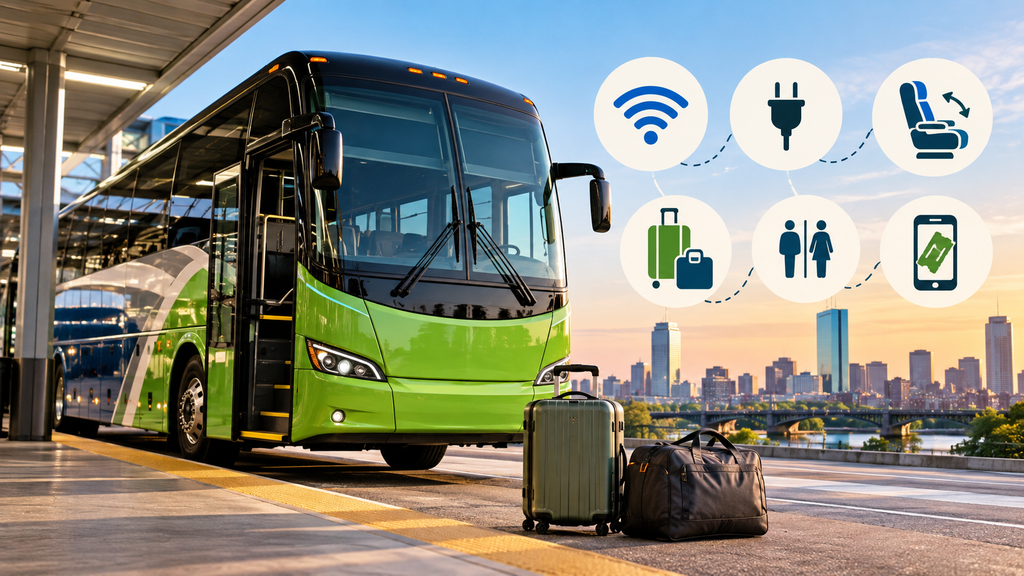
Current FlixBus services on the New York–Boston corridor advertise onboard amenities such as:
- Free Wi-Fi
- Power outlets
- Reclining seats
- Luggage storage
- Onboard restroom
- Mobile tickets
FlixBus also states that passengers on the route can bring 1 carry-on of up to 7 kilograms and 1 checked bag of up to 20 kilograms without an additional charge under its current allowance.
Greyhound and FlixBus schedules are integrated on many searches, providing numerous daily departure options. Passengers should check their ticket carefully because New York and Boston each have multiple possible pickup and drop-off locations.
The cheapest ticket is not necessarily the most convenient if the departure point is far from your hotel, home, or final destination.
Is the Bus Better Than the Train From NYC to Boston?
The bus can be a better fit when saving money is the priority, while the train can be more attractive when predictability and central stations matter more. Consider a traveler leaving Midtown Manhattan.
A low bus fare might save a substantial amount compared with Acela. If the traveler is flexible and not arriving for a time-sensitive appointment, the bus could make sense. A business traveler who must arrive for a specific meeting, however, may prefer rail because highway traffic creates an additional variable.
When comparing the two, look at:
- Ticket price
- Departure location
- Arrival location
- Scheduled duration
- Traffic risk
- Luggage allowance
- Cancellation/change rules
- Onboard amenities
The best choice depends on the trip rather than transportation mode alone.
Driving From New York City to Boston
Driving provides the greatest flexibility. Under typical traffic conditions, the drive from New York City to Boston can take roughly 3 hours 45 minutes, although congestion can easily push the journey beyond that.
The route is particularly useful for travelers who:
- Need a car after reaching Boston
- Are traveling with several people
- Have substantial luggage
- Want to stop along the way
- Are visiting destinations outside central Boston
- Prefer not to follow a train or bus schedule
The major drawback is traffic. Leaving New York during a busy period or entering Boston around rush hour can add considerable time.
What Does Driving From NYC to Boston Cost?
The total cost involves more than gasoline. Drivers should consider:
- Fuel
- Tolls
- Parking in New York, if applicable
- Parking in Boston
- Rental-car charges
- Insurance
- Additional driver charges
- One-way rental fees, where applicable
For a solo traveler, train or bus transportation can sometimes cost less once all driving expenses are included. For a family or group splitting the cost, driving may become more competitive.
Parking in Boston
Parking is another consideration. A traveler staying in central Boston may have little need for a car once there because many neighborhoods and major attractions are accessible by public transportation or on foot. Hotel and garage parking can also add substantially to the cost of a road trip.
If the car will remain parked throughout the visit, compare the total parking bill with the cost of train or bus tickets before deciding to drive.
Flying From New York City to Boston
Flying is another option, and the actual time in the air is short. Nonstop flights connect New York-area airports with Boston Logan International Airport (BOS). Current airline booking pages show New York–Boston service from airlines such as Delta Airlines, with fares varying substantially by date.
New York travelers may encounter Boston flights from:
- LaGuardia Airport (LGA)
- John F. Kennedy International Airport (JFK)
Available airports and airlines vary according to the date and schedule. The flight itself can take only around 1 to 1.5 hours, but that does not represent the entire journey.
Why Flying Can Take Longer Than It Looks
Suppose your scheduled flight time is 1 hour 20 minutes. Your real journey may also include:
- Traveling from Manhattan to the airport
- Arriving early enough for security
- Waiting to board
- Taxiing before takeoff
- The flight
- Deplaning
- Collecting checked baggage
- Traveling from Logan Airport into Boston
The complete door-to-door journey can therefore be considerably longer than the published flight duration. This is why rail remains competitive on the New York–Boston corridor even though trains are much slower than airplanes in pure vehicle speed.
Getting From Boston Logan Airport to Downtown Boston
Boston Logan is relatively close to the city center. Massport states that the airport is roughly 3 to 5 miles from downtown Boston, with many travelers reaching downtown in approximately 15 to 30 minutes by car or public transportation, depending on conditions.
Passengers have several transportation choices, including:
- MBTA Silver Line
- MBTA Blue Line
- Taxi
- Rideshare
- Rental car
- Water transportation
- Logan Express services
The Silver Line SL1 provides direct service between Logan’s terminals and South Station. Massport states that the Silver Line from Logan is free, including applicable transfer to the Red Line at South Station. The Blue Line requires passengers to use a free airport shuttle between the terminals and Airport Station.
Is Flying From NYC to Boston Worth It?
Flying can make sense in specific situations. It may be useful when:
- You live close to a New York airport
- Your Boston destination is near Logan
- You find an attractive airfare
- You have airline elite-status benefits
- You are connecting from another flight
- Your journey begins or ends outside central Manhattan
- The flight schedule fits significantly better than rail
For a traveler starting in Midtown Manhattan and ending in downtown Boston, however, the airport process can reduce the time advantage of flying. Compare door-to-door travel time, not simply flight time versus train time.
How Much Does It Cost To Travel From New York to Boston?
There is no single fixed price. Train, bus, airline, and rental-car prices all change according to factors such as:
- Travel date
- Day of the week
- Departure time
- Demand
- How early you book
- Fare type
- Refundability
- Holiday periods
For example, FlixBus currently advertises fares starting around $31.98 on the route, but that does not mean every departure costs that amount. Airfares fluctuate even more. Current September 2026 airline searches illustrate that fares can differ considerably from one date to another. Amtrak also uses variable pricing, making advance comparison important. Rather than relying on a single advertised “from” price, search your actual travel date.
Which Option Is the Fastest From New York City to Boston?
The answer depends on how you define fastest. An airplane has the shortest in-vehicle travel time. A train, however, can be highly competitive for a traveler moving between central Manhattan and central Boston because it eliminates much of the airport process.
Driving can be fast when roads are clear but becomes less predictable during congested periods. Some buses have very competitive scheduled journey times, but they are also vulnerable to road delays. For practical trip planning, compare:
- Travel to departure point + waiting/check-in time + transportation time + travel to final destination
This provides a more realistic comparison than looking only at scheduled flight, train, or bus duration.
Which Is the Cheapest Way To Travel From NYC to Boston?
Intercity buses frequently provide some of the lowest published fares on the route. FlixBus currently lists tickets starting at around $31.98, though fares vary. However, train fares can also be competitive when booked early or for less popular departures. Driving may become economical for groups because fuel and toll costs can be divided among several passengers.
Flying occasionally becomes competitive when airlines offer lower fares, but
baggage fees and airport transportation should be included in the comparison. The cheapest option is therefore date-specific.
What Is the Most Convenient Way To Travel From NYC to Boston?
For travelers going from central Manhattan to central Boston, Amtrak has a strong convenience advantage because it connects centrally located stations without airport security or highway driving. Moynihan Train Hall is located in Midtown Manhattan, while Boston South Station connects directly with local public transportation. That does not mean rail is always the correct choice.
Someone living in Queens near JFK, for example, may find a nonstop flight more convenient. A group heading to suburban Massachusetts may prefer a car. A budget traveler with a flexible arrival time may prefer the bus. Convenience depends on the complete itinerary.
Should You Choose Acela or Fly?
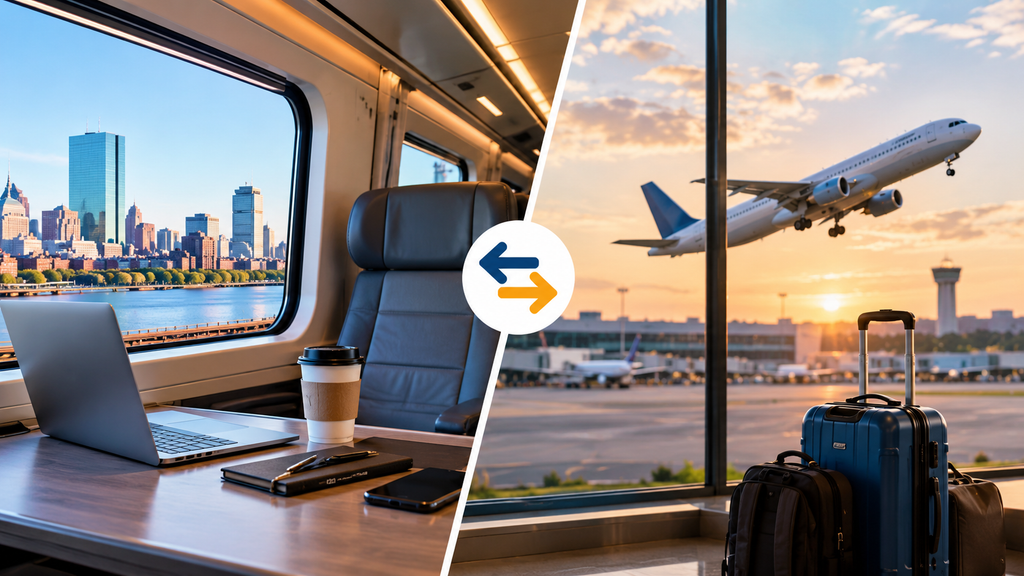
This comparison is particularly relevant for business travelers.
Acela allows passengers to:
- Depart from Midtown Manhattan
- Avoid airport security
- Use Wi-Fi
- Access power outlets
- Work during the journey
- Arrive directly in central Boston
- Carry luggage without the same airport process
Flying provides a much shorter time in transit once the plane leaves the ground. But travelers need to add airport transportation and predeparture time.
A useful way to decide is to calculate when you need to leave your actual starting point, rather than comparing only the scheduled Acela duration with the flight duration.
Is a Rental Car Necessary in Boston?
For a trip focused on central Boston, a rental car is often unnecessary. Boston has an extensive public transportation system, and many major neighborhoods and visitor areas can be reached by MBTA services or on foot. A car becomes more useful if the itinerary includes places outside Boston or a broader New England road trip.
For example, a traveler continuing from Boston into rural Massachusetts, New Hampshire, or Maine may benefit considerably more from having a vehicle than someone spending a weekend around Back Bay, Beacon Hill, Downtown, or the North End.
How To Choose the Right NYC-to-Boston Transportation
There is no transportation mode that works best for every traveler. Start with the factor that matters most to your trip.
Choose Amtrak If You Want Downtown-to-Downtown Convenience
Train travel works particularly well for passengers starting in Manhattan and ending in central Boston. Choose between Northeast Regional and Acela based on fare, departure time, and desired level of comfort.
Choose the Bus If Price Is Your Priority
Bus tickets can be inexpensive, especially when booked early. Leave additional schedule flexibility in case highway traffic extends the journey.
Choose a Car If You Need Flexibility
Driving works well for families, groups, travelers carrying significant luggage, or passengers continuing outside Boston. Remember to include parking and tolls in the total cost.
Choose a Flight If the Airports Fit Your Itinerary
Flying can work particularly well if your starting point is convenient to LGA or JFK or if Boston Logan is convenient to your final destination. It can also be practical as part of a connecting air itinerary.
Tips for Traveling From New York City to Boston
Before purchasing a ticket, compare more than the advertised price.
Consider these practical factors:
- Compare door-to-door journey times.
- Book popular train departures early.
- Check Acela and Northeast Regional prices separately.
- Compare several bus departure points.
- Allow extra time for road traffic when taking a bus or driving.
- Include tolls and parking when calculating driving costs.
- Include airport transfers and baggage fees when comparing flights.
- Check cancellation and change conditions before purchasing.
- Consider where you will stay in Boston.
- Avoid choosing a connecting flight when practical nonstop or ground options are available.
- Recheck schedules shortly before departure.
A $20 saving can quickly lose its value if the cheaper option adds several hours or leaves you far from your final destination.
Final Thoughts
New York City and Boston are close enough that travelers do not need to rely on air travel. Amtrak, buses, driving, and nonstop flights are all realistic options, and each works well for a different type of trip. Amtrak is especially useful for central-city travel because Moynihan Train Hall and Boston’s major rail stations eliminate airport transfers. Northeast Regional can provide a practical balance of price and convenience, while Acela adds a more premium experience. Bus travel deserves consideration when budget matters most, and driving offers flexibility for groups or travelers continuing beyond Boston.
Flying remains useful when the airports fit the itinerary, but compare the entire journey rather than the flight time alone. Before booking, check current fares and schedules for your specific date because train prices, bus fares, flight schedules, and road conditions can all change.
Frequently Asked Questions
Many Northeast Regional trips take approximately 3¼ to 4 hours, although travel times vary by train and stopping pattern. Acela also provides multiple daily services on the route. Check Amtrak’s schedule for the exact departure.
Amtrak passengers generally use Moynihan Train Hall at New York Penn Station, located across 8th Avenue from Penn Station in Midtown Manhattan.
New York–Boston Amtrak services can stop at Boston Back Bay and South Station, depending on the service. South Station provides connections to MBTA transportation.
Yes. Acela is Amtrak’s premium high-speed service on the Northeast Corridor. NextGen Acela trains entered service in 2025 and the fleet expanded further in 2026.
FlixBus currently lists its fastest New York–Boston trip at approximately 3 hours 5 minutes, but actual and scheduled durations vary by service, traffic, and stops.
Yes. Airlines offer nonstop service between New York-area airports and Boston Logan International Airport. Availability and frequency vary by airline and date.
The drive can take around 3 hours 45 minutes under typical conditions, but traffic in New York, Connecticut, and Boston can substantially increase the journey time.
The train can provide more predictable downtown-to-downtown transportation, while the bus can offer lower fares. The better option depends on ticket prices, schedule, departure location, and tolerance for traffic delays.
For travelers going between central Manhattan and central Boston, Amtrak can be particularly convenient because it eliminates airport transfers and security. Flying may be more practical when the traveler’s origin or destination is close to an airport.
Booking earlier can improve your selection of train, bus, and airline fares, especially around weekends, holidays, and other busy travel periods. Because prices fluctuate, compare options as soon as your dates are reasonably firm.