
Avianca Review: Seats, Baggage, Fees, Wi-Fi & LifeMiles
Avianca is an extensive network across the Americas and Europe, offering a broad range of economy, premium, and business-class options. However, the overall experience can vary by route, aircraft, fare type, and service level.
Avianca at a Glance
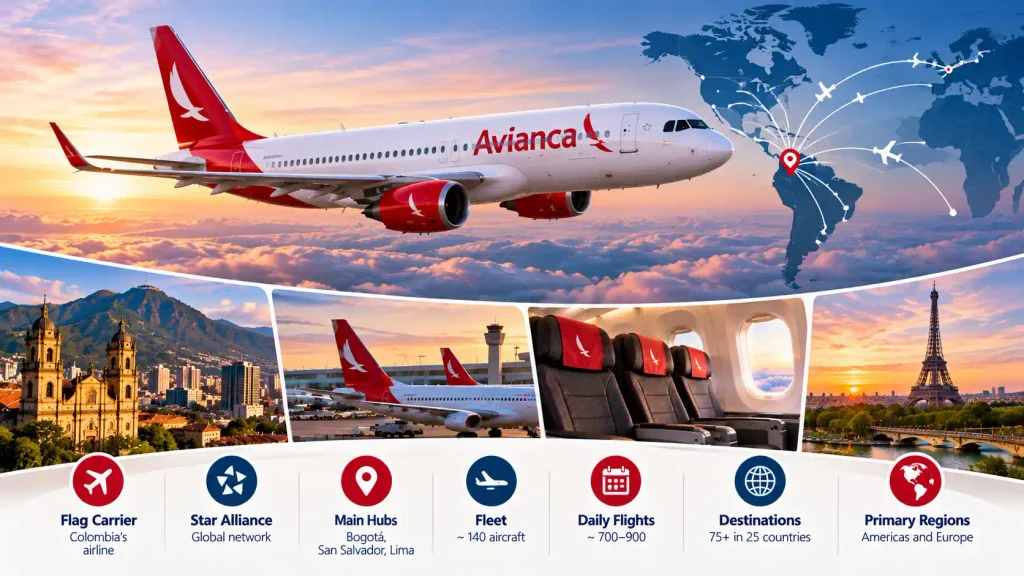
Avianca is Colombia’s flag carrier and one of the world’s oldest airlines. As a Star Alliance member, it provides access to a much broader network through its own routes and partner airlines. Its primary hubs are Bogotá, San Salvador, and Lima, supporting services across Latin America, North America, and Europe.
The airlines operates about 700 to 900 flights per day, depending on the season, and has a fleet of about 140 aircraft. Its network covers more than 75 destinations in approximately 25 countries across the Americas and Europe.
| Feature | Details |
| Airline | Avianca |
| Alliance | Star Alliance |
| Category | Legacy international airline |
| Frequent-flyer program | Lifemiles |
| Main hubs | Bogotá, San Salvador, Lima |
| Fleet | Approximately 140 aircraft |
| Daily flights | Approximately 700–900 |
| Destinations | 75+ destinations in 25 countries |
| Primary regions | Americas and Europe |
Avianca Route Network and Connectivity
Avianca’s greatest strengths are its extensive network and Star Alliance connectivity. The airline links major cities across the Americas and operates long-haul services to Europe. Its network includes key hubs such as Bogotá, San Salvador, and Lima, providing convenient connections across regions.
The airline’s Star Alliance membership further expands its reach. Passengers can use Avianca flights as part of itineraries that connect with numerous Star Alliance carriers, making the airline more relevant for international travelers who value alliance connectivity.
The network is particularly useful for travelers moving between North America, Central America, South America, and Europe. Major cities such as New York, Miami, Madrid, Bogotá, and San Salvador are part of the network described in the review.
Avianca Cabin Options
Avianca’s cabin structure centers on economy and business class, with a separate Premium product on some aircraft. Unlike many international carriers, Avianca does not offer a traditional premium economy cabin.
The experience can therefore differ significantly depending on the aircraft and fare purchased. Long-haul aircraft provide more substantial premium seating and service, while short-haul flights generally offer a simpler setup.
Economy Class
Avianca economy provides a standard seat and generally includes a personal item and a carry-on allowance of up to 10 kilograms (22 pounds) on most fare types.
Checked baggage depends heavily on the fare. Classic and Flex fares include a checked bag of up to 23 kilograms, or 50 pounds, while lower Basic and Light fares may exclude checked baggage and seat selection.
Food and beverage service also depends on the route. Most long-haul international flights include complimentary meals and nonalcoholic beverages, while many short regional flights use a buy-on-board model.
Premium
Avianca does not operate a conventional premium economy cabin. Instead, some aircraft offer a Premium product, particularly those without a traditional business-class cabin.
Premium seating generally offers a seat toward the front of the aircraft, additional features, and a blocked middle seat on applicable configurations. Passengers also receive complimentary checked baggage.
However, Premium does not necessarily provide the full service associated with business class. It does not include preferred check-in or additional meals simply because of the Premium designation.
Business Class
Avianca business class is more substantial on long-haul aircraft. Depending on the aircraft, passengers can receive lie-flat or enhanced-recline seating, priority check-in and boarding, lounge access, enhanced meals and beverages, and an additional baggage allowance.
Business-class passengers receive up to two checked bags, each weighing 23 kilograms.
The experience changes considerably on short-haul regional flights. Business class may consist primarily of an upfront seat with additional legroom rather than a full long-haul business-class experience.
Travelers should therefore pay close attention to the aircraft and route when comparing Avianca business-class fares.
Avianca Seats and Aircraft
Seat comfort varies across Avianca’s fleet, so aircraft type matters when choosing a flight.
On the Boeing 787-8, business-class configurations can provide 76-inch beds and 20-inch-wide seats. Economy seats generally offer 31 to 32 inches of pitch and 17.1 inches of width.
The Airbus A319 has 12 Premium seats with 33 inches of pitch and 17.7 inches of width, while its economy cabin provides about 28 inches of pitch and 17.7-inch-wide seats.
The Airbus A320 similarly offers 12 Premium seats with 33 inches of pitch and 17.7-inch width. Economy seating generally provides 28 to 29 inches of pitch and 17.7-inch width.
A320neo configurations vary. Premium seating generally provides 33 inches of pitch and 17.7-inch width, while economy seats provide approximately 28 to 29 inches of pitch.
One important aircraft variation involves certain aircraft acquired from Norwegian. These aircraft can feature seats marketed by Avianca as business class, even though they were originally designed as premium economy. These configurations can use a 2-3-2 layout and offer recliner-style seating rather than lie-flat beds.
| Aircraft | Cabin | Approx. Pitch/Bed | Width |
| Boeing 787-8 | Business | 76-inch bed | 20 inches |
| Boeing 787-8 | Economy | 31–32 inches | 17.1 inches |
| Airbus A319 | Premium | 33 inches | 17.7 inches |
| Airbus A319 | Economy | 28 inches | 17.7 inches |
| Airbus A320 | Premium | 33 inches | 17.7 inches |
| Airbus A320 | Economy | 28–29 inches | 17.7 inches |
| Airbus A320neo | Premium | 33 inches | 17.7 inches |
| Airbus A320neo | Economy | 28–29 inches | 17.7 inches |
Avianca Baggage Allowance
Avianca’s baggage rules depend heavily on fare type and route. Carry-on baggage is generally included, but Basic and Light fares may have stricter restrictions and may require passengers to purchase a carry-on in certain markets.
Personal items, such as a purse or small backpack that fits under the seat, are treated separately.
For South American domestic itineraries, Classic and Flex fares include one checked bag weighing up to 23 kilograms. Example extra-bag fees range from $60 to $120.
On international long-haul flights, Classic and Flex fares can include one 23-kilogram checked bag, while additional baggage can cost approximately $125 to $225. Basic and Light fares may not include checked baggage, with example additional-bag charges ranging from $30 to $200.
Oversized baggage can cost about $100 to $140, while overweight baggage up to 32 kilograms may cost about $55 to $100.
Because baggage charges can significantly affect the total ticket price, compare the full fare rather than the base fare alone.
Avianca Change and Cancellation Fees
Avianca’s change fees vary by market and fare rules. The source highlights substantially different charges by region.
Example published change fees include approximately $30 for flights within Colombia or Ecuador, $185 for international travel within South America, and $210 for other international routes. Flights involving the United Kingdom may carry a fee of about £150, while European itineraries may carry fees of about €180.
Flex and Business fares allow free changes, but passengers still must pay any applicable fare difference.
These rules make fare selection particularly important for travelers whose plans may change. Lower-priced tickets can look attractive at first but may cost more when you add changes, baggage, or seat selection.
Avianca Reservation Fees
Online bookings generally do not carry a reservation service charge. However, telephone or agent-assisted bookings can incur additional handling fees in some markets.
The source lists example phone or agent fees of approximately $25 to $50, although the actual amount varies by country.
Travelers comfortable booking online can complete the reservation digitally to avoid certain service charges.
Preferred and Extra-Legroom Seats
Avianca offers preferred seating through Plus Seats and exit-row options on many flights. These seats can offer extra space or a preferred location in the cabin.
Example prices range from approximately $15 to $40 on short- and medium-haul routes and around $40 to $90 on long-haul flights.
LifeMiles elite members may receive complimentary preferred seating or discounts, depending on their status and original fare.
Seat-selection costs should therefore be considered when comparing the total value of different fare classes.
Avianca Wi-Fi
Wi-Fi availability varies across the Avianca fleet. Some Boeing 787 aircraft offer onboard connectivity, while many regional aircraft do not have Wi-Fi.
Where Wi-Fi is available, passengers generally must purchase it during the flight. The source does not provide a universal price because costs vary according to flight length.
Avianca does not currently offer widespread complimentary Wi-Fi across its network. Passengers who require reliable connectivity should therefore check the aircraft and available services before departure.
Food and Drinks
Avianca’s food and beverage offering depends primarily on flight length and cabin. Long-haul international flights generally include complimentary meals and nonalcoholic beverages in economy and business class. Business-class service includes a more enhanced meal and beverage offering.
Short-haul regional flights often offer buy-on-board snacks and drinks rather than complimentary food for every passenger. Premium passengers may receive complimentary items on applicable flights. Meal and snack availability, and beverage availability, therefore vary considerably by the route and fare product.
Avianca Lounges
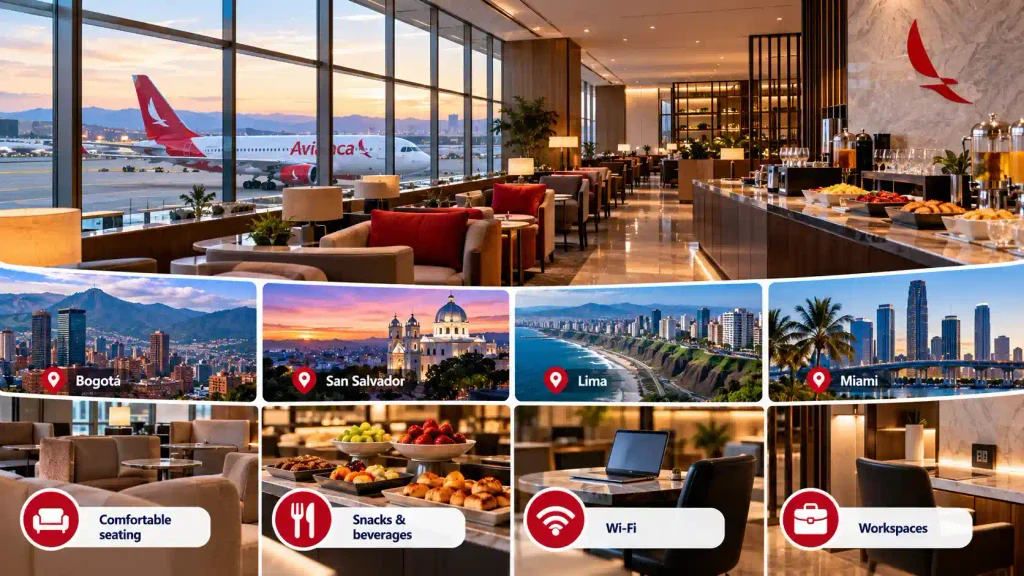
Avianca and its affiliates operate lounges at several major airports. Eligible business-class passengers and LifeMiles elite members generally have access.
Major lounge locations highlighted in the source include:
- Bogotá
- San Salvador
- Lima
- Miami, through a joint lounge arrangement with TAP Portugal
Typical lounge amenities include seating areas, snacks, beverages, Wi-Fi, and workspaces.
For eligible travelers, lounge access can add value to Avianca’s premium cabins and Lifemiles elite status, particularly when traveling through the airline’s principal hubs.
Avianca Lifemiles Frequent-Flyer Program
Lifemiles is Avianca’s frequent-flyer program and one of the largest loyalty programs in Latin America. Members can earn miles on Avianca flights and with Star Alliance partners, then redeem them for award flights, upgrades, seat selection, and other extras.
One of Lifemiles’ notable strengths is its broad partner network. Members can use miles on numerous Star Alliance airlines, providing access to destinations beyond Avianca’s own route network.
The program is also known for competitive award pricing, availability, and relatively low taxes and fees on some premium award bookings. Promotions can further improve redemption value.
However, the Lifemiles website and customer-support experience can be less convenient when members need to book, modify, or manage award travel.
Elite Lifemiles status provides additional benefits. Depending on the tier, members can receive mileage bonuses, priority services, and lounge access when traveling with Avianca and Star Alliance partners. Mileage bonuses range from 10% at lower levels to nearly 80% at the highest tier.
The program also benefits from a substantial number of points-transfer partners, making it relatively accessible for travelers who collect transferable rewards.
Avianca Pet and Unaccompanied Minor Policies
Avianca offers unaccompanied-minor services for an additional fee. The source lists example charges of $50 to $75 per segment for domestic travel and $75 to $150 per segment internationally. Passengers need to contact Avianca in advance to confirm pricing and arrange the service.
Pet transportation is also available under specific conditions. Pets may travel in the cabin if their combined weight, including the container, is no more than 10 kilograms (22 pounds). Pets traveling in the aircraft hold may weigh up to 70 kilograms (154 pounds), including the container.
Pet fees depend substantially on the route. Example charges range from approximately $20 for an in-cabin pet within Colombia to around $180 for an in-cabin pet traveling between South America and Europe. Hold transportation can range from approximately $53 in Colombia to $225 on South America-Europe routes.
A surcharge of approximately 10% to 20% may apply when a pet is added at the airport instead of being included in the booking in advance.
Customer Service and Passenger Satisfaction
Customer service is one area where Avianca receives mixed feedback. The source identifies operational disruptions, unclear communication, long telephone wait times, and confusing fare rules among the most common concerns.
Flight changes and difficulty resolving refunds or ticket changes also recur on review platforms.
At the same time, Avianca’s extensive network, modern fleet, and long-haul premium cabin options are among the airline’s positive characteristics.
The source reports a Skytrax rating of 3 stars out of 5. Tripadvisor rates the airline 3.5 out of 5 based on 22,473 reviews, while Kayak gives it 6.6 out of 10 based on 2,491 verified ratings.
These ratings place Avianca in the middle range overall: its network and loyalty program can be compelling, but travelers should still consider service consistency and customer support.
Avianca Safety and Operational Performance
Avianca has a generally solid safety record and operates according to global aviation standards. The source emphasizes that customer-service complaints and operational challenges do not indicate an unsafe airline.
Operational performance is also relatively strong, with more than 85% of Avianca flights reported as operating on time.
This combination of a substantial fleet, extensive network, and established operating history makes Avianca an important carrier.
How to Reduce Avianca’s Extra Costs
The source highlights several ways to manage Avianca’s ancillary fees. For travelers who need checked baggage or flexibility, a higher fare can make sense, as Classic and Flex fares offer benefits that may be excluded from Basic or Light tickets.
Lifemiles elite status can also reduce certain expenses through benefits such as preferred seating, priority services, lounge access, and additional baggage allowances.
The airline’s U.S.-issued Lifemiles credit cards provide another option for eligible travelers. According to the source, these cards can provide complimentary Lifemiles Silver status and associated travel benefits.
Travel-rewards cards with applicable travel credits can also offset qualifying Avianca expenses, such as baggage and seat-selection charges.
The best approach depends on the itinerary, fare, travel frequency, and loyalty-program participation.
Avianca: Main Advantages
Avianca’s strongest advantages center on network reach and loyalty-program connectivity. As a Star Alliance member, it gives passengers access to a broad collection of partner routes, while its own network provides extensive coverage throughout the Americas and service to Europe.
Other notable strengths include:
- Star Alliance membership
- LifeMiles award opportunities
- Competitive award pricing on some redemptions
- Relatively low taxes and fees on certain award bookings
- Long-haul business-class lie-flat seating on applicable aircraft
- Lounge access for eligible passengers
- Complimentary long-haul meals in applicable cabins
- Modern aircraft across parts of the fleet
- More than 85% reported on-time flight performance
Things to Consider Before Flying Avianca
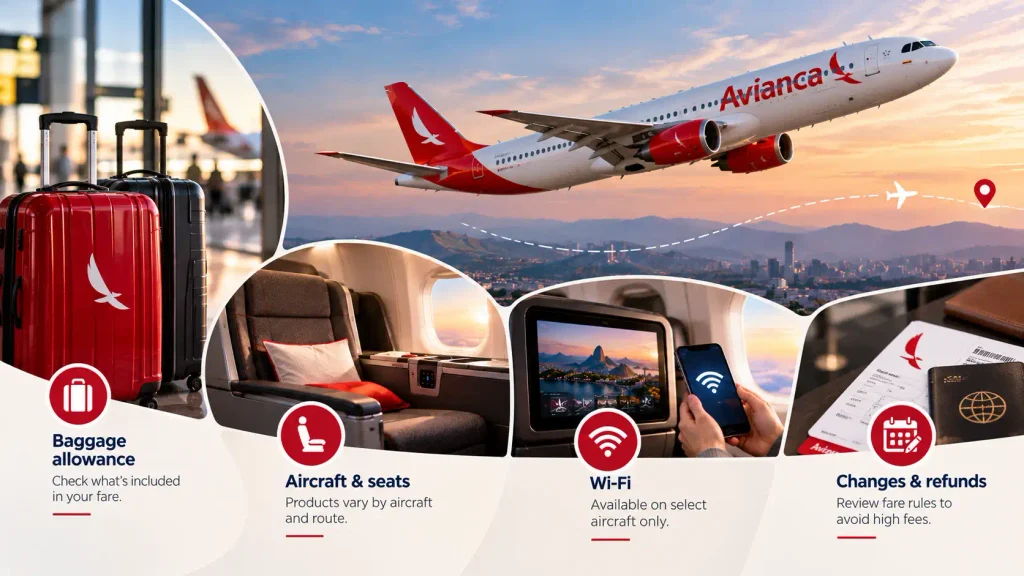
Avianca can offer good network value, but passengers should review their ticket details carefully before purchasing.
Basic and Light fares can exclude checked baggage and seat selection. Additional costs can therefore increase the final price of an otherwise inexpensive ticket.
Aircraft selection is also important. Business-class passengers on long-haul Boeing 787 aircraft can receive lie-flat seating, while some regional aircraft offer a much simpler premium experience. Certain aircraft configurations marketed as business class may use recliner-style seats rather than lie-flat beds.
Wi-Fi is another variable. Connectivity is available only on select aircraft and does not represent a universal complimentary service.
Finally, travelers who anticipate needing changes or refunds should review the fare rules carefully, as change fees can be substantial on certain international routes.
Overall Avianca Review
Avianca offers a useful combination of network reach, Star Alliance connectivity, and a potentially valuable Lifemiles program. Its broad Latin American presence makes it especially useful for travel within the Americas, while its European services and alliance partnerships extend its value for international itineraries.
The airline’s economy product is relatively straightforward, with the overall value depending heavily on the selected fare and included baggage. Premium seating offers extra space and select benefits, while long-haul business class provides a more complete premium experience.
At the same time, Avianca’s service consistency, fare structure, Wi-Fi availability, and customer-support experience can vary. Additional charges for baggage, preferred seats, changes, and other services can also materially affect the total cost of travel.
For travelers who prioritize network coverage and LifeMiles opportunities, Avianca can be an appealing option. Those seeking highly consistent service or straightforward fare structures should pay particular attention to the aircraft, route, fare conditions, baggage allowance, and included services before booking.
See This Guide: Travel Insurance Guide
Final Verdict
Avianca stands out for its extensive Latin American network, Star Alliance connectivity, and LifeMiles program. At the same time, its long-haul business class offers a stronger premium product than some of its regional offerings. However, fare restrictions, ancillary fees, inconsistent Wi-Fi, and customer-service concerns can affect the overall experience. Carefully compare fares, baggage, aircraft, and included benefits when choosing Avianca.
Frequently Asked Questions
Avianca serves more than 75 destinations across approximately 25 countries in the Americas and Europe. Its major hubs are Bogotá, San Salvador, and Lima.
Yes. Avianca is a Star Alliance member, allowing passengers to connect with a broad network of partner airlines and earn or redeem Lifemiles on eligible Star Alliance flights.
Lifemiles is Avianca’s frequent-flyer program. Members can earn miles on Avianca and Star Alliance flights and redeem them for award flights, upgrades, seat selection, and other extras.
Long-haul international flights generally include complimentary meals and nonalcoholic beverages. Many short-haul regional flights instead offer snacks and drinks for purchase.
Wi-Fi is available only on select aircraft. Some Boeing 787 aircraft offer connectivity, while many regional aircraft do not. The source does not identify a universal free Wi-Fi service.
Yes. Long-haul business class can include lie-flat seats, priority services, lounge access, enhanced meals and beverages, and additional baggage. Short-haul business-class service can be more basic.
Avianca does not offer a traditional premium economy cabin. It does offer a Premium product on certain aircraft, providing front-of-cabin seating, additional features, and other benefits.
Baggage depends on the fare and route. Classic and Flex fares generally include one checked bag up to 23 kilograms on applicable routes, while Basic and Light fares may exclude checked baggage.
Preferred Plus Seats and exit-row seats are generally sold separately. Example prices in the source range from $15 to $40 on short- and medium-haul routes and $40 to $90 on long-haul routes.
The source describes Avianca as having a generally solid safety record and meeting global aviation standards. It also reports that more than 85% of flights operate on time.