
When Is the Best Time to Visit Cabo San Lucas, Mexico?
The best time to visit Cabo San Lucas is from November to May, when the weather is generally sunny, rainfall is limited, and temperatures are comfortable for beach vacations, sightseeing, and outdoor activities. December through March is particularly popular for whale watching, while May and November offer a balance of pleasant weather, fewer crowds, and potentially lower hotel prices.
Located at the southern tip of Mexico’s Baja California Peninsula, Cabo San Lucas is famous for its golden beaches, dramatic rock formations, luxury resorts, and marine wildlife. Its iconic landmark, El Arco, attracts visitors throughout the year.
However, Cabo San Lucas offers different experiences depending on the season. Winter brings migrating whales and comfortable temperatures, summer delivers warmer ocean water, and autumn offers opportunities for quieter vacations.
Understanding the weather, hotel prices, seasonal activities, and crowd levels can help travelers choose the right time for their trip.
Check Out Our Blog: Tulum, Mexico Travel Guide: Practical Tips for Your Visit
When Is the Best Time to Visit Cabo San Lucas by Season?
The best season to visit Cabo San Lucas depends on whether travelers prefer pleasant weather, affordable accommodation, marine wildlife, or fewer tourists.
Cabo San Lucas has a warm, dry climate for much of the year, with most rainfall occurring during late summer and early autumn.
| Season | Months | Typical weather | Crowd levels | Best for |
|---|---|---|---|---|
| Winter | December–February | Warm days, cooler evenings, mostly dry | High | Whale watching, sightseeing, resorts |
| Spring | March–May | Sunny, warm to hot, little rain | Moderate to high | Beaches, boating, outdoor adventures |
| Summer | June–August | Hot, increasingly humid | Moderate to low | Warm-water activities, hotel deals |
| Autumn | September–November | Rainier early, improving by November | Low to moderate | Budget travel, fishing, quieter vacations |
November and May are particularly appealing for travelers who want comfortable weather without the busiest winter holiday crowds.
However, prices and visitor numbers can change considerably around public holidays, school vacations, and major events.
What Is the Weather Like in Cabo San Lucas Throughout the Year?
Cabo San Lucas experiences a desert-influenced climate with abundant sunshine, warm temperatures, and relatively low annual rainfall.
Unlike tropical destinations with extended rainy seasons, Cabo receives much of its precipitation during a shorter period between late summer and early autumn.
The surrounding Pacific Ocean and Sea of Cortez influence coastal temperatures, humidity, and marine conditions.
What Are the Average Temperatures in Cabo San Lucas by Month?
The following approximate daytime temperature ranges provide a general overview of Cabo San Lucas weather throughout the year.
| Month | Typical daytime temperature | Weather conditions |
|---|---|---|
| January | 72–77°F (22–25°C) | Mild, sunny, dry |
| February | 73–78°F (23–26°C) | Pleasant and dry |
| March | 76–82°F (24–28°C) | Warm and mostly sunny |
| April | 79–85°F (26–29°C) | Sunny and increasingly warm |
| May | 82–88°F (28–31°C) | Warm and mostly dry |
| June | 86–92°F (30–33°C) | Hot with limited rainfall |
| July | 90–96°F (32–36°C) | Very hot and increasingly humid |
| August | 91–97°F (33–36°C) | Hot, humid, greater rain risk |
| September | 89–95°F (32–35°C) | Humid, rainier, storm-prone |
| October | 86–92°F (30–33°C) | Warm, improving later in the month |
| November | 80–86°F (27–30°C) | Pleasant and increasingly dry |
| December | 75–81°F (24–27°C) | Warm days and cooler nights |
These temperatures are approximate planning ranges rather than daily forecasts. Actual conditions can vary depending on weather patterns, wind, and location.
Winter visitors may need a light jacket for evenings and early-morning boat excursions, while summer travelers should prepare for stronger heat and increased humidity.
Why Is December to April the Most Popular Time to Visit Cabo San Lucas?
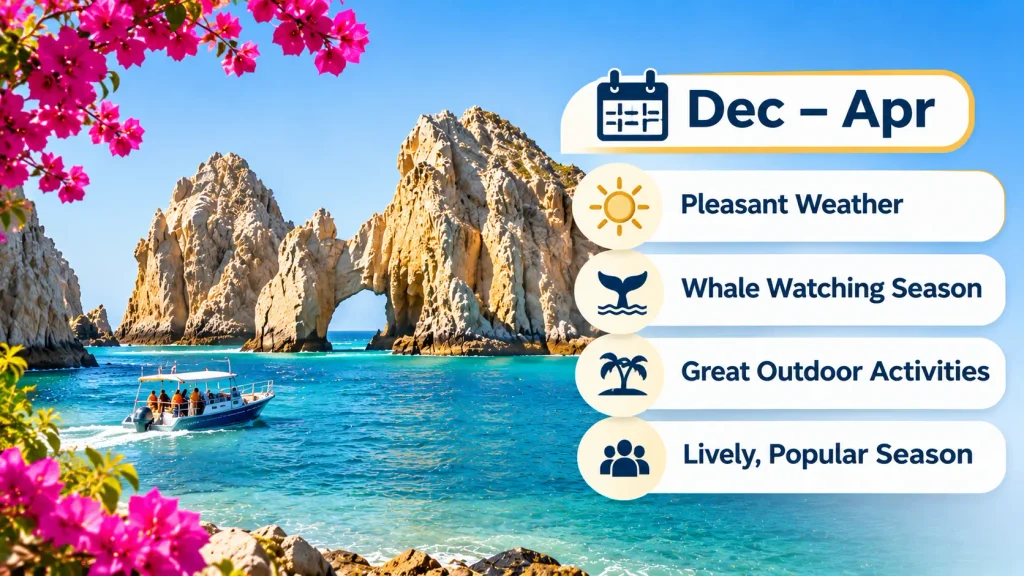
December through April is the most popular period for visiting Cabo San Lucas because of its comfortable weather, limited rainfall, and excellent opportunities for whale watching.
During these months, travelers can enjoy outdoor activities without the intense heat typically experienced in late summer.
Popular experiences include boat tours around El Arco, sightseeing, beach relaxation, sunset cruises, and marine wildlife excursions.
However, favorable conditions also attract larger crowds, particularly during Christmas, New Year’s, and spring break.
Is December a Good Month to Visit Cabo San Lucas?
December is an excellent month for travelers seeking pleasant temperatures, festive resort experiences, and the beginning of whale-watching season.
Early December may offer a balance of comfortable weather and manageable crowds.
As Christmas and New Year’s approach, beachfront resorts generally become more expensive, and accommodation availability may decrease.
Travelers planning a holiday vacation should consider booking their hotels and activities well in advance.
What Makes January and February Ideal for Cabo Vacations?
January and February are among the best months for travelers who prefer comfortable daytime temperatures and reliable whale-watching opportunities.
The weather is generally dry, with pleasant afternoons and cooler evenings.
Boat tours, hiking, outdoor dining, and coastal sightseeing are particularly enjoyable during this period.
However, ocean temperatures are cooler than in summer, and some visitors may prefer heated resort pools for swimming.
Is March or April Better for Visiting Cabo San Lucas?
April is generally better for travelers seeking warmer temperatures and potentially fewer crowds after the spring break rush.
March offers sunny weather and a lively atmosphere, but certain weeks attract large numbers of students and holiday travelers.
April may be more appealing for couples, families, and visitors interested in a quieter resort experience.
Whale sightings may still occur in early April, although activity generally decreases as the migration season ends.
When Is the Best Time for Whale Watching in Cabo San Lucas?
The best time for whale watching in Cabo San Lucas is generally from mid-December through March, with January and February offering especially strong opportunities for sightings.
During winter, humpback whales migrate into the warmer waters surrounding the Baja California Peninsula.
Gray whales also migrate along the Pacific coast, although their main calving lagoons are located farther north.
Which Whales Can Travelers See in Cabo San Lucas?
The region is best known for humpback whales and migrating gray whales.
Humpback whales are particularly popular with visitors because they may breach, slap their tails, or surface near whale-watching vessels.
Gray whales can sometimes be spotted along the Pacific side of the peninsula during their migration.
Sightings depend on natural behavior and weather conditions, so no tour can guarantee a particular encounter.
Find Out More Here: What Is the Best Time to Visit Spain for Weather and Crowds?
What Is the Best Month for Whale Watching?
January and February are generally the most reliable months for whale-watching excursions.
During these months, whale activity is well established, and weather conditions are often favorable for boat tours.
March can also offer excellent sightings, while activity usually declines through April.
Travelers should choose responsible operators that follow Mexico’s whale-watching regulations and maintain appropriate distances from marine animals.
When Is the Cheapest Time to Visit Cabo San Lucas?
The cheapest time to visit Cabo San Lucas is often during the late-summer and early-autumn low season, particularly August and September.
Hotels may offer lower rates as visitor demand decreases due to high temperatures, humidity, and increased tropical storm risk.
However, lower accommodation prices come with greater uncertainty about outdoor activities and weather-related travel disruptions.
Which Months Offer the Best Balance of Price and Weather?
May, early June, late October, and early November often provide an attractive balance between hotel prices and favorable weather.
These periods fall outside the busiest winter holiday season.
For example, travelers visiting in May may enjoy warm, sunny days with fewer crowds than those traveling during March.
Similarly, early November offers improving weather before Thanksgiving and the winter holiday rush.
How Can Travelers Save Money on a Cabo Vacation?
Travelers can reduce expenses by comparing travel dates across several weeks rather than booking fixed holiday periods.
Midweek flights, flexible accommodation dates, and early reservations may help identify better rates.
Comparing all-inclusive resorts with room-only hotels is also useful because dining, transportation, and activity costs can significantly affect the overall vacation budget.
The lowest advertised room rate is not always the cheapest option once taxes, resort fees, and other charges are included.
When Is Hurricane Season in Cabo San Lucas?
The Eastern Pacific hurricane season officially runs from May 15 through November 30, although the greatest tropical weather risk for Cabo San Lucas generally occurs in August and September.
Not every tropical storm reaches Cabo, and many days during hurricane season remain sunny.
However, storms can bring heavy rainfall, strong winds, rough seas, flight disruptions, and temporary closures of outdoor attractions.
Is September a Bad Month to Visit Cabo San Lucas?
September is usually the least favorable month for travelers seeking consistently dry weather.
It is often the rainiest period, with high humidity and an elevated risk of tropical storms.
On the positive side, accommodation prices may be lower and popular tourist areas less crowded.
Travelers visiting during September should maintain flexible plans and consider suitable travel insurance covering relevant weather-related disruptions.
Can Travelers Visit Cabo Safely During Hurricane Season?
Yes, travelers can visit Cabo San Lucas during hurricane season, but additional planning is important.
Visitors should monitor official weather forecasts, understand hotel cancellation policies, and avoid marine activities when conditions are unsafe.
A flexible itinerary can help reduce the inconvenience caused by unexpected weather changes.
Travelers should also remember that travel insurance policies have exclusions, and coverage may become unavailable for a storm after it becomes a known event.
When Is the Best Time to Visit Cabo San Lucas for Beaches?
The best time for beach vacations in Cabo San Lucas is generally April through June and October through November, depending on whether travelers prefer comfortable air temperatures or warmer ocean water.
Spring offers sunny conditions and increasingly warm days, while autumn brings ocean temperatures that remain warm after summer.
However, not every beach in Cabo San Lucas is suitable for swimming.
Strong currents, powerful shore breaks, and sudden changes in water depth can make certain beaches dangerous, even when the weather appears calm.
Which Beaches Are Best for Swimming in Cabo San Lucas?
Médano Beach: One of Cabo San Lucas’s most popular swimming beaches, known for its waterfront restaurants, beach activities, and relatively sheltered conditions.
Chileno Beach: A popular location for snorkeling and swimming, particularly when the water is calm and visibility is good.
Santa Maria Beach: A scenic, crescent-shaped bay offering opportunities for snorkeling and observing marine life in suitable conditions.
Even at these beaches, travelers should follow posted warning flags, local safety instructions, and current ocean conditions.
Discover More in This Blog: Caribbean Island Guide: Where Should Travelers Go?
When Should Travelers Visit Cabo San Lucas for Outdoor Activities?
The ideal time for outdoor activities depends on the type of experience.
Winter is generally best for sightseeing and whale watching, while late spring and autumn offer appealing conditions for snorkeling, boating, and beach activities.
| Activity | Recommended months | Why visit then? |
|---|---|---|
| Whale watching | December–March | Peak seasonal migration |
| Snorkeling | May–June, October–November | Warm conditions and opportunities for good visibility |
| Scuba diving | Late summer–autumn | Warmer water, subject to weather |
| Sportfishing | Summer–autumn | Seasonal opportunities for game fish |
| Hiking and sightseeing | November–April | More comfortable daytime temperatures |
| Sunset cruises | November–May | Generally pleasant weather |
| Beach vacations | April–June, October–November | Warm temperatures and fewer peak-season crowds |
Actual marine conditions can vary daily, so travelers should confirm weather and sea forecasts before booking water-based activities.
Is Cabo San Lucas Better in Summer or Winter?
Winter is generally better for comfortable weather, sightseeing, and whale watching, while summer may appeal to travelers seeking warmer ocean water and lower accommodation prices.
| Factor | Winter | Summer |
|---|---|---|
| Weather | Mild and dry | Hot and increasingly humid |
| Hotel prices | Generally higher | Often lower |
| Crowds | High during holidays | Generally lower, except some vacation periods |
| Ocean temperature | Cooler | Warmer |
| Whale watching | Excellent | Not the regular season |
| Tropical storm risk | Low | Higher, especially late summer |
| Best suited for | Families, sightseeing, marine wildlife | Budget-conscious travelers, warm-water activities |
For most first-time visitors, winter or late spring provides a more comfortable introduction to Cabo San Lucas.
However, travelers who enjoy hot weather and are comfortable with seasonal weather uncertainty may prefer summer.
When Is the Best Time to Visit Cabo San Lucas With Family?
November through April is generally the best period for family vacations because daytime temperatures are comfortable for sightseeing, resort activities, and outdoor excursions.
Families with younger children may particularly enjoy January and February, when the weather is mild and whale-watching tours are available.
May and early June can also be attractive because crowds are often lighter and resort prices may be more competitive.
Families planning beach activities should prioritize accommodation near suitable swimming beaches and confirm that their resort offers child-friendly facilities.
When Should Couples Visit Cabo San Lucas for a Romantic Vacation?
May, early June, and November are particularly appealing for couples seeking a romantic vacation with pleasant weather and fewer crowds.
These months can provide opportunities for sunset cruises, beachfront dining, spa experiences, and relaxing resort stays.
Couples planning a honeymoon may prefer May because it generally combines warm temperatures with relatively dry conditions.
November is another strong option for travelers who want comfortable weather before the busiest winter holiday period.
How Far in Advance Should Travelers Book a Cabo San Lucas Vacation?
Travelers visiting during December, January, February, or major holiday periods should consider booking several months ahead, particularly when seeking popular beachfront resorts.
Peak-season demand can limit room availability and increase prices.
For May, June, and early November trips, travelers may have more flexibility, although booking ahead remains useful for popular properties.
Comparing different arrival and departure dates can help travelers identify better flight and accommodation combinations.
What Should Travelers Pack for Cabo San Lucas?
Packing requirements vary by season, but lightweight clothing, sun protection, and comfortable footwear are useful throughout the year.
Travelers should consider bringing:
- Lightweight clothing and swimwear for warm afternoons.
- Reef-conscious sunscreen, sunglasses, and a sun hat.
- A light jacket for winter evenings and early-morning boat tours.
- Comfortable shoes for sightseeing and outdoor excursions.
- A reusable water bottle for hot-weather activities.
- Suitable rain protection when traveling during late summer or early autumn.
Travelers planning snorkeling, fishing, or boat excursions should also check whether equipment is included with their activity reservations.
Read More: Best Time to Visit Aruba
Conclusion
The best time to visit Cabo San Lucas depends on the type of vacation travelers want. November through May offers some of the most comfortable weather, while December through March is particularly rewarding for whale watching and outdoor sightseeing.
Travelers seeking affordable accommodation and fewer crowds may prefer May, early June, or early November. Summer and early autumn can offer lower prices and warmer ocean temperatures, but they also bring intense heat, humidity, and greater storm risk.
For most visitors, May and November provide an excellent balance of weather, value, and manageable crowds. Choosing travel dates around preferred activities, accommodation budgets, and seasonal conditions can help create a more enjoyable Cabo San Lucas vacation.
Frequently Asked Questions
November and May are excellent choices for travelers seeking pleasant weather and fewer crowds than during peak winter holidays. January and February are better for whale watching.
September is generally the rainiest month in Cabo San Lucas. It also falls within the period of elevated tropical storm risk.
Cabo San Lucas is generally most expensive during the winter holiday season, particularly Christmas and New Year’s. Spring break can also bring higher hotel prices.
Yes. December usually offers pleasantly warm daytime temperatures, although evenings can feel cooler. It is a popular month for sightseeing, resort vacations, and early-season whale watching.
Yes. May is one of the best months for warm weather, relatively low rainfall, and fewer tourists compared with peak winter periods.
Ocean temperatures are generally warmest from late summer through early autumn. However, this period also brings increased humidity and tropical storm risk.
March can be busy because of spring break travel. Popular beaches, nightlife areas, and resorts may experience increased demand.
Swimming is possible throughout the year at suitable beaches when conditions permit. However, many beaches have dangerous currents and shore breaks, so visitors must follow local safety guidance.
Four to five days are generally sufficient for a relaxing beach vacation with sightseeing and selected activities. Travelers interested in exploring the wider Los Cabos region may prefer six or seven days.