
Best Time to Visit Aruba: A Seasonal Travel Guide
The best time to visit Aruba is from December through April if your priority is dry, sunny weather, while May through August is better suited to travelers seeking a balance of favorable conditions and fewer peak-season crowds. September through November is Aruba’s off-season and can appeal to budget-conscious visitors, although temperatures are hotter and the chance of rain increases, particularly later in the year.
Unlike destinations where the season can make or break a vacation, Aruba remains warm throughout the year. Average monthly temperatures range from about 82°F (28°C) in January and February to 88°F (31°C) in August and September. The island receives only around 18 inches of rain annually, and its southern Caribbean location places it outside the main hurricane belt.
That means choosing when to go is less about finding a month when Aruba is “open for travel” and more about matching the season to your interests. Beach conditions, crowds, travel costs, festivals, wind, and rainfall can all influence which period works best for your vacation.
When Is the Best Time To Visit Aruba?
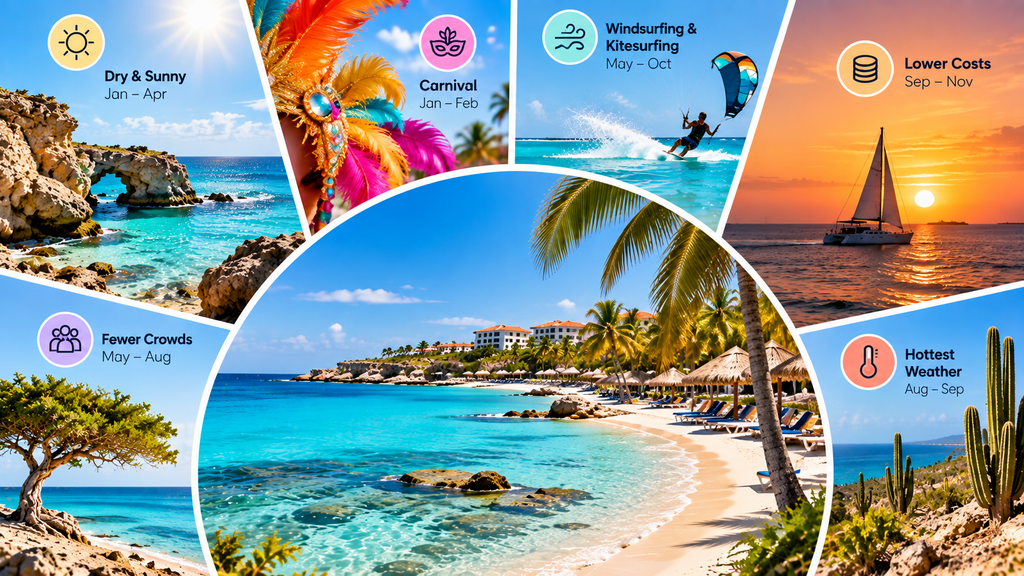
For many visitors, January through April provides the strongest combination of low rainfall, warm temperatures, and beach-friendly conditions. However, this period overlaps with Aruba’s peak tourist season, meaning accommodation and activities can be more expensive and popular areas busier.
Here’s a quick way to narrow down your dates:
| Your Travel Priority | Time To Consider |
| Dry, sunny weather | January–April |
| Fewer peak-season crowds | May–August |
| Lower-cost opportunities | September–November |
| Carnival celebrations | January–February |
| Windsurfing and kitesurfing | Windier May–October period |
| Hottest weather | August–September |
| Lower rainfall | February–May |
| Quieter off-season vacation | September–November |
There is no guarantee that airfare or hotels will be cheaper in a particular month. Prices depend on your travel dates, departure city, hotel demand, holidays, and how early you book.
What Is the Weather Like in Aruba?
Aruba has a warm, relatively dry climate with sunshine and trade winds throughout much of the year.
The temperature changes surprisingly little from season to season. According to Aruba’s official tourism climate data, average monthly temperatures currently range between 82°F and 88°F.
Rainfall is also limited compared with many tropical destinations. Aruba receives approximately 18 inches of rain annually, with October through December identified as the rainier season. Even during these months, rainfall often comes as intermittent showers rather than continuous all-day rain.
Aruba Average Temperature and Rainfall by Month
| Month | Average Temperature | Average Rainfall |
| January | 82°F | 1.0 in. |
| February | 82°F | 0.8 in. |
| March | 83°F | 0.6 in. |
| April | 84°F | 0.4 in. |
| May | 85°F | 0.6 in. |
| June | 86°F | 0.8 in. |
| July | 87°F | 1.0 in. |
| August | 88°F | 1.2 in. |
| September | 88°F | 1.2 in. |
| October | 87°F | 1.3 in. |
| November | 85°F | 1.2 in. |
| December | 83°F | 1.0 in. |
Visiting Aruba During Peak Season: December to April
December through April is Aruba’s peak season and the most popular period for travelers seeking an escape from colder winter climates.
The appeal is easy to understand. Conditions are generally warm and sunny, and January through April falls within the island’s driest period. Average temperatures sit around 82°F in January and February, 83°F in March, and 84°F in April.
Beach days, sightseeing, snorkeling, sailing, and outdoor dining are all easy to build into an itinerary.
Demand is the main drawback.
Hotels, restaurants, tours, rental cars, and popular activities can be busier. Aruba’s tourism authority recommends making reservations ahead of time during peak season and notes that accommodation and activity prices tend to be higher.
Peak season works particularly well for travelers who:
- Put dry weather high on their priority list
- Want to escape a cold winter
- Plan a beach-centered vacation
- Prefer slightly cooler temperatures
- Want to experience Carnival season
- Do not mind paying peak-period prices
Visiting Aruba During Shoulder Season: May to August
May through August is Aruba’s shoulder season and can offer an appealing middle ground between peak-season demand and the rainier months later in the year. Aruba’s official tourism guidance describes May through August as shoulder season.
Temperatures gradually rise from approximately 85°F in May to 88°F in August.
The island also becomes windier during this portion of the calendar. Aruba’s climate information identifies May through October as its windy season, with trade winds helping offset some of the tropical heat.
This makes the period especially interesting for visitors who want to combine a conventional beach vacation with windsurfing or kitesurfing.
May and June may be especially worth comparing if you want to travel after the winter peak but before the hotter late-summer months.
Visiting Aruba During Off-Season: September to November
September through November is Aruba’s official off-season and is worth considering if smaller crowds and potential savings matter more than securing the driest possible weather.
September is one of the hottest months, averaging around 88°F. October averages approximately 87°F and November about 85°F.
Rain becomes a more significant consideration as fall progresses. October, November, and December form Aruba’s rainier period, although showers tend to be intermittent.
The upside is demand. Aruba’s tourism authority notes that off-season travelers may encounter lower rates for accommodation, flights, rental cars, and activities. Actual savings vary by travel date and availability.
For travelers who spend more time relaxing at their resort, dining, shopping, or enjoying flexible sightseeing rather than following a rigid outdoor itinerary, occasional showers may be an acceptable trade-off for a quieter vacation.
Best Time To Visit Aruba by Interest

Weather is only one part of deciding when to travel. Your preferred activities can make a different period of the year more suitable.
Best Time for Beaches: January to April
If your Aruba vacation revolves around long beach days, January through April is difficult to overlook.
These months combine some of the island’s lowest rainfall levels with temperatures around 82°F to 84°F.
That is useful whether you plan to spend the day swimming at Eagle Beach, relaxing around Palm Beach, taking a boat trip, or simply moving between your resort and the shoreline.
The compromise is higher demand because these months fall within peak season.
Best Time for Lower Prices: September to November
Travelers trying to keep costs under control should investigate September through November first.
This is Aruba’s official off-season, and the tourism authority specifically notes opportunities for lower rates on accommodation and other travel services.
However, “off-season” does not mean every hotel room or flight will automatically be inexpensive.
For example, a major event, weekend stay, limited flight availability, or premium beachfront hotel can still command a high price. Compare several sets of dates before booking.
Best Time To Avoid Large Crowds: September to November
The same off-season window is useful for travelers who prefer a quieter atmosphere.
Resort districts, beaches, restaurants, and attractions may feel less crowded than they do during the winter peak.
The trade-off is warmer weather and a greater possibility of rain in October and November.
Best Time for Windsurfing and Kitesurfing: May to October
Aruba’s strong trade winds have helped establish the island as a destination for windsurfing and kitesurfing.
The official climate guide identifies May through October as Aruba’s windy season, making this period particularly relevant to travelers interested in wind-powered watersports.
Beginners should still consider local instruction and conditions on the specific day rather than assuming that stronger wind automatically means better conditions for every skill level.
Best Time for Carnival: January and February
Travelers interested in music, parades, colorful costumes, and Aruban culture should consider visiting during January or February.
Aruba’s Carnival season officially begins earlier, but the tourism authority identifies January and February as the months containing most major Carnival events, celebrations, and parades.
The biggest event is the Grand Carnival Parade in Oranjestad, which takes place on the Sunday before Ash Wednesday. Because Ash Wednesday changes each year, travelers should check the official calendar before choosing flights.
What Is the Best Month To Visit Aruba?
There isn’t one best month for everyone, but April deserves particular consideration for travelers trying to combine dry weather with the transition away from the heart of winter travel.
April averages approximately 84°F and just 0.4 inches of rainfall according to Aruba’s current climate table. It is also the final month of the island’s traditional peak season.
Other months make more sense for different priorities:
February offers some of the year’s lowest rainfall and Carnival festivities.
May brings warmer temperatures and the beginning of the windier season.
September suits travelers comfortable with hotter weather who want to enter the off-season.
November can work for a quieter vacation if occasional rain is not a major concern.
Instead of choosing solely by month, compare weather, hotel rates, airfare, and events together.
Is Hurricane Season a Concern in Aruba?
Aruba’s hurricane season runs from June 1 through November 30, but the island sits outside the main Caribbean hurricane belt and direct hurricane impacts are rare.
Aruba’s official tourism authority reported in June 2026 that the island has not received a direct hurricane hit since Atlantic hurricane records began in 1851. However, nearby tropical systems can still have indirect effects, including heavier showers, rough seas, strong winds, and coastal impacts.
Therefore, travelers should not interpret Aruba’s position outside the main hurricane belt as a guarantee against weather disruptions.
For June-to-November trips, check forecasts as your departure approaches and consider whether travel insurance makes sense for your itinerary and prepaid expenses.
Aruba Month-by-Month: When Should You Go?
January: Dry Weather and Carnival Energy
January averages about 82°F and receives relatively little rainfall. It also falls within peak season and the main Carnival period.
Good for: Winter escapes, beaches, Carnival events
Keep in mind: Peak-season demand
February: One of the Driest Months
February averages approximately 82°F and 0.8 inches of rain. Carnival celebrations are another major reason to visit.
Good for: Beaches, outdoor activities, Carnival
Keep in mind: Popular travel period
March: Sunny Outdoor Weather
March warms slightly to around 83°F while average rainfall drops to about 0.6 inches.
Good for: Beach vacations, sightseeing, outdoor activities
Keep in mind: Still peak season
April: Low Rainfall Before Shoulder Season
April has the lowest rainfall figure on Aruba’s current monthly tourism climate table at approximately 0.4 inches, with an average temperature around 84°F.
Good for: Dry weather and beach trips
Keep in mind: Peak season officially continues through April
May: Warmer and Windier
May averages about 85°F and marks the start of Aruba’s windy season.
Good for: Watersports and post-peak travel
Keep in mind: Hotter afternoons
June: Hot, Breezy Conditions
June reaches an average of approximately 86°F while rainfall remains comparatively limited.
Good for: Summer trips and watersports
Keep in mind: Atlantic hurricane season has begun
July: Warm Summer Vacation
July averages approximately 87°F. Persistent trade winds can make the heat more manageable, although sun protection and hydration remain important.
Good for: Beach trips and watersports
Keep in mind: Summer holiday demand can affect individual resorts and flights
August: One of the Hottest Months
August averages about 88°F and is part of the windier season.
Good for: Travelers who enjoy hot tropical weather
Keep in mind: Midday outdoor activities can feel intense
September: Beginning of Off-Season
September averages around 88°F and marks the beginning of Aruba’s off-season.
Good for: Fewer crowds and potential savings
Keep in mind: Hot conditions
October: Rainier but Quieter
October averages about 87°F and is part of Aruba’s rainier season.
Good for: Quieter vacations and flexible travelers
Keep in mind: Increased possibility of showers
November: Off-Season Continues
November averages approximately 85°F and remains within both the off-season and rainier period.
Good for: Lower-demand travel
Keep in mind: Occasional rain
December: Peak Season Returns
December cools to an average of around 83°F, while peak-season demand returns. It also remains within Aruba’s October-to-December rainier period.
Good for: Winter holidays and warm-weather escapes
Keep in mind: Higher demand around the holidays
What Should You Consider Before Choosing Your Travel Dates?

Weather vs. Price
The months with the most appealing weather can also attract the strongest demand.
If consistently dry conditions matter more than price, peak season may suit you. If your dates are flexible, compare May through August and September through November against winter prices before deciding.
Heat Tolerance
The difference between 82°F and 88°F may not appear dramatic on paper, but direct tropical sunshine can make hotter months feel considerably warmer.
Travelers planning hiking or long sightseeing days may find the cooler winter months easier.
Planned Activities
Your itinerary matters.
A traveler planning five days of beach relaxation has different weather priorities from someone hoping to windsurf, hike through Aruba’s landscapes, attend Carnival, or spend most of the trip sightseeing.
Choose your dates around the activity that would be hardest to compromise on.
Events
Major events can add considerable character to a trip but may also affect demand.
Carnival, for example, makes January and February particularly exciting for cultural travelers. Exact event dates vary annually, so confirm the current calendar before purchasing nonrefundable tickets.
Final Takeaway
The right time to visit Aruba depends on what you want from the trip. January through April is particularly attractive for dry beach weather, May through August offers a useful balance outside the main winter peak, and September through November can work well for travelers prioritizing smaller crowds and potential savings.
Aruba’s consistently warm temperatures, limited annual rainfall, and location outside the main hurricane belt make it more flexible than many destinations with sharply defined travel seasons.
Before booking, compare actual flight and hotel prices for your dates, check the current event calendar, and decide whether weather, crowds, cost, or activities matter most to you. That combination—not one universally “perfect” month—should determine the timing of your Aruba vacation.
Frequently Asked Questions
There is no guaranteed cheapest month because airfare and hotel prices fluctuate. However, September through November is Aruba’s official off-season, making these months a sensible starting point when searching for lower rates.
Aruba’s tourism authority identifies October through December as the rainy season. The island receives only around 18 inches of rainfall annually, and showers during the wetter months are often intermittent.
August and September are the hottest months on Aruba’s current official climate table, each averaging approximately 88°F (31°C).
January and February have the lowest average temperatures on Aruba’s tourism climate table at approximately 82°F (28°C).
April has the lowest average monthly rainfall in Aruba’s current official tourism climate table, at approximately 0.4 inches.
December marks the beginning of Aruba’s December-to-April peak season. Demand can therefore be higher, particularly around Christmas and New Year.
Not necessarily. October falls within Aruba’s off-season and can appeal to travelers seeking smaller crowds. However, it also marks the beginning of the island’s rainier October-to-December period.
Aruba is a year-round beach destination with warm conditions throughout the calendar. Daily sea and weather conditions can still vary, so follow local warnings and beach safety advice.
A stay of about 5 to 7 days gives many visitors enough time to combine beach days with sightseeing, watersports, dining, and other activities without rushing. The ideal trip length ultimately depends on your itinerary and travel style.