
Caribbean Island Guide: Where Should Travelers Go?
The Caribbean is not one single type of holiday destination: Antigua suits beach and sailing trips, Barbados combines beaches with food and culture, Saint Lucia is ideal for mountains and adventure, Grenada appeals to travelers seeking nature and local character, while Saint Kitts and Nevis and St Vincent and the Grenadines offer history, hiking and a quieter island experience. The wider region also includes destinations such as Jamaica, The Bahamas and Aruba, each with a distinctly different travel style.
With hundreds of islands, cays and islets spread across the Caribbean Sea and surrounding Atlantic waters, choosing where to go can be surprisingly difficult. Two islands may share warm weather and beautiful beaches but offer very different landscapes, nightlife, food, transport, and activities.
This guide breaks down the major island choices by beaches, culture, outdoor activities, food, sailing, atmosphere, and practical travel considerations, helping travelers narrow down the Caribbean destination that fits their trip.
Caribbean Islands at a Glance
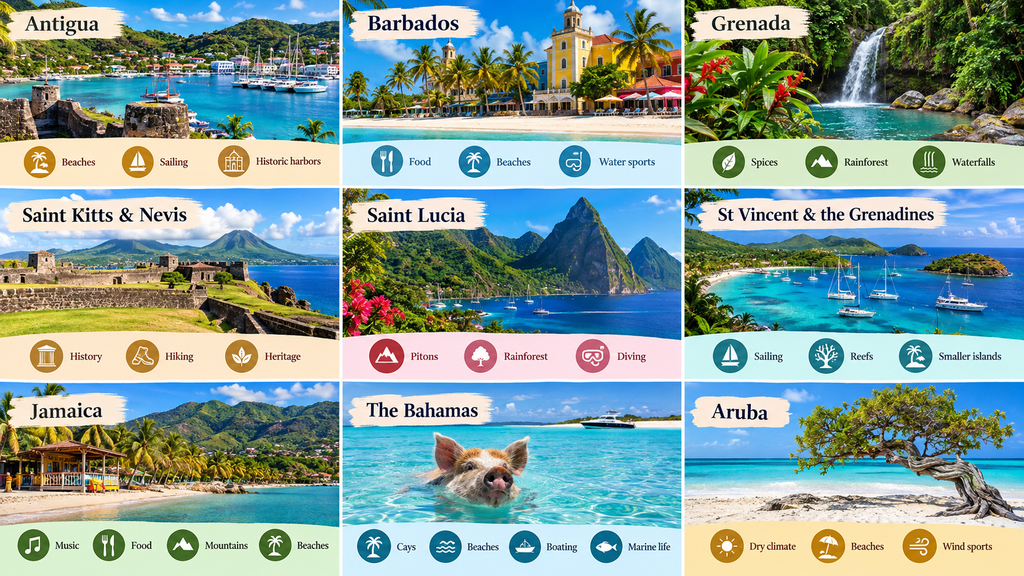
| Island or island group | Best known for | Ideal for |
| Antigua | Beaches, sailing, historic harbors | Beach holidays, sailing, couples |
| Barbados | Food, beaches, water sports, heritage | First-time visitors, food lovers |
| Grenada | Spices, rainforest, waterfalls | Nature, independent travel |
| Saint Kitts & Nevis | History, hiking, heritage | Culture, walking, relaxed trips |
| Saint Lucia | Pitons, rainforest, diving | Adventure, scenery, romance |
| St Vincent & Grenadines | Sailing, reefs, smaller islands | Yachting, snorkeling, seclusion |
| Jamaica | Music, food, mountains, beaches | Culture, adventure, families |
| The Bahamas | Cays, beaches, boating, marine life | Water activities, island-hopping |
| Aruba | Dry climate, beaches, wind sports | Reliable sunshine, beach trips |
How to Choose the Right Caribbean Island
The easiest way to choose is to decide what matters most during the trip. A traveler looking for a resort and easy beach days may have very different priorities from someone hoping to hike volcanic terrain or spend a week sailing between small islands.
Consider these factors before booking:
- Beaches: Some islands have long stretches of pale sand, while others have rugged Atlantic coastlines or volcanic beaches.
- Activities: Diving, snorkeling, hiking, sailing, surfing and rainforest excursions vary considerably.
- Culture: Jamaica, Barbados, Grenada and Saint Kitts and Nevis offer particularly strong opportunities to combine sightseeing with local history and cuisine.
- Nightlife: Larger tourism centers generally offer more restaurants, bars, entertainment and organized activities.
- Seclusion: Smaller islands and outer cays can provide a quieter experience but may require additional flights, ferries or boat transfers.
- Weather: Caribbean weather is broadly warm year-round, but rainfall, trade winds and tropical-storm exposure vary between destinations.
- Getting around: Some islands are compact enough for straightforward road trips, while multi-island destinations can involve ferries or regional flights.
The Caribbean Tourism Organization maintains a broad destination network covering the region’s different countries and tourism markets, illustrating just how diverse the Caribbean is as a travel region.
Why Visit Antigua?
Antigua is particularly well suited to travelers who want beaches, sailing and a mix of resort comfort and maritime history.
The island is famous for its extensive coastline and wide choice of beaches, from developed stretches close to visitor facilities to quieter coves. Its southern coast around English Harbour has a strong sailing identity, while historic sites add something beyond the beach.
Nelson’s Dockyard is a major attraction in the English Harbour area and provides a window into Antigua’s naval past. The harbor is also closely associated with the island’s modern sailing culture.
Shirley Heights offers views across English Harbour and is associated with social events, music and local food. For travelers who want to spend time on the water, Antigua is also a useful base for sailing excursions, snorkeling trips and boat tours.
Who should choose Antigua?
Antigua works particularly well for:
- Beach-focused vacations
- Sailing and boating
- Couples and honeymoon trips
- Travelers interested in maritime history
- Visitors who want a mixture of relaxation and evening entertainment
The island’s location and regional connections can also make it useful for travelers planning a multi-island itinerary.
Why Visit Barbados?
Barbados is one of the Caribbean’s more versatile choices, combining beaches with dining, heritage, shopping and water sports.
Its coastline changes noticeably from one side of the island to another. The west coast is known for calmer waters and beach-oriented tourism, while the Atlantic-facing east coast is more rugged and exposed. Barbados Tourism highlights surfing, paddleboarding, kayaking, sailing, snorkeling and other water activities across the island.
Food is another major reason to visit. Travelers can move between polished restaurants, casual beach establishments and traditional local food experiences. Oistins is especially known for its lively fish-fry tradition.
Barbados also offers more than beaches. Historic buildings, gardens and plantation-era sites provide opportunities to explore the island’s heritage, while Bridgetown and its surrounding areas offer shopping and urban experiences.
Who should choose Barbados?
Barbados is a strong fit for travelers who want:
- A first Caribbean trip with varied activities
- Food and restaurant experiences
- Beaches and water sports
- History and architecture
- A combination of resort areas and local communities
Why Visit Grenada?
Grenada combines beaches with rainforest, waterfalls, spice production and a more nature-oriented island experience.
Often associated with nutmeg and other spices, Grenada has a landscape that extends well beyond its coastline. Inland areas contain forested terrain, plantations, waterfalls and hiking opportunities.
The capital, St. George’s, adds a distinctly different experience. Its colorful architecture, waterfront setting and historic character make it worthwhile for travelers who want sightseeing alongside outdoor activities.
Grand Anse is one of the island’s best-known beaches, but Grenada’s appeal lies partly in the ability to combine a beach stay with excursions into the interior.
What can travelers do in Grenada?
Popular experiences include:
- Exploring spice and cocoa-growing areas
- Hiking through rainforest
- Visiting waterfalls
- Snorkeling and diving
- Exploring St. George’s
- Spending time on Grand Anse Beach
Grenada is particularly attractive to travelers who prefer an itinerary with both coastal relaxation and inland exploration.
Why Visit Saint Kitts and Nevis?
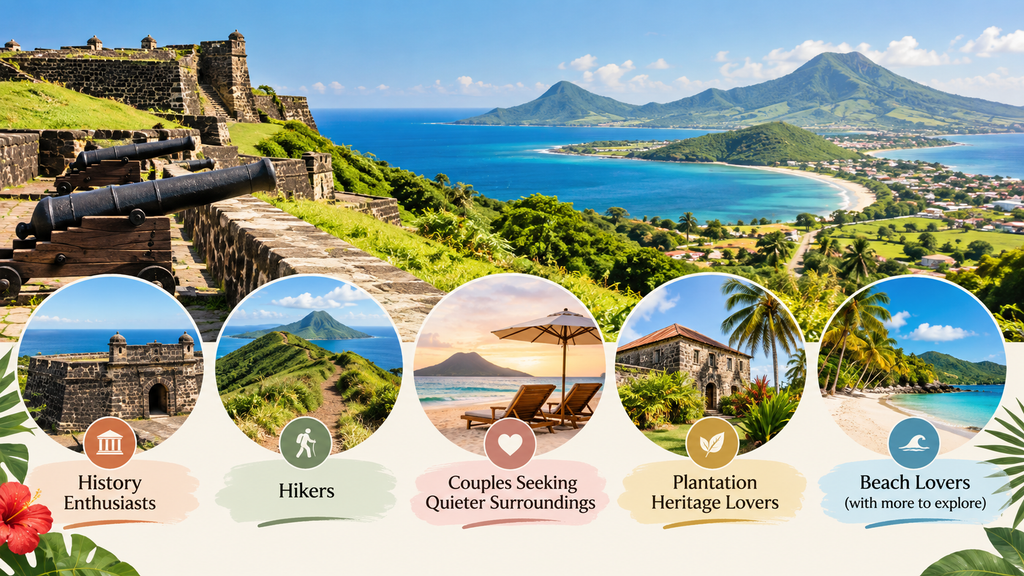
Saint Kitts and Nevis suits travelers interested in Caribbean history, hiking, heritage architecture and a slower pace.
The two-island nation has a long colonial and plantation history, much of which remains visible in historic sites and former estates. Saint Kitts is home to Brimstone Hill Fortress National Park, a UNESCO World Heritage Site and one of the region’s notable historic fortifications.
The islands also offer varied landscapes. Saint Kitts has beaches and volcanic terrain, while Nevis is known for Nevis Peak, hiking trails and a quieter atmosphere.
Travelers can combine the two islands rather than treating them as completely separate destinations. A ferry connection between Saint Kitts and Nevis makes island-pair itineraries practical, but always check schedules for your travel date.
Who should visit Saint Kitts and Nevis?
It is particularly suitable for:
- History enthusiasts
- Hikers
- Couples seeking quieter surroundings
- Travelers interested in plantation heritage
- Visitors who want beaches without making the coastline the entire focus
Why Visit Saint Lucia?
Saint Lucia is one of the Caribbean’s strongest choices for dramatic scenery, hiking, rainforest and outdoor adventure.
The island’s defining landscape is the pair of volcanic Pitons rising above the southwestern coast. The Pitons and surrounding area form part of a UNESCO World Heritage Site, while the wider island offers forest trails, beaches, viewpoints and marine activities.
The northern part of Saint Lucia, including Rodney Bay, has a more developed tourism scene, while the south around Soufrière is associated with the Pitons and volcanic landscapes.
The island’s cultural identity also reflects its complex French and British colonial history alongside African influences. This is visible in its food, architecture and traditions.
Best activities in Saint Lucia
Travelers can consider:
- Hiking around the Pitons and Soufrière
- Exploring rainforest trails
- Diving and snorkeling
- Visiting volcanic and geothermal attractions
- Sailing along the coast
- Relaxing on northern and southern beaches
Saint Lucia is especially appealing when you want more variety than a conventional beach resort can provide.
Why Visit St Vincent and the Grenadines?
St Vincent and the Grenadines is a particularly good option for travelers who want sailing, snorkeling, small islands, and a less developed atmosphere.
The country includes St Vincent and a chain of smaller islands and cays. Bequia is one of the better-known islands for visitors, while the Tobago Cays are famous for clear water, reefs, and marine life.
The Tobago Cays Marine Park is made up of several small uninhabited islands protected by reefs, making the area especially attractive for boating and snorkeling.
Travelers can base themselves on one island and take boat trips, or build an itinerary around several islands. Ferries and regional flights are key parts of planning, so pay attention to connection times when arranging accommodation.
Who should choose St Vincent and the Grenadines?
This destination is well suited to:
- Sailors and yacht travelers
- Snorkelers and divers
- Travelers seeking smaller islands
- Visitors who prefer quieter communities
- Multi-island trips
It is less about ticking off major attractions and more about time spent on the water, exploring beaches and enjoying individual island communities.
Jamaica: Best for Culture, Food and Adventure
Jamaica offers one of the broadest mixes of Caribbean experiences, from beaches and music to mountains, waterfalls, food and history.
Unlike a destination designed primarily around resort life, Jamaica offers substantial inland and urban experiences. Kingston is a major cultural center, while areas such as Montego Bay and Negril are strongly associated with beach tourism.
Jamaica’s official tourism organization highlights its music, food, history, beaches, nature and adventure experiences.
Reggae is central to the country’s cultural identity, and visitors can explore music history alongside museums, historic sites and local food. The island’s mountainous interior also provides opportunities for hiking, waterfalls, rafting and other outdoor activities.
Jamaica is a good choice for:
- Music and cultural experiences
- Jamaican cuisine
- Families seeking varied activities
- Beach vacations
- Adventure trips
- Travelers who want more than a resort
For travelers who want a Caribbean holiday with substantial cultural and geographical variety, Jamaica deserves consideration alongside the smaller islands.
The Bahamas: Best for Cays, Boating and Marine Experiences
The Bahamas is best understood as an archipelago rather than a single-island destination.
Nassau and Paradise Island are the best-known gateways, but the country contains many islands and cays with very different atmospheres. The Exumas are known for clear water, beaches, boating and attractions such as Big Major Cay, while Eleuthera and Harbour Island offer a different combination of beaches, settlements and scenery.
The Exumas are particularly popular for boat excursions, snorkeling and marine encounters. Official tourism information highlights Big Major Cay and Thunderball Grotto among its attractions.
Choose The Bahamas for:
- Boating and island-hopping
- Snorkeling
- Clear shallow waters
- Beach-focused vacations
- Short trips from major North American gateways
- Exploring multiple islands rather than staying in one resort area
The main practical question is which Bahamian island or cay fits the itinerary. Nassau, Exuma, Eleuthera, and other destinations can provide substantially different experiences.
Aruba: A Different Caribbean Weather Choice
Aruba stands out for its relatively dry climate, steady trade winds and location outside the main Atlantic hurricane belt.
The island lies south of the main hurricane belt and generally experiences a drier climate than many other Caribbean destinations. Visit Aruba describes year-round temperatures around 82°F (28°C) and notes that rainfall is generally limited, although showers can occur.
Its beaches, water sports, restaurants and resort areas make it an easy choice for travelers prioritizing sunshine and a straightforward beach vacation. The trade winds also contribute to conditions that appeal to wind- and watersports enthusiasts.
Aruba is therefore worth considering when weather reliability is a major factor in choosing a Caribbean destination.
Which Caribbean Island Is Best for Beaches?
There is no single answer because “best beach” depends on the type of coastline a traveler wants.
| Beach preference | Islands to consider |
| Calm swimming beaches | Barbados, Antigua, Aruba |
| Long resort beaches | Jamaica, Barbados |
| Quiet coves | Antigua, Grenada, St Vincent and the Grenadines |
| Dramatic scenery | Saint Lucia |
| Remote beaches and cays | The Bahamas, St Vincent and the Grenadines |
| Surfing and stronger Atlantic waves | Barbados |
| Beaches combined with nightlife | Jamaica, Barbados, Aruba |
Barbados, for example, has markedly different coastlines. Its west and south coasts tend to be more suitable for swimming and traditional beach activities, while the east coast is more exposed to Atlantic conditions and is better known for dramatic scenery and surfing.
Which Caribbean Islands Are Best for Couples?
Couples have several options depending on the type of trip they want.
Saint Lucia works well for couples who want dramatic scenery, private-feeling accommodations, hiking, and sailing. Antigua combines beaches with sailing and historic harbor areas. Barbados suits couples who want dining, beaches, and activities without spending the entire trip at a resort.
For a quieter island-hopping experience, St Vincent and the Grenadines can provide access to smaller islands and secluded beaches.
Rather than choosing solely on the word “romantic,” couples should compare accommodation location, transfer times, dining options, and the activities available outside the resort.
When Is the Best Time to Visit the Caribbean?
The best travel period depends on the island, budget, and tolerance for rain or tropical-storm disruption.
The Atlantic hurricane season officially runs from June 1 through November 30, with the climatological peak generally occurring around September and the broader period of greatest activity concentrated from August through October.
That does not mean every island experiences poor weather throughout these months. Conditions vary by location, and some destinations, such as Aruba, sit outside the main hurricane belt.
Travelers planning a Caribbean trip during hurricane season should:
- Check the destination’s current weather forecast before departure.
- Review airlines and accommodation change policies.
- Consider travel insurance with appropriate weather-related coverage.
- Allow flexibility for regional flights and ferries.
- Monitor official hurricane advisories when tropical systems develop.
NOAA’s seasonal outlook is useful for understanding regional activity, but seasonal forecasts are not predictions of whether a specific island will experience a storm.
Is the Caribbean Good for Island-Hopping?
Yes, but island-hopping requires more planning than staying on one island.
The most practical combinations are generally destinations with established regional air or ferry links. Antigua can work as a starting point for nearby islands, while Barbados is an important regional aviation gateway. St Vincent and the Grenadines also lends itself naturally to multi-island trips because ferries and local flights connect several destinations.
A useful itinerary might combine:
- Antigua + Nevis for beaches, sailing and a quieter second island
- Barbados + Saint Lucia for food and beaches followed by mountains and outdoor activities
- Grenada + Saint Vincent for nature, snorkeling and smaller-island experiences
- Saint Kitts + Nevis for a two-island itinerary without changing countries
Travelers should leave connection buffers when mixing flights and ferries. A late regional flight can affect a separate boat transfer, particularly during periods of poor weather.
What About Food and Local Culture?
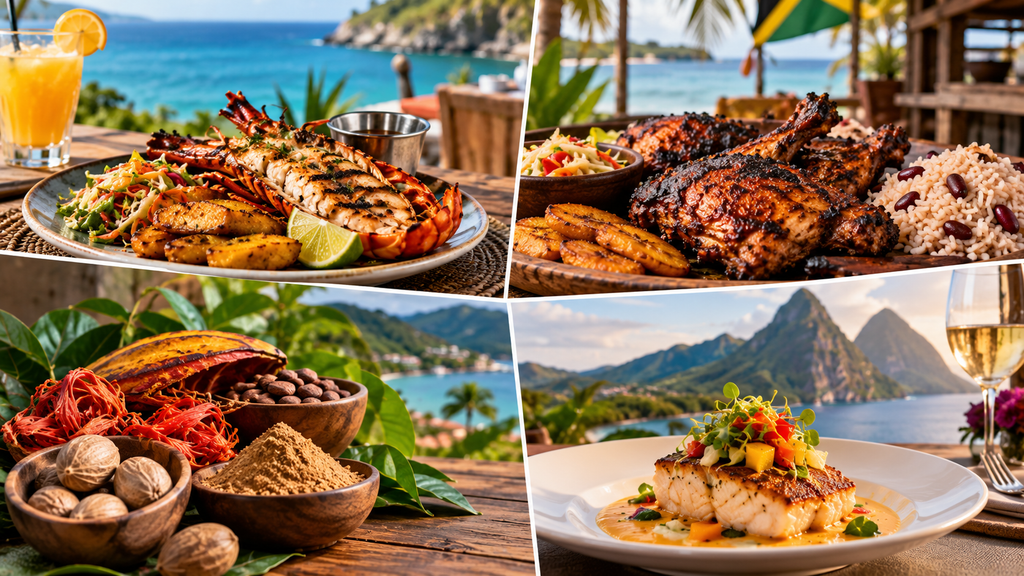
Food can be one of the clearest ways to distinguish Caribbean islands.
Barbados has a strong food culture, with seafood and traditional dishes alongside international restaurants. Jamaica is famous for jerk cooking, patties and a broader culinary tradition shaped by multiple cultural influences. Grenada has a strong association with spices such as nutmeg and cocoa.
Saint Lucia’s cultural identity reflects French, British, and African influences, while music and community traditions are central to the experience across many Caribbean destinations.
Travelers should look beyond resort restaurants when practical. A local market, food stall, fish fry, or neighborhood restaurant can provide a very different perspective from an all-inclusive dining room.
Caribbean Travel Planning Checklist
Before booking an island, travelers should check:
- Airport options — Confirm which airport serves the chosen area and whether a connecting flight is required.
- Transfer time — A hotel that looks close on a map may require a lengthy road or boat transfer.
- Seasonal weather — Check rainfall patterns and hurricane-season considerations.
- Activities — Confirm whether diving, hiking, sailing or other preferred activities operate during the intended dates.
- Accommodation location — Resorts on opposite sides of an island can offer very different beach and weather conditions.
- Transport — Decide whether renting a car, using taxis, ferries or organized excursions makes the most sense.
- Entry requirements — Passport, visa and health requirements depend on nationality and destination and should be verified through official sources before departure.
- Travel insurance — Consider coverage for medical emergencies, cancellations and weather-related disruption.
Conclusion
The right Caribbean destination depends less on finding a universally “best” island and more on matching the island to the trip. Antigua emphasizes beaches and sailing; Barbados combines food, heritage and water sports; Grenada adds rainforest and spice culture; Saint Lucia brings dramatic volcanic scenery; Saint Kitts and Nevis emphasizes history and hiking; St Vincent and the Grenadines suits sailing and quieter island exploration; Jamaica offers broad cultural and adventure options; The Bahamas excels at cays and marine activities; and Aruba stands out for its dry climate.
Before booking, travelers should compare the specific island, accommodation area, airport connections, seasonal weather, and activities available during their dates. That extra research can make the difference between choosing a destination that simply looks good on a map and choosing one that genuinely fits the way the trip will be spent.
Frequently Asked Questions
There is no universal choice. Barbados offers a broad mix of beaches, dining, culture and activities, while Jamaica provides extensive options for beaches, music, food, nature and adventure. Antigua is particularly appealing for travelers prioritizing beaches and sailing.
Saint Lucia, Grenada, Saint Kitts and Nevis, and St Vincent offer strong options for travelers who want hiking and landscapes beyond the beach. Saint Lucia is especially known for its mountainous Pitons and rainforest terrain.
Antigua and St Vincent and the Grenadines are particularly associated with sailing. The latter is especially attractive for multi-island cruising around smaller islands and cays.
Costs vary considerably by island, accommodation type, season and travel style. Resort-heavy destinations can be expensive, while travelers who use guesthouses, local restaurants and public transportation may be able to reduce costs. Regional flights and inter-island transfers can also add significantly to a multi-island itinerary.
Yes. Aruba is a Caribbean island located south of the main hurricane belt, close to the northern coast of Venezuela. It is one of the islands commonly considered part of the southern Caribbean.
Yes. Island-hopping is possible through regional flights, ferries and boat services, although the practical combinations depend on schedules and the islands selected. Travelers should check current connections before booking non-refundable accommodations.