
What Is the Best Time to Visit Spain for Weather and Crowds?
The best time to visit Spain is generally April to June or September to October, when many destinations offer pleasant sightseeing weather, manageable crowds, and better opportunities to explore cities and coastal regions without the intense summer heat. However, the ideal travel period depends on whether visitors prioritize beaches, cultural attractions, festivals, outdoor adventures, or affordable accommodation.
Spain doesn’t have one predictable climate. Madrid has hot summers and cooler winters, Barcelona benefits from its Mediterranean setting, Andalusia can get exceptionally hot, and the Canary Islands stay comparatively mild for much of the year.
A traveler planning a walking tour of Seville may prefer spring, while someone hoping to swim along the Costa del Sol may choose summer or early autumn. Similarly, winter can be appealing for mountain skiing or enjoying the Canary Islands.
This guide examines Spain’s seasons, regional weather differences, popular cities, coastal destinations, crowds, travel costs, and the best months for different vacation styles.
Your Next Informative Read Starts Here: When Is the Best Time to Travel to Bali for Sunshine and Lower Crowds?
What Is the Best Time of Year to Visit Spain?
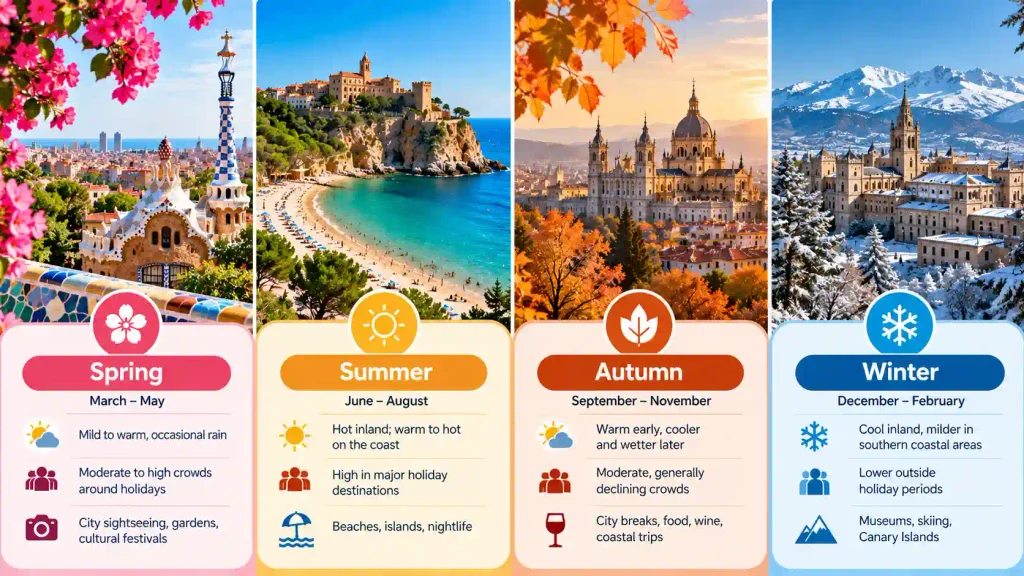
Spring and autumn are generally the best seasons to visit Spain for comfortable sightseeing, while summer suits traditional beach vacations and winter offers quieter city breaks and mountain activities.
Spain’s geography creates considerable regional differences, so the best season for Madrid may not be the best for Mallorca or Tenerife.
| Season | Months | Typical weather | Crowd levels | Best for |
| Spring | March–May | Mild to warm, with occasional rain | Moderate to high around holidays | City sightseeing, gardens, cultural festivals |
| Summer | June–August | Hot inland; warm to hot on the coast | High in major holiday destinations | Beaches, islands, nightlife |
| Autumn | September–November | Warm early, cooler and wetter later | Moderate, generally declining | City breaks, food, wine, coastal trips |
| Winter | December–February | Cool inland, milder in southern coastal areas | Lower outside holiday periods | Museums, skiing, Canary Islands |
These are broad seasonal patterns, not guaranteed conditions. Weather, crowds, and prices vary significantly by destination and travel dates.
Which Months Offer the Best Balance of Weather and Crowds?
May, June, September, and early October often offer an appealing balance of weather and sightseeing conditions across much of Spain.
May is particularly suitable for exploring cities before the peak summer heat. June offers longer daylight hours and improving beach conditions, though crowds begin to increase.
September is another strong option because temperatures gradually become more comfortable in many destinations while the Mediterranean Sea remains relatively warm after summer.
October can be excellent for cultural trips, especially in southern Spain, but travelers should expect shorter days and a higher chance of rain in some regions.
How Does Spain Weather Change Throughout the Year?
Spain’s weather varies by altitude, distance from the sea, and regional climate, so consider the destination rather than relying on national averages.
The Mediterranean coast generally experiences hot, dry summers and milder winters. Central Spain has greater temperature contrasts, while the Atlantic north is typically cooler and wetter.
What Are the Average Temperatures in Popular Spanish Cities?
The following approximate daytime temperature ranges illustrate typical seasonal differences. They are rounded planning estimates, not forecasts.
| Destination | Spring | Summer | Autumn | Winter |
| Madrid | 15–24°C | 28–35°C | 14–27°C | 9–13°C |
| Barcelona | 15–22°C | 25–29°C | 17–26°C | 13–16°C |
| Seville | 20–29°C | 33–37°C | 20–32°C | 16–18°C |
| Valencia | 18–24°C | 27–31°C | 19–28°C | 15–17°C |
| Málaga | 19–24°C | 28–31°C | 20–29°C | 17–18°C |
Actual temperatures may fall outside these ranges, particularly during heat waves or unusually cold periods.
Spain’s national meteorological agency, AEMET, provides official climate information and forecasts for individual destinations.
Is Spring the Best Season to Visit Spain?
Spring, from March through May, is one of the best times to visit Spain because temperatures are generally comfortable for walking, sightseeing, and outdoor activities. Cities come alive with festivals, café terraces, and blooming gardens, while the strongest summer heat usually hasn’t arrived.
Spain’s official tourism website also recommends spring for urban sightseeing, cultural experiences, and outdoor activities.
What Is Spain Like in March?
March is a good month for travelers interested in cultural attractions, quieter city breaks, and early spring festivals. Temperatures begin rising across much of the country, although northern regions and higher elevations can remain cool.
Valencia is particularly appealing during Las Fallas, a festival famous for elaborate artistic monuments, fireworks, and street celebrations.
Travelers seeking a peaceful vacation should remember that festival districts can be crowded and accommodation may cost more than usual.
Why Is April a Popular Month to Visit Spain?
April is particularly suitable for visiting Madrid, Seville, Córdoba, and Granada because many days are comfortable for walking through historic neighborhoods.
The month can also coincide with Semana Santa, or Holy Week, when elaborate processions take place across Spain.
Seville’s April Fair is another major attraction, although its exact dates vary. Visitors should book accommodation early when their trip overlaps with major celebrations.
Is May the Best Month for Sightseeing in Spain?
May is one of the strongest choices for travelers planning a city-focused itinerary. Madrid’s parks, Barcelona’s architectural landmarks, and Andalusia’s historic districts are generally more comfortable to explore than during midsummer.
Córdoba is especially attractive in May, when the city’s famous patio celebrations bring colorful flowers and decorated courtyards into the spotlight.
For travelers planning a trip to Madrid, Toledo, Córdoba, and Seville, May can offer a particularly appealing balance of weather and outdoor activities.
Take a Look at Our Blog: Best Time to Visit Vietnam
Is Summer a Good Time to Visit Spain?
Summer, from June through August, is an excellent time for Spanish beach holidays, island vacations, and coastal nightlife. Still, it can be challenging for sightseeing in the country’s hottest inland and southern cities.
July and August are typically the hottest months, with daytime temperatures frequently exceeding 30°C in many regions.
Is June Better Than July and August?
June is often a better compromise for travelers who want both sightseeing and beach time. Coastal destinations become increasingly suitable for swimming, while many cities have not yet reached their most intense summer temperatures.
For example, visitors could spend several days exploring Barcelona before traveling to the Costa Brava for beaches and seaside villages.
Late June can already be busy, particularly in popular Mediterranean destinations.
Why Are July and August So Busy in Spain?
July and August coincide with peak summer travel, school holidays, and strong demand for coastal accommodation.
Popular destinations such as Mallorca, Ibiza, Barcelona, and the Costa del Sol attract large numbers of visitors. Beaches, waterfront restaurants, and major attractions can become crowded.
These months suit travelers who prioritize warm-weather recreation and are comfortable booking accommodation well in advance.
Which Parts of Spain Are Better for Summer Sightseeing?
Northern Spain is often more comfortable for summer sightseeing than the hotter interior and southern lowlands.
The Basque Country, Asturias, Cantabria, and Galicia generally have milder summer temperatures, although rain is still possible.
Destinations such as Bilbao, San Sebastián, Santander, and Santiago de Compostela suit travelers interested in food, coastal scenery, historic streets, and outdoor activities.
Is Autumn the Best Time to Visit Spain Without Heavy Crowds?
Autumn, especially September and October, is one of the best times to visit Spain, with fewer peak-season crowds and more comfortable temperatures.
The Mediterranean coast often retains warmth into early autumn, while inland cities become easier to explore after summer.
Spain’s official tourism website also highlights autumn for countryside trips, seasonal cuisine, and wine-related experiences.
Is September a Good Time for Beaches in Spain?
September is an excellent month for Mediterranean beach vacations because the sea retains summer heat and some destinations become less crowded as school holidays end.
Mallorca, Ibiza, Valencia, Alicante, and the Costa del Sol remain appealing, particularly during the first half of the month.
However, rainfall and occasional storms become more likely as autumn progresses, so travelers should not assume every September day will be sunny.
Why Is October Ideal for Exploring Spanish Cities?
October is particularly suitable for Madrid, Granada, Córdoba, and Seville because temperatures are generally more comfortable for extended sightseeing.
Travelers can explore historic neighborhoods, visit museums, and enjoy outdoor restaurants without planning every activity around extreme heat.
October also suits visitors interested in food and wine, including harvest-season experiences in regions such as La Rioja.
Is November Too Cold to Visit Spain?
November is not necessarily too cold for a Spanish vacation, but it suits cultural travel better than traditional Mediterranean beach holidays.
Madrid can be chilly, Barcelona cooler, and northern Spain often sees more rainfall.
Southern destinations such as Málaga and Seville may still offer pleasant daytime sightseeing conditions, although evenings can be cool.
Is Winter a Good Time to Travel to Spain?
Winter, from December through February, is a good time to visit Spain for quieter cultural trips, seasonal celebrations, skiing, and milder-weather escapes to the Canary Islands.
While mainland destinations are cooler, the Canary Islands remain relatively mild because of their subtropical Atlantic location.
Is December a Good Month to Visit Spain?
December suits travelers interested in Christmas markets, festive decorations, museums, and traditional Spanish winter cuisine.
Madrid, Barcelona, and Seville offer seasonal celebrations, although accommodation demand may increase around Christmas and New Year’s Eve.
Travelers should also account for shorter daylight hours and reduced opening schedules at some attractions during public holidays.
Where Is the Warmest Place in Spain During January and February?
The Canary Islands are generally among Spain’s warmest destinations during January and February.
Tenerife, Gran Canaria, Lanzarote, and Fuerteventura offer comparatively mild conditions for coastal walks, hiking, and outdoor relaxation.
However, temperatures vary by island and elevation. Mountain areas can be considerably cooler than sheltered coastal resorts.
Can Travelers Go Skiing in Spain During Winter?
Yes. Spain has established ski destinations, including Sierra Nevada in Andalusia and resorts in the Pyrenees.
The skiing season depends on snowfall, temperature, and resort operations. January and February are commonly associated with winter sports, but conditions are not guaranteed.
Travelers should check snow reports and lift availability before booking a ski-focused trip.
When Is the Best Time to Visit Spain’s Most Popular Cities?
The best time to visit Spain’s major cities is generally spring or autumn, although individual destinations have different climates, attractions, and seasonal crowd patterns.
| City | Recommended months | Main advantage | Period to approach carefully |
| Madrid | April–June, September–October | Comfortable walking and sightseeing | July–August heat |
| Barcelona | May–June, September–October | City attractions and coastal weather | Peak summer crowds |
| Seville | March–May, October–November | Pleasant temperatures for historic sights | July–August extreme heat |
| Granada | April–May, September–October | Comfortable visits to the Alhambra | Hot summer afternoons |
| Valencia | April–June, September–October | City sightseeing and beach access | Busy festival periods |
| Bilbao | June–September | Generally milder summer weather | Wet autumn and winter days |
| Málaga | April–June, September–October | Coastal relaxation and sightseeing | Busy midsummer holidays |
When Should Travelers Visit Madrid?
Madrid is best visited from April to June or September to October, when the weather is generally suitable for exploring the city’s museums, parks, and historic neighborhoods.
Spring is particularly appealing for visiting Retiro Park, the Royal Palace, and outdoor cafés. Autumn offers another comfortable sightseeing window.
During July and August, Madrid can get intensely hot in the afternoons. Travelers visiting in midsummer should schedule outdoor activities early and reserve the hottest hours for museums or indoor attractions.
What Is the Best Month to Visit Barcelona?
May, June, and September are among the best months to visit Barcelona because they offer a useful balance between sightseeing weather and opportunities to enjoy the waterfront.
The city combines architectural landmarks such as the Sagrada Família and Park Güell with beaches, markets, and lively neighborhoods.
July and August are popular but can be hot, humid, and crowded. Travelers planning to visit major attractions should consider booking in advance, regardless of the season.
When Is Seville Most Comfortable for Tourists?
Seville is generally most comfortable during spring and autumn, especially March through May and October through November.
The city’s historic attractions, including the Royal Alcázar, Seville Cathedral, and Plaza de España, involve considerable walking.
Summer temperatures can become exceptionally high, making extended outdoor sightseeing difficult. Visitors interested in Semana Santa or the April Fair should also expect higher demand during those celebrations.
Is Granada Better in Spring or Autumn?
Both spring and autumn are excellent for visiting Granada, although September and October can be particularly appealing for exploring the Alhambra and the Albaicín.
Granada’s elevation makes evenings cooler than in many coastal destinations. Winter can also be chilly, especially when temperatures drop overnight. Reserve Alhambra tickets through the official booking system well in advance, especially during peak travel periods.
When Is the Best Time to Visit Spain’s Beaches and Islands?
The best time for a traditional beach vacation in mainland Spain and the Balearic Islands is generally June through September, while the Canary Islands offer coastal holidays year-round.
Swimming conditions depend on sea temperatures, wind, local weather, and personal comfort.
When Should Travelers Visit the Costa del Sol?
The Costa del Sol is especially appealing from June through September for swimming and beach holidays.
Málaga, Marbella, Nerja, and nearby coastal towns attract visitors seeking sunshine, seaside dining, and Mediterranean scenery.
May and October can be good alternatives for travelers who prioritize coastal walks, sightseeing, and fewer crowds over consistently warm swimming conditions.
What Is the Best Time to Visit Mallorca and Ibiza?
June and September are particularly attractive months for Mallorca and Ibiza because they offer warm weather without necessarily matching the peak visitor numbers of July and August.
Mallorca suits travelers interested in beaches, scenic drives, historic villages, and hiking. Ibiza is known for its coves, nightlife, and coastal resorts.
Some seasonal beach clubs, hotels, and entertainment venues close outside the main summer season, so opening dates matter for spring and autumn trips.
When Should Travelers Visit the Canary Islands?
Travelers can visit the Canary Islands year-round, with autumn and winter particularly appealing for milder weather than mainland Europe.
The islands have varied landscapes, from Tenerife’s volcanic mountains to Fuerteventura’s beaches and Lanzarote’s dramatic terrain.
Spain’s tourism authority identifies the Canary Islands as a year-round destination, with average annual temperatures around 22°C, though conditions vary by island and location.
Read this blog: Best Time to Visit Aruba: A Seasonal Travel Guide
Is Northern Spain Suitable for a Summer Beach Vacation?
Yes. Northern Spain is particularly attractive during July and August for travelers who prefer milder temperatures and dramatic Atlantic coastal scenery.
San Sebastián, Santander, and parts of Asturias and Galicia offer beaches, historic towns, and regional cuisine.
However, Atlantic waters are generally cooler than the Mediterranean, and cloudy or rainy days are still possible even in summer.
When Is Spain the Least Crowded?
Spain is generally less crowded during parts of November, January, February, and early March, excluding major holidays, festivals, and popular winter destinations.
However, no single low season covers the entire country. Ski resorts may be busy in winter, while the Canary Islands attract travelers seeking winter sunshine.
Which Months Are Best for Avoiding Tourist Crowds?
| Travel period | Typical crowd pattern | Important exception |
| January–February | Quieter in many mainland cities | Ski resorts, Canary Islands, Carnival |
| March | Moderate in many destinations | Las Fallas and Holy Week when applicable |
| April–May | Increasing spring demand | Easter and major festivals |
| June | Increasing summer tourism | Coastal and island resorts |
| July–August | Peak holiday demand | Some inland business areas may be quieter |
| September | Crowds often ease after summer | Popular Mediterranean resorts |
| October | Moderate to lower demand | City breaks and regional events |
| November | Often relatively quiet | Local holidays and special events |
| December | Mixed | Christmas and New Year celebrations |
These patterns are general expectations, not measured visitor counts for every destination.
Is Spain Less Crowded During the Week?
Many popular attractions are less crowded on weekdays than on weekends, especially outside school holidays.
However, internationally popular landmarks may remain busy throughout the week. Booking timed-entry tickets is often more reliable than depending on a particular weekday.
For example, travelers visiting the Sagrada Família or Alhambra should reserve admission in advance rather than assume that arriving on a Tuesday guarantees immediate entry.
When Is the Cheapest Time to Visit Spain?
The cheapest time to visit Spain is often during the mainland’s quieter travel periods, particularly parts of January, February, and November, when accommodation demand may be lower.
However, airfare and hotel prices depend on destination, holidays, booking lead time, and local events.
Spain’s official tourism website also recommends off-season travel as an opportunity to find quieter and potentially more affordable experiences.
Spain
Are Flights to Spain Cheaper During Winter?
Flights to Spain may be cheaper during quieter winter periods, but prices are not consistently lower on every route.
For example, flights to Madrid in February may offer better value than flights during a major summer holiday period. However, flights to Tenerife around Christmas could remain expensive because of strong seasonal demand.
Travelers can compare prices across nearby departure dates and airport rather than relying on a single month.
How Can Travelers Reduce Accommodation Costs in Spain?
Travelers can often reduce hotel expenses by visiting outside major festivals, avoiding peak beach season, and comparing accommodation in nearby neighborhoods.
For example, staying in a well-connected area outside central Barcelona may cost less than booking near the city’s most visited landmarks.
However, weigh lower room rates against transportation costs, travel time, and cancellation conditions.
Which Spanish Festivals Should Travelers Consider When Choosing Dates?
Spain’s festivals can significantly influence the best time to visit because they offer memorable cultural experiences but may also increase crowds and accommodation prices.
| Festival | Usual period | Destination | What makes it notable |
| Las Fallas | March | Valencia | Monumental sculptures and fireworks |
| Semana Santa | March or April | Multiple cities | Religious processions and traditions |
| Feria de Abril | April or May | Seville | Traditional dress, music, and celebrations |
| San Fermín | July | Pamplona | Traditional festivities and bull-running events |
| La Tomatina | August | Buñol | Organized tomato-throwing festival |
| Carnival | February or March | Cádiz, Tenerife, and others | Costumes, parades, and celebrations |
Festival dates can change, especially those linked to Easter. Spain’s official tourism calendar provides event-specific information.
Spain
Is It Better to Visit Spain During a Festival or Avoid It?
Visiting during a festival is worthwhile for travelers who specifically want to experience local celebrations. Those seeking quiet sightseeing and lower accommodation prices may prefer dates outside major events.
For example, Seville during Semana Santa offers a distinctive cultural atmosphere, but central streets can become extremely busy.
A traveler primarily interested in visiting the Royal Alcázar and exploring historic neighborhoods at a relaxed pace may find a different spring week more convenient.
What Is the Best Time to Visit Spain for Different Travel Experiences?
The ideal travel month depends on the activities travelers value most, not simply the warmest period.
| Travel priority | Recommended period | Suggested destinations |
| First-time sightseeing | April–June, September–October | Madrid, Barcelona, Seville |
| Mediterranean beaches | June–September | Mallorca, Costa del Sol, Costa Blanca |
| Fewer crowds | November–February, excluding holidays | Madrid, Valencia, Granada |
| Hiking and nature | Spring and autumn | Picos de Europa, Pyrenees, Andalusia |
| Winter sunshine | December–March | Tenerife, Gran Canaria, Lanzarote |
| Skiing | January–March, conditions permitting | Sierra Nevada, Pyrenees |
| Food and wine | September–November | La Rioja, Basque Country, rural Spain |
| Festivals | Varies by event | Valencia, Seville, Pamplona |
| Family summer holidays | June–August | Costa Brava, Mallorca, northern coast |
Spain’s official tourism guidance also identifies spring and autumn as favorable seasons for hiking, with cooler mountain areas offering additional possibilities during summer.
Spain
How Can Travelers Plan a Spain Vacation Around the Weather?
Travelers can plan a more comfortable Spain vacation by matching their destinations to seasonal temperatures, local events, and the activities they want to prioritize.
A multi-city itinerary requires particular attention because weather conditions may differ significantly between northern, central, and southern Spain.
How Should Travelers Plan a 7-Day Trip to Spain?
A seven-day Spain itinerary is generally more enjoyable when it focuses on two or three nearby destinations rather than attempting to cover the entire country.
For example, a spring itinerary could include four days in Madrid and three days in Seville, with a high-speed train connecting the cities.
Alternatively, a September vacation could combine Barcelona with several days along the Costa Brava.
Travelers should account for travel time, attraction reservations, and local transportation when selecting destinations.
What Should Travelers Pack for Each Season in Spain?
| Season | Recommended essentials |
| Spring | Light layers, comfortable shoes, compact umbrella |
| Summer | Breathable clothing, sunscreen, sunglasses, refillable water bottle |
| Autumn | Light jacket, layers, rain protection |
| Winter | Warm coat for inland cities, waterproof layers, suitable footwear |
| Canary Islands | Lightweight clothing, sun protection, extra layers for mountains |
Packing requirements depend on the destination. A winter visit to Madrid requires different clothing from a January beach holiday in southern Tenerife.
How Far in Advance Should Travelers Book a Spain Vacation?
Travelers should generally book earlier for summer beach holidays, major festivals, and popular attractions with limited admission capacity.
For example, a July trip to Mallorca may benefit from several months of advance accommodation planning, while a quieter November city break may offer more flexibility.
Airfare prices do not follow a guaranteed booking schedule, so travelers should compare fares, set price alerts, and review cancellation conditions before purchasing.
Dive Into the Details: Best Time to Visit Antigua: Weather, Events & Travel Tips
What Is the Best Time to Visit Spain Overall?
The best time to visit Spain is generally May, June, September, or early October for travelers seeking comfortable weather, varied sightseeing opportunities, and a reasonable balance of crowds.
Spring is especially appealing for Madrid, Seville, Granada, and other historic cities. Summer suits Mediterranean beaches and northern coastal destinations, while autumn offers opportunities for cultural travel, coastal relaxation, and wine-region visits.
Winter remains worthwhile for quieter city breaks, skiing, and sunshine in the Canary Islands.
Before booking, travelers should consider regional weather differences, festival dates, accommodation demand, and the activities they want to enjoy. Choosing the right destination for the season is often more important than finding one supposedly perfect month for all of Spain.
Frequently Asked Questions!
May is generally warmer and particularly suitable for sightseeing, while April offers spring festivals and comfortable conditions in many regions. Both months are good choices, although Easter and major events can increase crowds.
September can be better for travelers seeking warm Mediterranean water and easing summer crowds. June offers longer daylight hours and generally favorable conditions for combining sightseeing with beach activities.
Some regions can become extremely hot in August, particularly Madrid, Seville, and Córdoba. Coastal destinations and northern Spain may be more comfortable, although heat waves can affect many areas.
Rainfall varies considerably by region. Northern Spain experiences relatively frequent rain, especially during the cooler months, while Mediterranean destinations often have drier summers and more variable autumn conditions.
Swimming may still be comfortable in parts of the Mediterranean and Canary Islands during October, depending on weather and water temperatures. However, conditions are less predictable than during summer.
May, June, and September are particularly attractive for honeymoons because they offer favorable conditions for romantic city breaks, island stays, and coastal experiences without necessarily encountering peak summer crowds.
Yes. February can be suitable for museums, cultural sightseeing, winter sports, and Canary Islands holidays. Mainland temperatures are cooler, but some destinations are less crowded than during peak travel periods.
June through August is popular for family beach holidays, while April, May, and September can be more comfortable for sightseeing with children. School schedules and destination-specific weather should guide the decision.
Accommodation and flights can become expensive around Christmas and New Year, particularly in popular cities and winter-sun destinations. Quieter dates earlier in December or later in January may offer better value.
The Canary Islands are among Spain’s most reliable destinations for mild year-round temperatures. However, coastal areas, mountainous interiors, and individual islands experience different weather conditions.