
The 12 Best Boutique Hotels in Tokyo, Japan
The best boutique hotels in Tokyo include design-led stays such as K5, art-focused properties such as BnA Studio Akihabara, traditional Japanese inns such as Ryokan Kamogawa, and peaceful urban retreats such as Hamacho Hotel. The right choice depends on your preferred neighborhood, accommodation style, budget, and the kind of experience you want from your trip.
Tokyo’s boutique hotel scene is particularly appealing because properties often reflect the character of their surroundings. A stay in Asakusa can bring you closer to historic temples and traditional shopping streets, while Nihonbashi offers a quieter base with independent cafés and contemporary design. Shibuya and Roppongi, by contrast, suit travelers who want restaurants, nightlife, and modern city culture nearby.
This guide covers 12 distinctive hotels featured in the 2026 selection, explaining what makes each one worth considering, who it suits best, and what to know before booking. Because hotel operations and facilities can change, confirm current availability and room details directly with the property before making a reservation.
Read More Here: 22 Choice Hotel Brands: A Complete Guide for Travelers
What Makes Tokyo’s Boutique Hotels Different?
Boutique hotels generally offer a more distinctive design or sense of place than standardized accommodation. In Tokyo, that can mean a converted historic building, rooms designed around Japanese materials, a small property with artwork by local creatives, or a traditional inn that emphasizes hospitality and bathing rituals.
The term boutique does not necessarily mean inexpensive or very small. Some properties focus on compact, carefully designed rooms, while others offer spacious suites, fine dining, gardens, or high-end service.
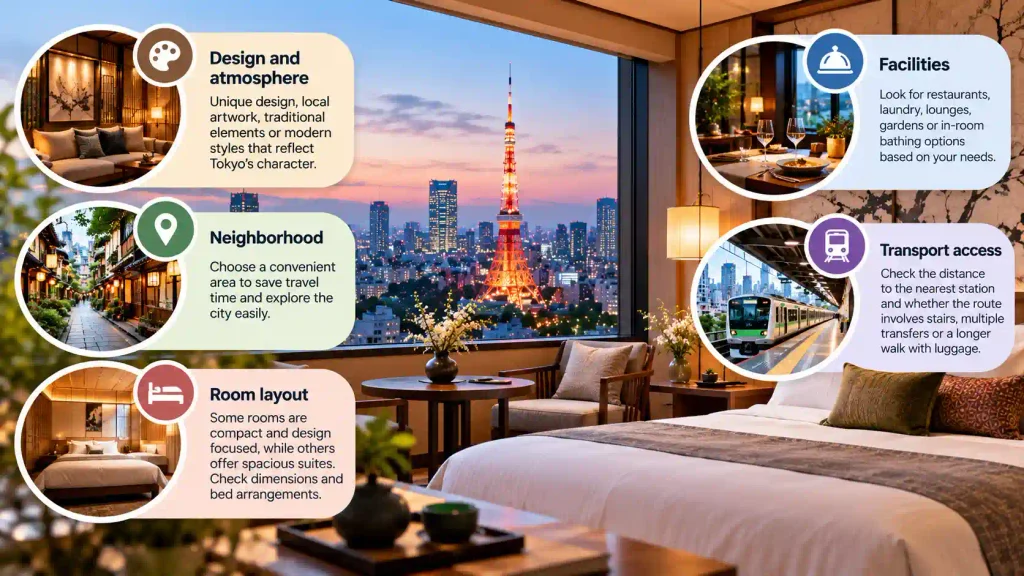
When comparing boutique hotels in Tokyo, consider these factors:
- Design and atmosphere: Look for a property that reflects your preferred style, whether minimalist, artistic, traditional, or contemporary.
- Neighborhood: Tokyo is large, and choosing a convenient base can save considerable travel time.
- Room layout: Some boutique properties prioritize design over floor space. Check the room dimensions and bed arrangement if you have large suitcases or are traveling as a family.
- Facilities: Restaurants, laundry, shared lounges, gardens, and in-room bathing facilities vary significantly.
- Transport access: Check walking distance to the nearest station and whether the route involves stairs, multiple transfers, or a long walk with luggage.
The 12 Best Boutique Hotels in Tokyo, Japan
These 12 properties offer different ways to experience the city, from contemporary architecture and creative interiors to traditional Japanese hospitality.
1. Arcsens Tokyo — Best for Families and Small Groups
Location: Ishiwara, Sumida
Arcsens Tokyo is a practical choice for travelers who want an intimate hotel with room configurations suited to friends or families. Located in the Sumida area near Ryogoku, the property offers a quieter alternative to the busiest central districts while keeping sightseeing within reach.
One of its defining features is its accommodation layout: the hotel highlights rooms with four beds, which can make group arrangements easier than booking multiple conventional double rooms. Guestroom facilities include private bathrooms, refrigerators, kettles, hair dryers, and complimentary Wi-Fi. A laundry room is also available.
The surrounding area provides access to Ryogoku’s sumo culture and museums, while Asakusa can be reached on foot or by public transport depending on your destination.
Why choose Arcsens Tokyo?
- Useful room layouts for families and groups.
- A neighborhood with a strong connection to traditional Tokyo.
- In-room essentials and laundry facilities for longer stays.
Best for: Families, friends traveling together, and visitors interested in Sumida and Ryogoku.
Before booking: Check the precise bed configuration and the walking distance from the station you plan to use, especially if arriving with heavy luggage.
2. BnA Studio Akihabara — Best for Art and Creative Design
Location: Akihabara area, Chiyoda
BnA Studio Akihabara is an appealing option for travelers who see accommodation as part of the cultural experience. The concept connects hotel design with contemporary art, giving the rooms a more individual character than a conventional business hotel.
The property is particularly relevant for visitors who enjoy galleries, illustration, experimental interiors, and Tokyo’s creative communities. Its Akihabara setting also makes it a convenient base for exploring the district’s electronics shops, gaming culture, anime-related retail, and nearby historic shrines.
Rather than choosing this hotel solely for standard amenities, consider whether its artistic approach matches your interests. Room themes and layouts can differ, so reviewing the available room photographs before booking is worthwhile.
Why choose BnA Studio Akihabara?
- Distinctive, art-centered room design.
- A location suited to exploring Akihabara and central Tokyo.
- An experience that may appeal to design-conscious travelers.
Best for: Art lovers, creative travelers, couples, and visitors interested in Akihabara’s urban culture.
Before booking: Confirm the exact room category, sleeping arrangement, and current facilities rather than assuming every room offers the same experience.
3. Hamacho Hotel — Best for a Calm, Contemporary Stay
Location: Nihonbashi Hamacho, Chuo
Hamacho Hotel combines contemporary interiors with a neighborhood atmosphere that feels more residential than Tokyo’s major entertainment districts. The hotel describes its approach as a way to connect guests with local craftsmanship, food, and the surrounding community.
Rooms range from compact options for individual travelers to layouts designed for leisure and family stays. The property also has a restaurant and bar, plus a chocolate shop with an on-site workshop that produces its own chocolate. These spaces give guests reasons to spend time at the hotel beyond sleeping there.
The location is useful for travelers who want access to central Tokyo without staying directly in the middle of its busiest nightlife areas. Hamacho, Suitengumae, and Ningyocho stations are all within walking distance, although the best route depends on your destination and luggage.
Why choose Hamacho Hotel?
- A relaxed design influenced by Japanese craft and local culture.
- On-site dining and a specialist chocolate shop.
- A quieter base with access to several train and subway stations.
Best for: Couples, design-conscious travelers, and visitors who prefer a neighborhood feel.
Before booking: Compare the room sizes carefully. Compact rooms can be comfortable for short city breaks but less convenient when two people have several large suitcases.
4. Hilltop Hotel — Best for a Historic, Classic Atmosphere
Location: Ochanomizu area
Hilltop Hotel has long been associated with an older, more traditional side of Tokyo hospitality. Its appeal lies in its established character rather than a trend-driven design concept, making it an option for travelers who prefer historic surroundings and a quieter atmosphere.
The property has been known for its blend of classic European-inspired interiors and Japanese accommodation styles. The 2026 selection also highlighted its dining options and varied room types, including traditional Japanese-style layouts.
Ochanomizu is a useful base for exploring central Tokyo, with access to cultural sites, bookstores, music shops, and university districts. It can suit visitors who would rather stay in a more understated part of the city than in the nightlife-heavy areas.
Why consider Hilltop Hotel?
- A traditional atmosphere rather than a highly modern aesthetic.
- A location suited to exploring central Tokyo.
- A different experience from minimalist, design-led properties.
Best for: Travelers interested in classic hospitality, history, and a less flashy hotel environment.
Before booking: Verify the hotel’s current operating and reservation status directly before including it in your itinerary, as property information and availability can change.
5. Hotel Azabu Ten — Best for an Upscale Boutique Experience
Location: Azabu area, Minato
Hotel Azabu Ten is a luxury-leaning boutique option for travelers who value individualized interiors, attentive hospitality, and a more intimate setting. Its design has been described as a meeting point between Japanese materials and European-influenced furnishings.
The property also stands out for its dining concept, which combines French culinary techniques with Japanese influences. Its location in Minato makes it a potential base for exploring areas around Tokyo Tower and the city’s upscale shopping and restaurant districts.
This is the kind of property to consider when the hotel itself is an important part of the trip. It may be less suitable for travelers who mainly need a simple room near a train station and expect to spend almost all their time sightseeing.
Why choose Hotel Azabu Ten?
- Individually styled interiors.
- An upscale atmosphere and a dining experience with Japanese-French influences.
- Access to Minato’s restaurants and city attractions.
Best for: Couples, special-occasion trips, and travelers seeking a more personalized stay.
Before booking: Check current dining arrangements, included services, room amenities, and the total price for your dates.
6. Hotel Gajoen Tokyo — Best for Japanese Art and Heritage
Location: Meguro
Hotel Gajoen Tokyo is known for its elaborate Japanese art, decorative interiors, and cultural heritage. Unlike a minimalist design hotel, its identity is rooted in craftsmanship, richly detailed spaces, and traditional artistic elements.
However, this property requires a specific booking caveat. The former operator ended its operations on September 30, 2026, and the hotel subsequently entered a period of transition. Hilton announced plans in June 2026 for the property to join its LXR Hotels & Resorts brand, with an official brand debut planned by 2027. Later reporting indicated that rooms and restaurants had resumed operations in July 2026, with changes and renovations continuing.
That makes Gajoen a distinctive heritage property to know about, but not one to book based on an older article alone.
Why consider Hotel Gajoen Tokyo?
- A strong connection to Japanese art and traditional craftsmanship.
- A distinctive historic atmosphere.
- A property with a notable transformation underway.
Best for: Travelers drawn to Japanese decorative arts and heritage-focused accommodation.
Before booking: Confirm the property’s current name, operating status, room availability, facilities, and renovation notices through the official booking channel.
7. Hotel Graphy Nezu — Best for Social Spaces and Value
Location: Nezu, Bunkyo
Hotel Graphy Nezu offers a more casual boutique experience, combining private guest rooms with shared spaces that encourage guests to relax and socialize. This makes it different from hotels where the room is the main attraction.
The Nezu area is part of Tokyo’s older Yanesen neighborhood, known for traditional streets, small shops, temples, and a slower pace than the city’s major commercial centers. The hotel has been associated with a lounge, café and bar spaces, and a rooftop terrace.
For travelers who enjoy walking around local neighborhoods, this location offers a useful contrast to the bright shopping and entertainment districts. It can also appeal to solo travelers who appreciate common spaces after a day spent exploring.
Why choose Hotel Graphy Nezu?
- Shared areas for relaxing and meeting other travelers.
- A neighborhood with historic streets and local character.
- A more casual atmosphere than a full-service luxury hotel.
Best for: Solo travelers, younger visitors, and guests who value common spaces.
Before booking: Check whether your preferred room is private or shared, and review bathroom arrangements, noise considerations, and the facilities included in the rate.
8. K5 — Best for Design-Led Luxury
Location: Kabutocho, Nihonbashi
K5 is one of Tokyo’s standout options for travelers interested in architecture and contemporary interiors. The hotel occupies a former bank building dating to 1923, reimagined as a design-focused property with Scandinavian influence and a strong emphasis on natural textures, plants, and carefully considered spaces.
The concept extends beyond the guest rooms. K5 has dining and drinks venues that contribute to its social atmosphere, making it a destination for people who appreciate food and design as much as accommodation. Its official website describes the property as a transformation of a century-old bank intended to bring new life to the neighborhood.
Kabutocho is particularly appealing to travelers who want to discover an evolving part of Tokyo rather than stay directly beside the biggest tourist attractions. Cafés, restaurants, and historic commercial streets help give the area its character.
Why choose K5?
- A distinctive conversion of a historic building.
- Contemporary interiors that blend Japanese and Scandinavian design ideas.
- On-site dining and drinks venues.
Best for: Design enthusiasts, couples, and travelers who enjoy independent restaurants and urban neighborhoods.
Before booking: Review the room layout and available amenities. Some design choices may differ from a conventional hotel, so check for features such as television availability and the exact bathroom setup.
9. Roppongi Hotel S — Best for Dining and City Access
Location: Nishi-Azabu, near Roppongi
Roppongi Hotel S takes a residential approach to boutique accommodation, with rooms that use different design themes rather than one uniform style. Its position between Roppongi and Nishi-Azabu puts guests within reach of restaurants, bars, galleries, and nightlife.
The property has been noted for its varied room designs, lounge and library spaces, dining options, and fitness facilities. The neighborhood is convenient for visitors who want evenings out without having to travel far back to their accommodation.
Roppongi is not the quietest area in Tokyo, so the location is best suited to travelers who want easy access to entertainment and dining. Those seeking a peaceful retreat may prefer a property in a more residential district.
Why choose Roppongi Hotel S?
- A variety of individually styled rooms.
- Access to Roppongi’s dining and cultural scene.
- A residential-style approach to accommodation.
Best for: Couples, nightlife enthusiasts, and visitors planning to spend time in Minato.
Before booking: Confirm the current room features and included services. Check the location of your room if you are sensitive to street noise.
10. Ryokan Kamogawa — Best for a Traditional Japanese Inn
Location: Asakusa
Ryokan Kamogawa is an option for travelers who want a more traditional Japanese lodging experience. A ryokan differs from a standard hotel through elements such as tatami flooring, futon bedding in selected rooms, Japanese hospitality, and bathing traditions.
The property is located close to Kaminarimon Gate and Nakamise Shopping Street, making it particularly convenient for visitors interested in Asakusa’s temples, traditional shops, and historic atmosphere. The 2026 selection described Japanese- and Western-style breakfast options, along with rooms featuring Japanese-style details.
For a first trip to Japan, staying at a ryokan can provide a useful introduction to a different style of accommodation. However, not every room or service at a ryokan is identical, so it is important to check the room category rather than assume all traditional features are included.
Why choose Ryokan Kamogawa?
- A traditional Japanese inn atmosphere.
- A location close to Asakusa’s well-known sights.
- A different experience from contemporary city hotels.
Best for: First-time visitors to Japan, culture-focused travelers, and couples.
Before booking: Check whether the room uses tatami and futon bedding, whether a private bathroom is included, and what bathing facilities are available.
11. The Tokyo Station Hotel — Best for Heritage and Transport Convenience
Location: Marunouchi, beside Tokyo Station
The Tokyo Station Hotel combines historic architecture with the convenience of staying beside one of the city’s main transport hubs. Housed within Tokyo Station’s landmark red-brick Marunouchi building, it offers a more classic atmosphere than many contemporary hotels.
Its heritage setting is balanced by modern guestroom comforts and a range of dining options. The location is particularly useful for travelers planning day trips by rail, arriving with luggage, or wanting straightforward access to different parts of Tokyo.
The hotel is not the smallest property on this list, but its distinctive architecture and historic character make it relevant to travelers looking for a boutique-style experience.
Why choose The Tokyo Station Hotel?
- A landmark building with a strong sense of history.
- Direct convenience for rail travel and connections.
- Classic interiors paired with modern accommodation.
Best for: Travelers with train journeys, short city breaks, and visitors who value historic architecture.
Before booking: Compare room categories and building views, and confirm the station access route that best suits your arrival point.
Explore This Blog: Tokyo Haneda Centurion Lounge Guide: Access, Hours & Amenities
12. Tsuki Tokyo — Best for Japanese-Inspired Minimalism
Location: Tsukiji, Chuo
Tsuki Tokyo brings Japanese design details into a contemporary hotel setting. The property has been associated with natural textures, a carefully curated tea experience, quality bath products, and a sake bar serving selected drinks and small dishes.
Its Tsukiji location is useful for travelers interested in Japanese food culture. The neighborhood’s market heritage, nearby restaurants, and access to Ginza make it a practical base for combining sightseeing with dining and shopping.
Tsuki is a good fit for visitors who want Japanese-inspired design without necessarily staying in a traditional inn. It offers a more contemporary interpretation of local aesthetics, making it an alternative to tatami-and-futon accommodation.
Why choose Tsuki Tokyo?
- A restrained, Japanese-inspired interior style.
- A location close to Tsukiji and the Ginza area.
- Details such as tea service and a sake-focused bar.
Best for: Couples, food-focused travelers, and guests who prefer minimalist design.
Before booking: Confirm which room types include a soaking tub or other specific amenities, as features can vary between categories.
Which Area of Tokyo Should You Stay In?
The best neighborhood depends on how you want to spend your time. A hotel near a famous attraction may save walking time, but a property close to a convenient train station can be more useful for exploring several parts of Tokyo.
| Neighborhood | Best for | What to expect |
| Asakusa | Traditional culture | Temples, historic streets, traditional shops, and Japanese inns |
| Akihabara | Anime, gaming, and electronics | Specialist stores, pop culture, and busy commercial streets |
| Nihonbashi and Kabutocho | Design and food | Independent cafés, restaurants, historic commercial buildings, and contemporary hotels |
| Shibuya and Harajuku | Shopping and nightlife | Fashion, restaurants, entertainment, and busy transport connections |
| Roppongi and Minato | Dining and art | Galleries, nightlife, upscale restaurants, and modern city attractions |
| Nezu and Yanesen | Local atmosphere | Traditional streets, neighborhood shops, temples, and a slower pace |
| Tokyo Station and Marunouchi | Rail convenience | Major train connections, shopping, business districts, and historic architecture |
| Tsukiji and Ginza | Food and shopping | Restaurants, market-area food culture, department stores, and premium shopping |
These are broad neighborhood characteristics rather than guarantees about a particular hotel. Before booking, check the property’s exact location and walking route to the station you expect to use.
How to Choose the Right Boutique Hotel in Tokyo
A hotel’s photographs can make a property look ideal, but the details of the room and location are often what determine whether it suits your trip.
Use the following checks before making a reservation.
- Compare room dimensions: Tokyo accommodation can be compact. Check the room’s square-meter measurement and consider how much space you need for luggage.
- Confirm the sleeping arrangement: A double bed, twin beds, futons, and bunk beds offer different levels of comfort depending on who is traveling.
- Check the bathroom setup: Some rooms have a private bathroom, while other accommodation types may use shared facilities. A Japanese soaking tub is not standard in every room.
- Review the nearest station: Check the walking distance, available train lines, and whether the route is convenient with luggage or a stroller.
- Read the cancellation conditions: Rates can have different payment deadlines, cancellation windows, and refund rules.
- Verify what’s included: Breakfast, laundry, lounge access, and other amenities may be included in some rates but charged separately in others.
- Check current operating information: This is particularly important for historic or transitioning properties, including Hotel Gajoen Tokyo.
Check This Out: Caption by Hyatt Kabutocho Tokyo Review & Guide
When Should You Book?
For travel during cherry blossom season, autumn foliage, major holidays, or popular events, compare availability well in advance. Demand and prices vary with travel dates, room type, and local events, so there is no single booking window that guarantees the lowest rate.
If your dates are flexible, compare several nights and check the property’s direct booking page alongside reputable booking platforms. Look at the total price, including taxes and any mandatory charges, rather than comparing the headline nightly rate alone.
Related: How to Book A Hotel On Booking.com
Final Thoughts
Tokyo’s boutique hotels offer more than a place to sleep: they can introduce travelers to the city’s design, history, food culture, and neighborhood life. K5 stands out for contemporary architecture, BnA Studio Akihabara for its artistic approach, Ryokan Kamogawa for traditional Japanese hospitality, and Hamacho Hotel for its calmer neighborhood setting.
Choose the property that fits your itinerary, not just the one with the most striking photographs. Before paying, confirm current availability, room dimensions, station access, included amenities, and cancellation conditions. Those checks will help you find a Tokyo stay that works in practice as well as on paper.
Frequently Asked Questions
They range from relatively affordable guesthouse-style accommodation to high-end properties with individually designed rooms and extensive dining facilities. Prices depend on the season, neighborhood, room type, and demand, so compare rates for your exact dates.
The Tokyo Station Hotel is worth considering if transport convenience is a priority, while Ryokan Kamogawa may appeal to visitors who want a traditional Japanese inn experience near Asakusa’s historic attractions. The better choice depends on your itinerary and accommodation preferences.
Arcsens Tokyo is worth investigating because it offers room configurations with four beds. Hamacho Hotel also lists room types suited to family stays. Confirm the maximum occupancy, bed layout, and child policies directly with the property before booking.
A boutique hotel is generally distinguished by its individual design, atmosphere, or personalized approach to hospitality. A ryokan is a traditional Japanese-style inn that may feature tatami rooms, futon bedding, and Japanese bathing or dining customs. Some modern properties combine elements of both.
Tokyo Station is useful for rail connections, including journeys to other parts of Japan, while Shibuya suits visitors interested in shopping, nightlife, and contemporary city culture. Neither is universally better; choose according to the places you plan to visit.
Compare both options. A booking platform can make it easier to compare properties, while the hotel’s official website may provide different room options or booking conditions. Check cancellation terms, taxes, included meals, and the final payable amount before confirming.
Not necessarily. Hotel operations, room inventory, facilities, and management arrangements can change. Hotel Gajoen Tokyo, in particular, has undergone an operational transition and announced plans for a future LXR Hotels & Resorts debut. Confirm its current status and availability before making plans.