
Best Time to Visit the Bahamas: Weather, Prices & Crowds
The best time to visit the Bahamas is from mid-December through April, when the islands generally enjoy warm temperatures, lower humidity, and relatively little rainfall. However, this is also the busiest travel season, particularly around Christmas, New Year, and spring break, when accommodation prices can be higher.
Travelers seeking a balance between pleasant weather, manageable crowds, and hotel rates may prefer late April to May or November. Those prioritizing lower travel costs can consider summer and early fall, though these months bring hotter conditions, more rainfall, and higher tropical storm risk.
The ideal month ultimately depends on the type of vacation being planned. Beach holidays, snorkeling excursions, family trips, and budget-friendly getaways each benefit from slightly different travel periods. Understanding the Bahamas’ seasonal weather, tourism patterns, and hurricane season can help visitors choose suitable dates.
Related: Best Time to Visit The Bahamas: Weather & Travel Guide
When Is the Best Time to Visit the Bahamas?
The Bahamas is a year-round destination, but its travel seasons offer noticeably different experiences. The country consists of hundreds of islands and cays, including popular destinations such as Nassau, Paradise Island, Grand Bahama, and the Exumas.
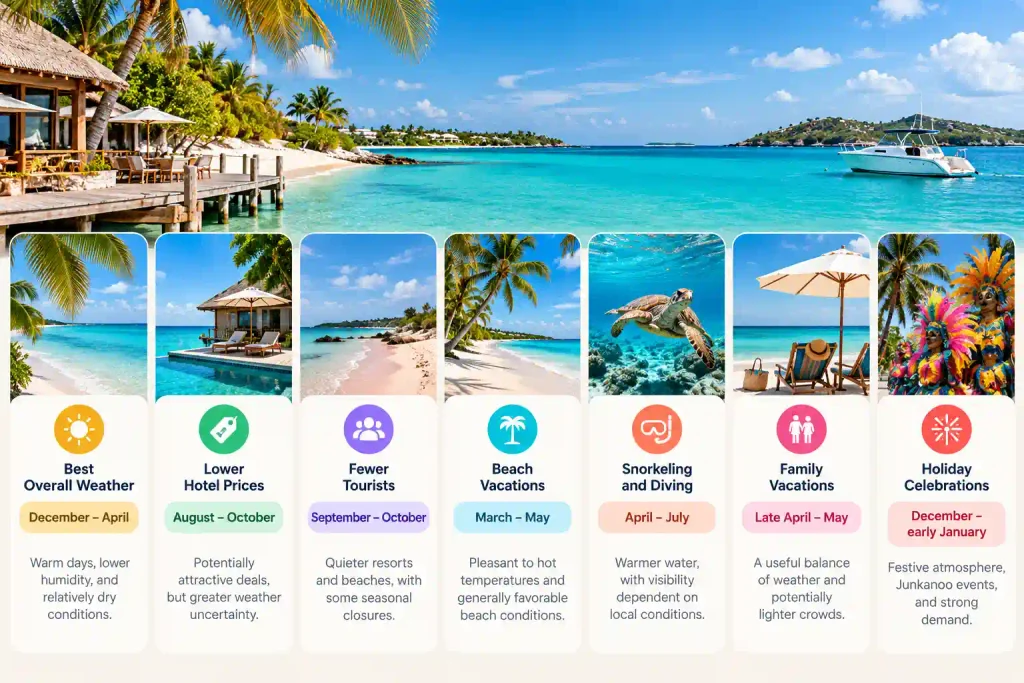
This comparison helps travelers choose the season that best matches their priorities.
| Travel priority | Recommended period | What to expect |
| Best overall weather | December–April | Warm days, lower humidity, relatively dry conditions |
| Lower hotel prices | August–October | Potentially attractive deals, but greater weather uncertainty |
| Fewer tourists | September–October | Quieter resorts and beaches, with some seasonal closures |
| Beach vacations | March–May | Pleasant to hot temperatures and generally favorable beach conditions |
| Snorkeling and diving | April–July | Warmer water, with visibility dependent on local conditions |
| Family vacations | Late April–May | A useful balance of weather and potentially lighter crowds |
| Holiday celebrations | December–early January | Festive atmosphere, Junkanoo events, and strong demand |
These are general seasonal patterns, not guaranteed prices or weather conditions. Individual islands, resorts, and travel dates can differ significantly.
What Is the Weather Like in the Bahamas Throughout the Year?
The Bahamas has a tropical maritime climate, with warm temperatures year-round and noticeable seasonal changes in rainfall, humidity, and wind.
According to the Bahamas Ministry of Tourism, winter temperatures can fall to around 70°F (21°C), while summer highs commonly reach 80–90°F (26–32°C). The surrounding ocean moderates temperatures, although occasional winter cold fronts can bring cooler, windier conditions.
Bahamas Weather Month by Month
The table below summarizes typical seasonal conditions rather than specific forecasts.
| Month | Typical daytime highs | Weather and travel conditions |
| January | 75–79°F | Mild, relatively dry, occasional cool fronts |
| February | 76–80°F | Pleasant weather, popular winter escape |
| March | 78–82°F | Generally favorable for outdoor activities |
| April | 80–84°F | Warmer days, often excellent beach weather |
| May | 83–86°F | Increasing humidity and showers |
| June | 85–88°F | Hotter weather, rainy season develops |
| July | 87–90°F | Hot, humid, occasional thunderstorms |
| August | 87–90°F | Very warm, humid, greater storm concerns |
| September | 86–89°F | Wet-season conditions, elevated hurricane risk |
| October | 83–87°F | Warm, variable rainfall and tropical weather |
| November | 80–84°F | Gradually cooler, often less humid |
| December | 77–81°F | Pleasant winter conditions, holiday demand |
Approximate representative daytime temperature ranges, rounded for planning purposes. Conditions vary by island, year, and local weather.
Dry Season: December to April
The dry season is generally the most dependable period for outdoor sightseeing, beach excursions, and island-hopping. Visitors often encounter comfortable daytime temperatures and lower humidity than during summer.
However, the dry season isn’t rain-free. Passing showers and winter weather systems remain possible, especially across the northern islands.
Wet Season: May to November
Rainfall and humidity generally increase from late spring into autumn. Tropical showers may develop quickly, sometimes bringing intense rainfall over a short period.
Rainfall patterns differ across the archipelago. The official Bahamas tourism website notes that May and June can be particularly rainy in parts of the northern and southern islands. Therefore, September or October should not automatically be described as the wettest month everywhere in the Bahamas.
When Is the Cheapest Time to Visit the Bahamas?
August through November is generally the cheapest period to visit the Bahamas, with September and October often offering particularly competitive accommodation rates.
This lower-demand period overlaps with the Atlantic hurricane season, so that some resorts may offer discounts or more flexible packages.
However, travelers should consider total cost, not just hotel rates. Flights, airport transfers, meals, activities, taxes, and resort fees can significantly affect the overall vacation budget.
How to Find Better Bahamas Vacation Deals
- Compare hotel prices for midweek and weekend stays.
- Check late April, May, and early June before choosing peak hurricane-season dates.
- Compare refundable and nonrefundable accommodation rates.
- Consider smaller hotels or guesthouses outside major resort areas.
- Compare complete flight-and-hotel costs instead of focusing on advertised discounts.
For example, a hotel room may appear considerably cheaper in September than in February. However, if bad weather cancels a boat excursion or delays travel, that financial advantage may be less appealing.
Travelers with fixed vacation dates may find May a more practical compromise than September.
When Is the Bahamas Most Crowded?
The Bahamas experiences its highest tourism demand from approximately mid-December through April. Winter holiday travel, spring break, and favorable weather attract international visitors, particularly to Nassau and Paradise Island.
Crowds also vary by location. Large resorts, cruise ports, and popular attractions may feel busy even during generally quieter months.
Peak Season: Mid-December to April
This period attracts visitors seeking sunshine during the colder months in North America and Europe. Popular resorts and excursions may require reservations, especially around major holidays.
Shoulder Season: Late April to June and November
Shoulder-season travel can offer a useful middle ground. Visitor demand often decreases after spring break, while many attractions and restaurants continue operating normally.
November is another option, although Thanksgiving travel can temporarily increase demand.
Low Season: Late August to October
September and October are commonly among the quietest months. Travelers may find less crowded beaches and more available accommodations, but some smaller properties and excursion operators may reduce services or temporarily close.
The quieter atmosphere is appealing, but weather-related disruptions become a bigger consideration.
When Is Hurricane Season in the Bahamas?
Hurricane season in the Bahamas officially runs from June 1 through November 30, with the highest historical Atlantic tropical cyclone activity concentrated between mid-August and mid-October.
According to the U.S. National Hurricane Center, Atlantic hurricane activity typically peaks around September 10. However, this is a basin-wide climatological pattern, not a prediction that a hurricane will affect the Bahamas on that date.
Is It Safe to Visit the Bahamas During Hurricane Season?
Travel during hurricane season is possible, and many visitors experience pleasant conditions without major disruptions. Nevertheless, tropical storms can affect flights, ferries, cruises, accommodation, and water-based activities.
Travelers visiting during this period should:
- Monitor official weather forecasts and tropical cyclone advisories.
- Consider travel insurance with appropriate weather-related coverage.
- Allow flexibility for ferry connections and island transfers.
- Follow local emergency guidance if severe weather approaches.
What Is the Best Time to Visit the Bahamas for Different Activities?
The best month can also depend on what visitors plan to do once they arrive. A snorkeling holiday may benefit from warmer ocean temperatures, while sightseeing and outdoor walking are often more comfortable during the cooler months.
Best Time for Swimming and Beach Holidays
March through May is an attractive period for travelers prioritizing beach activities. As spring progresses, the weather warms while humidity is generally lower than in midsummer.
Summer offers warmer ocean temperatures, although afternoon thunderstorms and tropical weather may interrupt beach plans.
Best Time for Snorkeling and Scuba Diving
The Bahamas offers diving opportunities year-round. April through July can be appealing for recreational snorkeling because the water generally warms during this period.
However, visibility depends on wind, currents, recent rainfall, and the specific dive site. Winter also attracts divers interested in certain seasonal marine wildlife encounters.
Travelers should choose their diving dates based on the specific activity and operator rather than assuming one season is best for every underwater experience.
Best Time for Family Vacations
Late April and May can work particularly well for families with flexible schedules. Resorts may be less crowded after spring break, and warmer temperatures support beach activities and outdoor excursions.
Families traveling during school vacations may prefer March or July instead. July is warmer and more humid, while March often brings stronger demand around spring break.
Best Time for Island-Hopping
March through May generally offers favorable conditions for visiting multiple islands, although boat and flight schedules remain weather-dependent.
For example, a traveler planning to combine Nassau with the Exumas should expect delays on smaller-aircraft services and boat excursions.
Plan island-hopping itineraries with some flexibility, especially when international departure flights depend on a domestic connection.
Best Time for Cultural Festivals
December and early January are especially appealing for travelers interested in Bahamian cultural celebrations.
Junkanoo, a major cultural festival featuring music, elaborate costumes, and street parades, traditionally includes celebrations around Boxing Day and New Year’s Day.
Visitors planning around festivals should confirm the official event schedule and reserve accommodation well in advance.
What is the best time to visit the Bahamas by island?
Although the Bahamas shares broad seasonal patterns, the experience can vary considerably between its islands.
Best for resort vacations, dining, cultural attractions, and convenient access to tours. December through April brings favorable weather but stronger visitor demand.
Best for boat excursions, secluded beaches, and marine activities. Spring is especially attractive for combining warm conditions with relatively favorable weather.
Best for beaches, nature attractions, and diving. Winter and spring are appealing, though the northern location can be cooler in winter.
Harbour Island
Best for relaxed coastal stays and its famous pink-sand beach. Spring offers a pleasant balance for walking, sightseeing, and beach time.
Travelers visiting the Out Islands should also check seasonal accommodation availability and transportation schedules, since smaller destinations may have fewer daily services than Nassau.
You May Also Like: When Is the Best Time to Visit The Bahamas?
How Far in Advance Should Travelers Book a Bahamas Vacation?
For peak-season travel between December and April, booking several months ahead can improve accommodation choice and availability, particularly for Christmas, New Year, and spring break.
Travelers with flexible schedules may find competitive rates closer to departure during quieter periods. However, last-minute booking is not guaranteed to be cheaper, especially when flight availability is limited.
Before confirming a reservation, visitors should compare the complete travel cost and check the cancellation conditions for each booking component.
Conclusion
The best time to visit the Bahamas depends on the balance travelers want between weather, prices, and crowds. December through April is generally the strongest choice for favorable weather, while late April and May can provide better overall value. September and October may offer lower prices, but their greater storm risk requires careful planning.
Before booking, travelers should review seasonal weather forecasts, compare total vacation costs, and confirm cancellation policies, especially for trips during hurricane season.
Frequently Asked Questions
Yes. May is an appealing month for travelers seeking warm beach weather and potentially lower accommodation rates than during peak winter season. However, humidity and rainfall generally increase as summer approaches.
Yes. Swimming is possible in December, although ocean temperatures are cooler than in summer. Visitors sensitive to cooler water may prefer late spring or summer.
September is often less suitable for weather-dependent vacations because it coincides with peak Atlantic hurricane activity. However, it may appeal to travelers seeking quieter resorts and lower prices.
Four to five days is often enough for a single-island resort vacation. Travelers planning to visit multiple islands may prefer seven to ten days, allowing time for transportation and excursions.
April generally offers lower humidity and more favorable dry-season conditions. June brings warmer water and potentially lower accommodation prices, but rainfall increases and hurricane season begins.
No. Summer rainfall often comes in showers or thunderstorms rather than continuous rain all day. However, tropical weather systems can bring prolonged rainfall.