
Best Things to Do in Cape Town for an Unforgettable Trip
Cape Town is one of South Africa’s most diverse destinations, combining mountains, beaches, historic landmarks, wildlife, food, wine, and coastal scenery within one region. Sitting beneath Table Mountain and beside the Atlantic Ocean, the city works equally well for travelers interested in outdoor adventures, history, beach days, or food-focused trips.
A first visit can include a cable-car ride up Table Mountain, a tour of Robben Island, shopping and dining at the V&A Waterfront, a drive around the Cape Peninsula, and an encounter with African penguins at Boulders. Travelers with additional time can also visit the Cape Winelands or explore the botanical diversity at Kirstenbosch.
Here is what you should know when planning a trip to Cape Town.
Cape Town at a Glance
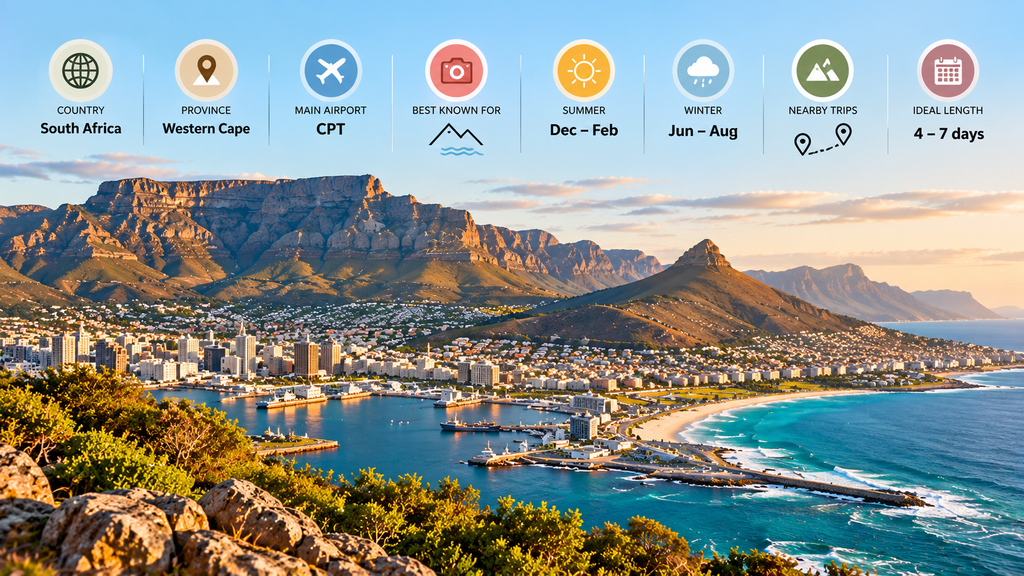
| Travel Detail | Information |
| Country | South Africa |
| Province | Western Cape |
| Main Airport | Cape Town International Airport (CPT) |
| Best known for | Table Mountain, beaches, Cape Peninsula, Robben Island, food and wine |
| Summer | December to February |
| Winter | June to August |
| Popular nearby trips | Cape Point, Boulders Beach, Stellenbosch, Franschhoek |
| Ideal trip length | Around 4–7 days for major city and surrounding attractions |
Cape Town has a Mediterranean-style climate, with generally warm, dry summers and cooler, wetter winters. Cape Town Tourism notes that the city also has several microclimates, meaning conditions can differ noticeably from one part of the peninsula to another.
Best Things to Do in Cape Town
Cape Town’s attractions range from internationally recognized natural landmarks to museums, beaches, gardens, historic sites, and waterfront entertainment districts.
1. Go Up Table Mountain
Table Mountain is the natural landmark most closely associated with Cape Town and an excellent place to start a first visit.
Travelers can use the Table Mountain Aerial Cableway to reach the summit, where walking paths provide viewpoints across the city and Atlantic coastline. Hiking is another option for experienced visitors who prefer a more active journey.
Weather matters when planning the trip. Clouds and strong winds can affect mountain conditions, so check operating information and the forecast before leaving.
If your schedule is flexible, avoid leaving Table Mountain until your final day. Having several possible days gives you another opportunity if poor weather interrupts your original plan.
2. Explore the V&A Waterfront
The Victoria & Alfred Waterfront combines a working harbor with restaurants, stores, hotels, entertainment, museums, and other visitor attractions.
It is particularly convenient for travelers who want several activities within one area. Cape Town Tourism lists attractions in and around the Waterfront such as the Two Oceans Aquarium, Zeitz Museum of Contemporary Art Africa, shops, restaurants, harbor activities, and the Nelson Mandela Gateway to Robben Island.
The Waterfront is also useful as an evening destination after a day of sightseeing elsewhere in the city.
3. Visit Robben Island
Robben Island is an important stop for understanding South Africa’s political and social history. The island served various purposes over its long history but is internationally known as the place where Nelson Mandela and other political prisoners were incarcerated during apartheid.
Official Robben Island tours depart by ferry from the Nelson Mandela Gateway at the V&A Waterfront. Robben Island Museum currently states that the standard experience takes about 3.5 hours, including the ferry journeys, although travel time can vary according to the vessel used.
Because the experience takes several hours, leave enough room in your itinerary rather than trying to fit it between several other major attractions.
4. Meet the Penguins at Boulders
Head south toward Simon’s Town and you can visit one of Cape Town’s most distinctive wildlife attractions: the African penguin colony at Boulders.
The Boulders section of Table Mountain National Park includes three beaches, a penguin viewing area, and boardwalks that allow visitors to observe the birds while reducing disturbance to them. SANParks asks visitors to remain on the boardwalks in viewing areas and not touch or feed the penguins.
Boulders is a paid attraction within Table Mountain National Park. Entry charges vary according to visitor category, so check current SANParks conservation fees before traveling.
5. Take a Cape Peninsula Road Trip
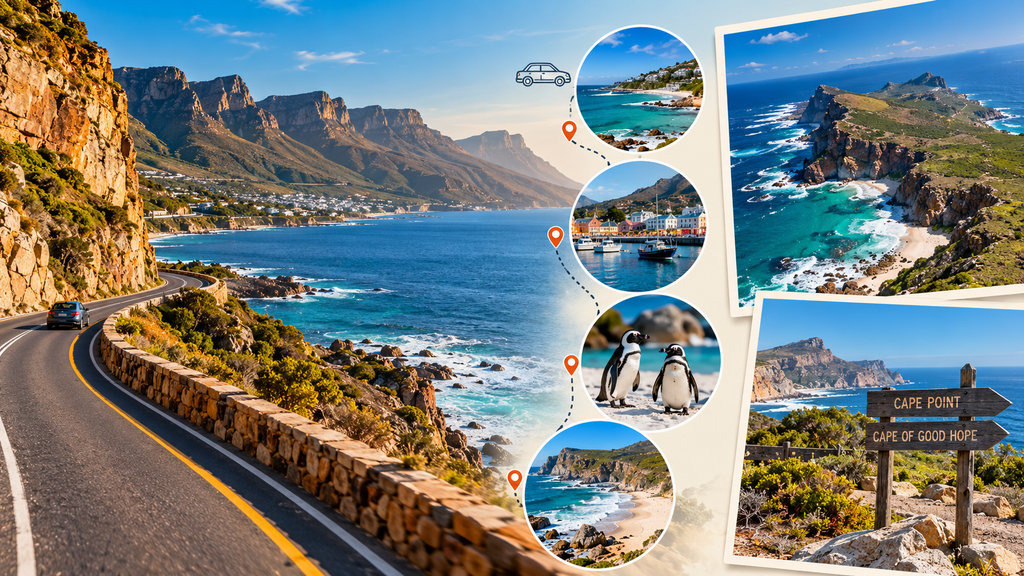
A Cape Peninsula drive is one of the easiest ways to understand just how varied the landscape surrounding Cape Town is.
Depending on your route and available time, a day trip can combine coastal suburbs, scenic roads, fishing communities, Simon’s Town, Boulders, and Cape Point.
SANParks lists routes to Cape Point through Simon’s Town as well as alternatives through Kommetjie and Scarborough. Chapman’s Peak can also form part of a scenic route, although its road status can change because of weather or maintenance.
Allow a full day if you want to make several stops instead of simply driving to Cape Point and returning.
6. Discover Cape Point and the Cape of Good Hope
Cape Point and the Cape of Good Hope are part of Table Mountain National Park and combine rugged cliffs, coastal views, walking opportunities, beaches, and native vegetation.
The broader national park protects an exceptionally rich natural environment. SANParks identifies Cape Point, Boulders Penguin Colony, Table Mountain, Lion’s Head, Signal Hill, and Silvermine among its main attractions.
Cape Point requires a conservation fee, and rates differ for South African residents, SADC nationals, and international visitors. Checking the latest fee and opening information directly with SANParks before your trip is recommended.
7. Spend Time at Kirstenbosch
Kirstenbosch National Botanical Garden lies against the eastern slopes of Table Mountain and offers a quieter alternative to Cape Town’s busier attractions.
Visitors come for indigenous South African plants, landscaped areas, walking routes, birdlife, and mountain scenery. Cape Town Tourism describes the garden as covering more than 500 hectares and highlights its extensive plant life and trails.
Kirstenbosch can work particularly well on an itinerary that also includes Constantia or other attractions on the southern side of the city.
8. Relax on Cape Town’s Beaches
Cape Town’s coastline gives visitors numerous choices, but beaches can have noticeably different atmospheres.
Camps Bay is a popular option if you want restaurants and cafés close to the sand. Clifton is known for a series of smaller beaches, while areas farther around the peninsula provide a different coastal experience.
Keep in mind that Cape Town’s Atlantic waters can be cold even when the weather on land is warm. A sunny summer afternoon does not necessarily mean warm swimming conditions.
9. Explore Bo-Kaap
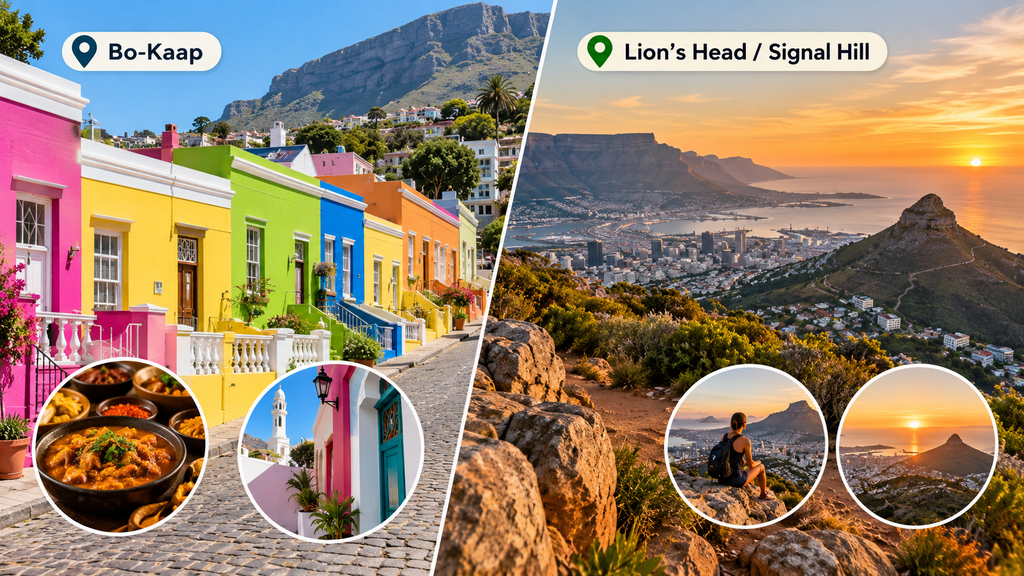
With brightly painted houses and a strong Cape Muslim heritage, Bo-Kaap is one of Cape Town’s most recognizable neighborhoods.
Rather than visiting only for photographs, spend some time learning about the community’s history, architecture, cuisine, and cultural significance. A guided cultural or food experience can provide more context than simply walking through its streets.
Visitors should also remember that Bo-Kaap is a residential neighborhood and behave respectfully around homes and residents.
10. See Cape Town From Lion’s Head or Signal Hill
Table Mountain is not the only place to find elevated city views.
Lion’s Head is popular with hikers, while Signal Hill offers a more accessible viewpoint for travelers who do not want a strenuous climb. Both are part of the wider Table Mountain National Park landscape.
Anyone planning a hike should consider weather, daylight, route difficulty, and current local safety guidance before setting out.
Take a Day Trip to the Cape Winelands
Cape Town can also serve as a base for exploring the Cape Winelands.
Two of the best-known destinations are Stellenbosch and Franschhoek, where vineyards, restaurants, historic architecture, and mountain scenery make it easy to turn wine tasting into a full-day excursion.
The Audley reference places Stellenbosch about 25 miles from Cape Town and the broader Winelands approximately 33 miles away, illustrating how easily the region can be incorporated into a Cape Town itinerary.
If everyone in your group intends to taste wine, consider an organized tour or arranged transportation rather than self-driving.
When Is the Best Time to Visit Cape Town?
There is no single best month for every traveler. The right season depends on whether beaches, hiking, wildlife, sightseeing, or lower-season travel is most important to you.
December to February: Summer
Cape Town’s summer is generally warm, sunny, and comparatively dry, making it a popular period for:
- Beaches
- Outdoor dining
- Hiking
- Scenic drives
- Coastal sightseeing
- Table Mountain
Cape Town Tourism gives typical summer daytime temperatures of approximately 20–26°C (68–78°F), although hotter conditions are possible.
January can be particularly busy, so booking major attractions and accommodations ahead is sensible during peak travel periods.
March to May: Autumn
Autumn can offer a useful balance between pleasant weather and fewer peak-summer crowds. It is a good period for city sightseeing, hiking, road trips, and visits to the Winelands.
Conditions become cooler as the season progresses, so pack layers if your itinerary includes early mornings or evenings outside.
June to August: Winter
Winter brings cooler weather and a greater chance of rain. Cape Town Tourism lists typical winter daytime temperatures around 12–17°C (54–62°F).
The trade-off is that winter can appeal to travelers who are less focused on beach weather and more interested in food, culture, sightseeing, and seasonal wildlife.
September to November: Spring
Spring is an attractive period for outdoor sightseeing as temperatures begin to rise. It can also be a good time to combine Cape Town with seasonal flower displays elsewhere in the Western Cape.
How Many Days Do You Need in Cape Town?
Four to seven days is a practical amount of time for a first Cape Town trip, depending on how many excursions you want to add.
For example:
| Trip Length | What You Could Cover |
| 2–3 days | Table Mountain, V&A Waterfront, Robben Island, central Cape Town |
| 4–5 days | Major city sights plus Cape Peninsula and Boulders |
| 6–7 days | City attractions, Peninsula, beaches, Winelands, and a slower sightseeing day |
Trying to see Cape Town, Cape Point, Boulders, Robben Island, and the Winelands in two days would make the trip unnecessarily rushed. Weather can also affect outdoor attractions, so an extra day provides useful flexibility.
Getting to Cape Town
Most international and domestic air travelers arrive through Cape Town International Airport (CPT).
The airport is the main air gateway to Cape Town and the surrounding Western Cape. After arriving, travelers can continue to their accommodation by private transfer, taxi, ride-hailing service, rental car, or other locally available transportation.
If you intend to explore the Cape Peninsula or Winelands independently, renting a vehicle can provide additional flexibility. Remember that vehicles in South Africa drive on the left-hand side of the road.
Getting Around Cape Town
The best transportation option depends on your itinerary.
Ride-hailing and taxis can be practical for trips between popular urban attractions, while organized tours are convenient for travelers who do not want to navigate unfamiliar roads.
A rental car becomes more useful when your plans include Cape Point, Boulders, the Winelands, or several destinations outside central Cape Town.
Avoid judging travel time by distance alone. Mountain roads, coastal routes, sightseeing stops, traffic, and weather can make relatively short journeys take longer than expected.
Practical Tips for Visiting Cape Town
A little planning can make a major difference, particularly because many of Cape Town’s best experiences depend on weather or advance availability.
- Keep your Table Mountain day flexible. Wind and cloud can affect mountain visits.
- Reserve popular attractions early. This is particularly useful for Robben Island and busy travel periods.
- Pack layers. Conditions can change between the city, mountain, and coastline.
- Use sun protection. Sunscreen, water, and a hat are important for outdoor sightseeing.
- Allow a full day for the Peninsula. Boulders, Cape Point, scenic drives, and smaller stops quickly fill the day.
- Check official information before hiking. Review weather, route, daylight, and current safety guidance.
- Do not disturb wildlife. At Boulders, remain on designated boardwalks and never feed or touch penguins.
- Verify attraction fees before visiting. Conservation and admission fees can change.
Is Cape Town Worth Visiting?
Yes, Cape Town offers an unusually broad mix of natural scenery, history, wildlife, beaches, cuisine, and day-trip possibilities within a relatively compact region.
You could spend one morning overlooking the city from Table Mountain, learn about South Africa’s history on Robben Island the next day, watch African penguins at Boulders, and then dedicate another day to vineyards and mountain scenery around the Winelands.
That variety is the main reason travelers benefit from giving Cape Town several days rather than treating it as a quick stop.
Final Thoughts
Cape Town rewards travelers who leave enough room in their schedule for both its famous landmarks and the wider peninsula. Table Mountain and Robben Island provide two very different perspectives on the city, while Boulders, Cape Point, Kirstenbosch, the beaches, and nearby Winelands add wildlife, landscapes, food, and outdoor experiences.
For a first trip, plan roughly four to seven days if possible and avoid making every day inflexible. Check official operating information, weather conditions, attraction availability, and current fees shortly before visiting, particularly for Table Mountain National Park sites and Robben Island
Frequently Asked Questions
Cape Town is particularly known for Table Mountain, its Atlantic coastline, Cape Peninsula scenery, Robben Island, V&A Waterfront, nearby vineyards, beaches, and diverse cultural heritage.
Table Mountain, Robben Island, the V&A Waterfront, Cape Point, Boulders Penguin Colony, and Kirstenbosch are strong choices for a first visit. Travelers with additional time can add the Winelands, beaches, Bo-Kaap, and Lion’s Head.
Yes. Both are on the Cape Peninsula, so they are commonly combined into a full-day trip. Avoid creating an overly tight schedule, as scenic stops and traffic can extend the journey.
Yes. Cape Town can be visited throughout the year, although the experience changes by season. Summer favors beaches and outdoor activities, while cooler months can suit cultural sightseeing, food experiences, and seasonal wildlife.
Pack according to the season, but layers are useful throughout the year because weather can change between the coastline, mountains, and city. Comfortable walking shoes, sunscreen, sunglasses, and a light outer layer are particularly useful for sightseeing.
Yes. Cape Town can be visited throughout the year, although the experience changes by season. Summer favors beaches and outdoor activities, while cooler months can suit cultural sightseeing, food experiences, and seasonal wildlife.
Yes, particularly for first-time visitors. The area combines shopping, restaurants, museums, entertainment, harbor activities, and the departure point for official Robben Island tours.
Robben Island Museum currently states that its standard tour lasts approximately 3.5 hours, including the ferry journey, although ferry travel time varies depending on the vessel.
Yes. Boulders Penguin Colony in Simon’s Town is home to a land-based colony of endangered African penguins and has designated boardwalks and viewing areas for visitors.