
Visit Antananarivo: A Guide to Madagascar’s Vibrant Capital
Antananarivo is worth visiting for its royal history, lively streets, hilltop views, and access to Madagascar’s central highlands. Often called Tana, the capital is where many travelers begin or end their trip, but it deserves more than a brief stop between flights. Its neighborhoods climb across a series of hills, giving each part of the city a different view and pace.
A visit can take you from the historic Upper Town to busy market streets, then beyond the city to one of Madagascar’s most significant royal sites. This guide covers what to see, how to plan your time, and what to check before traveling.
Why Visit Antananarivo?

Antananarivo offers an introduction to Madagascar that its beaches and national parks cannot provide. It is a working capital where historic buildings, churches, markets, and modern businesses share the same hills. The city’s steep streets and changing elevations also make a short drive feel like a tour through several distinct neighborhoods.
Travelers interested in Malagasy history will find plenty to explore around the Upper Town. Those continuing across the island can use their stay to adjust to the journey, try local food, and prepare for the next leg. Allowing time in Tana also gives you more flexibility if a flight or road transfer changes.
What Are the Best Things to Do in Antananarivo?
Antananarivo’s attractions are spread across its hills, so it helps to choose a few places that show different sides of the capital. These sights bring together its royal history, everyday street life, and city views:
See the Rova and the Upper Town
The Rova of Antananarivo, the royal palace complex on a prominent hill, is one of the city’s defining landmarks. A visit to the surrounding Upper Town brings the capital’s royal past into view alongside older streets, churches, and broad views over the lower neighborhoods.
Check current opening arrangements and guided-visit options before you go. Even if you have limited time, the Upper Town is a useful place to begin understanding why Antananarivo developed across its hills.
Spend Time Around Analakely
Analakely is a busy commercial part of central Antananarivo. Shops, street activity, and market areas give visitors a glimpse of daily life beyond the city’s monuments. Go with time to look around, keep your belongings secure, and avoid trying to cover too much ground during the busiest hours.
A local guide can help you navigate the area and explain what you are seeing. That is especially useful if you want to combine Analakely with historic stops in a single day.
Look Out Over Lake Anosy
Lake Anosy is a recognizable landmark near the center of the city. It works well as a stop on a broader sightseeing route, especially for travelers who want to understand the layout of Antananarivo’s hills and lower districts. Plan your route around traffic rather than assuming nearby places will always be quick to reach.
Take a Guided City Tour
Antananarivo rewards travelers who have someone to connect its neighborhoods and history. A guided tour can link the Upper Town, central streets, viewpoints, and selected markets without leaving you to work out each transfer independently. The exact stops can be adjusted to your interests and the time available.
Take a Day Trip to the Royal Hill of Ambohimanga
If you have an extra day, consider visiting the Royal Hill of Ambohimanga outside Antananarivo. This UNESCO World Heritage site includes a royal city, a burial site, and sacred places. It remains culturally and spiritually significant, so approach the visit with respect for any instructions given at the site.
Ambohimanga adds depth to a city stay. After seeing Antananarivo’s royal landmarks, you can learn more about the traditions and history associated with Madagascar’s central highlands. Arrange transport in advance and leave room in the day for traffic and an unhurried visit.
How Do You Get to Antananarivo?

Most visitors arriving by air use Antananarivo International Airport at Ivato (TNR). The airport serves the capital and has both international and domestic operations. Its official website lists licensed taxis among the ground transport options, so you can arrange an airport transfer or use an authorized service on arrival. Confirm the fare and destination before setting off.
For travel onward within Madagascar, Madagascar Airlines is one airline to consider. Its published destination information includes Antananarivo and other locations such as Nosy Be and Morondava. Check the airlines current timetable before building a tight connection into your itinerary, and allow enough time between separately booked flights.
When Is the Best Time to Visit?
For a trip that combines Antananarivo with travel around Madagascar, many visitors favor the generally drier part of the year. Conditions vary across the island, however, and a good month for a highland city visit may feel different on the coast or in a rainforest.
Pack for changing conditions rather than expecting the same weather throughout your trip. A light layer can be useful during cooler highland mornings and evenings, while comfortable shoes matter on Antananarivo’s slopes and steps. Check the forecast for each destination shortly before departure.
How Long Should You Stay in Antananarivo?
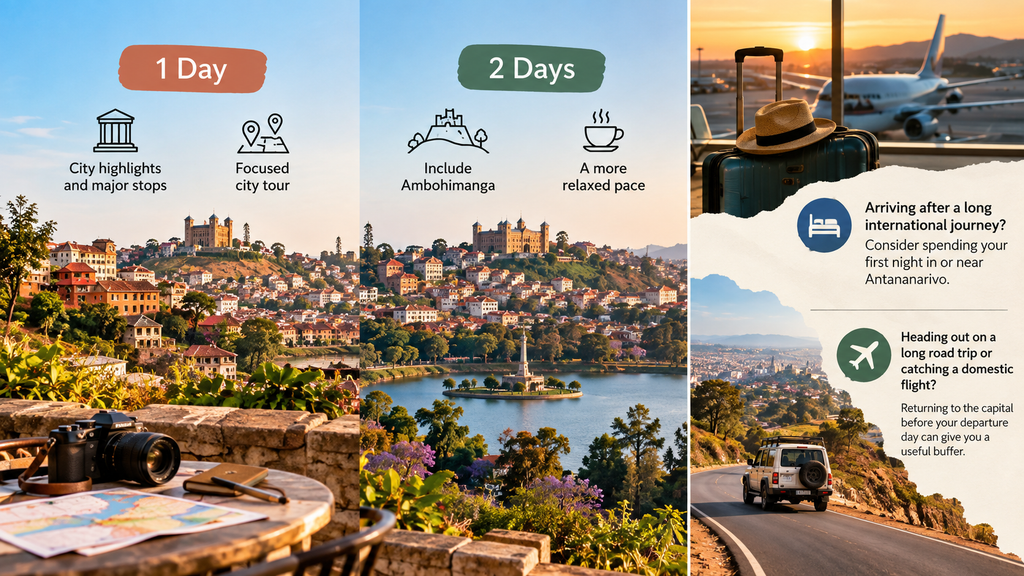
One full day gives you time for a focused city tour and a few major stops. Two days offers a more comfortable pace and leaves room for Ambohimanga or a slower look around the city.
If you arrive after a long international journey, consider spending your first night in or near the capital before starting a lengthy road trip. Likewise, returning to Antananarivo before your departure day can provide a useful buffer when your itinerary involves domestic flights or long transfers.
Practical Tips for Visiting Antananarivo
Antananarivo is easier to enjoy when you leave room for its traffic, hilly streets, and the occasional change of plans. A few simple preparations can help you spend more time seeing the city and less time sorting out logistics:
- Plan journeys by time, not distance. Traffic can make a short trip across town take longer than expected.
- Arrange a dependable airport transfer. This is especially helpful when arriving late or traveling with luggage.
- Wear shoes suited to hills and uneven streets. Some sightseeing routes include steep climbs or steps.
- Keep a flexible schedule. Choose a few meaningful stops instead of filling every hour.
- Check entry requirements for your passport. Visa and document rules can change; verify them with an official source before departure. The airport provides a formalities page, and travelers should also review guidance relevant to their nationality.
Conclusion: Make Time for the Capital
Antananarivo is more than an arrival point. Its hilltop royal landmarks, active commercial streets, and views across the city offer a first look at Madagascar’s history and everyday life. A day here can make the rest of your journey feel more connected to the country; a second day gives you time to add Ambohimanga and see the city at a gentler pace.
Build your visit around the interests that brought you to Madagascar. If history appeals to you, spend more time in the Upper Town and at the royal hill. If you are preparing for a longer journey, use Tana to settle in, organize transport, and check your onward flight. Before booking, confirm current opening arrangements, airport transfers, entry requirements, and flight schedules. Those few checks will help you give the capital the attention it deserves without putting the rest of your itinerary under pressure.
Frequently Asked Questions
Yes. Antananarivo is Madagascar’s capital and is commonly called Tana. Its historic and modern neighborhoods spread across several hills in the central part of the island.
Antananarivo International Airport at Ivato serves the city. Its airport code is TNR. Check your flight details and terminal information before leaving for the airport.
One full day is enough for a selected city route, such as the Upper Town and a central neighborhood. Stay longer if you want a relaxed pace or a trip to Ambohimanga.
Yes. Ambohimanga is a practical excursion from the capital. Arrange transport beforehand and allow plenty of time so you can appreciate the site without rushing.
A guide is optional, but one can make a short visit more rewarding by connecting the city’s landmarks with its history and helping you plan an efficient route.
Yes. Madagascar Airlines publishes domestic destinations from its Antananarivo network. Routes and flight times may change, so check the schedule for your travel dates before making onward plans.
Staying in the capital before departure is a sensible option if you are arriving from another part of Madagascar. It gives you more time to manage a changed domestic flight or a longer-than-expected road journey.