
Synchrony Bank Store Credit Cards: Full List & Guide
Synchrony Bank is behind dozens of store-branded and co-branded credit cards, ranging from retail and furniture cards to automotive, electronics, travel, and general-use cards. Its current online directory lists 69 card options, although the broader Synchrony portfolio includes cards and products with different eligibility, merchant, and application statuses.
That makes Synchrony a little different from a traditional card issuer. You may encounter a card designed exclusively for one retailer, a card accepted across a network of participating merchants, or a Visa or Mastercard that can be used wherever that payment network is accepted.
If you’re considering a Synchrony card, the important question isn’t simply which cards does Synchrony issue? It’s where can the card be used, what does it offer, and what happens when the promotional financing period ends?
What Is Synchrony Bank?
Synchrony is a consumer financial services company that provides credit products for retailers, brands, and specialized purchasing categories. Rather than focusing primarily on a single lineup of general-purpose rewards cards, Synchrony works with individual brands to offer financing, store cards, rewards programs, and co-branded cards.
Its portfolio covers categories such as:
- Home furnishings and improvement
- Electronics and appliances
- Automotive
- Jewelry
- Health and wellness
- Apparel
- Sporting goods
- Online shopping
- Travel
- General-purpose spending
Synchrony’s current card directory groups its products across these categories and allows consumers to filter cards based on the type of purchase or retailer they’re interested in.
How Do Synchrony Credit Cards Work?
A Synchrony card can work in several different ways depending on the product.
A private-label store card is generally restricted to the retailer or participating stores associated with that account. For example, a retailer-specific card may provide promotional financing on qualifying purchases but cannot be used for an unrelated purchase at another business.
A network or co-branded card has broader acceptance. Cards carrying a Visa or Mastercard logo can generally be used wherever that payment network is accepted, subject to the individual card’s terms.
Synchrony’s own portfolio includes both types. Its current lineup includes store cards such as the Amazon Store Card alongside products such as the Synchrony Premier World Mastercard and other network cards.
Store Card vs. General-Use Card
| Card type | Where it can generally be used | Typical purpose |
| Store card | Specific retailer or participating locations | Retail financing and store rewards |
| Multi-merchant card | Participating merchants within a Synchrony network | Category-specific purchases |
| Visa/Mastercard | Wherever the applicable network is accepted | Broader everyday spending |
| Co-branded card | Network-wide, with brand-specific benefits | Rewards and brand loyalty |
The distinction matters because a card that looks like a conventional credit card may have a much narrower acceptance network than a Visa or Mastercard.
What Types of Store Credit Cards Does Synchrony Offer?
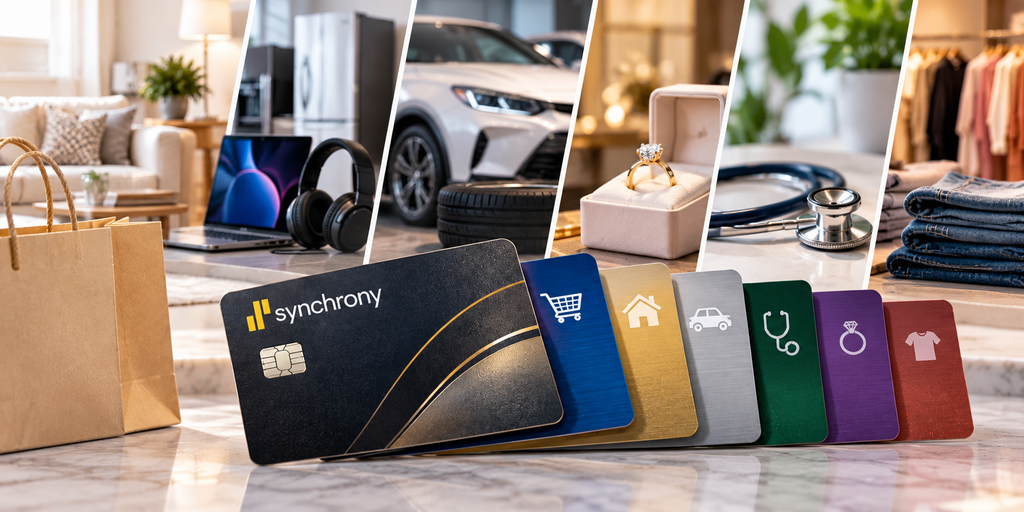
Synchrony’s portfolio is broad enough that shoppers can encounter cards designed around very different purchases.
Home & Furniture Credit Cards
Synchrony works with numerous furniture and home retailers. Current examples include Ashley Advantage, Rooms To Go, La-Z-Boy, Mattress Firm, and the Synchrony HOME Credit Card.
These cards are often centered around promotional financing rather than everyday rewards. For example, Synchrony HOME can be used at participating Synchrony HOME locations, with promotional financing available on qualifying purchases.
This can be particularly relevant when financing a large purchase such as a sofa, mattress, appliance, or home-improvement project.
Electronics & Appliances
Synchrony also provides financing products for electronics and appliances.
The current lineup includes products such as the Google Store Financing Account, which can be used for qualifying purchases at the Google Store, along with retailer-specific cards for appliances and other electronics.
Automotive Cards
Automotive is another major part of the Synchrony portfolio.
Examples include:
- Synchrony Car Care
- 4 Wheel Parts
- Summit Racing Equipment Speedcard
- Tire Pros
- Town Fair Tire
- Tuffy Tire & Auto Service
- Ziebart
Availability and application status can differ by product, so a card appearing in a broader Synchrony portfolio does not necessarily mean that new applications are currently being accepted.
Jewelry Cards
Synchrony also partners with jewelry retailers. Examples in its current portfolio include REEDS Jewelers, Shane Co., and other specialty jewelry cards.
These products may offer promotional financing for qualifying purchases, making them particularly different from conventional rewards cards.
Health & Wellness Cards
One of the better-known products in this category is CareCredit, which is designed to help consumers finance eligible healthcare expenses through participating providers.
Because healthcare financing can involve different promotional terms and repayment conditions, applicants should review the specific offer before making a purchase.
Examples of Popular Synchrony Cards
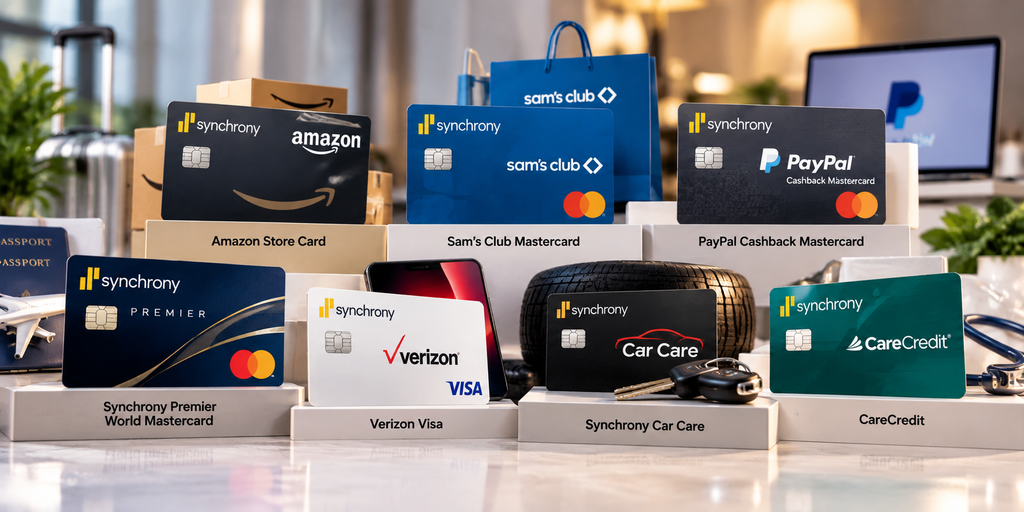
Synchrony’s portfolio changes over time, but several cards and products are particularly recognizable.
Amazon Store Card
The Amazon Store Card is designed for Amazon shoppers and offers promotional financing options on qualifying purchases. Amazon Prime members may also have access to a Prime Store Card version that offers rewards on eligible Amazon.com and Whole Foods Market purchases.
The important distinction is that the Amazon Store Card is not simply a general-purpose credit card. Its primary value is tied to Amazon purchases and the financing or rewards options associated with the account.
Sam’s Club Mastercard
Synchrony also issues the Sam’s Club Mastercard, which combines Sam’s Club benefits with broader Mastercard acceptance.
The card can provide rewards on eligible purchases beyond Sam’s Club, while Sam’s Club membership is required. Specific rewards and eligibility terms should be checked against the current card agreement before applying.
Synchrony Premier World Mastercard
The Synchrony Premier World Mastercard is different from a traditional store card because it operates on the Mastercard network.
Synchrony currently advertises 2% cash back on every purchase, unlimited cash back, no annual fee, and Mastercard benefits.
This illustrates why it’s useful to separate Synchrony’s store cards from its broader-use cards when comparing the portfolio.
PayPal Cashback Mastercard
The PayPal Cashback Mastercard is another network card in Synchrony’s portfolio. Synchrony currently lists 3% cash back on eligible PayPal purchases and 1.5% on other purchases, subject to the card’s terms.
Verizon Visa
The Verizon Visa is another co-branded card issued by Synchrony. It is tied to Verizon’s rewards ecosystem rather than functioning like a conventional retailer-only store card.
Synchrony Promotional Financing: What Should You Know?
Promotional financing is one of the biggest reasons consumers encounter Synchrony cards.
A retailer might advertise an offer such as a fixed number of months of promotional financing on a qualifying purchase. The exact structure varies by card and retailer, so you should read the terms attached to the particular offer rather than assuming every Synchrony card works the same way.
For example, Synchrony currently advertises promotional financing on qualifying purchases through products such as Ashley Advantage, Synchrony HOME, and Synchrony Outdoors.
Why the Fine Print Matters
A promotional financing offer doesn’t necessarily mean that the purchase is permanently interest-free.
Before accepting an offer, check:
- The promotional period
- Minimum purchase requirements
- Whether minimum monthly payments are required
- The regular purchase APR
- What happens if the promotional balance isn’t paid according to the offer terms
- Which purchases qualify
- Whether the promotion can be combined with other discounts
This is particularly important for large purchases. A financing offer that appears inexpensive during the promotional period can become substantially more expensive if the regular APR applies afterward.
Can You Use a Synchrony Store Card Anywhere?
Usually, no. A private-label Synchrony store card may only work at the retailer or participating merchants associated with that card.
For example, Synchrony describes the Google Store Financing Account as usable only for purchases at store.google.com.
By contrast, a Synchrony-issued Mastercard or Visa has broader acceptance through its respective payment network.
The easiest way to tell the difference is to check the card itself and its terms. A Visa or Mastercard logo generally indicates network-wide acceptance, while a retailer-specific card may have much narrower usage restrictions.
How to Apply for a Synchrony Credit Card
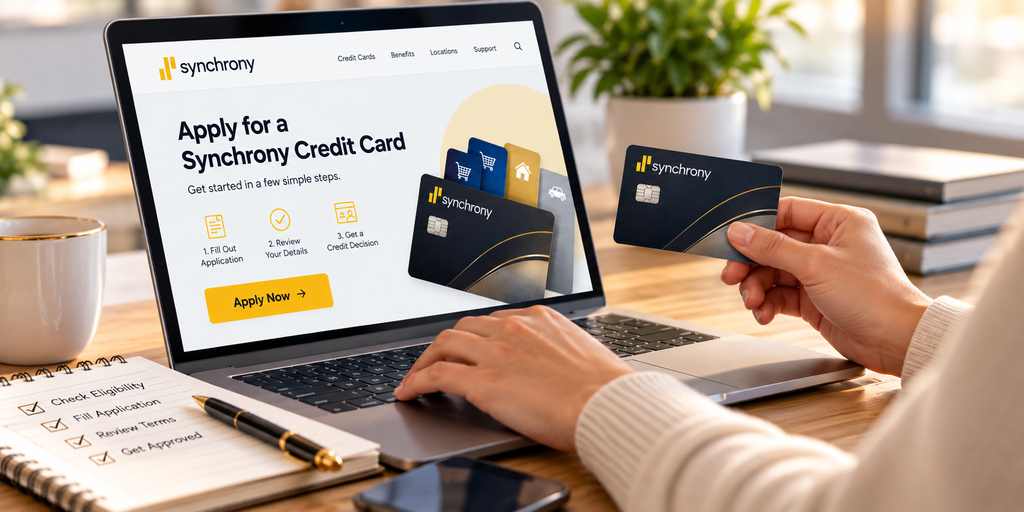
The application process depends on the particular Synchrony product.
For many cards, you can:
- Find the retailer or card through Synchrony’s credit-card directory.
- Review the card’s terms, rewards, and financing offers.
- Check whether prequalification is available.
- Submit an application if you decide to proceed.
- Wait for the issuer’s credit decision.
Synchrony’s current website offers Apply and, for selected cards, See if you prequalify options.
Prequalification is not the same as approval, and the availability of a prequalification option varies by card.
What Should You Check Before Getting a Synchrony Card?
A store card can make sense for a particular purchase, but it’s worth looking beyond the introductory offer.
1. Where Can You Use It?
First determine whether the card is retailer-only, usable at participating merchants, or accepted more broadly through Visa or Mastercard.
2. What Is the Regular APR?
Don’t evaluate a financing offer solely by its promotional period. Check the regular purchase APR that can apply afterward.
3. Are There Rewards?
Some Synchrony cards are primarily financing tools, while others offer retailer rewards or broader cash-back programs.
4. Is There a Minimum Purchase?
Some promotional financing offers require a minimum purchase amount. The threshold can vary by card and promotion.
5. What Happens After the Promotional Period?
Work out whether you can realistically pay off the promotional balance within the applicable period before using financing for a major purchase.
Does Synchrony Have Credit Cards for Everyday Spending?
Yes. Synchrony’s portfolio extends beyond store-only cards.
Its current lineup includes Mastercard products such as the Synchrony Premier World Mastercard, Synchrony Plus World Mastercard, and Synchrony Preferred Mastercard. The Premier card currently advertises 2% cash back, while the Plus card advertises 1% cash back; the latter two have different eligibility requirements, including invitation-only availability for some products.
This means Synchrony shouldn’t be viewed solely as a store-card issuer. Its products span private-label retail financing, specialized networks, and general-use payment cards.
The Bottom Line
Synchrony’s credit-card portfolio is much broader than a simple list of store cards. It includes retailer-specific cards, multi-merchant products, specialized financing accounts, and Visa or Mastercard products.
For shoppers, the most important distinction is how each card works: some are primarily designed to finance a purchase from a particular retailer, while others offer rewards and broader acceptance. Checking the current terms for the exact card you’re considering is therefore more useful than judging the Synchrony portfolio as a whole.
Frequently Asked Questions
Synchrony’s current online directory displays 69 card options, while third-party lists may show a larger number when they include products with different application statuses, closed products, or broader portfolio categories.
Not always. Synchrony issues private-label store cards as well as network and co-branded cards. A Visa or Mastercard issued by Synchrony can generally be used wherever that network is accepted, subject to its terms.
Usually not. Store cards are generally tied to the retailer or participating merchant network for which they were issued.
Yes. Promotional financing is available on many Synchrony products, although the offer, qualifying purchase amount, duration, and repayment terms vary by card and retailer.
Yes. Synchrony’s current portfolio includes Mastercard products such as the Synchrony Premier World Mastercard, Synchrony Plus World Mastercard, and Synchrony Preferred Mastercard.
Some Synchrony cards offer a prequalification option. Availability varies by product, and prequalification does not guarantee approval.
Look at the card’s acceptance restrictions, regular APR, promotional financing terms, rewards, fees, minimum purchase requirements, and what happens after any introductory financing period.