
How To Get Between Washington, DC & New York?
You can travel between Washington, D.C., and New York City by train, plane, or car, with Amtrak offering a particularly convenient city-center-to-city-center option. Driving covers roughly 229 miles and takes about 3 hours and 50 minutes in typical traffic, while some Acela schedules complete the rail journey in under 3 hours. Flying has a much shorter airborne time, but airport transfers, security, boarding, and waiting can significantly increase the total journey.
That means the right transportation method depends on more than speed. Your starting point, destination within New York, number of travelers, luggage, schedule, and total trip cost can all change which option makes the most sense.
This guide compares flying, driving, and taking the train from Washington, D.C., to New York so you can understand the practical differences before booking.
Washington, D.C., to New York Travel Options at a Glance
| Transportation | Typical/Example Travel Time | Main Advantage | Factor To Consider |
| Acela | Some schedules under 3 hours | Fast downtown-to-downtown service | Usually a premium rail product |
| Northeast Regional | Generally longer than Acela | Direct city-center service | Journey varies by departure |
| Driving | About 3 hr. 50 min. in typical traffic | Flexibility | Traffic, tolls, fuel, and parking |
| Flying | Short flight, but longer door-to-door | Fast airborne journey | Security and airport transfers |
| Bus | Around 4+ hours on some schedules | Often useful for budget travel | Road congestion can cause delays |
Travel times are estimates. Train schedules, traffic, weather, airport conditions, and your exact origin and destination can change the overall journey.
How Far Is Washington, D.C., From New York City?
Washington, D.C., and New York City are approximately 229 miles apart by road, or about 369 kilometers. Under typical traffic conditions, driving takes approximately 3 hours and 50 minutes.
The cities form part of the busy Northeast Corridor. A typical road journey follows the I-95 corridor through or near Baltimore, Wilmington, Philadelphia, and northern New Jersey before reaching New York.
The relatively short distance is also why rail competes so effectively with air travel on this route. Instead of traveling far outside the city center at both ends, train passengers can depart from Washington Union Station and arrive directly in Midtown Manhattan.
Taking the Train From Washington, D.C., to New York
Amtrak provides direct downtown-to-downtown rail service between Washington and New York, making the train one of the simplest ways to travel between the cities. Washington Union Station is located near central D.C., while New York Penn Station and Moynihan Train Hall put travelers directly in Midtown Manhattan.
The two principal services to compare are Acela and Northeast Regional.
Traveling on Amtrak Acela
Acela is Amtrak’s premium high-speed Northeast Corridor service connecting Washington, Baltimore, Philadelphia, New York, New Haven, Providence, Boston, and other destinations.
Journey time depends on the departure selected. For example, Amtrak’s April 2026 timetable includes Washington-to-New York Acela service scheduled for 2 hours and 50 minutes on certain departures.
Acela passengers can expect amenities such as:
- Reserved seating
- Wi-Fi
- Power outlets
- Business Class
- First Class
- Quiet Car availability
- Café service
Amtrak’s newer NextGen Acela trains are also entering service across the Northeast Corridor. They have a maximum operating speed of 160 mph and offer features including high-speed Wi-Fi, individual USB ports, electrical outlets, and reading lights. NextGen equipment is currently used on selected departures rather than every Acela service.
Traveling on Northeast Regional
Northeast Regional is another useful option for passengers who do not require Acela’s premium service.
The trains also operate directly along the Northeast Corridor. Amtrak lists spacious seats, free Wi-Fi, and at-seat power outlets among the features of Northeast Regional service.
Journey times depend on the train and its intermediate stops, so travelers should compare individual departures rather than assuming every Northeast Regional journey takes the same amount of time.
Why the Train Can Save Door-to-Door Time
The location of the stations is one of rail’s biggest practical advantages.
Washington Union Station is in central Washington, while New York Penn Station/Moynihan Train Hall is in Midtown Manhattan. Acela is specifically designed as downtown-to-downtown transportation along the Northeast Corridor.
Imagine that your trip starts near Capitol Hill and ends near Times Square. Taking the train eliminates a separate journey from central Washington to an airport and another airport-to-Manhattan transfer after landing.
You also avoid the airport security process required for a flight.
For this reason, travelers should compare door-to-door travel time, not simply a train’s scheduled duration with an aircraft’s time in the air.
Flying From Washington, DC to New York
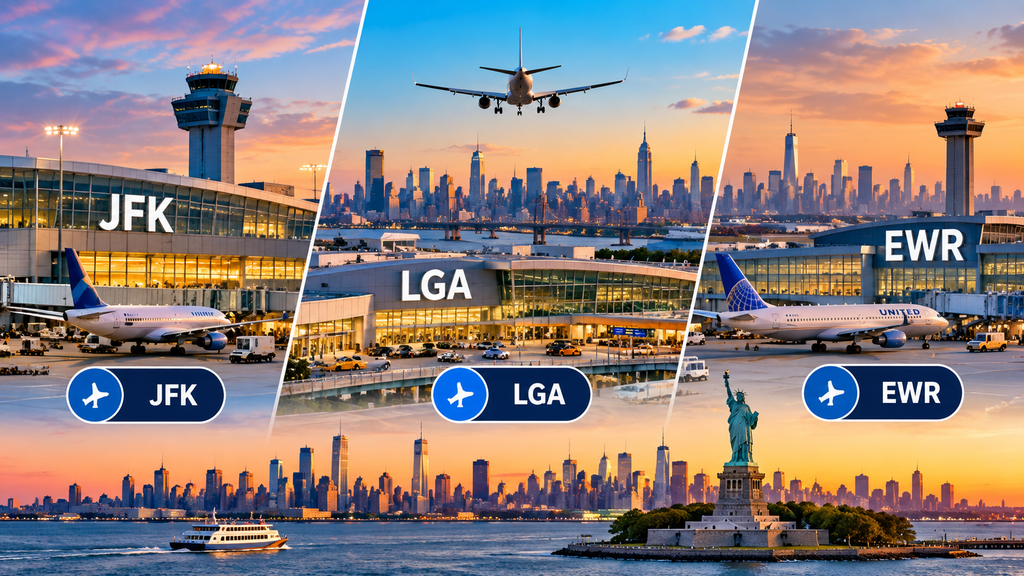
Flying can cover the distance quickly, but it does not necessarily produce the shortest total journey between central Washington and Manhattan.
Travelers first need to reach an airport, clear security, board, fly, deplane, and then travel from the New York-area airport to their final destination.
Which Airports Serve Washington, DC?
Three major airports serve the Washington region:
- Ronald Reagan Washington National Airport (DCA)
- Washington Dulles International Airport (IAD)
- Baltimore/Washington International Thurgood Marshall Airport (BWI)
For many travelers beginning in central Washington, DCA is particularly convenient because the airport has a Metrorail station connected to its terminals. Reagan National is served by the Blue and Yellow lines.
Dulles also has rail access. The Silver Line extension serves Washington Dulles International Airport.
BWI is farther from central Washington, but it has rail connections through its nearby MARC/Amtrak station. A free airport shuttle links the terminal and rail station.
Which Airports Serve New York City?
The three principal airports serving the New York metropolitan area are:
- LaGuardia Airport (LGA)
- John F. Kennedy International Airport (JFK)
- Newark Liberty International Airport (EWR)
The airport you select can make a major difference to your total travel time.
DCA to LGA
DCA and LaGuardia are worth checking when the journey begins in central Washington and ends in New York City.The downside is that LaGuardia does not have a subway station inside the airport. Instead, passengers can use MTA buses to connect with the subway and other transit services.
The Q70 LaGuardia Link is free and connects Terminals B and C with the Jackson Heights–Roosevelt Avenue and 74 St–Broadway subway hubs.
Flying Into JFK
JFK can work well for travelers who prefer a rail connection into Manhattan.
The AirTrain connects JFK’s terminals with the Long Island Rail Road, New York City Subway, and other ground transportation. JFK Airport currently recommends public transportation during ongoing airport construction and notes that LIRR connections from Penn Station or Grand Central Madison reach the AirTrain connection in about 20 minutes.
Why Airport Choice Matters
Consider two passengers who book similarly timed flights.
One leaves from a location close to DCA and arrives at LGA with a destination in Queens. Another starts near Washington Union Station, flies from a more distant airport, lands at JFK, and then continues to Midtown Manhattan.
Their scheduled flights might look similar, but their door-to-door journey times could be very different.
That is why airport transportation should be calculated before deciding whether flying is faster than rail.
How Long Does Flying Really Take?
The flight itself is only one stage of the journey.
A realistic flight itinerary includes:
- Traveling to the Washington-area airport.
- Arriving sufficiently early for check-in and security.
- Clearing TSA screening.
- Walking to the departure gate.
- Waiting and boarding.
- Flying to the New York area.
- Deplaning and collecting checked baggage, if necessary.
- Traveling from the arrival airport to your final destination.
For example, Reagan National currently advises passengers to check in at least 2 hours before domestic departures.
Consequently, a short flight can translate into several hours of total travel.
Airfares are also highly dynamic. Current airline fare pages explicitly warn that displayed prices can change by the time of booking and that optional charges such as baggage fees may apply.
Driving From Washington, D.C., to New York
Driving from Washington, D.C., to New York covers approximately 229 miles and takes about 3 hours and 50 minutes under typical traffic conditions.
The major advantage is flexibility. You can leave when you want, carry more luggage without airline-style baggage restrictions, and stop along the route.
However, driving through the Northeast Corridor also means dealing with potentially heavy traffic.
What Is the Driving Route?
A typical journey follows the I-95 corridor north toward Baltimore, then continues through Delaware and the Philadelphia region before passing through New Jersey toward New York City.
Your navigation app may suggest different roads according to congestion, crashes, construction, tolls, or your final destination.
Live navigation is therefore more useful than following one fixed route.
What Does Driving Actually Cost?
Do not calculate the road trip using fuel alone.
The full cost can include:
- Fuel
- Highway and turnpike tolls
- Bridge or tunnel tolls
- Rental-car charges
- Parking
- Hotel parking
- Additional mileage or rental fees
Parking deserves particular attention if you are staying in Manhattan. A car that spends the entire visit parked in a garage may provide little practical benefit once you arrive.
However, the economics can change for a group.
If four people travel together, for example, fuel and toll expenses can be divided among four passengers, whereas each traveler generally needs an individual train or airline ticket.
When Is Driving Particularly Useful?
Driving may be practical when:
- Several people are traveling together.
- You have substantial luggage.
- You need a vehicle after arriving.
- Your destination is outside central Manhattan.
- You want to stop along the way.
- You are continuing on a longer road trip.
Philadelphia, for example, sits naturally along the broader Washington–New York corridor, making it possible to turn transportation between the cities into a multi-stop trip.
What About Taking a Bus?
Although the main comparison is train versus plane versus car, intercity buses provide another practical alternative.
Bus service can be attractive for travelers prioritizing price over journey time. However, buses use the same road network as cars, meaning congestion on I-95 and around major cities can affect arrival times.
Bus operators, boarding locations, schedules, fares, baggage allowances, and onboard amenities vary. Travelers should therefore confirm the exact departure location and operator rules before booking.
Train vs. Plane: Which Is More Convenient?
For travelers going from central Washington to Manhattan, the biggest difference is what happens before and after the actual ride.
| Factor | Train | Plane |
| Washington departure | Union Station | DCA, IAD, or BWI |
| New York arrival | Midtown Manhattan | LGA, JFK, or EWR |
| Security | No airport-style TSA process | TSA screening required |
| Airport transfer | Not required | Required |
| Work during trip | Wi-Fi/power available on major Amtrak services | Depends on aircraft/service |
| Main advantage | Downtown-to-downtown journey | Short airborne time |
The plane can make sense when the airports fit your itinerary well, when airfare is attractive, or when the flight connects with a longer journey.
The train avoids airport transfers and places passengers directly in Midtown Manhattan, which can make its longer scheduled travel time competitive on a door-to-door basis.
Train vs. Driving: What Changes the Decision?
Driving and rail can have comparable headline travel times, but the experience differs considerably.
On a train, passengers can work, read, eat, or rest during the journey. Amtrak also avoids the need to navigate traffic and find parking after reaching New York.
A car offers much greater flexibility. Travelers can choose their departure time, stop whenever necessary, carry more belongings, and continue to destinations that are inconvenient by public transportation.
Consider your plans after reaching New York. If you are spending three days sightseeing in Manhattan, a parked car may become an unnecessary expense. If you are continuing to suburban New York, Long Island, or another destination, a vehicle may be more useful.
What Is the Cheapest Way From Washington, D.C., to New York?
There is no transportation option that is always the cheapest because train tickets, airfares, bus fares, fuel costs, tolls, and parking expenses vary.
Bus tickets can sometimes be inexpensive, while advance Amtrak fares may also be attractive. Airline prices fluctuate considerably according to travel dates and demand.
Driving becomes more competitive when several people share one vehicle.
A useful calculation is:
Base fare or fuel + baggage fees + tolls + airport/station transfers + parking + other required charges = realistic trip cost
Suppose an airfare looks cheaper than the train ticket. If the flight requires paid transportation to Dulles, a checked-bag charge, and another transfer from the New York airport, the final cost may reverse the comparison.
Always compare the complete journey rather than the headline fare.
How To Choose Between Flying, Driving, and Taking the Train
Start with your actual origin and destination, not simply “Washington” and “New York.”
Consider:
- Door-to-door journey time
- Total price
- Number of passengers
- Luggage
- Parking requirements
- Airport transfer time
- Traffic risk
- Desired departure time
- Flexibility
- Need for a car after arrival
- Change and cancellation conditions
A traveler going from Capitol Hill to Midtown Manhattan may value direct rail access. Someone traveling from northern Virginia to northern New Jersey may find that driving better fits the itinerary.
The same transportation method is not automatically right for every traveler.
Tips for Traveling Between Washington and New York
Compare door-to-door time. A one-hour flight is not a one-hour trip once airport transportation, security, boarding, and arrival transfers are included.
Book fixed trips early. Amtrak specifically recommends advance booking among its strategies for finding lower fares.
Check live traffic before driving. A typical driving estimate does not account for every rush-hour backup, accident, weather event, or construction project.
Confirm your airport. New York has multiple major airports, as does the Washington region. An attractive fare may become inconvenient if the airport is far from your actual destination.
Calculate parking before choosing a car. Parking costs can significantly change the economics of driving to Manhattan.
Check the latest schedule. Rail services, flights, airport transit, and road conditions can change, so verify your itinerary shortly before departure.
Final Thoughts
Washington, D.C., and New York are close enough for rail, road, and air travel to be realistic options.
Amtrak has the advantage of connecting central Washington directly with Midtown Manhattan, while driving provides greater control over timing, luggage, stops, and onward transportation. Flying covers the distance quickly in the air, but its real travel time depends heavily on airport access, security, and the journey into New York after landing.
Before booking, compare the complete door-to-door journey and total cost for your specific date. That approach provides a much more useful answer than choosing an option solely because it advertises the shortest travel time.
Frequently Asked Questions
Yes. Amtrak operates direct Northeast Corridor trains between Washington Union Station and New York Penn Station/Moynihan Train Hall, including Acela and Northeast Regional service.
The journey varies by service and departure. Certain Acela schedules take less than 3 hours; an April 2026 Amtrak timetable, for example, lists a 2-hour-50-minute Washington-to-New York Acela journey. Check the timetable for your travel date.
The driving distance is approximately 229 miles (369 kilometers).
Typical driving time is approximately 3 hours and 50 minutes, although traffic, weather, roadwork, rest stops, and your exact destination can increase the journey.
Reagan National (DCA) has a Metrorail station connected to the airport and served by the Blue and Yellow lines, making it convenient for many central Washington journeys.
No direct subway station is located at LaGuardia. Passengers can connect to the subway by bus. The free Q70 LaGuardia Link connects Terminals B and C with nearby subway transit hubs.
Yes. Direct rail and air services make a same-day trip possible. If maximizing time in New York is important, compare early departures and late returns and account for all transfers at both ends.