
Frontier Airlines Review: Fares, Seats, Baggage & More
Frontier Airlines is a U.S. ultra-low-cost carrier built around low base fares, with extras such as carry-on bags, checked baggage, seat selection, and onboard food generally priced separately.
That pricing model is the key to understanding a Frontier flight: the fare you see first is not necessarily the final amount you will pay. Frontier currently serves more than 100 destinations across the U.S., Mexico, the Caribbean, and Central America, and its fleet is made up of Airbus A320-family aircraft.
So, what is Frontier Airlines actually like to fly? This review breaks down its fares, baggage rules, seats, in-flight experience, loyalty program, and the costs that can change the economics of a cheap ticket.
Frontier Airlines at a Glance
| Feature | Frontier Airlines |
| Airline type | Ultra-low-cost carrier |
| Headquarters | Denver, Colorado |
| Main fleet | Airbus A320 family |
| Frequent flyer program | Frontier Miles |
| Fare model | Base fare + optional extras |
| Free baggage | 1 personal item |
| Wi-Fi | Not currently available |
| Inflight food & drinks | Available for purchase |
| First Class | Being introduced during 2026 |
| Main network | U.S., Mexico, Caribbean & Central America |
Frontier describes itself as a value-focused airline whose model lets travelers pay for the services they actually want. Its standard fare includes a personal item, while bags, seats, and several other services can carry additional charges.
What Is Frontier Airlines Like?
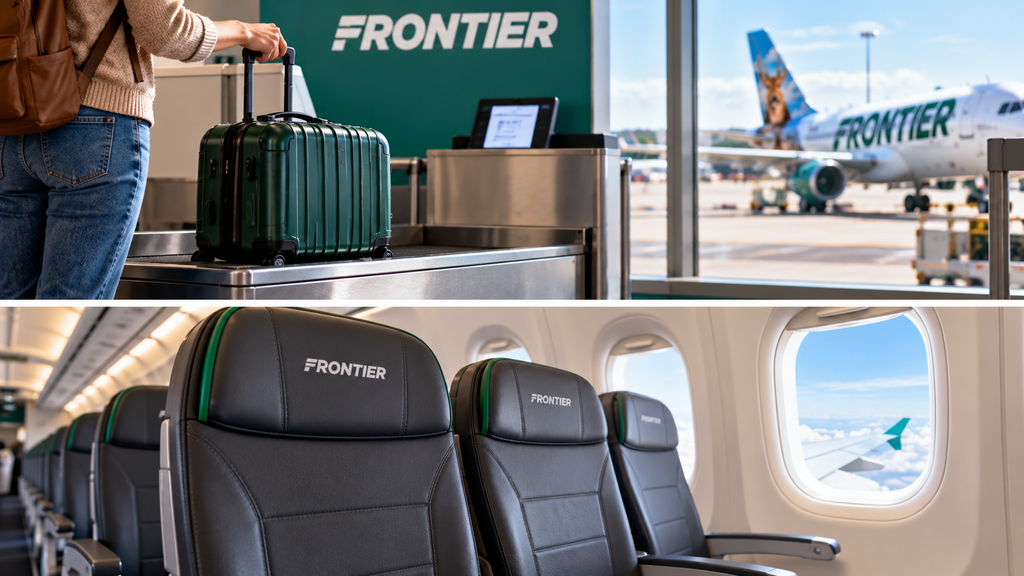
Frontier is designed around the ultra-low-cost airline model rather than the traditional full-service experience. That means the airline keeps the basic ticket relatively stripped down and gives passengers the option to add services individually or through bundles.
For example, a traveler taking a short weekend trip with one small backpack may need little beyond the base fare. Someone traveling for two weeks with a large suitcase, a carry-on, a preferred seat, and onboard refreshments will have a very different final price.
That distinction is important when comparing Frontier with other airlines. The useful comparison is not always the advertised fare; it is the total trip cost after adding everything you actually need.
Frontier Airlines Fares and Bundles
Frontier currently offers a Basic Fare along with Economy, Premium, and Business bundles. The bundles package selected extras together rather than requiring passengers to purchase every option separately.
Basic Fare
The Basic Fare is the most stripped-down option. It includes the flight and one personal item, while services such as seat selection and larger baggage options may cost extra.
This can work well for a traveler who packs light and does not care where they sit.
Economy Bundle
The Economy Bundle adds services such as seat selection and baggage to the basic fare. Frontier’s current fare information lists the Economy bundle as including a personal item, carry-on bag, standard seat selection, and a checked bag.
Premium Bundle
The Premium Bundle adds a higher-level seat option along with baggage and other benefits.
Business Bundle
The Business Bundle is the highest current bundle and includes a carry-on bag, two checked bags, and access to higher-level seating, along with other benefits. Frontier says bundle inclusions and pricing can change, so travelers should check the options displayed for their specific booking.
Frontier Airlines Baggage Fees
Baggage is one of the biggest differences between Frontier and traditional airlines.
Every Frontier ticket includes one free personal item, but carry-on and checked bags are generally purchased separately unless they are included in your fare bundle or status benefits. Bag prices vary according to the trip and when the bag is purchased.
Frontier specifically states that buying bags at booking is generally the cheapest option, while prices can increase closer to departure, with the highest pricing potentially applying at the gate.
Frontier Baggage Size Limits
The current baggage rules include:
- Personal item: Up to 18 × 14 × 8 inches
- Checked bag: Up to 62 linear inches
- Overweight checked bag: Additional charges apply
- Oversized checked bag: Additional charges apply
Frontier’s current baggage page states that checked bags must not exceed 62 linear inches, including handles, wheels, and straps. Bags over 100 pounds are not accepted, while bags between 63 and 110 linear inches can be subject to an oversized charge.
For example, a suitcase measuring 30 × 20 × 12 inches totals 62 linear inches and therefore falls within the stated maximum size. A 31 × 21 × 12-inch suitcase totals 64 linear inches and moves into the oversized category. Because baggage pricing can change by route and purchase timing, travelers should use Frontier’s current bag-price checker rather than relying on a generic fee figure.
Frontier Airlines Seat Selection and Legroom
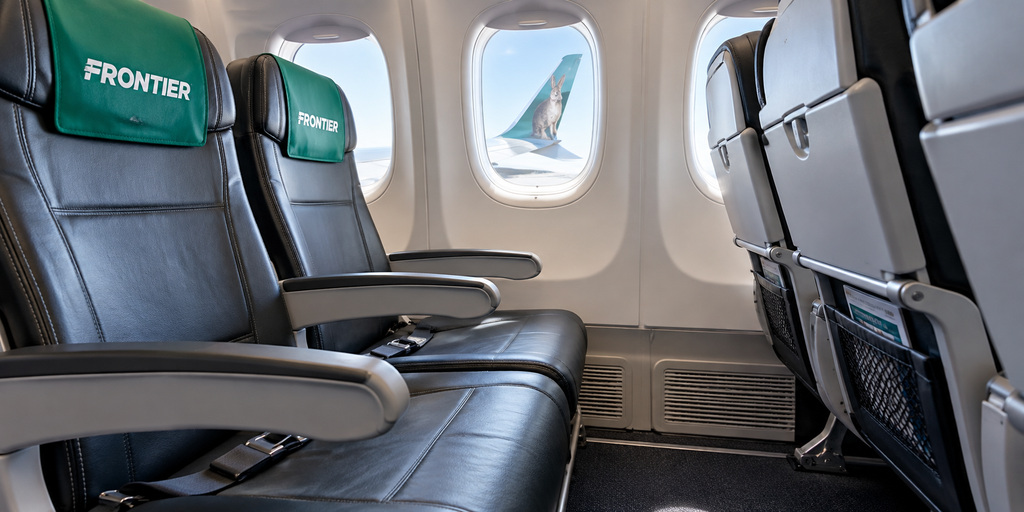
Seat selection is another area where Frontier’s pricing model differs from traditional carriers.
Passengers on the basic fare can skip advance seat selection and receive an assigned seat, but selecting a specific seat generally costs extra. Frontier offers several seating categories, including Standard, Preferred, Premium, UpFront Plus, and its new First Class product.
Standard Seats
Standard seats are the regular seating option and are generally the least expensive when seat selection is purchased separately.
Premium Seats
Premium seats offer additional legroom and are available for purchase or through certain bundles and loyalty benefits.
UpFront Plus
UpFront Plus places passengers toward the front of the aircraft and provides an empty middle seat, along with additional legroom. It is intended to provide more personal space without creating a separate traditional business-class cabin.
Frontier First Class
Frontier is introducing a new First Class product during 2026. The new seats use a 2×2 configuration at the front of the aircraft and are being introduced progressively as aircraft are equipped with the new configuration.
That makes the current Frontier cabin worth checking carefully before booking: not every aircraft will necessarily have the same seating configuration during the transition.
What Is Frontier Airlines’ Inflight Experience Like?
Frontier keeps its onboard offering relatively simple.
At present, Frontier does not offer Wi-Fi, streaming entertainment, television, or electrical outlets on its flights. The airline says it plans to begin installing Starlink Wi-Fi starting in early 2027.
Food and drinks are also not complimentary. Passengers can purchase snacks and beverages onboard, including alcoholic drinks.
For example, a traveler expecting to work on a laptop throughout a Frontier flight should download anything needed beforehand and arrive with a fully charged device, since onboard connectivity and electrical outlets are not currently available.
Frontier Airlines Routes and Destinations
Frontier currently flies to more than 100 destinations across the United States, Mexico, the Caribbean, and Central America. Its network can be particularly relevant for travelers looking for lower-cost nonstop or connecting options between U.S. cities and leisure destinations.
Frontier’s route network can change, so a city served today is not necessarily guaranteed to remain on the schedule year-round. Check the airline’s current route and flight schedule when planning a trip.
Frontier Miles: What Does the Loyalty Program Offer?
Frontier Miles is the airline’s frequent-flyer program.
Members earn miles and points based on eligible Frontier purchases, with earning rates affected by the fare or bundle purchased and the member’s status. Frontier announced changes taking effect for bookings made from September 1, 2026, with further Elite Status benefit changes applying to bookings made from January 1, 2027.
Current elite benefits can include perks such as priority customer care, fee waivers, seat-related benefits, baggage benefits, and companion travel, depending on status level and the applicable program rules.
For frequent Frontier travelers, these benefits can materially change the economics of the airline because services that normally cost extra may become included or discounted.
What Is Frontier Discount Den?
Discount Den is Frontier’s paid fare membership program. Members receive access to eligible lower fares and promotions, and the membership can be used for up to eight additional people on the same reservation when the member is traveling. It also includes access to Kids Fly Free offers on qualifying flights.
The membership fee and enrollment offers can change, so check Frontier’s current terms before joining.
The basic question is whether you fly Frontier often enough for the fare savings to exceed the membership cost.
Is Frontier Airlines Reliable?
Reliability should be separated into different measures rather than treated as one overall characteristic.
For example, on-time performance measures whether flights arrive within the applicable scheduled threshold, while cancellation rates, irregular operations, and the availability of alternative flights can affect the practical impact of a disruption.
The U.S. Bureau of Transportation Statistics publishes current airline performance data, including on-time arrival information. Its national July 2026 data showed 69.49% of reporting flights arriving on time across the measured network, illustrating why individual airline and route-level data should be checked rather than relying on a generic industry assumption.
Frontier’s own network structure can also matter when a disruption occurs. If a route has fewer daily frequencies, there may be fewer alternative flights available compared with a carrier operating multiple daily departures.
That does not mean every Frontier flight will experience a delay; it means travelers should consider the specific route, schedule, and connection when evaluating their itinerary.
Is Frontier Airlines Safe?
Safety and comfort are separate considerations.
Frontier operates an Airbus A320-family fleet and reported 165 aircraft in its fleet as of June 30, 2026.
A review of an airline should not use passenger comfort ratings or complaints as a substitute for aviation safety information. For safety-related questions, travelers should rely on aviation regulators and established safety-monitoring sources rather than individual passenger reviews.
What Are the Main Advantages of Flying Frontier?
Frontier’s model can make sense in several situations.
Low Base Fares
The airline’s pricing structure is built around low initial fares, which can be useful for travelers who need only transportation and a personal item.
Optional Extras
Passengers do not necessarily have to purchase every service. If you do not need a checked bag, seat upgrade, or onboard food, you can avoid those individual costs.
Growing Seating Options
Frontier is expanding beyond its traditional bare-bones seating model with UpFront Plus and the introduction of First Class during 2026.
Loyalty Benefits
Frequent travelers can potentially reduce some of the airline’s extra costs through Frontier Miles elite benefits.
What Should You Watch Out for With Frontier?
The biggest issue to calculate is the final price, not simply the starting fare.
A ticket that looks inexpensive can become considerably more expensive after adding:
- Carry-on baggage
- Checked baggage
- Seat selection
- Flight changes
- Priority-related services
- Food and drinks
- Other optional extras
Frontier itself explains that its optional-service model is designed to let customers pay for the services they choose.
This means two passengers on the same flight can have very different total prices.
For example, a traveler with a small backpack who accepts an assigned seat may pay little beyond the base fare. Another passenger traveling with a carry-on, checked bag, and selected seat could pay substantially more for the same flight.
How to Get the Most Value From a Frontier Flight
If you’re comparing a Frontier fare with another airline, calculate the complete trip cost before deciding.
Check the baggage cost first
If you know you need a carry-on or checked bag, add it before comparing fares.
Compare bundles with à la carte pricing
Sometimes purchasing several extras individually may cost more than a bundle. Check both options before completing the booking.
Choose your seat only if it matters to you
If you are comfortable with an assigned seat, you can avoid the separate seat-selection charge on a basic fare.
Buy baggage early
Frontier states that baggage prices generally increase closer to departure, with the lowest pricing available when the bag is purchased at booking.
Check the aircraft
If seating comfort matters, look at the aircraft and seating configuration attached to your flight. Frontier is currently introducing new First Class seating while continuing to operate aircraft with existing configurations.
Frontier Airlines: Who Is the Airline Best Suited For?
Frontier’s model is easiest to understand when you match the fare structure to your travel style.
It can appeal to travelers who:
- Prioritize a low starting fare
- Can travel with a personal item
- Do not need extensive onboard amenities
- Are comfortable purchasing only the extras they need
- Are flexible about seating
- Regularly use Frontier’s network
It may require more careful cost comparison for travelers who need several extras, such as multiple bags, specific seats, or additional onboard services.
The important point is not whether Frontier’s model works for every traveler. It is whether the airline’s total price and included services match what you actually need for the trip.
Final Takeaway
Frontier Airlines is built around a simple proposition: start with a lower base fare and let passengers add the services they need. That can work well when you travel light and are comfortable with a more limited onboard experience. It requires more calculation when you need baggage, specific seating, or several additional services.
Before booking, compare the complete fare, not just the headline price. Check your baggage needs, seat costs, bundle options, aircraft configuration, and the current rules for your specific itinerary. That gives you a much clearer picture of what your Frontier flight will actually cost and what to expect once you board.
Frequently Asked Questions
Frontier offers an ultra-low-cost flying model in which the base fare includes fewer services than many traditional airlines. Whether the fare works for you depends largely on the services you need and the total price after optional additions.
No. Frontier currently does not offer Wi-Fi, TV, movies, or other inflight entertainment, and its aircraft do not currently have electrical outlets. The airline says Starlink installation is planned to begin in early 2027.
Yes, Frontier is introducing a new First Class seating product during 2026. It features a 2×2 configuration at the front of equipped aircraft and is being introduced progressively.
Generally, yes. Passengers can pay to select a seat, while travelers who do not purchase seat selection can be assigned a seat. Certain bundles and Elite Status benefits can include seating benefits.
A standard ticket does not automatically include a free checked bag. Checked baggage can be purchased separately or included through certain bundles or qualifying loyalty benefits.
Every Frontier ticket includes one personal item within the airline’s stated size limit. Larger carry-on and checked bags generally require an additional purchase unless included through a qualifying bundle or benefit.
Yes, but food and beverages are generally available for purchase rather than provided free of charge.
Yes. Frontier Miles is Frontier’s loyalty program, with miles and elite-status benefits available to members. The program has announced changes to earning rates and benefits for 2026 and 2027.