
Norse Atlantic Cancels All U.S. Routes Except for 1: What Travelers Need to Know
Norse Atlantic Airways is making a major change to its U.S. network. From late October 2026, the airline is scheduled to withdraw its New York–London Gatwick and New York–Rome services, leaving London Gatwick–Orlando as its only scheduled transatlantic route to the United States during the winter 2026–27 season.
The move marks a significant shift for an airline that originally built its identity around low-cost, long-haul connections between Europe and North America.
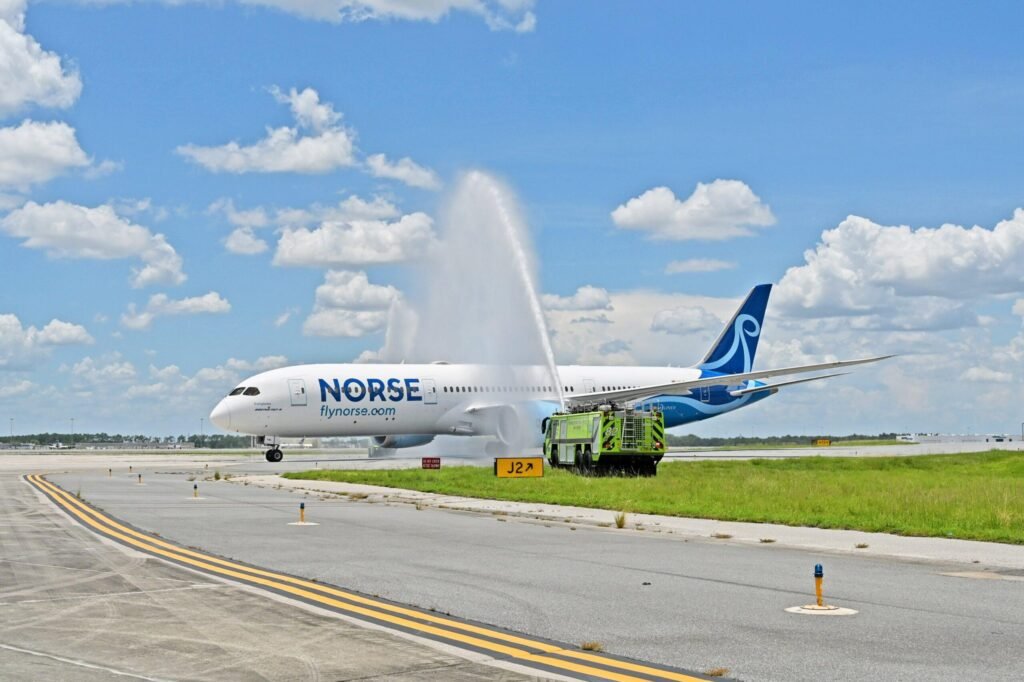
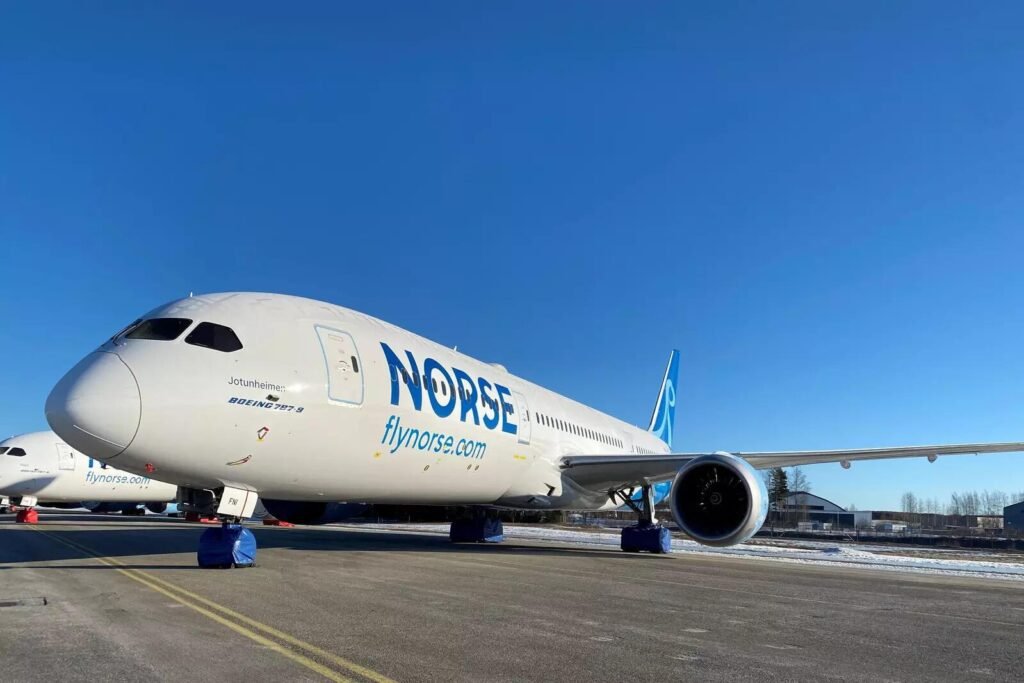
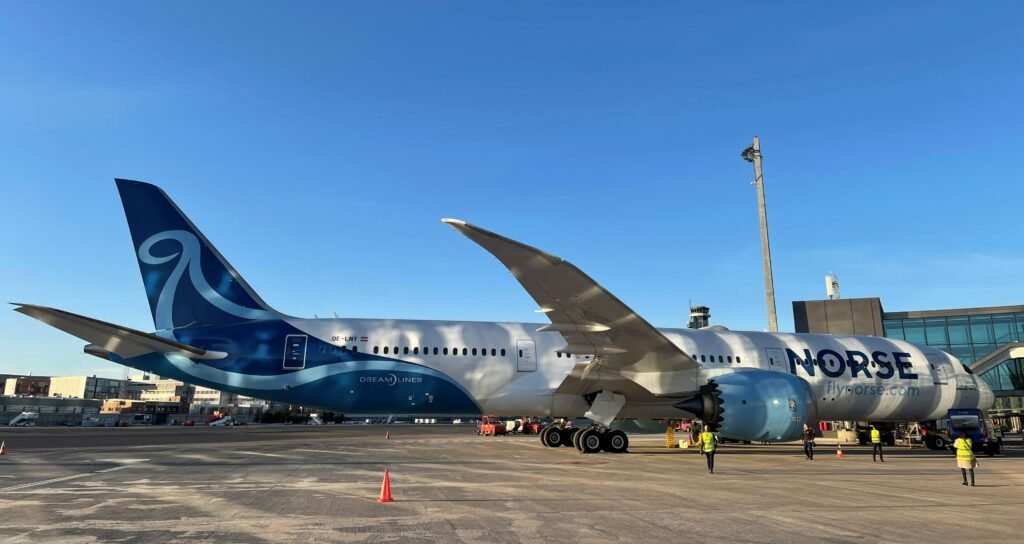
Norse Atlantic U.S. Route Cuts at a Glance
| Detail | Current / Upcoming Situation |
|---|---|
| Airline | Norse Atlantic Airways |
| Major change | Most scheduled U.S. routes are being withdrawn |
| New York–London Gatwick | Scheduled to end from late October 2026 |
| New York–Rome | Scheduled to end from late October 2026 |
| Los Angeles services | Already removed from the 2026 summer schedule |
| Remaining scheduled U.S. route | Orlando (MCO) – London Gatwick (LGW) |
| Aircraft | Boeing 787 Dreamliner |
| Main strategic direction | More leisure, charter and ACMI flying |
| Winter 2026–27 U.S. network | One scheduled U.S. route |
| Source of latest schedule information | Norse schedules/OAG reporting and aviation industry reporting |
The latest schedule data reported by Aviation Week indicates that Norse’s planned New York services will disappear from the winter schedule, leaving London Gatwick–Orlando as the airline’s only scheduled U.S. route for that season.
What Routes Is Norse Atlantic Cancelling?
The most significant changes affect New York.
1. New York JFK – London Gatwick
Norse Atlantic is scheduled to end regular service between New York John F. Kennedy International Airport (JFK)and London Gatwick Airport (LGW) from late October 2026.
The route had been an important part of Norse’s original low-cost transatlantic strategy.
2. New York JFK – Rome Fiumicino
The airline is also withdrawing its New York JFK–Rome Fiumicino (FCO) service from the winter schedule.
According to Aviation Week’s analysis of OAG schedule data, both New York routes had been planned to operate multiple times per week with Boeing 787-9 aircraft.
3. Los Angeles – Europe
The New York cuts follow an earlier withdrawal from Los Angeles. Norse did not resume three planned seasonal LAX services to London Gatwick, Paris Charles de Gaulle and Rome Fiumicino for summer 2026.
Earlier reporting linked the LAX withdrawal to elevated fuel costs and the economics of operating long-haul routes.
What Is the One U.S. Route Norse Atlantic Is Keeping?
The remaining scheduled U.S. route is:
| Route | Airport Codes | Status |
|---|---|---|
| Orlando – London Gatwick | MCO – LGW | Scheduled to remain |
| New York – London Gatwick | JFK – LGW | Ending from late October 2026 |
| New York – Rome | JFK – FCO | Ending from late October 2026 |
| Los Angeles – London | LAX – LGW | Not returning for summer 2026 |
| Los Angeles – Paris | LAX – CDG | Not returning for summer 2026 |
| Los Angeles – Rome | LAX – FCO | Not returning for summer 2026 |
The Orlando–London Gatwick route therefore becomes particularly important to Norse’s remaining U.S. network. Upgraded Points reported that the route is oriented toward leisure traffic between the United Kingdom and Florida.
Why Is Norse Atlantic Reducing Its U.S. Network?
There is no single publicly established explanation that should be treated as the definitive reason for every route cancellation. However, several developments provide important context.
1. Higher operating costs
Fuel prices became a major challenge for long-haul airlines during 2026. Norse itself said in its Q1 2026 report that an escalation in the Middle East conflict produced a significant fuel-price increase and materially affected airline economics.
Long-haul flights are particularly exposed to fuel costs because they require large quantities of fuel and involve substantial aircraft utilization.
2. Norse is changing its business model
Norse has increasingly moved toward a more flexible operating model involving scheduled passenger flights, charter operations and ACMI/wet-lease flying.
In its April 2026 company presentation, Norse said its business plan involved increased focus on charter and aircraft maintenance and insurance/ACMI operations while retaining selected scheduled routes during the summer high season.
3. Capacity is being directed toward other markets
Norse has identified strong demand for routes connecting Europe with destinations such as Thailand and South Africa.
Its Q1 2026 report said the airline responded to changing travel patterns by adding capacity on London Gatwick–Bangkok and emphasized a more demand-driven operating model.
This means the U.S. withdrawal is better understood as part of a broader network restructuring rather than simply the cancellation of two individual flights.
A Major Change From Norse Atlantic’s Original Strategy
Norse Atlantic launched commercial operations in June 2022 with an ambitious proposition: use Boeing 787 Dreamliners to provide relatively affordable long-haul, point-to-point flights.
Its first commercial route was Oslo–New York, establishing the airline’s connection with the U.S. market.
Over time, Norse expanded its U.S. network considerably.
At different points, the airline served or planned services involving cities including:
- New York
- Los Angeles
- Miami
- Orlando
- Las Vegas
- Boston
- San Francisco
- Washington, D.C.
- Fort Lauderdale
Norse’s 2024 annual report shows just how different its network was during the earlier phase of the airline’s development, listing multiple U.S. destinations alongside European destinations.
The 2026 network is therefore considerably more selective.
What Does This Mean for Passengers?
For travelers, the biggest impact will be felt by people who had planned to use Norse for direct flights between New York and Europe.
Passengers with existing bookings
Travelers should check their individual booking directly with Norse because the applicable options can depend on:
- Travel date
- Route
- Fare type
- Booking channel
- Whether the airline has formally cancelled the passenger’s flight
- Applicable fare and passenger-rights rules
A route being removed from a future schedule does not automatically mean every passenger receives the same resolution.
Passengers planning a New York–Europe trip
Travelers looking for a Norse flight from New York should check the actual operating date rather than relying on historical route information.
This is particularly important because some third-party travel websites may continue displaying older Norse destinations or route information.
Norse’s own online booking ecosystem and current schedule should be checked before purchasing.
Why the Norse Atlantic Cut Matters for Low-Cost Transatlantic Travel
Norse was part of a broader attempt to establish a sustainable low-cost model for long-haul flights.
The challenge is straightforward: passengers want low fares, but long-haul airlines face substantial costs for:
- Jet fuel
- Aircraft leasing
- Airport charges
- Maintenance
- Crew
- Navigation and handling
- Catering
- Regulatory compliance
Norse has attempted to address this through a combination of efficient Boeing 787 aircraft, a lean operating structure and additional revenue from optional services.
The airline says its Boeing 787 fleet is approximately 25% more fuel efficient than other long-haul aircraft types, according to its Q1 2026 corporate report.
Even with fuel-efficient aircraft, however, route profitability depends on demand, fares, fuel prices, aircraft utilization and other operating factors.
Norse Atlantic’s New Strategy: More Flexible Flying
One of the most important developments is that Norse is no longer relying exclusively on its original scheduled passenger model.
Its Q1 2026 report described a business with approximately half of its fleet covered by ACMI and charter operations and highlighted a strategy focused on adjusting capacity according to market conditions.
What is ACMI?
ACMI stands for:
- Aircraft
- Crew
- Maintenance
- Insurance
Under an ACMI arrangement, one airline provides an aircraft and its operating resources to another airline.
This can give an aircraft owner a more predictable source of revenue than relying entirely on selling individual passenger tickets.
Norse has previously operated ACMI services for other airlines, including a significant arrangement involving India’s IndiGo.
What Happens to Norse’s Boeing 787 Dreamliners?
The network changes also raise questions about aircraft utilization.
Norse operates Boeing 787 Dreamliners, aircraft designed for long-distance international operations.
As scheduled routes change, aircraft can potentially be allocated to:
| Aircraft use | What it means |
|---|---|
| Scheduled passenger service | Norse sells individual tickets |
| Charter flights | Aircraft is operated for a specific group or travel program |
| ACMI | Aircraft and operating services are supplied to another airline |
| Seasonal routes | Capacity moves according to seasonal demand |
| Other commercial opportunities | Aircraft may be deployed where demand or contracts justify operation |
Aviation Week reported in August 2026 that Norse was considering options for aircraft returning from its IndiGo arrangement, illustrating the company’s broader effort to redeploy its fleet.
Is Norse Atlantic Leaving the United States Completely?
No.
This distinction is important.
Norse Atlantic is not completely withdrawing from the U.S. market according to the latest winter 2026–27 schedule information.
Instead, its scheduled U.S. presence is being reduced to one route: Orlando–London Gatwick.
So the headline “Norse Atlantic cancels all U.S. routes except for 1” describes a dramatic reduction in the network, but it should not be interpreted as the airline permanently abandoning the United States altogether.
Norse Atlantic U.S. Routes: Before vs. Winter 2026–27
| Period | U.S. network |
|---|---|
| Earlier expansion period | Multiple U.S. cities and European connections |
| 2024 | New York, Orlando, Miami, Las Vegas and Los Angeles listed among U.S. destinations |
| Summer 2026 | Major reductions, including the removal of planned LAX services |
| Winter 2026–27 | One scheduled U.S. route reported: Orlando–London Gatwick |
| New York | No regular winter service after late October 2026 |
| Los Angeles | No scheduled Norse service in the 2026 summer network |
Norse’s 2024 annual report demonstrates the scale of its earlier U.S. network, while the latest OAG-based schedule analysis shows the much smaller winter 2026–27 operation.
What Travelers Should Do Before Booking Norse Atlantic
If you are considering a Norse Atlantic flight, use these practical checks:
Check 1: Confirm the operating date
Do not assume a route operates year-round. Norse has increasingly used seasonal and flexible capacity.
Check 2: Check the complete fare
A low advertised base fare may not represent the final price after adding:
- Checked baggage
- Seat selection
- Meals
- Other optional services
Check 3: Check the airport
Norse operates from airports such as London Gatwick, while other airlines may use different London airports.
Check 4: Check the schedule shortly before departure
Airline schedules can change, particularly during periods of fuel-price volatility or network restructuring.
Check 5: Check your passenger rights
If an airline cancels your flight, the applicable passenger-rights rules can depend on the departure country, destination, airline, circumstances of cancellation and other factors.
FAQs
No. The latest winter 2026–27 schedule information indicates that Norse will retain London Gatwick–Orlando as its scheduled U.S. route while withdrawing New York–London and New York–Rome services.
The New York–London Gatwick and New York–Rome routes are scheduled to end from late October 2026.
The remaining scheduled U.S. route for winter 2026–27 is Orlando International Airport (MCO)–London Gatwick Airport (LGW).
Norse did not resume its previously planned summer 2026 services from Los Angeles to London Gatwick, Paris and Rome.
Norse has cited changing market conditions and the impact of elevated fuel prices in its 2026 corporate reporting. The company is also pursuing a more flexible business model with greater emphasis on ACMI and charter operations.
The current winter schedule shows no regular New York service after the planned late-October withdrawal. Future network changes cannot be established from the current schedule alone.
Yes. Boeing 787 Dreamliners remain central to Norse Atlantic’s fleet and operating model.