
When Is the Best Time to Travel to Bali for Sunshine and Lower Crowds?
The best time to visit Bali is generally April to June or September to October, when travelers can enjoy a balance of pleasant weather, manageable crowds, and better accommodation availability than during the busiest holiday periods. Those prioritizing sunshine and outdoor adventures may prefer the dry season from approximately April to October, while budget-conscious visitors may find better value during the wetter months.
Bali’s appeal changes throughout the year. During the dry season, beaches attract sunseekers, surf conditions favor different coastlines, and outdoor activities become easier to plan. In the wet season, tropical showers bring lush landscapes, fuller waterfalls, and a quieter atmosphere in many tourist areas.
However, Bali’s climate is not entirely predictable. Rainfall varies across coastal towns, inland villages, and mountainous regions, while school holidays and international travel patterns influence crowds and hotel prices.
Understanding these differences can help visitors choose dates that suit their interests rather than simply booking the sunniest month.
Check Out This Blog: When Is the Best Time to Visit Turkey in 2026?
When Is the Best Time to Visit Bali?
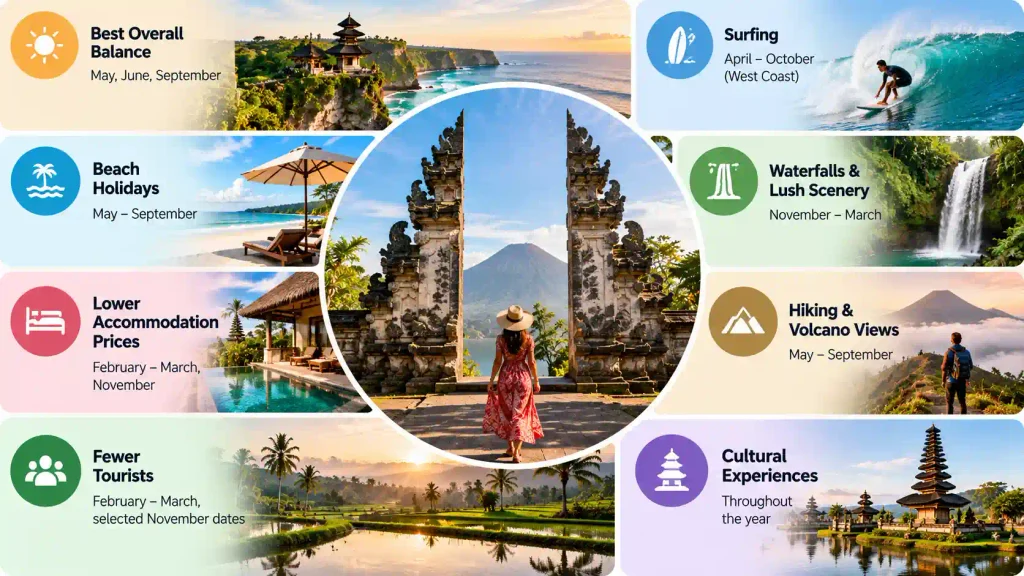
The best time to visit Bali depends on whether the priority is beach weather, affordable accommodation, fewer tourists, or outdoor activities.
For most first-time visitors, May, June, and September are particularly attractive because they generally offer favorable dry-season conditions without the same holiday demand often associated with July and August.
Travelers looking for lower prices may consider February or November, although wetter weather can affect outdoor plans.
| Travel priority | Recommended period | Why it works |
| Best overall balance | May, June, September | Generally drier weather and fewer peak-season crowds |
| Beach holidays | May–September | More reliable sunshine and outdoor conditions |
| Lower accommodation prices | February–March, November | Often less demand outside major holidays |
| Fewer tourists | February–March, selected November dates | Quieter periods in many popular areas |
| Surfing | April–October on the west coast | Seasonal swells and offshore winds |
| Waterfalls and lush scenery | November–March | Rainfall supports greener landscapes and stronger water flow |
| Hiking and volcano views | May–September | Generally better chances of clear, dry mornings |
| Cultural experiences | Throughout the year | Festivals and ceremonies follow local calendars |
These are seasonal guidelines rather than guarantees. Weather, holiday dates, and prices can change considerably between individual weeks.
What Is Bali’s Weather Like Throughout the Year?
Bali has a tropical climate with warm temperatures throughout the year, but rainfall and humidity change noticeably between seasons.
The island generally experiences two main seasons rather than the four seasons familiar in temperate countries. According to Indonesia’s official tourism authority, the dry season typically extends from April to October, while the rainy season generally runs from November to March.
However, seasonal boundaries are approximate, and rainfall patterns can shift from year to year.
How Does Bali’s Dry Season Compare With Its Wet Season?
| Weather factor | Dry season | Wet season |
| Typical months | April–October | November–March |
| Rainfall | Less frequent | More frequent tropical showers |
| Humidity | Generally lower | Generally higher |
| Temperature | Warm throughout | Warm throughout |
| Beach conditions | Often better for sunbathing | More variable |
| Outdoor activities | Easier to schedule | Require flexible plans |
| Landscapes | Some areas become drier | Vegetation becomes greener |
| Tourist demand | High in July and August | Generally lower, except major holidays |
Coastal temperatures commonly remain around the upper 20s to low 30s Celsius during the day. Inland highlands such as Kintamani and Bedugul are cooler, particularly during evenings and early mornings.
The difference between seasons is therefore less about temperature and more about how often rain affects outdoor activities.
Why Is Bali’s Dry Season Popular With Tourists?
Bali’s dry season is popular because it generally offers more sunshine, lower humidity, and favorable conditions for sightseeing, beaches, hiking, and water activities.
Between approximately April and October, visitors can usually plan outdoor excursions with fewer weather-related interruptions.
Beach destinations such as Seminyak, Jimbaran, and Uluwatu become especially attractive for travelers hoping to spend long afternoons near the coast.
However, the dry season also contains Bali’s busiest holiday period, particularly July and August.
What Can Travelers Do During the Dry Season?
The drier months are well suited to activities that depend on clear skies, comfortable walking conditions, or favorable sea conditions.
Popular options include:
- Watching the sunrise from Mount Batur on a suitable guided trek.
- Visiting temples such as Uluwatu and Tanah Lot.
- Exploring the rice terraces around Ubud.
- Surfing suitable west-coast breaks.
- Taking boat excursions when marine conditions permit.
- Spending time at beaches, outdoor restaurants, and coastal viewpoints.
For example, a traveler planning a Mount Batur sunrise hike may prefer June over January because dry-season conditions generally improve the chances of a clear morning.
Nevertheless, individual weather forecasts and local safety advice remain important, especially for mountain activities.
What Are the Disadvantages of Visiting During the Dry Season?
The main disadvantages are higher demand, crowded attractions, and potentially more expensive accommodation during peak travel weeks.
Popular locations such as Canggu, Seminyak, and central Ubud can become congested, particularly when international school holidays overlap.
Travelers visiting during July or August may need to reserve desirable villas, hotels, and popular restaurants further in advance.
The dry season also does not guarantee completely rain-free weather, especially in Bali’s mountainous interior.
Is Bali Worth Visiting During the Wet Season?
Yes. Bali can still be an appealing destination during the wet season, particularly for travelers interested in cultural attractions, wellness retreats, green landscapes, and accommodation value.
Rainfall generally becomes more frequent from November through March, but that does not mean every day is continuously rainy.
Some days feature extended dry periods, while others experience heavy showers that disrupt outdoor plans.
The wet season is particularly suitable for travelers who can adjust their schedules and do not need uninterrupted beach weather.
What Makes Bali Attractive During the Rainy Season?
The rainy months bring a different character to the island.
Rice fields and tropical gardens often appear greener, waterfalls may carry more water, and some popular attractions experience fewer visitors outside holiday periods.
A traveler staying in Ubud, for example, might spend a rainy afternoon enjoying a spa treatment, visiting an indoor gallery, or taking a Balinese cooking class.
The following morning could still provide an opportunity for outdoor sightseeing.
What Challenges Should Travelers Expect During the Wet Season?
Heavy rain can cause slippery walking surfaces, localized flooding, reduced visibility, and interruptions to outdoor activities.
Boat transfers to nearby islands may also be affected by rough seas or unfavorable weather.
Visitors should allow flexibility when scheduling activities such as snorkeling, diving, waterfall excursions, and island-hopping trips.
Rain can also wash debris onto certain beaches, making some coastal areas less appealing immediately after storms.
For travelers whose main priority is daily beach time, the dry season is generally the more dependable choice.
Which Month Is Best for Visiting Bali?
May, June, and September are among the strongest choices for visitors seeking a balance of weather, crowds, and accommodation availability.
However, each month offers different advantages.
Explore the Complete Guide: When Is the Best Time to Visit Egypt?
How Does Bali Change From January to December?
| Month | Typical weather | Crowd level | Best suited for |
| January | Very wet and humid | Moderate after New Year | Wellness stays and flexible sightseeing |
| February | Frequent tropical rain | Generally lower | Budget-conscious travelers |
| March | Rain begins easing in some periods | Low to moderate | Culture and quieter holidays |
| April | Transition toward drier weather | Moderate | Mixed beach and cultural trips |
| May | Generally dry and pleasant | Moderate | Best overall travel balance |
| June | Favorable dry-season conditions | Moderate to high | Beaches, hiking, and sightseeing |
| July | Dry-season weather | Very high | Family holidays and outdoor activities |
| August | Generally dry | Very high | Beaches, surfing, and excursions |
| September | Usually dry and comfortable | Moderate | Couples and outdoor travelers |
| October | Transition toward wetter conditions | Moderate | Flexible itineraries and value |
| November | Rainfall generally increases | Lower outside holidays | Green scenery and quieter stays |
| December | Wet and humid | High around Christmas and New Year | Festive resort holidays |
Crowd levels are broad seasonal estimates, not measured monthly visitor counts. Local festivals, school breaks, and international holidays can change demand.
Is January a Good Time to Visit Bali?
January is suitable for travelers who do not mind frequent rain and prefer spending time at resorts, spas, and cultural attractions.
The month is generally among Bali’s wettest periods. Outdoor excursions may need to be rearranged, and sea conditions can be unpredictable.
After the New Year holiday rush, some accommodations may become easier to book.
Is February a Good Month for Budget Travel?
February can be a good option for budget-conscious travelers because demand often decreases after the year-end holiday period.
Hotels and villas may offer more competitive rates, although discounts are not guaranteed.
The trade-off is frequent rainfall, high humidity, and the possibility of disrupted outdoor activities.
Lunar New Year and other holidays can also temporarily increase demand.
What Can Travelers Expect in March?
March is often a transitional month when rainy conditions continue but some periods become more favorable for sightseeing.
It is also an important cultural period because Nyepi, Bali’s Day of Silence, commonly falls in March, although its date changes annually.
Travelers should check the official calendar before booking flights or arranging activities.
Why Is April a Popular Time to Visit Bali?
April often marks the transition toward Bali’s drier season, making it attractive for travelers who want improving weather before the busiest summer months.
Beach visits, sightseeing, and outdoor dining become easier to plan as rainfall generally decreases.
However, Easter holidays and other travel periods can temporarily increase visitor numbers.
Is May the Best Month for Bali?
May is one of the best months to visit Bali because it generally combines dry-season weather with less intense crowds than July and August.
Travelers can comfortably combine beach days, cultural sightseeing, and outdoor excursions.
It is particularly suitable for first-time visitors planning to experience several different parts of the island.
What Makes June a Good Time to Visit?
June generally offers favorable conditions for beach holidays, hiking, and outdoor activities.
It is a useful month for travelers planning a combination of Ubud, Uluwatu, and coastal sightseeing.
Demand may begin increasing as international school holidays approach, so early reservations can still be worthwhile.
Should Travelers Visit Bali in July or August?
July and August are excellent for travelers prioritizing dry-season weather, but they are also among Bali’s busiest months.
Popular resorts, beaches, restaurants, and attractions can experience substantial demand.
Visitors should expect heavier traffic in tourist areas and potentially higher accommodation prices.
For families restricted to school holidays, these months remain practical choices, provided reservations are made well in advance.
Why Is September Often Recommended?
September offers many of the advantages of the dry season while avoiding some of the peak holiday crowds.
Beach conditions are generally favorable, and popular attractions may become easier to visit as international school holidays end.
It is particularly attractive for couples, independent travelers, and visitors interested in outdoor activities.
Is October Still a Good Time to Visit Bali?
October can be a good month for visitors who prefer flexible travel plans and are comfortable with occasional rain.
The month sits near the transition between the dry and wet seasons, so weather can become more variable.
Travelers may find attractive accommodation options, especially outside busy holiday dates.
What Is Bali Like in November?
November typically brings increasing rainfall and humidity as the wet season develops.
However, visitors can still enjoy cultural attractions, restaurants, spa experiences, and sightseeing during dry intervals.
It can be an appealing period for travelers who prioritize accommodation value over predictable beach conditions.
Is December Too Rainy for a Bali Holiday?
December is part of Bali’s wet season, but it also attracts substantial demand around Christmas and New Year.
This combination can surprise travelers expecting lower prices simply because it is the rainy season.
Popular resorts may charge premium rates during the holiday period despite unpredictable weather.
Visitors planning a December trip should book early and allow flexibility for outdoor activities.
When Is Bali Most Crowded?
Bali generally experiences its largest tourist crowds during July, August, and the Christmas–New Year holiday period.
These periods coincide with international school vacations, family holidays, and increased demand for beach resorts and private villas.
However, tourist numbers are not distributed evenly across the island. Areas such as Canggu, Seminyak, Ubud, and Uluwatu can remain busy even during quieter months.
How Do Peak, Shoulder, and Low Seasons Compare?
| Travel season | Typical period | Crowds | Accommodation demand |
| Peak season | July–August | Very high | High |
| Holiday peak | Christmas–New Year | Very high | High |
| Shoulder season | April–June, September–October | Moderate | Generally more manageable |
| Lower-demand season | January–March, parts of November | Generally lower | Often more competitive |
These categories are approximate. Indonesian public holidays, Eid, Easter, and regional school vacations can produce temporary increases in visitor numbers.
How Can Travelers Avoid Bali’s Biggest Crowds?
Travelers can reduce crowd-related inconvenience by choosing shoulder-season dates and avoiding the busiest hours at popular attractions.
For example, visiting the Tegallalang Rice Terrace early in the morning may provide a more comfortable experience than arriving during a busy afternoon.
Staying outside the busiest tourist centers can also help. However, quieter accommodation locations may require longer transfers to restaurants, beaches, or major attractions.
When Is the Cheapest Time to Visit Bali?
The cheapest time to visit Bali is often during lower-demand periods in the wet season, particularly parts of February, March, and November.
Hotels may reduce prices when occupancy is lower, and travelers can sometimes find better availability at villas and resorts.
However, Bali does not have a guaranteed cheapest month. Airfares depend on departure city, airline, booking date, connecting routes, and holiday demand.
How Can Travelers Save Money on a Bali Trip?
The biggest savings often come from selecting flexible travel dates rather than choosing the least expensive hotel alone.
Travelers should compare the total cost of flights, accommodation, transportation, and activities before booking.
For example, a discounted villa in a remote location may become less economical if visitors need a private driver for every excursion.
Those booking international flights can also compare airlines through the AirlineLocations airline directory before reviewing schedules, baggage policies, and connection requirements on the operating airline’s official website.
When Is the Best Time to Visit Bali for Different Activities?
The ideal travel period depends on the activities visitors intend to prioritize.
A surfing holiday, for example, may require different conditions from a waterfall photography trip or a mountain trek.
When Is the Best Time for Bali’s Beaches?
May through September generally offers some of the most favorable conditions for beach holidays.
Lower rainfall makes it easier to spend time swimming, sunbathing, and visiting coastal attractions.
However, conditions differ between beaches. Strong currents, waves, and changing tides can make swimming unsafe even during sunny weather.
Travelers should follow local warnings and choose beaches suitable for their preferred activities.
When Is the Best Time to Surf in Bali?
April through October is generally favorable for many west-coast and Bukit Peninsula surf breaks, including well-known locations around Uluwatu.
During the wetter months, east-coast locations such as Keramas and parts of Nusa Dua may offer more favorable wind conditions.
Surf quality also depends on swell direction, tide, wind, and the surfer’s experience.
Beginners should select appropriate beaches and lessons rather than assuming every popular surf destination is suitable for learning.
When Is the Best Time for Snorkeling and Diving?
The drier months often provide more favorable conditions for snorkeling and diving, although visibility and currents vary by location.
Areas around Amed, Tulamben, and Nusa Penida offer different underwater experiences.
Travelers interested in manta rays around Nusa Penida may have opportunities throughout the year, but sightings are never guaranteed.
Water temperatures, currents, and marine conditions should be checked with a reputable local operator before booking.
When Is the Best Time to Hike Mount Batur?
May through September generally provides better chances of clear weather for a Mount Batur sunrise hike.
Rain can make volcanic trails slippery, while cloud cover may obscure summit views.
Travelers should check current access restrictions, volcanic activity advisories, and local trekking requirements before arranging an excursion.
Even during the dry season, an early morning hike can be cold and windy at higher elevations.
When Is the Best Time to See Bali’s Waterfalls?
Bali’s waterfalls can be visited throughout the year, but their appearance changes with rainfall.
The wet season often produces stronger water flow and greener surroundings, which can be attractive for photography.
However, heavy rain can make trails hazardous and increase the risk of sudden water surges.
For visitors prioritizing easier access and safer walking conditions, the early dry season can offer a useful compromise.
When Is the Best Time for a Honeymoon in Bali?
May, June, and September are excellent choices for many couples planning a Bali honeymoon.
These months generally offer favorable conditions for private villa stays, beach dinners, sightseeing, and outdoor experiences.
Couples interested primarily in spa treatments, wellness retreats, and resort relaxation may also enjoy quieter wet-season dates.
Does the Best Time to Visit Bali Depend on Where Visitors Stay?
Yes. Bali’s weather and travel experience vary between its southern beaches, central highlands, and northern coastal areas.
A visitor staying in Ubud may experience frequent afternoon showers while another traveler enjoys clearer conditions near the southern coast.
How Do Bali’s Popular Regions Compare?
| Destination | Main attractions | Travel considerations |
| Ubud | Rice terraces, temples, wellness retreats | Inland areas can receive frequent rainfall |
| Seminyak | Beaches, restaurants, shopping | Busy during peak holidays |
| Canggu | Surfing, cafés, beach clubs | Traffic and visitor demand can be high |
| Uluwatu | Clifftop scenery, surfing, beaches | Outdoor activities favor drier conditions |
| Nusa Dua | Resorts and family holidays | Suitable year-round with weather flexibility |
| Amed | Diving, snorkeling, coastal villages | Sea visibility and conditions vary |
| Munduk | Waterfalls, mountain scenery, trekking | Cooler, wetter highland climate |
| Lovina | Northern coastline and quieter stays | Often less crowded than southern resort areas |
Travelers should choose a destination based on both their interests and the expected conditions.
For example, a visitor planning daily surfing lessons may prefer a coastal base, while someone interested in cultural activities and wellness might find Ubud more suitable.
Which Festivals and Holidays Can Affect a Bali Trip?
Nyepi, Galungan, Kuningan, and major national holidays can influence travel arrangements, attraction access, and accommodation demand.
Bali’s religious traditions are an important part of the island’s identity, and ceremonies take place throughout the year.
What Should Travelers Know About Nyepi?
Nyepi is Bali’s Day of Silence, when the island observes approximately 24 hours of restricted activity.
During this period, Bali’s Ngurah Rai International Airport closes to regular flights, most transportation stops, and visitors are generally required to remain within their accommodation.
Hotels may continue providing essential guest services under specific restrictions.
Indonesia’s official tourism authority advises visitors to avoid scheduling flights on Nyepi and to arrange necessary supplies beforehand.
The exact date changes each year, so travelers should confirm it before finalizing their itinerary.
Do Galungan and Kuningan Affect Tourist Activities?
Galungan and Kuningan are important Balinese Hindu celebrations that follow the 210-day Pawukon calendar.
Visitors may notice decorated bamboo poles, religious ceremonies, and increased activity around temples and villages.
Some local businesses may adjust their operating hours, although tourist services do not necessarily close across the island.
Travelers should respect ceremonies, follow temple dress requirements, and avoid disrupting religious activities.
How Far in Advance Should Travelers Book a Bali Holiday?
Travelers visiting Bali during July, August, or the Christmas–New Year period should generally consider booking several months ahead, particularly when seeking specific villas, family rooms, or premium resorts.
Shoulder-season travelers may have more flexibility, but popular properties can still sell out.
The ideal booking window depends on the destination, accommodation category, and travel dates.
What Should Travelers Check Before Booking?
A successful Bali itinerary requires more than selecting the right month.
Travelers should confirm the following details:
- Weather expectations for their chosen region.
- Flight connections and arrival times at Ngurah Rai International Airport (DPS).
- Passport validity, visa eligibility, and applicable entry requirements.
- Hotel cancellation policies and total accommodation charges.
- Boat transfer conditions when visiting nearby islands.
- Local festivals and public holidays that may affect transportation.
- Travel insurance coverage for weather-related interruptions.
Indonesia’s meteorological agency, BMKG, publishes seasonal forecasts that can help travelers understand changing rainfall patterns. Its forecasts also illustrate why the typical dry- and wet-season calendar should not be treated as an exact prediction for every year.
Take a Look at This Blog: When Is the Best Time to Visit The Bahamas?
What Is the Best Time to Plan a Bali Holiday?
For most travelers, May, June, and September provide the best balance of favorable weather, outdoor activities, and manageable crowds.
July and August remain excellent for beach holidays, although accommodation demand and tourist numbers are generally higher. Meanwhile, the wet season can appeal to visitors interested in green landscapes, cultural experiences, and potentially lower accommodation costs.
The best decision ultimately depends on the type of holiday being planned. Travelers prioritizing surfing, hiking, or island excursions should consider seasonal conditions carefully, while those seeking a relaxing resort stay may have greater flexibility.
Before booking, it is worth checking current weather forecasts, local holiday dates, and accommodation policies. Choosing the right combination of travel dates and destinations can make a greater difference than simply selecting the driest month.
Related FAQs!
Yes. Bali generally experiences warm tropical temperatures throughout the year. The main seasonal differences involve rainfall and humidity rather than dramatic temperature changes.
August is often among Bali’s driest months, although rainfall patterns vary by location and year. Travelers should consult current forecasts rather than relying entirely on historical averages.
Yes, swimming may still be possible during the rainy season when sea conditions are safe. However, strong currents, waves, poor water quality after heavy rain, or local warnings may restrict swimming.
Both months are excellent choices. May often offers fresh greenery following the wetter months, while September generally provides established dry-season conditions. The better option depends on flight prices, accommodation availability, and preferred activities.
Yes. Christmas and New Year form one of Bali’s major holiday travel periods. Popular resorts and tourist areas may be busy despite the wet-season weather.
Seven to ten days is a practical duration for many first-time visitors. This allows time to experience a beach destination and an inland area such as Ubud without spending too much of the holiday transferring between hotels.
Yes, but boat services and marine activities may be affected by rough seas or unfavorable weather. Travelers should check operator updates and avoid scheduling a tight connection between a boat journey and an international flight.
Yes. Bali’s wet season is associated with seasonal monsoon patterns that bring increased rainfall and humidity. However, the intensity and timing of rainfall vary between years and locations.
Yes. Families can enjoy resorts, cultural activities, restaurants, and indoor attractions during the rainy season. Choosing accommodation with suitable facilities and maintaining a flexible itinerary can make the trip more comfortable.