
How to Upgrade to First Class on Alaska Airlines
Travelers can upgrade to First Class on Alaska Airlines by purchasing an upgrade when available, qualifying for a complimentary upgrade through Atmos Rewards elite status, or using an eligible guest upgrade certificate. The best option depends on the fare purchased, available seats, loyalty status, and how much the traveler is willing to pay.
Alaska Airlines offers several ways to reach the front of the aircraft, but not every method is available on every flight. Some travelers may see an upgrade option when booking, while others may need to check their reservation closer to departure. Elite members can qualify for complimentary upgrades, but eligibility doesn’t guarantee a First Class seat.
Types of First Class Upgrades on Alaska Airlines
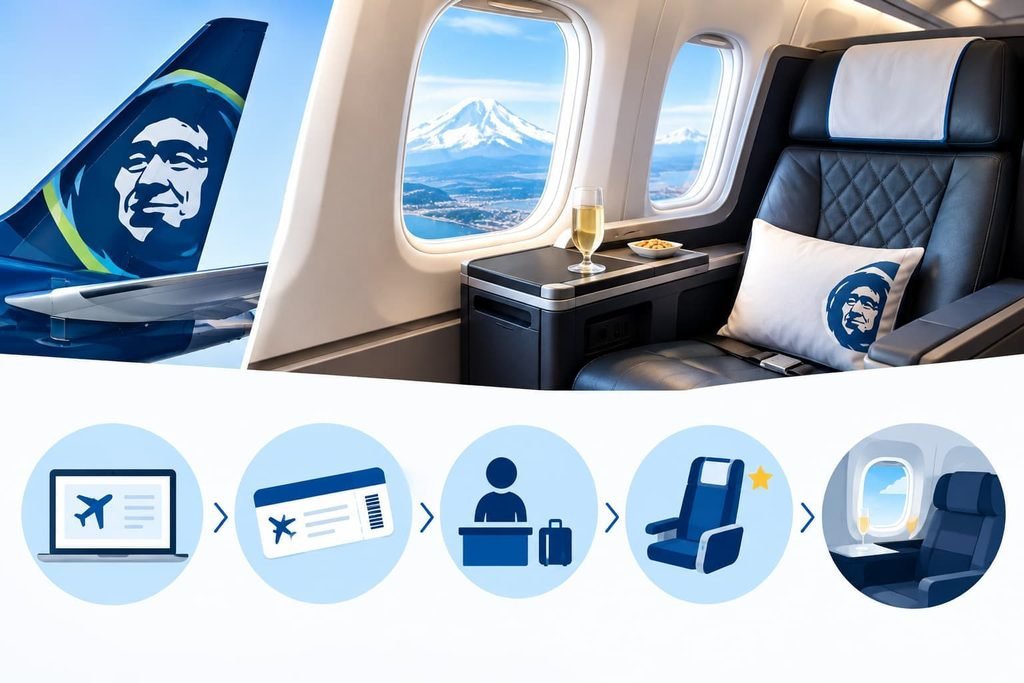
There are three main ways to move from the Main Cabin to First Class: purchase a First Class fare or upgrade, qualify for a complimentary upgrade through elite status, or use an eligible guest upgrade certificate. The right choice depends on the traveler’s circumstances.
| Upgrade method | Who can use it? | Main consideration |
| Buy a First Class ticket | Any traveler, subject to availability | Compare the full First Class fare with the cost of upgrading an existing ticket |
| Purchase an upgrade after booking | Travelers offered an eligible upgrade | Price and availability vary by flight |
| Complimentary elite upgrade | Eligible Atmos Rewards members | Depends on status, fare rules, upgrade inventory, and priority |
| Guest upgrade certificate | Travelers with a valid eligible certificate | Only qualifying flights and fares can be upgraded |
| Book First Class with points | Atmos Rewards members with enough points | This books a First Class award ticket rather than upgrading an existing paid ticket. |
A First Class upgrade is different from Alaska Airlines Premium Class. Premium Class seats are located toward the front of the Main Cabin and offer additional legroom, priority boarding, and complimentary beer, wine, or cocktails on most flights over 350 miles. First Class is a separate cabin with a different onboard experience. Travelers should check the specific aircraft and flight details before paying for either option.
Related: Alaska and Hawaiian Plan New Oneworld Joint Ventures
1. How to Purchase a First Class Upgrade
Buying an upgrade is usually the most direct option for travelers without elite status or who don’t want to rely on a waitlist. Alaska Airlines may display paid upgrade options after a ticket has been purchased, including through its website, mobile app, or airport channels. Offers depend on the flight and available inventory.
Check your reservation online.
After booking an eligible flight, travelers can review their itinerary through Alaska Airlines’ website or app.
- Open the airline‘s website or app and access the reservation.
- Review the available seat and upgrade options.
- Check whether First Class is offered for an additional payment.
- Compare the upgrade price with the cost of purchasing a First Class ticket outright.
- Review the final price and conditions before confirming.
The upgrade option may not appear immediately after booking. Availability can change as the airline manages its remaining First Class seats, so it can be worth checking again closer to departure.
Look again during check-in.
Travelers may see a paid upgrade offer during online check-in or through an airport kiosk, ticket counter, or departure-gate agent, depending on the flight and the airline’s current procedures. An offer is not guaranteed, and the price can vary.
For example, a traveler who buys a Main Cabin ticket several weeks before departure might not see an upgrade option at first. If First Class seats remain available closer to the flight, an offer may appear later. The traveler should compare that offer with the original fare difference rather than assuming that a last-minute upgrade will always be cheaper.
Is there a fixed price to upgrade?
No single price applies to every Alaska Airlines First Class upgrade. The amount can depend on the route, flight, remaining seats, timing, and the specific offer displayed. Older articles may mention starting prices, but those figures should not be treated as guaranteed current rates.
Before accepting an offer, compare the total cost of the original ticket plus the upgrade with the price of a new First Class ticket. Also check the ticket’s change and cancellation conditions: buying an upgrade does not necessarily remove the restrictions attached to the original fare.
2. Get a Complimentary Upgrade With Atmos Rewards Elite Status
Atmos Rewards is Alaska Airlines’ loyalty program. Members who earn elite status may qualify for complimentary upgrades to First Class on eligible Alaska-operated flights. The upgrade is a status benefit, not a promise that every eligible member will receive a seat in the premium cabin.
The program’s current elite tiers are:
- Atmos Silver
- Atmos Gold
- Atmos Platinum
- Atmos Titanium
Higher status generally improves a member’s position on the upgrade list. However, the number of seats available for complimentary upgrades, the fare purchased, and other priority factors all influence whether an upgrade clears.
Upgrade windows and fare eligibility.
Alaska Airlines uses both fare-based eligibility and upgrade waitlists. Certain eligible fares may allow a member to receive an upgrade when booking if qualifying First Class upgrade inventory is available. If an upgrade is not confirmed immediately, the member may be placed on a waitlist.
The commonly published upgrade windows for eligible Atmos Rewards members are:
| Atmos Rewards tier | General First Class upgrade window |
| Silver | Up to 48 hours before departure |
| Gold | Up to 72 hours before departure |
| Platinum | Up to 120 hours before departure |
| Titanium | Up to 120 hours before departure, with the highest Alaska elite priority |
These windows indicate when an eligible upgrade may begin clearing; they do not mean a seat will be available at that time. An upgrade can clear earlier when eligible inventory is available, or remain waitlisted until departure. Exact rules and fare eligibility can change, so travelers should confirm the current terms through Alaska Airlines before booking.
Choose the correct fare when booking.
To improve your chances of a complimentary upgrade, select a fare that qualifies for your member tier. Alaska’s booking process includes an Upgrade type filter with options for Silver, Gold, Platinum/Titanium, and upgrade certificates. This helps travelers identify flights and fares that may qualify for the relevant upgrade benefit.
For example, an Atmos Gold member comparing two flights could find that one offers a qualifying upgrade fare while the other does not. If the fare difference is reasonable, the eligible option may offer better upgrade potential. The member should still weigh the price against the likelihood of an upgrade clearing.
How upgrade priority works
When a complimentary First Class upgrade is not available immediately, the traveler may be added to an upgrade waitlist. Status tier is an important factor, but it is not the only one. Fare class and when a traveler is added to the list can also affect the order. Alaska’s applicable rules may include additional priority considerations.
An elite member should therefore avoid treating the published window as a confirmed upgrade time. A lower-tier member on a lightly booked flight may receive an upgrade, while a higher-tier member on a busy route may remain in the Main Cabin if demand for First Class is strong.
Are Saver fares eligible for complimentary First Class upgrades?
Alaska’s Saver fares have important restrictions, and travelers should not assume that elite status makes every benefit available. Alaska’s published guidance states that Saver fares are not eligible for complimentary First Class upgrades. A traveler can still purchase a First Class ticket or an available paid upgrade, but the original Saver fare’s restrictions may still apply.
3. Use an Alaska Airlines Guest Upgrade Certificate
Eligible Atmos Rewards members may receive guest upgrade certificates that can be used by another traveler, subject to the certificate’s terms and available upgrade inventory. This can help a family member or friend who doesn’t have elite status.
Alaska’s booking system provides an Upgrade certificate search option. Travelers can use it to identify flights and fares that qualify for a valid certificate. Eligible certificates may also be applied to an existing reservation when the itinerary meets the requirements.
How to use a guest upgrade certificate
- Confirm that the certificate is valid and that the traveler meets its conditions.
- Search Alaska Airlines flights using the upgrade-certificate option.
- Check the eligible fare and upgrade availability for the desired flight.
- Apply the certificate as directed during booking or through the existing reservation.
- Verify the final itinerary and whether the upgrade is confirmed.
A certificate does not guarantee an upgrade on every flight. Certain fares, routes, and flights may not qualify, and available upgrade space can change. Travelers should check the certificate’s terms rather than relying on an old code or a general description of the benefit.
Can a guest use a certificate without the elite member traveling?
Guest upgrade certificates let eligible members share an upgrade benefit with another traveler, so the member doesn’t necessarily need to be on the same flight when the certificate’s rules allow independent use. The traveler must still meet the applicable eligibility and booking requirements.
Before transferring or sharing a certificate, check its expiration date, fare restrictions, and any conditions governing its use. These details can determine whether the certificate is useful for the intended trip.
4. Can You Upgrade to First Class With Atmos Rewards Points?
Travelers can use Atmos Rewards points to book eligible First Class award tickets, but booking an award ticket is different from upgrading an existing paid ticket. Alaska’s current published guidance says seat upgrades cannot be purchased with Atmos Rewards points. The practical alternative is to search for a First Class award fare and compare its points price with the cash cost of buying or upgrading a ticket.
How to book a First Class award ticket
- Open Alaska Airlines’ flight-search page.
- Select the option to use points.
- Enter the departure airport, destination, and travel dates.
- Compare the available First Class award options with Main Cabin fares.
- Review taxes, fees, and ticket conditions before confirming.
Award prices and availability vary by route, date, and demand. A First Class award may be a good use of points when the cash fare is high, but it is not automatically the best value. Travelers should compare the points required with the cash price and consider whether the points would be more useful for another trip.
Can Atmos Rewards points upgrade a partner-airline ticket?
Atmos Rewards points can be used to book eligible award travel on participating partner airlines, subject to the partner, route, and award availability. That does not mean points can be used to upgrade any existing paid ticket operated by a partner. Travelers should check the applicable award rules and the operating airline’s policies before booking.
For a trip involving multiple airlines, confirm which carrier operates each flight and which program issued the ticket. Upgrade eligibility may differ between an Alaska-operated flight and a partner-operated flight, even when both appear on the same itinerary.
5. Does an Alaska Airlines Credit Card Help With First Class Upgrades?
An Alaska Airlines credit card can help travelers earn Atmos Rewards points through eligible spending and card benefits, but the card alone does not guarantee complimentary First Class upgrades. Upgrade eligibility depends on the relevant status, fare, certificate, and availability rules.
A card may still be useful for travelers who regularly fly with Alaska or its eligible partners. Depending on the card and its current terms, benefits may include a welcome offer, points on eligible purchases, or travel-related perks. Those points can help fund a future First Class award ticket.
Before applying for a card solely for an upgrade, consider:
- How often the traveler flies Alaska: Frequent travelers may get more value from recurring airline benefits.
- The value of the welcome offer: Promotional points can change and are subject to eligibility requirements.
- Annual fees and spending requirements: Compare the cost of holding the card with the benefits realistically used.
- The distinction between points and status: Earning redeemable points through card spending does not necessarily mean earning elite status or receiving a complimentary upgrade.
For someone who takes only one Alaska flight a year, buying a paid upgrade when the price is attractive may be simpler than opening a new card to pursue an upgrade benefit.
6. How to Increase the Chances of an Alaska Airlines First Class Upgrade
No strategy guarantees a complimentary upgrade, but a few practical steps can help travelers make informed choices.
Compare flights before booking.
If travel times are flexible, compare different departures on the same route. Upgrade availability can differ between flights, even on the same day. A flight with more open First Class inventory may offer better prospects than a popular departure with strong premium-cabin demand.
Look at the fare and upgrade options during the initial search. Alaska’s upgrade-type filter can help eligible Atmos Rewards members find fares that qualify for their tier or a certificate.
Understand the fare you are buying.
The cheapest fare is not necessarily the best choice for someone prioritizing a complimentary upgrade. Fare eligibility matters, and Saver fares have restrictions. Compare the price of an eligible Main Cabin fare with a more restrictive ticket before deciding.
For example, if a qualifying fare costs modestly more than a Saver fare, the added flexibility or upgrade eligibility may be worth considering. That calculation depends on the actual fare difference and the traveler’s priorities—not on a guarantee of receiving First Class.
Monitor the reservation
Check the reservation after booking, during the applicable upgrade window, and again when check-in opens. Upgrade inventory can change as other passengers book, change, or cancel their travel. A seat map alone does not establish that a seat is available for a complimentary upgrade.
If the app or website does not show an upgrade, the traveler can ask an Alaska representative whether any paid upgrade options are available. An agent cannot guarantee a seat if the airline has no eligible inventory.
Be realistic about busy flights.
Flights during holidays, peak summer, and popular business-travel times can see strong demand for First Class. Routes with substantial premium-cabin demand may be difficult for lower-tier members to upgrade on, even when the upgrade window has opened.
If First Class comfort is essential, buying the cabin upfront or accepting a clearly priced paid upgrade is more predictable than relying on a complimentary upgrade list.
Check the aircraft and itinerary.
The onboard experience and cabin layout can vary by aircraft. Travelers connecting between flights should also check each segment separately: an upgrade on one flight does not automatically mean the other flight will be upgraded.
If an itinerary includes a partner-operated flight, verify the rules for that segment rather than assuming Alaska’s upgrade policy applies throughout the journey.
7. First Class Upgrades on Oneworld and Other Partner Airlines
Alaska Airlines’ membership in the oneworld alliance gives Atmos Rewards members opportunities to earn or redeem points with participating airlines, subject to the program’s rules. However, alliance membership does not mean a traveler can use Alaska’s complimentary First Class upgrade rules on every partner flight.
There is an important distinction between these two actions:
- Booking a First Class award: Using Atmos Rewards points to reserve an eligible premium-cabin award on a participating airline.
- Upgrading a paid ticket: Moving an existing ticket to a higher cabin using a particular airline’s upgrade product or status benefit.
Partner award inventory, redemption rates, booking conditions, and cabin availability vary. Travelers should verify the operating airline, the program used to book the ticket, and the conditions of the specific fare before committing points or money.
For instance, a traveler planning a long-haul trip with a connection on a partner airline may find that a First Class award is available on one segment but not another. Check the cabin shown for every flight and confirm whether the itinerary is a mixed-cabin award before booking.
Final Takeaway
The most reliable way to travel in First Class on Alaska Airlines is to purchase the cabin outright or accept a paid upgrade when the price and availability make sense. Atmos Rewards elite status and eligible guest upgrade certificates can provide alternatives, but neither guarantees a seat. Travelers should compare fares before booking, confirm the current rules for their status and ticket type, and monitor their reservation as departure approaches.
Frequently Asked Questions
Yes. Travelers don’t need elite status to buy a First Class ticket or accept a paid upgrade when one is available. Complimentary upgrades and certificate-based upgrades have separate eligibility requirements.
An airport kiosk, ticket counter, or departure gate may offer a paid upgrade, depending on availability and current procedures. Ask an Alaska representative if no offer appears online, but remember that availability and pricing are not guaranteed.
No. Elite status provides upgrade eligibility and priority, but the result depends on available seats, fare eligibility, status tier, and the airline’s upgrade rules. A waitlisted request may not be cleared before departure.
No. Premium Class is part of the Main Cabin and offers extra legroom, early boarding, and complimentary alcoholic beverages on most flights over 350 miles. First Class is a separate cabin with a different service offering.
Travelers can purchase a First Class ticket or a paid upgrade, but Saver fare restrictions still apply. Saver fares are not eligible for complimentary First Class upgrades through Alaska’s elite upgrade program. Always check the latest Saver terms before booking.
Alaska’s current published guidance says seat upgrades cannot be purchased with Atmos Rewards points. Travelers can instead search for an eligible First Class award ticket and compare its points price with available cash fares.
No. A co-branded credit card does not automatically grant a First Class upgrade. Its value may come from earning points and other card benefits, while complimentary upgrades depend on the applicable status and fare rules.