
Crete, Greece: Ancient Wonders, Turquoise Shores & Cretan Charm
Crete is Greece’s largest island and a destination where Minoan archaeology, Venetian towns, rugged mountains, exceptional beaches, and distinctive Cretan cuisine come together in one trip.
Stretching across a large and geographically varied part of the southern Aegean, Crete feels less like a single resort island and more like a collection of different landscapes and experiences. You can spend a morning exploring Bronze Age ruins near Heraklion, an afternoon swimming in clear Mediterranean water, and the next day hiking through a mountain gorge or wandering a centuries-old harbor.
The island is also significant historically. In 2025, six Minoan Palatial Centers on Crete, including Knossos, Phaistos, Malia, Zakros, Zominthos, and Kydonia, were inscribed together as a UNESCO World Heritage property.
If you are planning to visit Crete, this guide covers where to go, what to see, beaches and outdoor experiences, the best time to travel, how to get around, and practical tips for planning your stay.
Crete at a Glance
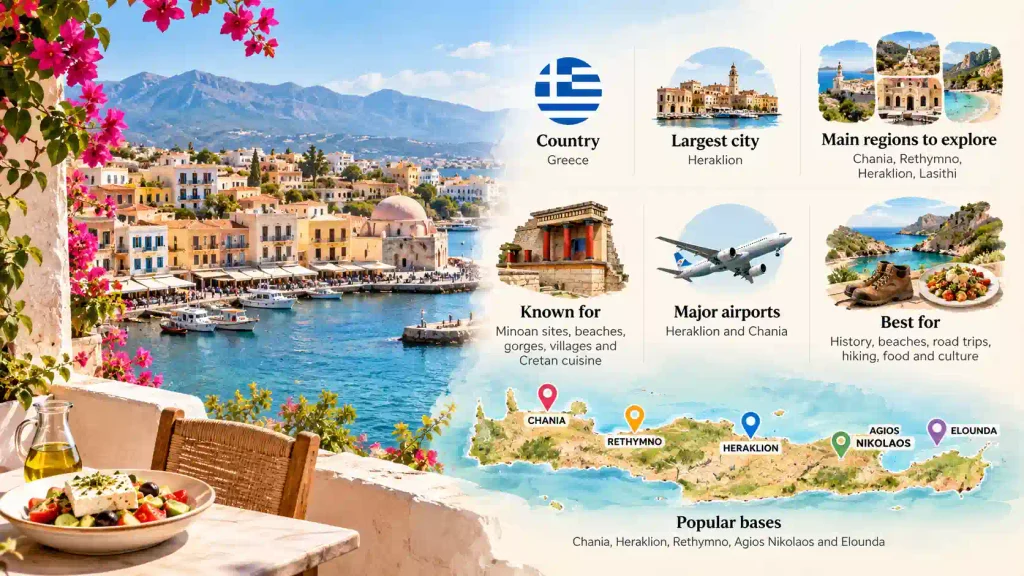
Crete is large enough that choosing your base can significantly shape your trip. The western side is known for Chania, dramatic scenery, and famous beaches, while central Crete is closely associated with Heraklion and Minoan history.
| Travel detail | What to know |
| Country | Greece |
| Largest city | Heraklion |
| Main regions to explore | Chania, Rethymno, Heraklion, Lasithi |
| Known for | Minoan sites, beaches, gorges, villages and Cretan cuisine |
| Major airports | Heraklion and Chania |
| Best for | History, beaches, road trips, hiking, food and culture |
| Popular bases | Chania, Heraklion, Rethymno, Agios Nikolaos and Elounda |
Because distances can be substantial, travelers who want to experience several parts of the island should avoid treating Crete as a destination that can be fully covered through short day trips from one base.
Where to Go in Crete
Crete’s four broad travel areas each offer a different atmosphere. Choosing two or three areas can give you a more balanced experience than staying in one resort for the entire trip.
Chania: Venetian Streets and Western Beaches
Chania is one of the most atmospheric places to stay in Crete, particularly if you enjoy historic architecture, restaurants, waterfront walks, and easy access to western beaches.
Its Old Town surrounds the Venetian harbor and Egyptian Lighthouse, with Venetian mansions, Ottoman-era buildings, churches, and narrow streets reflecting the city’s layered history.
Chania is also a useful base for excursions toward Balos, Elafonisi, Falasarna, and Samaria Gorge.
Heraklion: The Gateway to Minoan Crete
Heraklion combines a busy modern city with some of the island’s most important archaeological attractions. The city is close to Knossos, while its Venetian walls, Koules Fortress, museums, restaurants, and waterfront provide plenty to do beyond the archaeological site.
The city’s Archaeological Museum is particularly useful for understanding Minoan Crete before or after visiting the archaeological sites.
Rethymno: Old-World Character and Mountain Villages
Rethymno is a good choice if you want historic streets without sacrificing beach access. Its old town features Venetian and Ottoman influences, while the Fortezza overlooks the city and harbor.
Beyond Rethymno, travelers can visit Arkadi Monastery, traditional villages, caves, and mountain landscapes.
Lasithi: Eastern Crete at a Slower Pace
Eastern Crete offers a combination of coastal resorts, fishing towns, mountain scenery, and archaeological sites. Agios Nikolaos sits around Lake Voulismeni and provides access to Mirabello Bay, while nearby Elounda is known for its coastal setting and access to Spinalonga.
For travelers looking beyond the coast, the region also offers mountain villages and caves tied to Greek mythology.
Best Things to Do in Crete
Crete rewards travelers who mix major attractions with slower experiences. Instead of spending the entire trip moving between landmarks, leave time for local villages, tavernas, beaches, and scenic drives.
1. Explore the Palace of Knossos
Knossos is the obvious starting point for understanding Crete’s Minoan heritage. The archaeological site forms part of the UNESCO-listed Minoan Palatial Centres and dates within the broader Bronze Age history of the Minoan civilization.
The site is associated with the ancient stories of the labyrinth and Minotaur, although mythology and archaeological evidence should not be treated as the same thing.
Pairing Knossos with Heraklion’s Archaeological Museum can provide useful context about the objects, art, architecture, and culture of Minoan Crete.
2. Wander Through Chania’s Old Town
Chania is worth visiting even if you are not particularly interested in museums. Walk along the Venetian harbor, explore the historic lanes of Topanas and Splantzia, and stop at a waterfront café.
The city’s architecture reflects successive Venetian, Ottoman, and modern influences, making the Old Town one of Crete’s most distinctive urban areas.
3. Visit Spinalonga
Spinalonga is a small island near Elounda with a Venetian fortress and a complex modern history as one of Greece’s former leper colonies.
Boat trips commonly connect the island with the surrounding coast, making it possible to combine a historical visit with time around Elounda and Agios Nikolaos.
4. Hike Samaria Gorge
For outdoor travelers, Samaria Gorge is one of Crete’s signature hiking destinations. It lies within the White Mountains and forms part of the island’s dramatic mountainous landscape.
The hike requires more preparation than a casual sightseeing walk. Check seasonal access, weather, transportation arrangements, and current trail conditions before setting out.
5. Spend Time on Crete’s Beaches
Crete has a remarkably varied coastline, from broad sandy beaches to shallow lagoons and rugged coves.
Western Crete is particularly known for destinations such as Elafonisi, Balos, and Falasarna. Elafonisi is notable for its shallow lagoon and pink-tinged sand, while Falasarna combines a large sandy coastline with nearby archaeological remains.
6. Discover Cretan Food
Food is an important part of the Crete experience. Look beyond hotel restaurants and try local tavernas where possible.
Common ingredients and dishes include olive oil, fresh vegetables, herbs, cheeses, seafood, lamb, goat, honey, and traditional pastries. Mountain areas such as Omalos also have their own regional specialties, including cheeses, honey, potatoes, and traditional taverna dishes.
Crete’s Most Memorable Beaches
Crete’s beaches are spread across the island, so the most convenient beach depends heavily on where you stay.
| Beach or coastal area | Why visit |
| Elafonisi | Shallow lagoon and distinctive pink-tinged sand |
| Balos | Dramatic lagoon and rugged coastal scenery |
| Falasarna | Broad sandy beaches and western-coast sunsets |
| Elounda | Sheltered coastal setting and access to Spinalonga |
| Matala | South-coast atmosphere and dramatic coastal surroundings |
Do not choose accommodation solely because a famous beach appears nearby on a map. Some beaches require lengthy drives, seasonal transport, or walking over uneven terrain.
When Is the Best Time to Visit Crete?
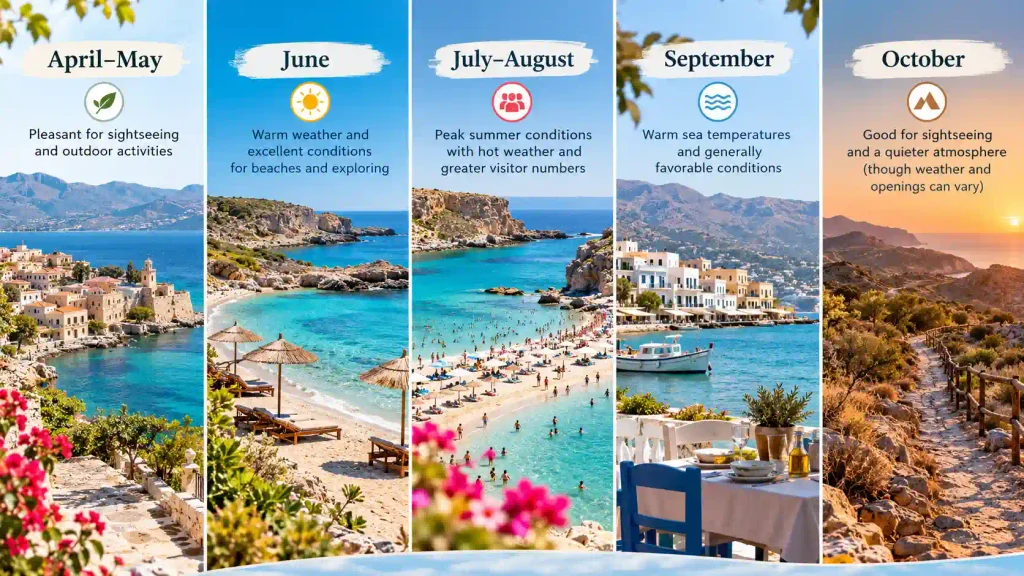
The best time to visit Crete depends on whether you prioritize swimming, hiking, sightseeing, or avoiding the busiest summer period.
| Period | What to expect |
| April–May | Pleasant for sightseeing and outdoor activities; the island begins its main visitor season |
| June | Warm weather and excellent conditions for beaches and exploring |
| July–August | Peak summer conditions, with hot weather and greater visitor numbers |
| September | Warm sea temperatures and generally favorable conditions |
| October | Good for sightseeing and a quieter atmosphere, though weather and opening schedules can vary |
July and August are generally the busiest summer months. Shoulder-season travel in May, June, September, or October can appeal to travelers who want to combine outdoor activities with coastal sightseeing.
For hiking, spring and autumn can be especially appealing because strenuous mountain walks may be less comfortable during the hottest part of summer. Always check local conditions before planning a specific hike.
How to Get to Crete
Crete connects to mainland Greece by air and sea.
By Air
The island’s two principal passenger airports are Heraklion International Airport and Chania International Airport.
Your choice should depend on your itinerary. If you are beginning with Knossos, Heraklion, or eastern Crete, Heraklion is generally convenient. If your trip focuses on Chania and western Crete, flying into Chania can reduce unnecessary driving.
For example, a traveler planning a western-Crete itinerary could arrive in Chania, explore the Old Town and surrounding beaches, then travel east toward Rethymno and Heraklion rather than repeatedly crossing the island.
Chania has air connections from Athens and Thessaloniki, among other routes, with flight schedules varying by season.
By Ferry
Ferries connect Crete with mainland Greece and other Greek islands, with routes and schedules varying according to season.
Ferry travel can be useful if Crete is part of a longer Greek-island itinerary, but check the current timetable before booking accommodation around a specific sailing.
How to Get Around Crete
A rental car is particularly useful if your itinerary includes several regions, beaches, mountain villages, or archaeological sites outside the main cities.
Public buses are another option, especially for travelers concentrating on larger towns and established routes. However, reaching remote beaches and villages can be more complicated without a vehicle.
Before renting a car, consider:
- How many different areas you plan to visit
- Whether your accommodation provides parking
- The condition and size of roads on your planned route
- Driving times between attractions
- Whether you are comfortable driving mountain roads
- Seasonal traffic around major attractions
Crete can look compact on a map, but mountainous terrain and winding roads can make journeys longer than expected.
Where to Stay in Crete
The best place to stay depends more on your itinerary than on a single “best” town.
Stay in Chania if you want:
- Historic streets and a lively old town
- Waterfront restaurants and cafés
- Access to western beaches
- A strong base for western-Crete excursions
Stay in Heraklion if you want:
- Easy access to Knossos
- Museums and archaeological attractions
- A larger urban environment
- A practical base for central Crete
Stay in Rethymno if you want:
- A historic old town
- A combination of beaches and culture
- Access to central and western attractions
Stay around Agios Nikolaos or Elounda if you want:
- Eastern-Crete scenery
- Coastal resorts
- Boat trips and access to Spinalonga
- A slower seaside atmosphere
For a longer trip, splitting your accommodation between western, central, and eastern Crete can save driving time and reveal more of the island’s different personalities.
What to Eat in Crete
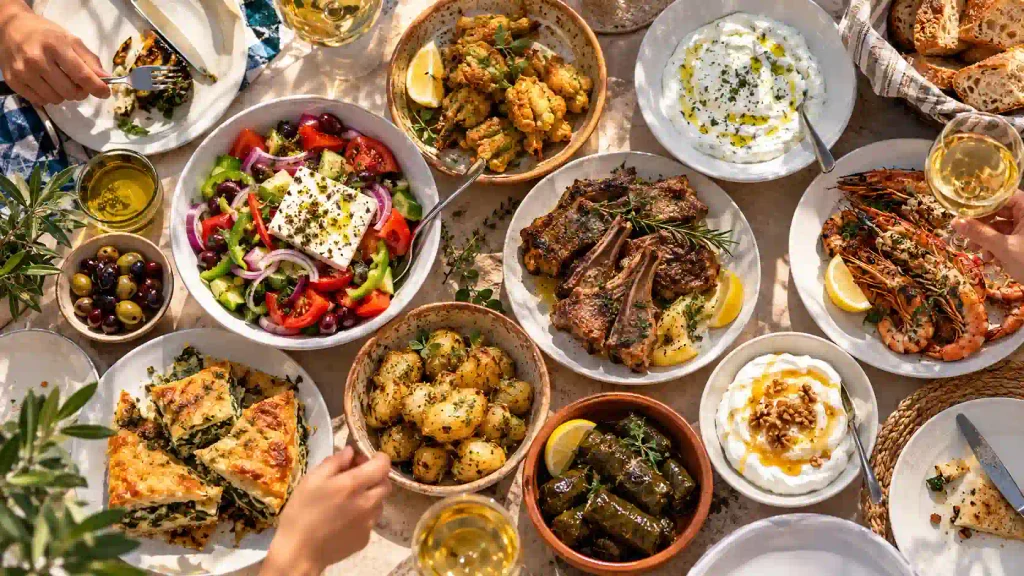
Cretan cuisine is closely connected to the island’s agricultural traditions and Mediterranean setting.
Look for dishes and ingredients featuring:
- Extra-virgin olive oil
- Local cheeses
- Fresh vegetables
- Herbs and wild greens
- Seafood
- Lamb and goat
- Honey
- Yogurt
- Traditional pies and pastries
- Local wines
Do not be surprised if a simple meal in a village taverna becomes one of the highlights of your trip. Regional food is often best experienced through small, seasonal menus rather than trying to find every famous dish in a single restaurant.
Practical Tips for Visiting Crete
A little planning can make a big difference, especially because Crete is much larger and more varied than many travelers expect.
Plan by Region
Group nearby attractions together rather than crossing the island every day. A Chania day, for example, can combine the Old Town with nearby attractions, while a separate day can be dedicated to a longer western-coast excursion.
Book Peak-Season Accommodation Early
July and August can bring high demand, particularly in popular coastal destinations. If you have fixed dates or want a specific location, booking earlier gives you more choice.
Allow Extra Time for Mountain Roads
Google Maps or another navigation service may provide a route, but driving times can feel longer on winding roads. Avoid building an itinerary with back-to-back attractions that depend on perfect timing.
Carry Suitable Footwear
Even a beach-focused holiday can involve rocky paths, uneven archaeological sites, or walking through historic streets. Proper footwear is especially important for gorge hikes and mountain excursions.
Check Attraction and Trail Conditions
Opening schedules, transport services, archaeological-site arrangements, and hiking access can change seasonally. Check official information close to your travel date.
Respect Beaches and Natural Areas
Crete’s coastline and mountain environments are part of what makes the island special. Follow local access rules, avoid leaving waste behind, and stay on marked routes where required.
How Many Days Do You Need in Crete?
Seven days is a useful starting point for a first visit to Crete, while 10–14 days allows more time to combine several regions without rushing.
A week could be structured around one western base and one central or eastern base. A longer trip makes it easier to include Chania, Rethymno, Heraklion, a major archaeological site, several beaches, and at least one mountain or village excursion.
If you have only three or four days, it is better to concentrate on one region rather than trying to see the entire island.
Is Crete Worth Visiting?
Crete offers an unusually broad mix of experiences within one Greek destination: important Bronze Age archaeology, historic Venetian and Ottoman architecture, mountain landscapes, long stretches of coastline, traditional villages, and a distinctive food culture. Its six Minoan Palatial Centres were added to the UNESCO World Heritage List in 2025, further highlighting the island’s archaeological importance.
The key to enjoying Crete is to plan around the island’s scale. Choose your bases carefully, leave realistic travel time between attractions, and balance famous landmarks with quieter villages, local food, and time by the sea.
Final Thoughts
Crete is best approached as a destination to experience, not simply check off a list of attractions. Give yourself enough time to move between regions, explore its archaeological heritage, enjoy its beaches, eat locally, and venture into the mountains.
For a first trip, combining Chania, Heraklion, and one eastern or southern area provides a useful introduction to the island’s contrasting landscapes and cultures. Travelers with more time can slow the pace and discover the villages, coastal roads, archaeological sites, and hiking routes that make Crete much more than a conventional beach destination.
FAQs About Visiting Crete
Crete is best known for its Minoan archaeological heritage, beaches, mountain landscapes, historic towns, gorges, and Cretan cuisine. Knossos and the island’s other Minoan Palatial Centres are particularly important cultural attractions.
No single area suits every traveler. Chania suits visitors interested in historic streets and western beaches, Heraklion works well for archaeology and museums, Rethymno combines heritage with coastal access, and eastern Crete suits travelers interested in resorts, bays, and places such as Spinalonga.
Costs vary considerably by season, accommodation type, location, transportation, and dining choices. Popular coastal resorts during peak summer can cost more than smaller inland towns or travel during the shoulder seasons.
Yes. Buses and organized excursions can work well if you focus on major towns and established tourist routes. A car becomes more useful when your itinerary includes remote beaches, mountain villages, or several regions.
Popular highlights include Knossos, Chania Old Town, Rethymno, Samaria Gorge, Elafonisi, Balos, Falasarna, Agios Nikolaos, Elounda, and Spinalonga. The right combination depends on whether you prioritize history, beaches, hiking, food, or a mix of all four.