
Hawaii Travel Guide: When Is the Best Time to Visit?
The best time to visit Hawaii is generally April through May and September through November, when travelers can find warm weather, relatively lighter crowds, and good conditions for beaches, hiking, and sightseeing. However, Hawaii is a year-round destination, and the ideal month depends on whether you prioritize whale watching, surfing, snorkeling, festivals, or avoiding busy travel periods.
Hawaii’s climate is unusually varied for a tropical destination. The islands have two broad seasons rather than four conventional seasons: a warmer, drier summer from roughly May through October and a somewhat cooler, wetter winter from November through April. Even within the same island, mountains, elevation, prevailing winds, and coastline orientation can create dramatically different weather.
That means choosing a travel date is about more than finding the hottest month. A winter trip can bring humpback whales and spectacular North Shore surf, while late spring can offer calmer ocean conditions and fewer visitors. September and parts of October can provide a particularly attractive combination of warm weather and lighter crowds.
What Is the Best Month to Visit Hawaii?
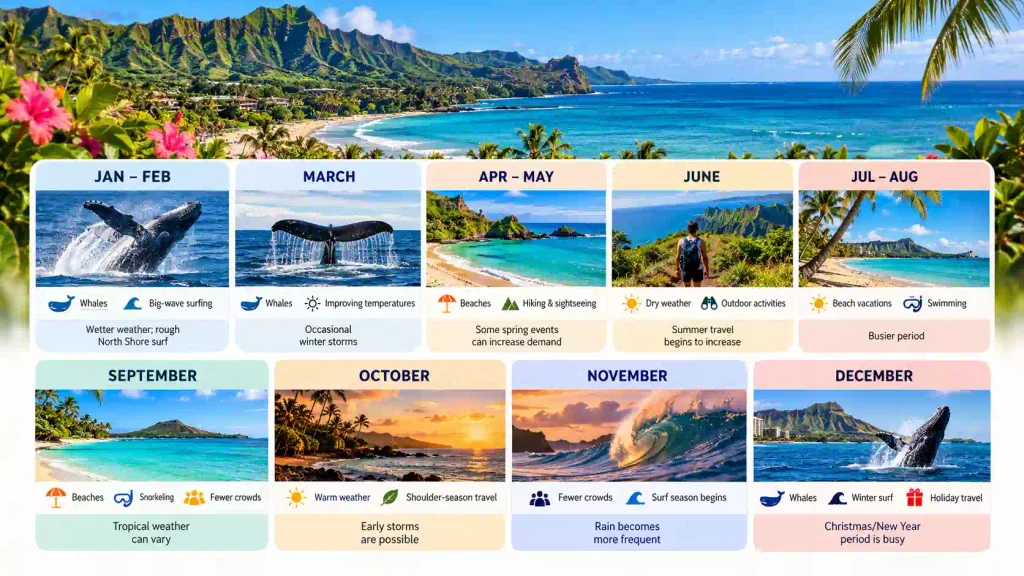
For many travelers, September is one of the strongest choices, particularly for beach time, swimming, snorkeling, and a quieter atmosphere. Hawaii’s official tourism organization describes fall as a period of warm temperatures, gentle breezes, fewer crowds, and the beginning of the winter surf season.
April, May, October, and November are also useful shoulder-season options, but each has different advantages.
| Travel period | What it is best for | What to consider |
| January–February | Whales and big-wave surfing | Wetter weather; rough North Shore surf |
| March | Whales, improving temperatures | Occasional winter storms |
| April–May | Beaches, hiking, sightseeing | Some spring events can increase demand |
| June | Dry weather, outdoor activities | Summer travel begins to increase |
| July–August | Beach vacations and swimming | Busier period |
| September | Beaches, snorkeling, fewer crowds | Tropical weather can vary |
| October | Warm weather, shoulder-season travel | Early storms are possible |
| November | Fewer crowds, surf season begins | Rain becomes more frequent |
| December | Whales, winter surf, holiday travel | Christmas/New Year period is busy |
The table is a planning guide, not a guarantee. Hawaii’s microclimates mean weather can vary significantly from one side of an island to another.
Understanding Hawaii’s Weather Before Booking
Hawaii’s weather stays relatively mild year-round. At sea level, average daytime temperatures are about 85°F (29°C) in summer and 78°F (26°C) in winter, according to Go Hawaii. Nights are generally around 10°F cooler.
Rainfall, not temperature, is the bigger consideration.
Summer: May Through October
Summer is Hawaii’s warmer season and generally brings less rainfall across much of the state. June is especially attractive for travelers seeking sunny outdoor conditions before the peak summer travel period gets busier.
Summer is particularly useful for:
- Beach vacations
- Swimming
- Snorkeling
- Hiking
- Road trips
- Water activities
- Family holidays
The North Shore of Oahu also changes character dramatically during summer. Large winter waves subside, creating calmer conditions that are generally more suitable for swimming and beginner surfing.
Winter: November Through April
Hawaii’s winter is not cold in the conventional sense. Instead, the season brings more frequent rain, changing winds, and larger ocean swells. Rainfall is highly localized, so a shower on one side of an island does not necessarily mean an entire day’s itinerary is lost.
Winter can actually be the preferred season for specific experiences, particularly:
- Humpback whale watching
- Big-wave surfing
- Winter scenery
- Certain cultural and sporting events
- Escaping cold mainland weather
At higher elevations, conditions are considerably cooler. Hawaiʻi Volcanoes National Park notes that temperatures at the summit of Kīlauea can be 12–15°F cooler than at sea level. At the same time, snow is possible at the summit of Mauna Loa during any season.
Does It Rain a Lot in Hawaii?
It can, but Hawaii’s rainfall patterns are much more complicated than a simple wet-versus-dry season.
Trade winds bring moist air toward the islands, and mountains force that air upward, producing more rainfall on many windward slopes. Leeward areas, protected by mountains, are often considerably sunnier and drier.
This creates striking differences within short distances. For example, a visitor staying on a drier leeward coast may experience sunshine while rain falls over the mountains or windward side of the same island.
That is why travelers should check the weather forecast for their specific resort area, rather than relying solely on a statewide forecast.
Best Time to Visit Hawaii for Different Activities
No single month works equally well for every Hawaii vacation. The right timing depends on the experience you’re planning.
Best Time for Beaches and Swimming
May through September is a strong period for traditional beach vacations, although conditions vary by coastline.
Summer brings generally calmer conditions to many beaches. On Oahu’s North Shore, for example, the powerful winter swells diminish during summer, creating more approachable conditions for swimming and beginner surfing.
September is particularly appealing because it combines warm conditions with a quieter fall travel period.
Visitors should still check local ocean-safety warnings before entering the water. Ocean conditions can change quickly, and a beach that looks calm from shore may have dangerous currents or surf.
Best Time for Surfing
The answer depends on the type of surfing.
November through February is the major period for large surf on Hawaii’s north and west-facing shores. Oahu’s North Shore is internationally known for powerful winter waves, with the biggest conditions generally occurring in winter.
Summer is different. North Shore waves become smaller, while south-facing shores can receive larger swells generated by storms in the Southern Hemisphere.
Travelers should not confuse “best surf” with “best swimming.” The huge winter waves that attract experienced surfers can create dangerous conditions for inexperienced swimmers.
Best Time for Whale Watching
December through May is the principal humpback whale season in Hawaii, with January through March often highlighted as a particularly productive period for sightings.
Humpback whales migrate thousands of miles to Hawaiian waters to breed, give birth, and nurse their young. You can see them around several islands, but the waters between Maui, Molokaʻi, and Lānaʻi are especially well known for whale watching.
Timing varies from year to year. Hawaii’s Department of Land and Natural Resources notes that whales may arrive as early as October, while occasional sightings can occur outside the main season.
Best Time for Snorkeling
Late spring through early fall can be attractive for snorkeling because many locations experience calmer summer ocean conditions.
September is particularly useful for travelers interested in underwater activities, with warm conditions and generally favorable visibility at suitable sites. However, snorkeling conditions depend heavily on the specific beach, swell, wind, and local marine conditions.
Rather than choosing an island based only on month, travelers should select a sheltered coastline and check daily ocean conditions.
Best Time for Hiking
Hiking is possible year-round, but spring and fall offer a comfortable balance of temperatures and visitor levels.
Summer offers longer daylight and generally drier conditions, while winter can bring rain that makes some trails muddy or slippery. Higher-elevation hikes require additional planning because temperatures can be substantially lower than at sea level.
For example, a traveler who spends the morning at a warm coastal beach and later heads toward a high volcanic summit may encounter completely different temperatures on the same day.
Best Time to Visit Hawaii by Island

Each major island has its own personality and climate patterns, so the ideal travel period can vary.
Oahu
Oahu works well year-round because it combines Honolulu’s urban attractions with beaches, hiking, cultural sites, and the North Shore.
For big-wave surfing, winter is the key period. For swimming and beginner surfing on the North Shore, summer is generally calmer.
September and October can appeal to travelers who want warm conditions without the busiest summer atmosphere.
Maui
Maui is particularly well suited to travelers interested in beaches, scenic drives, hiking, and whale watching.
Winter is important for whale watchers because humpbacks return to Hawaiian waters from December through May, while the warmer months are well suited to beach-focused itineraries.
Travelers should also remember that conditions can differ substantially between coastal areas and the higher elevations around Haleakalā.
Kauaʻi
Kauaʻi is exceptionally green and receives substantial rainfall, particularly in its windward areas. That rainfall is a major reason for the island’s lush landscapes.
Visitors should not automatically avoid the island during the wetter season. Instead, flexible itineraries can take advantage of the island’s localized weather patterns. Poʻipū and other leeward areas may offer different conditions from the wetter northern and eastern parts of the island.
Hawaiʻi Island
The island of Hawaiʻi offers one of the clearest illustrations of Hawaiʻi’s climatic diversity. Its geography ranges from tropical coastal environments to high volcanic terrain.
Hawaiʻi Volcanoes National Park warns that weather around Kīlauea can change quickly and that temperatures at elevation can be significantly cooler than on the coast.
The island also hosts major annual events, including the Merrie Monarch Festival in spring and the Kona Coffee Cultural Festival in November.
When Is Hawaii Least Crowded?
For travelers prioritizing a quieter trip, spring and fall shoulder periods are worth considering, particularly April–May and September–November.
Hawaii’s official tourism organization describes fall as generally quieter than the summer and winter holiday periods. Spring is also typically less crowded than the winter holiday season and summer.
The exception is major events or holiday periods. A destination can feel much busier when a major festival, sporting event, or school vacation coincides with the trip.
October and November can therefore attract travelers who want warm weather and fewer visitors, but they should be prepared for a greater chance of rain.
Hawaii’s Seasonal Events Worth Planning Around
You can also choose travel dates around cultural events rather than weather alone.
Spring
The Merrie Monarch Festival on Hawaiʻi Island takes place in spring and is widely associated with hula and Hawaiian cultural traditions. Lei Day is celebrated statewide on May 1, with cultural programs, music, hula, crafts, and lei-making activities.
Summer
Summer includes events such as the King Kamehameha celebrations and Prince Lot Hula Festival on Oahu. These provide opportunities to experience Hawaiian cultural traditions beyond the beach.
Fall
September features Aloha Festivals, while October and November bring additional food, cultural, film, and sporting events.
Travelers interested in a particular festival should check the official event schedule for the year they plan to travel because dates and individual programs can change.
Is Hawaii Expensive During Certain Times of Year?
Travel costs vary by island, accommodation type, flight route, holidays, and how far ahead a trip is booked, so there is no universal “cheap month.”
However, travelers can often find a more relaxed travel environment during shoulder periods than during major holiday and peak vacation periods. Fall and spring can therefore be good times to compare airfare and accommodation.
Christmas and New Year’s are particularly important to plan for because they coincide with a popular vacation period. Summer can also be busy due to school holidays.
A practical approach is to compare several date ranges rather than assuming that one month will always be cheaper.
Hawaii Hurricane Season: Should Travelers Be Concerned?
Hawaii’s official hurricane season runs from June 1 through November 30, with Central Pacific hurricane activity generally concentrated in July, August, and September.
That doesn’t mean travelers should automatically avoid Hawaii in summer or early fall. Tropical systems affecting the islands are not common, and conditions vary significantly from year to year.
Nevertheless, travelers visiting during hurricane season should:
- Monitor official weather forecasts before departure.
- Keep travel plans flexible when severe weather threatens.
- Check airlines and accommodation policies before booking.
- Follow local emergency instructions.
- Avoid ocean activities when authorities issue warnings.
Travel insurance can also be worth considering for expensive trips, particularly when reservations are nonrefundable. Review the policy carefully to understand covered reasons, exclusions, and documentation requirements.
Hawaii Month-by-Month Travel Guide
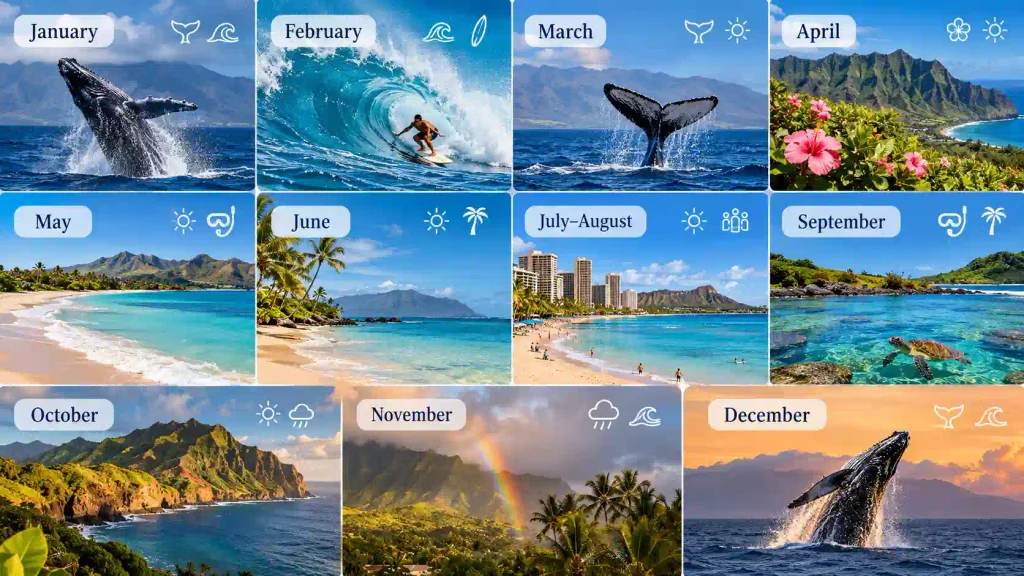
January
A good month for whale watching and winter surf. The period immediately after New Year’s can be quieter, but rain is more common.
February
Excellent for humpback whales and big-wave surfing, especially on Oahu’s North Shore. Ocean conditions can be rough on exposed northern beaches.
March
Whale season continues, while temperatures begin warming. Winter storms can still affect conditions.
April
A strong shoulder-season option, with warmer temperatures and spring cultural events.
May
Warm weather and increasingly favorable ocean conditions make May attractive for beach and outdoor activities.
June
One of the drier and sunnier periods in the year, before the height of summer travel.
July–August
Hot, sunny summer conditions make these months popular for beach vacations, but visitor numbers are generally higher.
September
A strong choice for warm weather, beach activities, snorkeling, and a quieter atmosphere after the peak summer period. Fall festivals add another reason to visit.
October
Warm conditions and fewer visitors can make October attractive, although tropical weather and occasional heavier seas remain possible.
November
The weather becomes wetter, but crowds can be lighter, and winter surf begins to return.
December
Whale season begins, and winter surf builds. The first part of the month can feel quieter than the Christmas and New Year holiday period.
How to Choose the Right Hawaii Travel Dates
Instead of asking only “When is the best time to visit Hawaii?”, travelers should match the month to the purpose of the trip.
For the best balance of weather and fewer crowds: consider April–May or September–October.
For whale watching: choose January–March, and remember the broader season generally runs from December through May.
For giant waves and professional-level surfing: winter, particularly November through February, is the major period on north-facing shores.
For swimming and calmer North Shore conditions: summer is generally more suitable than winter.
For cultural festivals: check spring and fall event calendars before selecting dates.
To avoid peak holiday crowds, compare spring and fall dates rather than Christmas, New Year’s, and major school-break periods.
Final Takeaway
Hawaii does not have one universally perfect travel month. April, May, September, and October are particularly useful choices for travelers seeking a balance of weather, activities, and visitor levels, while winter is the better fit for humpback whales and major surf.
Before booking, travelers should consider the island, coastline, elevation, planned activities, school or holiday periods, and seasonal events. Checking the forecast for the specific destination—not simply “Hawaii” as a whole matters because the islands’ mountains create distinct local climates.
Frequently Asked Questions
No single month is consistently cheapest because airfare and hotel rates vary by island, departure city, demand, holidays, and booking date. Comparing shoulder-season dates, such as spring and fall, can offer more options than focusing on one fixed month.
It depends on the trip. Summer generally offers warmer, drier conditions and calmer North Shore surf, while winter brings humpback whales and large northern swells.
Rainfall varies considerably by island and coastline, but summer is generally the drier season across much of Hawaii. Windward areas can remain wet even during relatively dry periods elsewhere.
September is outside the main humpback whale season. The principal season is generally December through May, with January through March particularly associated with whale watching.
October can be a good shoulder-season choice because temperatures remain warm and fall generally brings fewer visitors than summer and winter holidays. Travelers should still plan for tropical weather and changing ocean conditions.
May through September is a practical window for travelers focused on beaches and swimming, with September offering a useful combination of warm conditions and fewer visitors. Always check local ocean conditions before swimming.