
Japan Through the Seasons: Choosing the Right Month for Your Trip
The best time to visit Japan is generally during spring from March to May or autumn from September to November, when seasonal scenery and comfortable sightseeing conditions make these periods particularly attractive. Spring brings Japan’s famous cherry blossoms, while autumn transforms landscapes with red, orange, and gold foliage.
However, there is no single perfect month for every traveler. Japan’s climate stretches from subarctic Hokkaido in the north to subtropical Okinawa in the south, so weather varies considerably by destination. Skiers may prefer winter, hikers can target summer in Hokkaido and the Japanese Alps, and travelers seeking fewer crowds can consider periods outside the major holiday seasons.
Understanding what each month offers makes it much easier to plan the right Japan vacation.
What Is the Best Time of Year to Visit Japan?
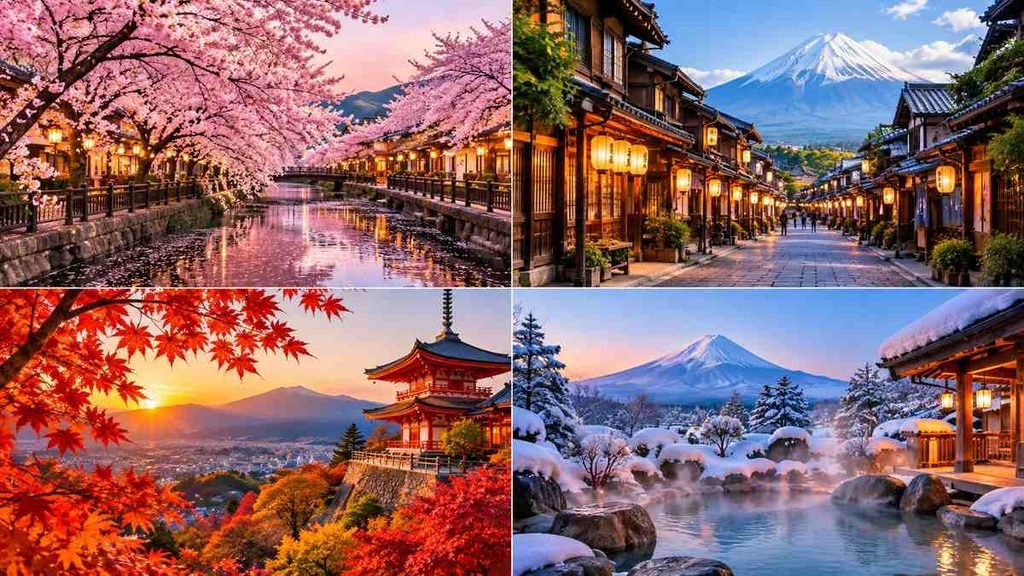
For conventional sightseeing in destinations such as Tokyo and Kyoto, spring and autumn are usually the most appealing seasons.
Audley identifies March through May and September through November as particularly favorable periods. These seasons also bring two of Japan’s most recognizable natural attractions: cherry blossoms in spring and colorful foliage in fall.
Japan’s official tourism organization similarly describes spring as mild and associated with cherry blossoms, while autumn offers colorful foliage and comfortable conditions.
Here’s a quick comparison:
| Season | Months | Main Reasons to Visit |
| Spring | March–May | Cherry blossoms, mild weather, greenery |
| Summer | June–August | Festivals, fireworks, hiking, beaches |
| Autumn | September–November | Fall foliage, cooler weather, outdoor sightseeing |
| Winter | December–February | Skiing, snow, hot springs, fewer crowds in some cities |
Your best season depends on whether your priority is scenery, outdoor activities, festivals, skiing, weather, or crowd levels.
Is September a Good Time to Visit Japan?
Yes, September can be a good time to visit Japan, particularly if you want fewer crowds than August and don’t mind some lingering summer heat and the possibility of typhoons.
Audley notes that domestic crowds associated with August usually decline by September. However, temperatures can remain hot and humid. Toward late September, leaves begin changing color in Hokkaido before the autumn-color season gradually moves south.
The Japan National Tourism Organization (JNTO) also describes September as the transition from summer into autumn. Hokkaido cools earlier than much of the country, while central and southern destinations can still feel distinctly summery.
What Is Japan’s Weather Like in September?
September does not immediately bring cool autumn weather everywhere.
Audley’s climate figures list average September maximum temperatures of approximately:
| Destination | Average September Maximum |
| Tokyo | 81°F |
| Kyoto | 82°F |
| Osaka | 82°F |
| Hiroshima | 82°F |
| Kanazawa | 81°F |
| Okinawa | 86°F |
These figures demonstrate why travelers shouldn’t automatically pack for cool fall conditions simply because September is technically part of autumn.
Light, breathable clothing can still be useful, especially during the first half of the month.
Does Japan Get Typhoons in September?
Yes. September is an important month to consider for typhoon risk.
JNTO warns that typhoons are particularly frequent from late August through much of September. Japan’s Meteorological Agency also notes that September precipitation is influenced by the autumn rain front and tropical cyclones.
A typhoon doesn’t mean an entire September trip will be disrupted, but travelers should leave some flexibility in their itinerary and monitor forecasts.
Transportation schedules, outdoor attractions, ferries, and flights can be affected when severe weather approaches.
Visiting Japan in January
January is a strong choice for snow sports, winter scenery, and comparatively quiet sightseeing after the New Year holiday period.
Audley describes January as generally cool, dry, and sunny, while northern Japan receives heavy snowfall suitable for skiing.
Winter can be especially attractive for:
- Skiing
- Snowboarding
- Snow-covered landscapes
- Hot springs
- Winter photography
- Visiting cities outside peak spring and autumn periods
Hokkaido and mountainous regions are considerably colder and snowier than Pacific-side cities such as Tokyo.
Visiting Japan in February
February remains one of Japan’s major winter-sports months.
Audley identifies it as the peak ski period in northern Japan and notes that many attractions elsewhere remain less crowded than during more popular travel seasons.
Sapporo Snow Festival
One of the major February attractions is the Sapporo Snow Festival, famous for its large snow and ice sculptures.
This makes February particularly appealing to travelers interested in winter culture as well as skiing.
Visiting Japan in March
March marks Japan’s transition from winter toward spring.
Temperatures begin becoming milder, plum blossoms signal the approaching spring, and cherry blossoms can begin emerging in warmer areas toward the end of the month.
The exact timing of cherry blossoms varies according to destination and annual weather conditions.
Late March can become considerably busier as travelers arrive for sakura season.
Visiting Japan in April
April is one of Japan’s most famous travel months because of the cherry blossoms.
Audley identifies April as a peak blossom-viewing period as flowering progresses northward. The popularity also means destinations can become crowded and accommodation prices can rise.
Travelers visiting during this period should consider booking accommodation and popular activities well ahead of time.
Is April the Best Month for Cherry Blossoms?
It can be an excellent month, but there is no single date that works for the entire country.
Japan’s cherry blossom season progresses geographically, with flowering generally beginning in warmer southern regions and moving north. JNTO notes that blossoms can appear between March and May depending on location.
Therefore, destination-specific forecasts are more useful than assuming early or mid-April will always be perfect everywhere.
Visiting Japan in May
May can be one of the most pleasant months for sightseeing, particularly after Golden Week.
Audley describes May as pleasantly warm and usually dry, with lush green vegetation. However, the first week includes Golden Week, one of Japan’s busiest domestic travel periods.
JNTO also identifies late April through early May as a major domestic travel season.
Once Golden Week finishes, travelers may find a more comfortable balance of warmer weather and sightseeing opportunities.
Northern areas also experience spring later than central Japan, with cherry blossoms reaching parts of Hokkaido around this period.
Visiting Japan in June
June marks the rainy season across much of Japan.
Audley describes the month as hot, humid, and typically rainy in many areas, although the moisture also makes gardens and vegetation particularly lush.
Japan’s Meteorological Agency explains that the early-summer rainy season, known as Baiu, is associated with a stationary seasonal rain front.
June isn’t necessarily a month to avoid. Travelers who don’t mind rain can still enjoy:
- Gardens
- Temples
- Museums
- Indoor cultural attractions
- Fewer crowds than peak blossom season
Carrying a compact umbrella and breathable waterproof clothing can make sightseeing easier.
Visiting Japan in July
July becomes increasingly hot and humid, but it is also a lively month for festivals.
Audley notes that the rainy season generally ends across much of Japan during the first half of July, though humidity remains high. July is also one of the warmer-season months suitable for climbing Mount Fuji.
Summer travelers can enjoy:
- Traditional festivals
- Fireworks
- Mountain activities
- Hiking
- Seasonal food
- Beaches
The heat in major cities such as Tokyo, Kyoto, and Osaka can make long days of outdoor sightseeing more demanding.
Visiting Japan in August
August is generally hot, humid, and busy with domestic travel.
Audley highlights school vacations and festivals as major characteristics of the month, while Hokkaido tends to be cooler and more comfortable than many other regions.
JNTO also identifies Obon in mid-August as one of Japan’s important domestic travel periods.
If visiting during August, travelers should prepare for:
- High temperatures
- Humidity
- Domestic crowds
- Festivals
- Possible typhoons
- Strong demand around Obon
Hokkaido and mountainous areas can provide alternatives for travelers seeking relief from city heat.
Visiting Japan in September
September offers fewer domestic crowds than August and the first signs of autumn, but travelers should still prepare for warm weather and possible typhoons.
This makes September something of a transitional month.
Advantages of Visiting in September
Potential advantages include:
- Fewer crowds than August
- Early autumn scenery in Hokkaido
- Beaches that may be quieter
- Summer warmth without peak school-holiday crowds
- Seasonal festivals
- Gradually cooling conditions later in the month
JNTO notes that beaches and tourist attractions generally see fewer crowds once the summer vacation period ends.
Disadvantages of September Travel
The main drawback is weather unpredictability.
Typhoons can disrupt:
- Flights
- Trains
- Ferries
- Outdoor sightseeing
- Hiking
- Island travel
September also remains hot in much of central and southern Japan.
Where Can You See Autumn Colors in September?
Hokkaido is the place to look first.
JNTO notes that autumn foliage can begin in Daisetsuzan National Park early in September, with some areas reaching strong color around the middle of the month.
Mainland destinations such as Kyoto generally reach their best autumn-color periods considerably later.
Visiting Japan in October
October is one of the most attractive months for general sightseeing because summer heat begins easing and autumn becomes more established.
Audley describes October as the beginning of fall for mainland Japan, with cooler weather and red and gold colors starting to transform the landscape.
JNTO similarly notes that much of Honshu and Kyushu experiences pleasant temperatures during October and November.
October works particularly well for:
- City sightseeing
- Hiking
- Temple visits
- Gardens
- Countryside trips
- Food-focused travel
Autumn colors appear earlier in northern and higher-altitude regions than in cities farther south.
Visiting Japan in November
November is one of the strongest months for autumn foliage across much of mainland Japan.
Audley identifies November as a peak period for colorful leaves on the mainland and describes the weather as pleasantly cool and mild.
JNTO states that much of central Japan sees autumn colors from around mid-November into early December.
Kyoto is particularly popular during autumn, so major temples and foliage-viewing areas can still attract substantial crowds.
Visiting Japan in December
December brings cooler, generally drier weather and the beginning of Japan’s winter travel season.
Audley notes that the first couple of weeks can be comparatively quiet before school vacations and New Year travel increase activity toward the end of the month.
Winter highlights include:
- Onsen
- Seasonal illuminations
- Snowy scenery in northern regions
- Early ski-season activities
- Clear winter days in some Pacific-side cities
Travelers visiting around the New Year should check opening schedules because some attractions and businesses may close or operate differently.
Best Time to Visit Japan for Cherry Blossoms
March and April are the key cherry blossom months for many popular destinations, although the season varies significantly by region.
JNTO explains that blossoms generally move from south to north and can appear between March and May depending on location.
For example:
- Warmer southern areas bloom earlier.
- Tokyo and Kyoto often become major blossom destinations around late March and early April.
- Northern Japan blooms later.
- Hokkaido can experience blossoms into May.
Travelers planning specifically around sakura should follow the annual blossom forecast because flowering dates change according to weather.
Best Time to Visit Japan for Autumn Leaves
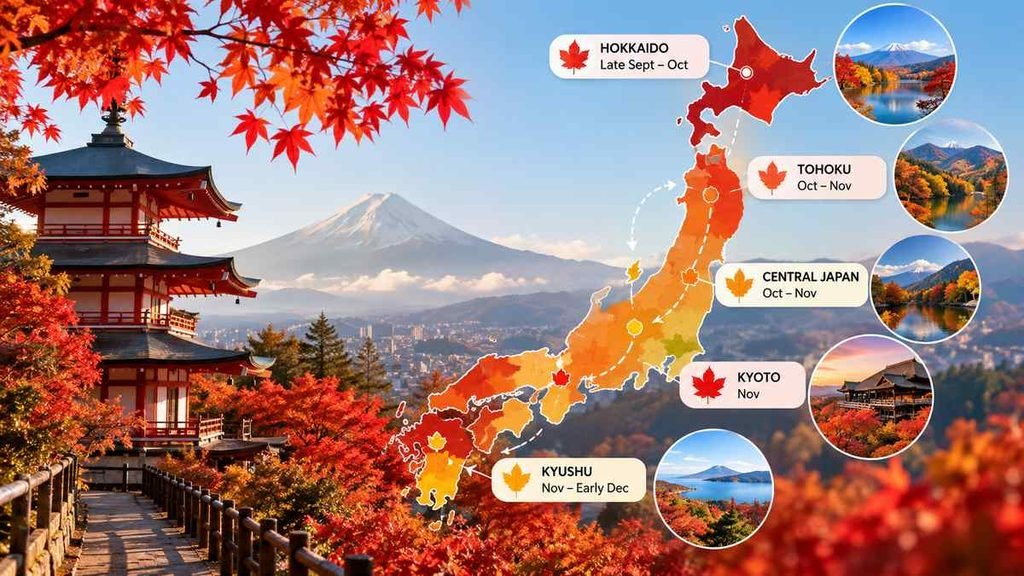
October and November are the main foliage months for many travelers, although autumn colors begin earlier in Hokkaido and mountainous regions.
JNTO notes that foliage starts in Hokkaido and progresses south, with autumn colors appearing across the country from around late September into early December.
This means travelers can potentially follow the changing leaves over an extended period by choosing destinations strategically.
For classic Kyoto autumn scenery, November is generally more suitable than September.
Best Time to Visit Japan for Skiing
Winter is the natural choice for skiing and snowboarding.
Audley highlights February as a peak ski period in northern Japan, while JNTO notes that ski seasons begin in many mountainous areas after hiking trails close for winter.
Popular snow regions include:
- Hokkaido
- Nagano
- Niigata
- Tohoku
The precise ski season depends on snowfall and resort elevation.
Best Time to Visit Tokyo
Tokyo can be visited throughout the year, but spring and autumn generally provide more comfortable outdoor sightseeing conditions.
Based on Audley’s climate guide, average maximum temperatures range from around 50°F in January and February to approximately 88°F in August. September remains warm at around 81°F, while October falls to about 70°F.
Travelers sensitive to heat may therefore find October and November more comfortable than August or early September.
Best Time to Visit Kyoto
Kyoto is particularly popular during spring cherry blossom season and autumn foliage season.
Audley’s climate figures show average maximum temperatures of approximately:
- 54°F in March
- 66°F in April
- 75°F in May
- 90°F in August
- 82°F in September
- 72°F in October
- 61°F in November
Travelers should remember that the most attractive seasonal periods can also bring large crowds.
Best Time to Visit Hokkaido
Hokkaido’s seasonal pattern differs significantly from central Japan.
Summer is generally cooler, making the island attractive when Tokyo, Kyoto, and Osaka are experiencing intense heat and humidity. Audley specifically notes Hokkaido as more comfortable during August.
Autumn also arrives early. JNTO notes that foliage begins changing in parts of Hokkaido during September.
Winter then brings substantial snowfall and excellent conditions for snow-focused vacations.
When Is Japan Most Crowded?
Some of Japan’s busiest travel periods are connected to domestic holidays and major seasonal attractions.
Important periods include:
- New Year: late December and early January
- Cherry blossom season: particularly late March and April in popular areas
- Golden Week: late April through early May
- Obon: around mid-August
- Peak autumn foliage: particularly popular locations in November
Audley and JNTO both highlight New Year, Golden Week, and Obon as important domestic travel periods.
Transport and accommodation can become busier, so advance planning is especially useful around these dates.
When Is the Cheapest Time to Visit Japan?
There is no guaranteed cheapest month because airfare and accommodation prices depend on origin, destination, booking date, holidays, events, and demand.
However, travelers looking for lower costs can compare periods outside major demand peaks such as:
- Cherry blossom season
- Golden Week
- Obon
- Peak autumn foliage
- New Year
January after the New Year holiday period, February outside ski destinations, June’s wetter period, and early December can sometimes provide alternatives to the most popular sightseeing seasons.
Always compare actual fares and hotel prices rather than assuming a particular month will automatically be cheaper.
When Should You Avoid Visiting Japan?
There is no single month that everyone should avoid. Instead, certain periods may be less suitable depending on your priorities.
Consider avoiding or carefully planning around:
- Golden Week if you dislike heavy domestic travel demand
- June if persistent rain would significantly affect your trip
- July and August if you struggle with heat and humidity
- August and September if typhoon-related uncertainty is a major concern
- Obon if you want to minimize domestic crowds
- Peak cherry blossom season if avoiding crowds matters more than seeing sakura
JNTO emphasizes that every season offers different experiences, rather than identifying one universally unsuitable period.
How to Choose the Right Month for Japan
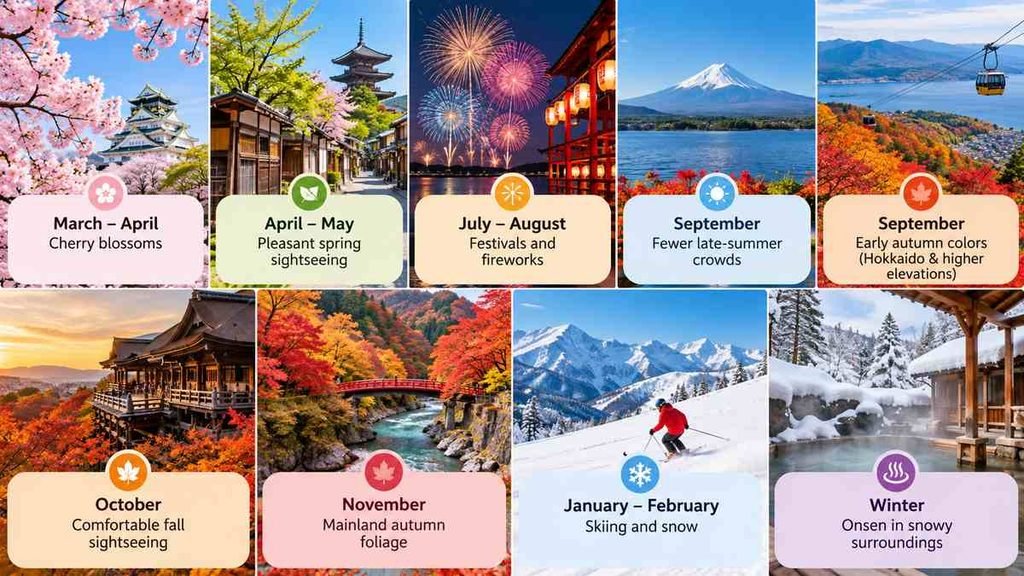
Match your travel dates to your main goal:
For cherry blossoms: March–April for many central destinations, later farther north.
For pleasant spring sightseeing: April–May, while avoiding Golden Week where possible.
For festivals and fireworks: July–August.
For fewer late-summer crowds: September, with weather flexibility.
For early autumn colors: September in Hokkaido and higher elevations.
For comfortable fall sightseeing: October.
For mainland autumn foliage: November.
For skiing and snow: January–February.
For onsen in snowy surroundings: Winter.
This approach is more useful than searching for one perfect month for the entire country.
Final Thoughts
Japan can be rewarding throughout the year, but March through May and September through November provide some of the country’s most sought-after combinations of seasonal scenery and sightseeing conditions. Spring attracts travelers for cherry blossoms, while autumn brings colorful foliage and increasingly comfortable temperatures.
September deserves particular consideration. August’s domestic crowds usually ease, early autumn colors begin appearing in Hokkaido, and much of the country remains warm. The trade-off is that September can still be hot and humid, while typhoons can occasionally disrupt travel.
Rather than choosing dates based on Japan as a whole, decide what you most want to experience—sakura, festivals, mountain hiking, fall foliage, skiing, or quieter sightseeing—and select the region and month that best match that goal.
Frequently Asked Questions
There isn’t one ideal month for everyone. April is popular for cherry blossoms, May offers pleasant spring conditions, October provides cooler fall weather, and November is excellent for autumn foliage.
Yes. September usually has fewer domestic crowds than August, and autumn begins appearing in Hokkaido. However, much of Japan remains warm and humid, and typhoons are an important weather consideration.
Yes, especially in central and southern Japan. Audley’s climate data lists average September maximums around 81°F in Tokyo and 82°F in Kyoto and Osaka.
September is one of the months with notable typhoon activity. JNTO advises travelers to keep itineraries flexible because typhoons are particularly frequent from late August through much of September.
Cherry blossoms generally appear from March through May as flowering progresses from warmer southern areas toward northern Japan. Exact dates vary annually and by location.
Autumn foliage begins in northern Japan and high-elevation areas from around September and progresses south through November and into early December in some places.
Major domestic travel periods include New Year, Golden Week from late April into early May, and Obon around mid-August. Cherry blossom and peak autumn foliage periods can also be busy in popular sightseeing destinations.
Yes. October brings cooler temperatures after summer and marks the development of autumn across mainland Japan, making it particularly suitable for outdoor sightseeing.
Yes. November is a major autumn foliage month across mainland Japan and generally offers pleasantly cool conditions.
January after the New Year period, February outside major ski areas, June, September outside holiday periods, and early December can be worth considering. Crowd levels still vary significantly by destination and event.