
30 Best Things to Do in New Orleans for Every Traveler
Top things to do in New Orleans include exploring the French Quarter, visiting Jackson Square, listening to live jazz, discovering historic landmarks, and enjoying family attractions like Audubon Zoo and City Park. Many of the city’s most memorable experiences are free, while museums, river cruises, and guided tours offer additional ways to discover its history and culture.
Located along the Mississippi River in Louisiana, New Orleans is celebrated for its Creole and Cajun traditions, distinctive architecture, jazz heritage, and lively festivals. Its neighborhoods reflect French, Spanish, African, and Caribbean influences, making the city an interesting destination for travelers with different interests.
Beyond Bourbon Street and Mardi Gras, New Orleans offers peaceful gardens, interactive museums, historic cemeteries, waterfront promenades, and family-friendly outdoor adventures.
This guide highlights 30 of the best New Orleans attractions, organized by free activities, family experiences, music, history, and local culture, plus practical planning advice.
Read This Too: Travel Insurance Guide: Coverage & Common Exclusions
New Orleans Attractions at a Glance
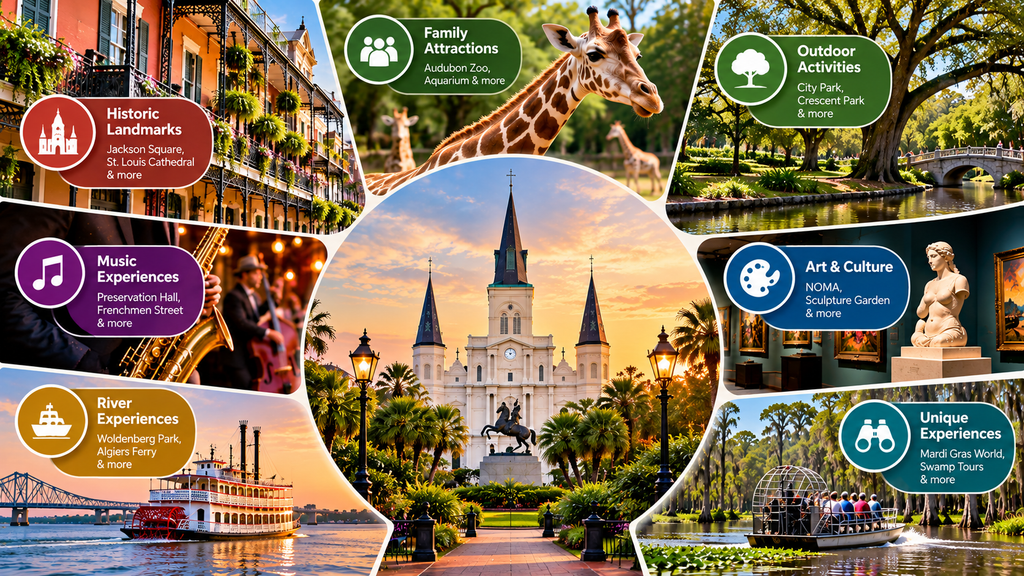
New Orleans combines walkable historic neighborhoods with cultural attractions and outdoor spaces. This overview helps travelers choose activities based on their interests, budget, and available time.
| Category | Recommended Attractions | Typical Cost |
| Historic landmarks | Jackson Square, St. Louis Cathedral, The Cabildo | Free to paid |
| Family attractions | Audubon Zoo, Aquarium, Louisiana Children’s Museum | Paid |
| Outdoor activities | City Park, Crescent Park, Audubon Park | Free entry |
| Music experiences | Preservation Hall, Frenchmen Street, Jazz Museum | Free to paid |
| Art and culture | Besthoff Sculpture Garden, NOMA, Historic New Orleans Collection | Free to paid |
| River experiences | Woldenberg Park, Algiers Ferry, riverboat cruise | Free to paid |
| Unique experiences | Mardi Gras World, swamp tours, cemetery tours | Paid |
Admission charges, operating hours, event schedules, and tour availability may change. Free admission to a park or neighborhood does not necessarily include its museums, rides, or special attractions.
Best Free Things to Do in New Orleans
New Orleans offers several rewarding experiences without admission fees. Historic streets, public parks, riverside paths, and cultural landmarks allow visitors to appreciate the city’s character without spending heavily on attractions.
1. Walk Through the Historic French Quarter
The French Quarter is New Orleans’ historic center and one of the city’s most recognizable neighborhoods. Established in 1718, the district features colorful buildings, decorative iron balconies, narrow streets, and architecture shaped by French and Spanish colonial influences.
Royal Street is particularly appealing for its art galleries, antique shops, and street musicians. Chartres Street offers historic buildings and architectural details, while Bourbon Street is associated with the city’s nightlife.
Exploring the neighborhood on foot is free, although individual museums, guided tours, restaurants, and entertainment venues charge separately.
Best for: First-time visitors, architecture enthusiasts, and photographers.
2. Experience the Atmosphere of Jackson Square
Jackson Square is a historic public square surrounded by notable French Quarter landmarks. The central statue of Andrew Jackson, landscaped grounds, and surrounding colonial-era buildings make it a popular gathering place.
Street artists, musicians, and performers regularly contribute to the square’s lively atmosphere. Visitors can admire local artwork, photograph the cathedral, or enjoy the surrounding streets.
The square also provides convenient access to St. Louis Cathedral, the Cabildo, and the Presbytère.
Best for: Free sightseeing, local art, and historic architecture.
3. Admire St. Louis Cathedral
St. Louis Cathedral stands prominently behind Jackson Square and remains one of Louisiana’s most significant religious landmarks.
The cathedral’s distinctive three-spired facade, interior artwork, and religious history make it a popular stop for visitors interested in architecture and local heritage.
General visits are typically free when the building is open to the public, although access may be limited during religious services, weddings, and special events.
Best for: Architecture, photography, and cultural history.
4. Discover Art at the Sydney and Walda Besthoff Sculpture Garden
The Sydney and Walda Besthoff Sculpture Garden offers a distinctive combination of contemporary art and natural scenery.
Located beside the New Orleans Museum of Art in City Park, the garden displays sculptures along landscaped walking paths, lagoons, and mature trees.
Admission to the sculpture garden is free, making it one of the city’s strongest cultural attractions for budget-conscious visitors.
Best for: Art lovers, couples, and leisurely outdoor walks.
5. Relax Beneath the Oak Trees at City Park
New Orleans City Park is a major green space featuring ancient oak trees, walking trails, lagoons, recreational areas, and cultural attractions.
The park offers an escape from the busy French Quarter and is especially attractive to families seeking outdoor recreation.
General park access is free. However, activities such as Storyland, Carousel Gardens, miniature golf, and certain rentals require payment.
The park also houses the Louisiana Children’s Museum and the New Orleans Museum of Art, letting you combine outdoor relaxation with educational activities.
Best for: Families, picnics, walking, and outdoor photography.
6. Enjoy Mississippi River Views at Woldenberg Riverfront Park
Woldenberg Riverfront Park provides a scenic pedestrian route along the Mississippi River near the French Quarter.
Visitors can watch commercial vessels and riverboats while enjoying views of the city’s riverfront.
The park is especially convenient for travelers visiting the Audubon Aquarium, Canal Street, or nearby waterfront attractions.
Public access is free, and the promenade is suitable for a relaxed walk between sightseeing stops.
Best for: River views, photography, and budget-friendly sightseeing.
7. Explore the French Market
The French Market is a historic commercial district stretching along the French Quarter near the Mississippi River.
Its stalls and shops feature local crafts, souvenirs, food products, and specialty goods. The market offers an accessible introduction to the city’s culinary traditions and local vendors.
Browsing is free, while food, merchandise, and specialty purchases are individually priced.
The market’s location also makes it easy to combine with a walk along Decatur Street and a visit to Jackson Square.
Best for: Local shopping, food culture, and casual sightseeing.
8. Walk Along Crescent Park
Crescent Park is a riverfront green space connecting parts of the Marigny and Bywater neighborhoods.
The park includes landscaped walking paths, open spaces, and viewpoints overlooking the Mississippi River.
Its distinctive pedestrian bridge and industrial riverfront setting create a different atmosphere from the historic French Quarter.
Visitors interested in walking, photography, or quieter outdoor recreation can enjoy the park for free.
Best for: Scenic walks, couples, and photography.
Also Worth Reading: Philippines Travel Guide: Best Time to Visit
Best Kid-Friendly Things to Do in New Orleans
New Orleans offers many family-friendly attractions, including wildlife exhibits, interactive museums, outdoor play areas, and educational experiences.
9. Meet Wildlife at Audubon Zoo
Audubon Zoo is one of the city’s leading family attractions, featuring animals from different habitats and regions.
Visitors can encounter wildlife exhibits, learn about conservation, and discover species associated with Louisiana’s wetlands.
The zoo’s landscaped environment and educational programming make it suitable for families with children of different ages.
Admission is ticketed. Audubon currently advertises variable pricing, with adult tickets generally in the 30–40 range and child/senior tickets in the 25–35 range; actual prices depend on the visit date and applicable offer.
Best for: Families, animal enthusiasts, and educational outings.
10. Discover Marine Life at Audubon Aquarium
Audubon Aquarium introduces visitors to aquatic ecosystems through marine-life exhibits and educational displays.
Located near the Mississippi River, the aquarium is convenient for families spending time around Canal Street and the waterfront.
The attraction features aquatic animals, including fish, sharks, and other marine species, with exhibits designed to encourage learning about underwater environments.
Audubon currently sells a combined Aquarium and Insectarium ticket, with advertised adult prices generally ranging from $45 to $55 and child/senior prices from $40 to $50.
Best for: Children, marine-life enthusiasts, and rainy-day activities.
11. Visit the Louisiana Children’s Museum
The Louisiana Children’s Museum offers interactive exhibits that support learning through play.
Located in City Park, the museum features hands-on activities that encourage creativity, problem-solving, and exploration.
Its indoor and outdoor spaces make it especially suitable for younger children who benefit from hands-on learning.
The museum is a useful option for families seeking a break from conventional sightseeing while still incorporating educational activities into the trip.
Best for: Toddlers, preschoolers, and elementary-age children.
12. Explore Storyland in City Park
Storyland is a themed playground featuring structures inspired by familiar fairy tales and children’s stories.
Its imaginative setting allows younger visitors to climb, play, and interact with oversized storybook displays.
Located in City Park, Storyland pairs well with other nearby family attractions for a half-day outing.
Admission is separate from general City Park entry, so families should verify current ticket prices before visiting.
Best for: Young children and imaginative outdoor play.
13. Enjoy Carousel Gardens, Amusement Park
Carousel Gardens Amusement Park offers traditional amusement rides in City Park.
The park is best known for its historic carousel, a nostalgic attraction for children and adults.
Additional rides and family entertainment make it a great option for a relaxed afternoon, especially when paired with Storyland.
Operating schedules can be seasonal, and ride availability may vary.
Best for: Families with younger children and classic amusement rides.
14. Take a Louisiana Swamp Tour
A guided swamp tour introduces travelers to the wetlands surrounding New Orleans, including bayous, cypress trees, and native wildlife.
Depending on the route and season, participants may see alligators, turtles, wading birds, and other species associated with Louisiana’s ecosystems.
Guides often explain the area’s ecology and cultural history, helping visitors understand how local communities relate to the wetlands.
Tours typically depart outside central New Orleans, and transportation arrangements vary by operator. Wildlife sightings are not guaranteed.
Best for: Families with older children, nature enthusiasts, and outdoor adventurers.
15. Experience Mardi Gras World
Mardi Gras World offers a chance to learn how elaborate Mardi Gras parade floats are built.
Visitors can see oversized decorations, artistic designs, and float-building techniques associated with the city’s carnival traditions.
The attraction offers insight into the craftsmanship and planning behind major parades.
It is especially useful for travelers visiting outside Mardi Gras season who still want to experience an important part of New Orleans culture.
Best for: Families, festival enthusiasts, and arts and culture lovers.
Best Music and Cultural Experiences in New Orleans
New Orleans is widely associated with the development of jazz, but its musical identity also includes brass bands, gospel, rhythm and blues, and contemporary styles. Several attractions offer opportunities to understand these traditions through performances and exhibitions.
16. Listen to Traditional Jazz at Preservation Hall
Preservation Hall is an established venue dedicated to preserving traditional New Orleans jazz.
Located in the French Quarter, the intimate space emphasizes live music over elaborate production. Its small setting lets audiences appreciate the interaction between musicians and instruments.
Concerts are ticketed, and performances may sell out during busy travel periods. Families should check the current performance schedule and admission policies before visiting.
Best for: Jazz enthusiasts, couples, and cultural experiences.
17. Discover Live Music on Frenchmen Street
Frenchmen Street is one of New Orleans’ best-known live music areas.
Located in the Faubourg Marigny neighborhood, the street features music venues, bars, and entertainment spaces where local and visiting musicians perform.
Jazz, blues, funk, and brass-band music contribute to the neighborhood’s energetic atmosphere.
Some venues charge admission or require minimum purchases, while others occasionally offer performances without a cover charge. Age restrictions vary, so daytime activities and outdoor performances are better for families.
Best for: Music lovers and evening entertainment.
18. Learn About Jazz at New Orleans Jazz National Historical Park
The New Orleans Jazz National Historical Park introduces visitors to jazz’s development and its connection to the city’s communities.
Managed by the National Park Service, the park offers educational programming, musical performances, and opportunities to learn about jazz history.
The visitor center operates at 419 Decatur Street, with published hours of Tuesday through Saturday, 9:30 a.m. to 4:30 p.m., subject to holiday and event closures.
Admission is free, and regular public programming is generally free unless otherwise specified.
Best for: Budget travelers, students, and music history enthusiasts.
19. Explore the New Orleans Jazz Museum
The New Orleans Jazz Museum is housed in the historic Old U.S. Mint near the French Quarter.
Its exhibits trace jazz history through instruments, recordings, photographs, and other cultural artifacts.
The museum helps connect the city’s musical traditions with the people and communities that shaped them.
The museum may also schedule live performances and educational events, offering additional opportunities to engage with New Orleans’ musical heritage.
Best for: Music history, cultural education, and indoor sightseeing.
20. Experience a New Orleans Festival or Second-Line Parade
New Orleans festivals and second-line parades reflect the city’s longstanding traditions of public celebration, community organization, and live music.
Second-line parades commonly feature brass bands, dancing, and participants following a procession through neighborhood streets.
The city also hosts major celebrations such as Mardi Gras, French Quarter Festival, and the New Orleans Jazz & Heritage Festival.
Some street parades and festivals are free to attend, while other events require tickets. Dates, routes, and access arrangements should be checked before visiting.
Best for: Local culture, live music, and festival experiences.
Best Historic Attractions and Museums in New Orleans
The city’s history includes colonial rule, slavery, resistance, commerce, immigration, and cultural transformation. Its museums and preserved buildings offer important context for understanding these overlapping histories.
21. Discover Louisiana History at The Cabildo
The Cabildo is one of the most significant historic buildings in the French Quarter.
Built during the Spanish colonial period, it later became tied to key events in Louisiana’s political and legal history.
Today, the building is part of the Louisiana State Museum, with exhibitions covering colonial Louisiana, state history, and major historical developments.
Admission is paid, and travelers should check the museum’s current schedule.
Best for: History enthusiasts and educational visits.
22. Explore Mardi Gras and Hurricane Katrina History at The Presbytère
The Presbytère stands beside St. Louis Cathedral and houses exhibitions that examine key aspects of Louisiana’s history.
The museum is particularly known for its displays about Mardi Gras traditions and Hurricane Katrina.
Its exhibits offer a chance to understand both the city’s celebratory culture and the challenges of a major natural disaster.
The museum is especially worthwhile for visitors seeking more historical context than a conventional walking tour provides.
Best for: Cultural history, older children, and museum visitors.
23. Visit the National WWII Museum
The National WWII Museum is one of the city’s major educational attractions.
The museum examines the Second World War through historical artifacts, personal accounts, military equipment, and multimedia exhibitions.
Its galleries cover different theaters of war and the experiences of service members and civilians.
Visitors interested in detailed historical exhibits may need several hours to appreciate the museum’s extensive collections.
Admission is ticketed, and certain experiences may require additional reservations or fees.
Best for: Military history, students, and educational travel.
24. Explore the Historic New Orleans Collection
The Historic New Orleans Collection is a museum and research institution dedicated to the history and culture of New Orleans and the surrounding region.
Its exhibitions explore architecture, local communities, historical events, and cultural traditions.
The institution also preserves archival materials and historical collections that help explain the city’s development.
Many exhibitions offer free admission, although selected programs and experiences may have separate requirements.
Best for: Local history, research, and budget-friendly cultural activities.
25. Learn About Historic Cemeteries
New Orleans is known for its above-ground tombs, many of which reflect local burial traditions, architectural styles, and the city’s environmental conditions.
Historic cemeteries provide insight into family histories, religious practices, and memorial design.
However, access rules vary significantly between cemeteries.
For example, St. Louis Cemetery No. 1 requires an authorized guided tour rather than unrestricted independent entry. Other cemeteries may have different visiting hours or restrictions.
Visitors should respect burial sites and avoid entering closed or restricted areas.
Best for: Architecture, local history, and guided cultural tours.
26. Visit the Old Ursuline Convent
The Old Ursuline Convent is an important surviving example of early colonial architecture.
The building is associated with the Ursuline religious community and the development of education and religious institutions in colonial Louisiana.
Its architecture and historical significance make it an interesting destination for visitors studying the city’s early history.
Access arrangements and available tours may vary, so advance confirmation is advisable.
Best for: Colonial architecture, religious history, and heritage tourism.
Unique New Orleans Experiences Worth Adding to an Itinerary
The following activities combine local transportation, river scenery, architecture, and neighborhood exploration.
27. Ride the Historic St. Charles Streetcar
The St. Charles Avenue Streetcar Line offers an affordable way to see several of the city’s historic neighborhoods.
Its vintage green streetcars travel along St. Charles Avenue, passing oak-lined streets, historic residences, and notable architectural landmarks.
The journey is especially appealing for visitors who want to experience local transportation while sightseeing.
The New Orleans Regional Transit Authority’s standard streetcar fare is generally $1.25 per ride, while a one-day Jazzy Pass is advertised at $3.
Best for: Affordable sightseeing, families, and historic transportation.
28. Discover the Garden District
The Garden District is known for its grand residences, landscaped gardens, and architectural variety.
Visitors can admire historic mansions, ornate fences, shaded sidewalks, and buildings that reflect the city’s nineteenth-century development.
Walking independently through public streets is free, while guided tours provide additional historical commentary.
The neighborhood is accessible by streetcar, making it convenient to combine with other Uptown attractions.
Best for: Architecture, photography, and relaxed walking tours.
29. Take a Mississippi Riverboat Cruise
A Mississippi Riverboat cruise offers a different perspective on New Orleans and its historic relationship with river commerce.
Traditional-style paddlewheel boats let you enjoy waterfront views and learn about the Mississippi River’s role in the city’s development.
Depending on the operator, cruises may feature narrated sightseeing, live jazz, meals, or special events.
Ticket prices vary by cruise type, duration, and included services.
Best for: Couples, families, and scenic sightseeing.
30. Visit Audubon Park
Audubon Park is a landscaped public park in Uptown New Orleans.
The park features walking and jogging paths, mature oak trees, open green spaces, and scenic lagoons.
It offers a quieter alternative to the busy French Quarter and a great setting for picnics, outdoor exercise, and casual photography.
General park access is free, although nearby attractions and recreational services may charge separately.
Best for: Nature lovers, families, and outdoor relaxation.
How to Plan a New Orleans Sightseeing Trip
A well-organized New Orleans itinerary can combine several attractions without requiring extensive travel between neighborhoods.
| Trip Duration | Suggested Experiences |
| 1 day | French Quarter, Jackson Square, St. Louis Cathedral, French Market |
| 2 days | Add a jazz performance, Garden District, and riverfront walk |
| 3 days | Add City Park, a major museum, and a family attraction |
| 4–5 days | Include a swamp tour, additional museums, and neighborhood visits |
Best Time to Visit New Orleans
Spring and fall generally offer comfortable sightseeing conditions, though festivals and major events can increase hotel prices and crowds.
February and March are particularly popular around Mardi Gras, with dates changing annually.
Summer is typically hot and humid, and the Atlantic hurricane season runs from June through November. Outdoor itineraries should allow flexibility for rain and heat.
Getting Around New Orleans
Walking is convenient in the French Quarter and nearby neighborhoods. Streetcars and buses provide inexpensive transportation to other areas.
Rideshare services and taxis may be more practical for attractions located farther apart.
Swamp tours often require transportation outside the city, so travelers should confirm whether the hotel includes pickup.
You May Also Like: Best Time to Visit South Africa: Monthly Guide
Final Thoughts
New Orleans offers an unusually diverse collection of attractions, combining historic architecture, live music, cultural museums, wildlife experiences, and scenic outdoor spaces.
First-time visitors can build an itinerary around the French Quarter and Mississippi River, while families may prefer City Park, the zoo, and interactive museums. History buffs can spend extra time at the Cabildo, the Presbytère, and the National WWII Museum.
Combining free attractions with a few carefully selected paid experiences is an effective way to experience the city without overloading the itinerary.
Before traveling, visitors should verify attraction hours, admission prices, transportation schedules, and special-event arrangements.
Frequently Asked Questions About New Orleans Attractions
The best free activities include exploring the French Quarter, visiting Jackson Square, walking through City Park, viewing the Besthoff Sculpture Garden, and enjoying the Mississippi River waterfront.
Yes. Audubon Zoo, Audubon Aquarium, Louisiana Children’s Museum, Storyland, and City Park offer child-friendly activities. Families can also enjoy daytime street performances and selected cultural attractions.
Three to four days are generally sufficient to experience major landmarks, museums, live music, and several neighborhoods. Five days allow more time for swamp tours and additional cultural activities.
The French Quarter is among the city’s most recognizable attractions. Jackson Square, St. Louis Cathedral, Bourbon Street, and historic architecture make it especially popular with first-time visitors.
Yes. Many central attractions are walkable, and public transportation connects several neighborhoods. Most visitors staying near the French Quarter or Central Business District don’t need a rental car.
Costs vary. Public parks, historic streets, and several cultural attractions are free, while museums, wildlife attractions, riverboat cruises, and guided tours require paid admission.