
Chasing Sun, Sea & Softer Crowds: When Is the Best Time to Visit The Bahamas?
The best time to visit The Bahamas is generally November or late April, when travelers can find warm weather, lower humidity, fewer visitors than during the busiest winter and spring periods, and travel dates outside the core Atlantic hurricane season.
The Bahamas stays warm year-round, but the experience changes considerably by season. Winter and early spring bring comfortable temperatures and strong demand; summer brings more humidity and showers, while September and October fall within the most active part of the Atlantic hurricane season. The right month therefore depends on whether you prioritize beach weather, cultural events, quieter islands, or avoiding weather-related disruption.
Best Time to Visit The Bahamas at a Glance
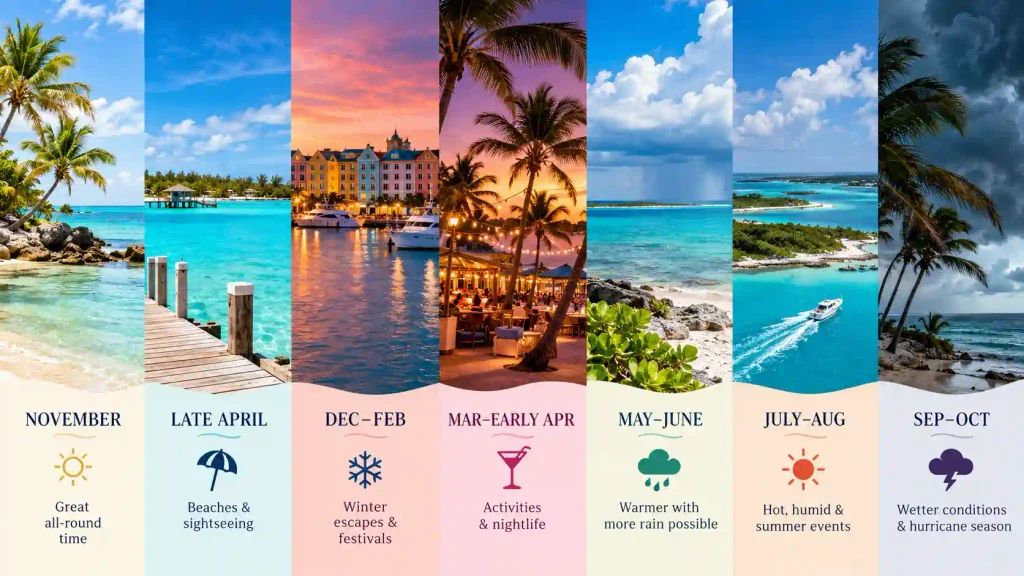
You can visit The Bahamas year-round, but different periods suit different types of travelers.
| Travel period | What to expect | Best suited to |
| November | Warm weather, lower humidity and a quieter atmosphere | Overall balance |
| Late April | Warm sea, sunshine and fewer spring-break crowds | Beaches and sightseeing |
| December–February | Comfortable weather and high demand | Winter escapes and festivals |
| March–early April | Warm, pleasant conditions but heavier spring-break demand | Travelers prioritizing activities and nightlife |
| May–June | Warmer, more humid conditions with more rain possible | Travelers comfortable with tropical showers |
| July–August | Hot, humid weather with scattered thunderstorms | Summer vacations and events |
| September–October | Humid, wetter conditions and peak Atlantic hurricane activity | Travelers with flexible plans |
The exact experience can vary between Nassau, Grand Bahama and the Out Islands, so travelers should consider their specific island rather than treating the entire archipelago as having identical weather.
Why November and Late April Stand Out
November is a particularly useful shoulder-season option. Temperatures remain warm, humidity begins to ease, and the Atlantic hurricane season has officially ended. Audley Travel also identifies November and late April as good times to combine good weather with fewer crowds.
Late April offers another attractive window. Spring-break demand generally falls after its peak, while ocean temperatures are comfortable for swimming and the weather remains suitable for outdoor activities. The official Bahamas tourism site identifies the country’s spring-break period as running from late February through mid-April.
For travelers who want a quieter holiday without moving too far into the hotter summer months, these shoulder-season periods can provide a useful balance.
The Bahamas Weather by Season
The country’s subtropical location keeps temperatures warm year-round. The official Bahamas tourism website notes that winter lows average around 70°F (21°C), while summer highs generally range from 80°F to 90°F (26°C to 32°C).
Winter: December to February
Winter is one of the most popular periods to visit The Bahamas, particularly for travelers escaping colder weather elsewhere.
December, January and February generally bring warm days, comfortable evenings and relatively manageable humidity. January is also home to Junkanoo celebrations, making it especially appealing for travelers who want to experience Bahamian culture alongside a beach holiday.
The trade-off is demand. Accommodation and popular activities can be harder to secure around Christmas, New Year’s, and major festival dates, so advance planning helps.
Spring: March to May
Spring starts with high visitor demand and gradually becomes quieter.
March and early April can be particularly busy because they overlap with the Bahamas’ spring-break period. By late April and May, crowds generally begin to ease. May is warmer and more humid, but it can still work well for travelers who want beaches, boating, and outdoor activities without the peak winter atmosphere.
The official tourism authority also notes that May and June typically receive more rainfall, although showers can pass quickly.
Summer: June to August
Summer brings higher temperatures, greater humidity, and more frequent showers or thunderstorms.
June 1 marks the official beginning of the Atlantic hurricane season. That does not mean storms occur throughout the month, but travelers visiting during this period should monitor weather forecasts and understand their accommodation and travel insurance policies.
July and August can still offer plenty of sunshine between showers. The season also features major cultural celebrations, including Bahamian Independence Day on July 10.
Early Autumn: September to October
September and October require more weather flexibility. They fall within the most active portion of the Atlantic hurricane season, with the National Hurricane Center identifying September 10 as the climatological peak and noting that most Atlantic tropical cyclone activity occurs from mid-August through mid-October.
The Bahamas’ official tourism site describes the destination as having rain year-round, while Audley Travel characterizes September and October as hot, humid, and frequently rainy.
Travelers choosing these months should therefore check forecasts close to departure and confirm cancellation, rebooking, and storm-related policies before booking non-refundable arrangements.
Best Months to Visit The Bahamas for Different Travel Plans

No single month is ideal for every traveler. The best timing depends on the purpose of the trip.
For the Best Balance of Weather and Crowds
November and late April are strong choices for travelers seeking pleasant conditions and fewer visitors than during the busiest periods. November also falls immediately after the official hurricane season.
For a Winter Beach Escape
December through February suits travelers looking for warm-weather travel during the Northern Hemisphere winter. December also brings the beginning of the major Junkanoo celebrations.
For Bahamian Culture and Junkanoo
Late December and early January are especially notable because Junkanoo’s major celebrations take place on Boxing Day and New Year’s Day. The official Bahamas tourism authority describes Junkanoo as a major cultural tradition celebrated across the islands, with the largest parade taking place in downtown Nassau.
For Fewer Spring-Break Crowds
Late April and May can be more appealing than March or early April for travelers who prefer a calmer atmosphere. Spring-break season in The Bahamas generally runs from late February through mid-April.
For Summer Events
July offers opportunities to experience Independence Day celebrations on July 10, along with other seasonal cultural activities. However, expect warmer, more humid weather.
For Travelers Comfortable With Weather Flexibility
June through August can work for those who prioritize summer travel and do not mind humidity or passing showers. Hurricane season is officially underway during these months, so weather monitoring becomes more important.
Is The Bahamas Worth Visiting During Hurricane Season?
Yes, but hurricane-season travel requires more flexibility than a trip during the drier and less active months.
The official Atlantic hurricane season runs from June 1 through November 30, although tropical systems can occasionally develop outside those dates. The National Hurricane Center identifies mid-August through mid-October as the period when most Atlantic activity occurs.
A traveler visiting in June faces a different level of seasonal risk than someone traveling in September. Hurricane season should not be interpreted as a guarantee of storms, but it is a reason to monitor official forecasts and understand cancellation arrangements.
Travelers booking during this period can take several practical precautions:
- Choose accommodation with clearly stated cancellation or hurricane policies.
- Consider travel insurance that addresses weather-related interruptions.
- Avoid tightly connecting multiple island transfers when severe weather is forecast.
- Check official weather advisories before excursions.
- Leave some flexibility in the itinerary for outdoor activities.
The Bahamas’ tourism authority specifically notes that many Bahamian hotels have hurricane cancellation policies. However, travelers should confirm the individual property’s terms rather than assuming every booking has the same protection.
When Is the Best Time for Beaches and Water Activities?
Beach conditions are possible year-round, but November through May generally offers a useful combination of warm water and weather outside the official Atlantic hurricane season.
The waters around Nassau and Paradise Island are known for clear, shallow coastal areas suitable for swimming, snorkeling, and sailing.
Late spring can also appeal to travelers interested in marine activities, though increasing humidity and rainfall should be considered. Summer remains suitable for swimming and water sports, but weather can change more quickly.
For snorkeling or diving excursions, check local conditions because visibility, wind, and sea conditions can vary even when the general weather forecast looks favorable.
When Is The Bahamas Busiest?
The busiest periods generally coincide with major holidays, winter travel, and spring-break demand.
December through April attracts travelers seeking warm weather during the Northern Hemisphere winter. March and early April can become particularly busy because of spring break. The official Bahamas tourism authority defines the spring-break season as late February through mid-April.
Recent tourism figures also show strong demand. The Bahamas reported record monthly stopover arrivals for both March and April 2026, indicating continued strong interest during the traditional spring travel period.
Travelers visiting during these high-demand periods should consider booking accommodation, flights, and popular excursions earlier than they would for a quieter shoulder-season trip.
Month-by-Month Guide to Visiting The Bahamas
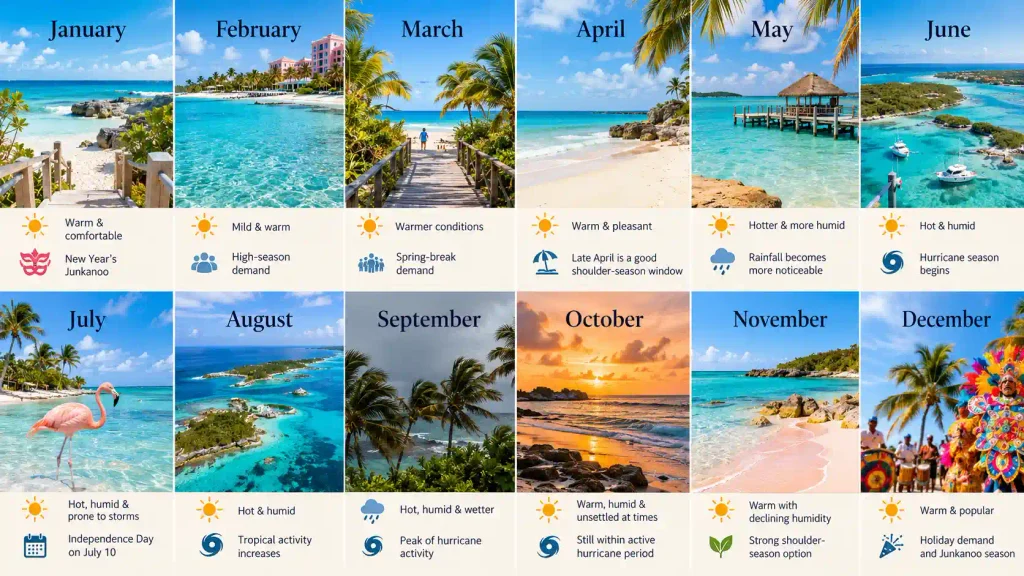
| Month | Weather and travel conditions | What travelers should know |
| January | Warm and generally comfortable | Popular winter month; New Year’s Junkanoo |
| February | Mild, warm and relatively comfortable | High-season demand |
| March | Warmer with increasing visitor numbers | Spring-break demand can be significant |
| April | Warm with increasingly pleasant beach conditions | Late April is a useful shoulder-season window |
| May | Hotter and more humid | Rainfall generally becomes more noticeable |
| June | Hot and humid with increased rain potential | Atlantic hurricane season begins |
| July | Hot, humid, and prone to passing storms | Independence Day on July 10 |
| August | Hot and humid | Atlantic tropical activity becomes more significant |
| September | Hot, humid, and wetter | Climatological peak of Atlantic hurricane activity |
| October | Warm, humid and unsettled at times | Still within the active hurricane period |
| November | Warm with declining humidity | Strong shoulder-season option |
| December | Warm and popular | Holiday demand and Junkanoo season |
Weather patterns can vary between islands, and tropical systems do not follow a fixed calendar. Travelers should use this table as a planning guide, not a guarantee of conditions.
What Should Travelers Consider Before Choosing Their Dates?
Choosing the right month involves more than checking average temperatures. Several practical factors can change the experience.
Island Choice
Nassau and Paradise Island have a different tourism profile from smaller Out Islands such as Exuma, Eleuthera, Abaco and Bimini. Flight schedules, hotel operations and excursion availability can vary by island and season.
Hurricane Policies
Anyone traveling between June and November should read the cancellation terms attached to flights, hotels, tours and transfers. A flexible booking can be particularly useful if severe weather threatens the region.
Holiday Demand
Christmas, New Year’s and Junkanoo can create additional demand for accommodation and activities. Travelers visiting for these events should book key accommodations and activities well in advance.
Spring Break
Those seeking quieter beaches may want to avoid the busiest part of spring break. The official Bahamas tourism authority defines the season as running from late February through mid-April.
Outdoor Activities
Travelers planning snorkeling, diving, boating, or island-hopping should avoid building the entire itinerary around one specific weather-sensitive day. Keeping one or two alternative activity days available can make the trip easier to manage.
Final Takeaway
For travelers looking for a practical balance of warm weather, comfortable conditions,s and fewer crowds, November and late April are particularly useful times to consider. Winter brings dependable warm-weather appeal but greater demand, while March and early April can be busy because of spring break. Summer remains viable for travelers who can handle more humidity and rainfall. At the same time, September and October require more flexibility because they fall within the most active part of the Atlantic hurricane season.
Your final choice should also reflect the intended island, activities, holiday calendar, and booking flexibility. Checking the latest weather outlook and the specific hotel’s cancellation policy shortly before departure is especially important for trips planned during hurricane season.
Frequently Asked Questions
No single low-price period applies to every island, hotel, and travel date. Demand generally rises around major holidays and spring break, while some travelers may find better value during quieter periods outside those peaks. Compare prices for the specific island and dates rather than assuming an entire season is uniformly cheaper.
January offers warm weather compared with much of North America and Europe and is an important month for Junkanoo. It is also a popular travel period, so accommodation and flights can experience strong demand.
Yes. April can provide warm weather and comfortable sea conditions, while late April generally has less spring-break demand than March and early April.
September can offer warm conditions, but it falls close to the climatological peak of Atlantic hurricane activity. Travelers choosing this month should be prepared for weather disruptions and check official forecasts before and during the trip.
Not necessarily. The Bahamas tourism authority notes that showers and thunderstorms can pass quickly, although rainfall varies by season and island. A rainy-season forecast therefore does not automatically mean continuous rain throughout the day.
The official Atlantic hurricane season runs from June 1 through November 30. Tropical cyclone activity is typically highest around September, with the National Hurricane Center identifying September 10 as the climatological peak.