
Why Is Fall the Best Time to Visit Morocco?
Fall is one of the best times to visit Morocco because September through November brings milder temperatures, comfortable sightseeing conditions, and excellent opportunities to explore the Sahara Desert, historic cities, and Atlas Mountains. October is particularly attractive for travelers planning to experience several regions in one trip.
Morocco offers an extraordinary combination of landscapes and cultural experiences. Within a single vacation, travelers can wander through centuries-old medinas, explore mountain villages, relax beside the Atlantic Ocean, and watch the sunset over the Sahara’s golden dunes.
However, the country’s diverse geography means weather conditions can change dramatically between destinations. Marrakech may remain warm during the afternoon, while the Atlas Mountains experience chilly evenings and the desert becomes considerably colder after sunset.
Fall provides a practical balance between these extremes. The intense summer heat gradually fades, making outdoor activities more enjoyable across much of the country.
From the colorful markets of Marrakech to the blue streets of Chefchaouen, this guide explores why Morocco deserves a place on the fall travel calendar, which destinations are worth visiting, and how travelers can plan a memorable vacation.
Must Visit: Explore the Atlas Mountains: A Journey Through Morocco
What Makes Fall a Great Season to Visit Morocco?
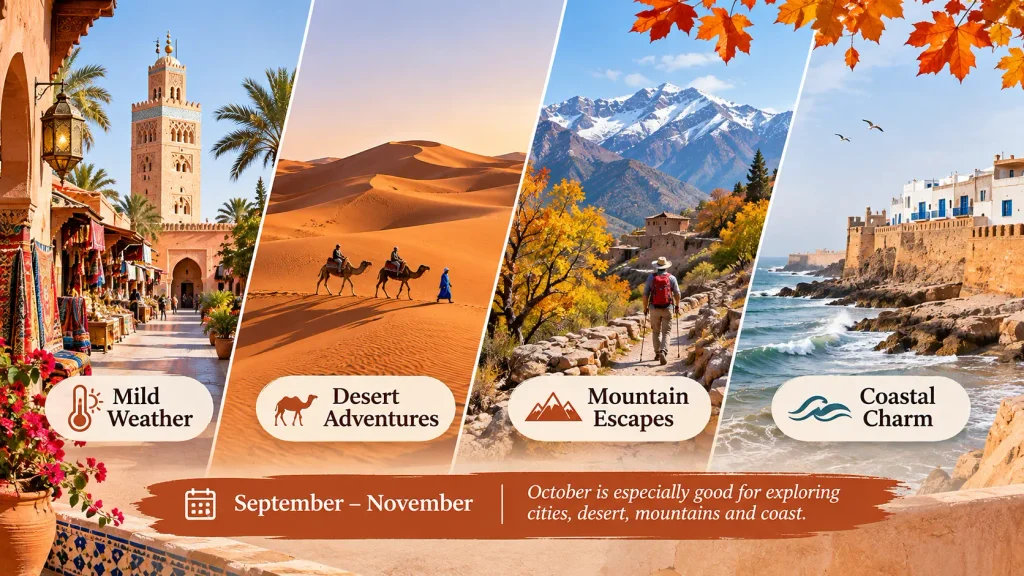
Fall is an excellent season to visit Morocco because the weather becomes more comfortable for exploring cities, hiking in the mountains, and experiencing desert landscapes.
While summer temperatures can make sightseeing difficult in inland destinations, autumn generally provides milder conditions.
What Are the Main Benefits of Visiting Morocco in Fall?
| Benefit | Why it matters |
|---|---|
| Comfortable sightseeing | Cooler conditions for exploring historic cities |
| Sahara Desert excursions | More manageable daytime temperatures |
| Mountain adventures | Suitable conditions for many hiking routes |
| Coastal vacations | Pleasant weather along much of the Atlantic coast |
| Cultural experiences | Opportunities to experience local markets and harvest traditions |
| Flexible itineraries | Easier to combine cities, mountains, and desert destinations |
| Seasonal travel opportunities | Potentially better value outside busy holiday periods |
Fall is particularly suitable for travelers interested in combining outdoor activities with cultural sightseeing.
What Is the Weather Like in Morocco During Fall?
Morocco’s fall weather varies by month and region, with September remaining warm, October offering milder conditions, and November bringing cooler evenings and a greater chance of rain in some areas.
Coastal destinations generally experience more moderate temperatures than inland cities, while mountain and desert locations have greater differences between daytime and nighttime conditions.
How Does Morocco’s Weather Change From September to November?
| Month | General weather | Best travel experiences |
|---|---|---|
| September | Warm to hot inland; pleasant along the coast | Beaches, coastal towns, city visits |
| October | Warm days and increasingly comfortable evenings | Imperial cities, desert excursions, mountain trips |
| November | Mild days in many cities; cooler nights and some regional rainfall | Cultural sightseeing, Sahara trips, quieter vacations |
Travelers should check destination-specific forecasts rather than relying on a single national temperature estimate.
Is September a Good Month to Visit Morocco?
Yes. September is a good month for visiting Morocco, particularly for travelers interested in coastal destinations and late-summer experiences.
Agadir, Essaouira, and other Atlantic coastal towns often remain pleasant.
However, Marrakech and southern desert regions can still experience considerable heat, especially during the first half of the month.
Why Is October One of the Best Months to Visit Morocco?
October offers a favorable combination of warm days, more comfortable sightseeing conditions, and opportunities for desert travel.
Visitors can explore Marrakech, Fes, and other historic cities without the extreme temperatures commonly associated with midsummer.
October is also a popular period for Sahara excursions and hiking in suitable parts of the Atlas Mountains.
Is Morocco Worth Visiting in November?
Yes. November is worth considering for travelers who prefer cooler weather and a more relaxed sightseeing experience.
Cities such as Marrakech and Fes generally remain suitable for cultural exploration, although evenings become cooler.
Mountain areas can experience changing weather, and travelers visiting the desert should prepare for colder nights.
Which Are the Best Places to Visit in Morocco During Fall?
Morocco’s best fall destinations include Marrakech, Fes, Chefchaouen, Merzouga, Essaouira, the Atlas Mountains, and several historic imperial cities.
Each destination offers a different experience, allowing travelers to choose between architecture, outdoor adventures, coastal relaxation, and cultural exploration.
The following destinations are presented as a travel shortlist, not a ranking.
Why Should Travelers Visit Marrakech in Fall?
Marrakech is one of Morocco’s most attractive fall destinations because cooler weather makes its busy markets, historic landmarks, and traditional neighborhoods more enjoyable to explore.
The city combines centuries-old architecture with colorful souks, gardens, museums, and contemporary hospitality.
What Are the Best Things to Do in Marrakech?
- Explore Jemaa el-Fnaa: Experience the famous square, food stalls, and lively evening atmosphere.
- Visit Bahia Palace: Discover intricate Moroccan architecture and decorative courtyards.
- Walk Through the Medina: Browse traditional markets selling spices, ceramics, textiles, and handmade goods.
- Explore Jardin Majorelle: Enjoy landscaped gardens and distinctive blue architecture.
- Visit the Saadian Tombs: Learn about Morocco’s royal history through an important historical site.
Royal Air Maroc and Air France are among the airlines travelers can consider when planning journeys to Marrakech, depending on their departure airport and available connections.
Why Is Fes Worth Exploring During Autumn?
Fes is an excellent autumn destination because comfortable temperatures make it easier to explore its historic medina, traditional markets, and architectural landmarks.
The city is known for its preserved cultural heritage and longstanding traditions of craftsmanship.
What Can Travelers Experience in Fes?
Visitors can explore Fes el-Bali, a UNESCO-listed historic medina featuring narrow streets, traditional workshops, and centuries-old buildings.
Popular attractions include the Bou Inania Madrasa, Bab Bou Jeloud, Nejjarine Museum, and the famous leather tanneries.
Travelers can also discover traditional Moroccan cuisine and explore the city’s artisan markets.
Royal Air Maroc and Ryanair are among the airlines offering services to Fes on selected routes, although availability varies by origin and season.
What Makes Chefchaouen Special During Fall?
Chefchaouen is especially appealing during fall because its mild weather and mountain setting provide comfortable conditions for walking through its distinctive blue-painted streets.
Located in the Rif Mountains, the town offers a quieter atmosphere than Morocco’s largest cities.
What Should Travelers Explore in Chefchaouen?
Visitors can wander through the blue medina, explore Plaza Uta el-Hammam, and enjoy views of the surrounding mountains.
Nearby natural attractions, including Akchour, offer additional opportunities for outdoor excursions when weather conditions permit.
Chefchaouen does not have a major commercial airport. Travelers generally arrive through airports such as Tangier or Tetouan and continue by road.
Royal Air Maroc and Air Arabia Maroc may be useful options for reaching northern Morocco, depending on the itinerary.
Why Is Fall an Ideal Time to Visit the Sahara Desert?
Fall is one of the best seasons to explore Morocco’s Sahara Desert because temperatures become more manageable after the intense summer heat.
October and November are particularly suitable for desert excursions, although nighttime temperatures can be significantly lower than daytime conditions.
What Are the Best Sahara Desert Experiences?
| Experience | What travelers can expect |
|---|---|
| Camel excursions | Guided journeys across sand dunes |
| Desert camping | Overnight stays in traditional or luxury camps |
| Sunset viewing | Golden landscapes and changing desert colors |
| Stargazing | Dark skies in suitable remote locations |
| Cultural visits | Opportunities to learn about local communities |
| Photography | Desert scenery and distinctive natural formations |
Merzouga is a popular gateway to the Erg Chebbi dunes, while Zagora and the surrounding desert regions offer alternative experiences.
Travelers should choose established operators, check weather conditions, and prepare for cooler nights.
Royal Air Maroc can be considered for domestic flights to regional airports such as Errachidia or Ouarzazate when suitable services are available. Road transportation is generally required to reach desert camps.
Why Should Travelers Visit the Atlas Mountains in Fall?
The Atlas Mountains are a rewarding fall destination because many lower- and mid-altitude hiking routes offer pleasant conditions, scenic landscapes, and opportunities to visit traditional mountain communities.
However, conditions vary significantly with elevation, and higher mountain areas may experience cold weather or early snowfall.
Which Activities Are Popular in the Atlas Mountains?
Travelers can enjoy guided hikes, explore mountain villages, visit local markets, and discover scenic valleys.
The Imlil region is a popular starting point for hiking excursions, while the Ourika Valley offers opportunities for shorter trips from Marrakech.
More demanding mountain routes require appropriate equipment, weather checks, and experienced guides.
Travelers can fly to Marrakech with airlines such as Royal Air Maroc or easyJet on eligible routes before continuing into the mountains by road.
Is Essaouira Worth Visiting During Autumn?
Essaouira is an attractive fall destination because its coastal climate generally remains mild, making it suitable for sightseeing, beach walks, and cultural exploration.
The Atlantic port city is known for its historic medina, fishing harbor, traditional markets, and artistic atmosphere.
What Are the Best Things to Do in Essaouira?
Visitors can explore the UNESCO-listed medina, walk along the historic ramparts, visit the fishing port, and discover local galleries.
The city’s beaches are also popular for walking, surfing, and wind-related water sports, although conditions vary.
Travelers should expect occasional coastal winds and cooler evenings, especially later in the season.
Ryanair and Transavia are among the airlines that may serve Essaouira on selected routes. Travelers can also reach the city by road from Marrakech.
Which Moroccan Imperial Cities Are Best to Visit in Fall?
Morocco’s four historic imperial cities—Marrakech, Fes, Meknes, and Rabat—are excellent autumn destinations because milder temperatures make cultural sightseeing more comfortable.
Each city has served as the country’s capital during different historical periods and offers distinctive architecture and heritage.
How Do Morocco’s Four Imperial Cities Compare?
| Imperial city | Main attractions | Best for |
|---|---|---|
| Marrakech | Jemaa el-Fnaa, Bahia Palace, historic medina | Markets and architecture |
| Fes | Fes el-Bali, traditional tanneries, madrasas | Cultural heritage |
| Meknes | Bab Mansour, historic monuments, nearby Volubilis | History and quieter sightseeing |
| Rabat | Hassan Tower, Kasbah of the Udayas, Chellah | Coastal history and museums |
Travelers can combine several imperial cities using Morocco’s rail network and other ground transportation.
Royal Air Maroc and Air France offer useful international connections to major Moroccan gateways, depending on departure city and schedule.
Can Travelers Enjoy Morocco’s Beaches During Fall?
Yes. Morocco’s beaches remain attractive during fall, particularly in September and parts of October, when coastal destinations can still experience warm and sunny conditions.
However, swimming comfort depends on sea temperatures, local weather, and individual preferences.
Which Moroccan Beaches Are Worth Visiting?
| Beach destination | Popular activities | Fall travel consideration |
|---|---|---|
| Agadir | Beach holidays, waterfront walks | Generally mild and sunny |
| Essaouira | Surfing, coastal sightseeing | Windy conditions possible |
| Taghazout | Surfing, relaxation | Popular with surfers |
| Asilah | Historic town visits, beach walks | Cooler later in autumn |
| Dakhla | Kitesurfing, lagoon excursions | Conditions vary by wind and season |
Agadir is particularly suitable for travelers seeking a combination of beach relaxation and comfortable accommodation.
Royal Air Maroc and easyJet are among the airlines serving Agadir on selected routes.
What Cultural Experiences Can Travelers Enjoy in Morocco During Fall?
Fall offers opportunities to experience Morocco’s traditional markets, regional cuisine, harvest activities, and cultural heritage.
The season is particularly associated with agricultural activities in several regions.
Which Autumn Traditions Are Worth Exploring?
Date harvesting: Southern regions, including parts of the Draa Valley and areas around Erfoud, are associated with date cultivation and harvest activities.
Saffron harvesting: The Taliouine region is known for saffron production, with harvesting generally occurring during autumn.
Olive harvesting: Some Moroccan olive-growing regions begin harvesting during the later part of fall, depending on local conditions.
Traditional markets: Visitors can explore souks featuring seasonal produce, spices, textiles, and regional handicrafts.
Cultural festivals and harvest celebrations do not always occur on fixed dates. Travelers should verify schedules before planning an itinerary around a particular event.
What Traditional Moroccan Foods Should Travelers Try in Fall?
Fall is a wonderful season to explore Moroccan cuisine, particularly dishes featuring aromatic spices, seasonal vegetables, and slow-cooked ingredients.
Which Moroccan Dishes Are Popular With Visitors?
| Dish | Description |
|---|---|
| Tagine | Slow-cooked meat or vegetable dish prepared with spices |
| Couscous | Steamed semolina served with vegetables and sometimes meat |
| Harira | Traditional soup made with tomatoes, lentils, and chickpeas |
| Pastilla | Savory-sweet pastry, commonly prepared with poultry |
| Rfissa | Traditional dish featuring chicken, lentils, and layered bread |
| Moroccan mint tea | Tea commonly served as part of local hospitality |
Travelers can experience traditional cuisine in local restaurants, markets, and riads.
Cooking classes may also provide opportunities to learn about regional ingredients and preparation methods.
Is Morocco Less Crowded During Fall?
Morocco can be less crowded during parts of fall than during major summer holiday periods, but October is also a popular travel month.
Popular destinations such as Marrakech, Fes, and the Sahara may attract substantial visitor numbers because of the pleasant weather.
How Do Crowds and Travel Costs Compare Throughout Fall?
| Month | General crowd pattern | Pricing considerations |
|---|---|---|
| September | Summer crowds begin to ease in some areas | Prices vary by destination |
| October | Popular sightseeing period | Higher demand possible |
| November | Often quieter outside holiday periods | Potential accommodation deals |
Fall should not automatically be considered the cheapest season.
Travelers seeking lower prices should compare dates and avoid assuming that all shoulder-season departures offer discounts.
How Can Travelers Find Affordable Flights to Morocco in Fall?
Travelers can find affordable flights to Morocco by comparing departure dates, arrival airports, and airline options.
International flights serve several Moroccan cities, including Casablanca, Marrakech, Fes, Rabat, Agadir, and Tangier.
Which Airlines Can Travelers Consider for Morocco?
| Airline | Potential travel option |
|---|---|
| Royal Air Maroc | International connections through Casablanca |
| Air France | Connecting flights through Paris |
| Iberia | Connections through Madrid |
| Turkish Airlines | Connections through Istanbul |
| Ryanair | Selected routes from European cities |
| easyJet | Selected European routes to Morocco |
Airline availability depends on the departure airport, travel dates, and operating schedule.
Travelers should compare the final ticket price, including baggage fees and any additional services.
How Can Travelers Get Around Morocco During Fall?
Travelers can explore Morocco using trains, intercity buses, private transfers, domestic flights, and rental vehicles.
The most convenient transportation method depends on the destinations included in the itinerary.
Which Transportation Options Are Best?
| Transportation | Best suited for |
|---|---|
| Trains | Major cities such as Casablanca, Rabat, Fes, and Marrakech |
| High-speed rail | Travel between Tangier, Kenitra, Rabat, and Casablanca |
| Intercity buses | Destinations not connected by rail |
| Rental cars | Flexible regional sightseeing |
| Private transfers | Desert and mountain excursions |
| Domestic flights | Selected longer-distance journeys |
Morocco’s rail network does not cover every destination. Desert camps, mountain villages, and smaller coastal towns often require road transportation.
Travelers planning mountain drives should monitor weather conditions, particularly during late autumn.
What Should Travelers Pack for Morocco in Fall?
Travelers should pack lightweight daytime clothing, warmer layers for evenings, comfortable walking shoes, and sun protection.
Because Morocco’s climate differs considerably between the coast, mountains, and desert, packing should reflect the intended itinerary.
What Are the Essential Items for a Fall Vacation?
| Item | Why it is useful |
|---|---|
| Lightweight shirts and trousers | Comfortable daytime sightseeing |
| Warm jacket or sweater | Cooler evenings and mountain locations |
| Comfortable walking shoes | Medinas, markets, and historic streets |
| Sunscreen and sunglasses | Protection during sunny afternoons |
| Light scarf | Wind protection and versatile layering |
| Reusable water bottle | Hydration during excursions |
| Rain jacket | Possible rainfall in northern regions |
| Travel documents | International entry and identification |
| Portable charger | Navigation and communication |
Visitors may also prefer clothing that respects local customs, particularly when entering religious or culturally significant locations.
Related: Pacific Northwest Trip: Best Places & Highlights
How Many Days Are Enough for a Fall Trip to Morocco?
A trip of seven to ten days allows travelers to explore several major Moroccan destinations, while longer vacations provide more time for desert excursions and coastal visits.
The ideal duration depends on travel interests and transportation arrangements.
What Is a Practical 10-Day Morocco Fall Itinerary?
| Day | Destination | Suggested experience |
|---|---|---|
| 1 | Marrakech | Arrival and evening in Jemaa el-Fnaa |
| 2 | Marrakech | Medina, gardens, and historic landmarks |
| 3 | High Atlas | Guided mountain or valley excursion |
| 4 | Ait Benhaddou and Ouarzazate | Historic sites and scenic journey |
| 5 | Dades Valley | Landscapes and regional villages |
| 6 | Merzouga | Sahara dunes and overnight desert camp |
| 7 | Fes | Travel day with scenic stops |
| 8 | Fes | Historic medina and cultural attractions |
| 9 | Chefchaouen | Blue streets and mountain scenery |
| 10 | Tangier | Departure or additional sightseeing |
This itinerary involves several long road journeys, especially between the desert and Fes. Travelers preferring a slower pace should extend the trip or reduce the number of destinations.
What Mistakes Should Travelers Avoid When Visiting Morocco in Fall?
Common mistakes include assuming every region has the same weather, underestimating desert temperatures at night, and planning too many destinations within a short trip.
Travelers should avoid the following:
- Packing only summer clothing: Desert and mountain evenings can become cold.
- Assuming October is uncrowded: Popular tourist destinations can remain busy.
- Ignoring travel distances: Morocco’s major attractions are spread across different regions.
- Booking desert excursions without checking conditions: Weather and operator quality matter.
- Overlooking regional rainfall: Northern and mountain destinations can experience autumn showers.
- Leaving popular accommodation bookings too late: Desirable riads and desert camps may fill during peak travel weeks.
- Ignoring local customs: Appropriate clothing and respectful behavior improve cultural experiences.
- Planning difficult mountain hikes without preparation: High-altitude conditions can change quickly.
Conclusion: Why Should Travelers Choose Morocco for a Fall Vacation?
Morocco is an exceptional fall destination because it combines comfortable sightseeing weather with diverse landscapes, historic cities, coastal attractions, and memorable cultural experiences.
October stands out as an excellent month for exploring Marrakech, Fes, the Atlas Mountains, and the Sahara Desert, while September remains attractive for coastal holidays and November offers opportunities for quieter sightseeing.
However, travelers should remember that Morocco’s climate varies considerably by region. A successful itinerary requires suitable clothing, realistic travel times, and careful planning around local weather conditions.
Whether visitors prefer discovering ancient medinas, exploring desert dunes, hiking mountain trails, or enjoying Moroccan cuisine, fall provides a rewarding opportunity to experience the country’s remarkable diversity.
Frequently Asked Questions About Visiting Morocco in Fall
Yes. Fall is one of the best seasons to visit Morocco because temperatures become more comfortable for exploring historic cities, desert landscapes, and mountain regions.
October is generally the best all-around month for visiting Morocco. It offers comfortable sightseeing conditions in many regions and is particularly suitable for desert excursions.
Yes. September can remain hot in inland destinations such as Marrakech and parts of the Sahara. Coastal cities generally experience more moderate conditions.
November is usually mild during the day in many Moroccan cities, but evenings can become cool. Mountain and desert locations may experience significantly colder temperatures.
Yes. October is one of the preferred months for Sahara excursions because daytime temperatures are generally more manageable than during summer.
Some coastal destinations remain suitable for swimming during September and early October, depending on local conditions and personal comfort. Water temperatures generally become cooler later in autumn.
Travel costs vary by destination and month. October can be popular and relatively expensive, while selected November dates may offer more affordable accommodation.
Marrakech, Fes, Rabat, and Chefchaouen are popular choices for first-time visitors interested in architecture, history, markets, and cultural experiences.
Seven to ten days is suitable for exploring several destinations, while approximately two weeks provides more flexibility for combining imperial cities, mountains, and the Sahara Desert.
Lightweight clothing is suitable for many daytime activities, while sweaters and jackets are useful for evenings. Comfortable shoes and modest, versatile clothing are practical for cultural sightseeing.