
When Should You Travel to Brazil? A Month-by-Month Guide
The best time to visit Brazil depends on where you are going, but August through October is an especially attractive period for combining destinations such as Rio de Janeiro and the Pantanal. Brazil is enormous, and its climate varies significantly between the tropical north, coastal northeast, central wetlands, southeast, and cooler south. This means there is no single month that delivers ideal conditions everywhere.
Travelers seeking hot beach weather and Brazil’s famous celebrations may prefer December through March. Wildlife enthusiasts can target the Pantanal’s drier months, while Rio can be visited throughout the year. The Amazon also changes considerably according to rainfall and river levels.
Understanding these regional differences is the key to choosing the right time for your Brazil vacation.
Brazil’s Seasons at a Glance
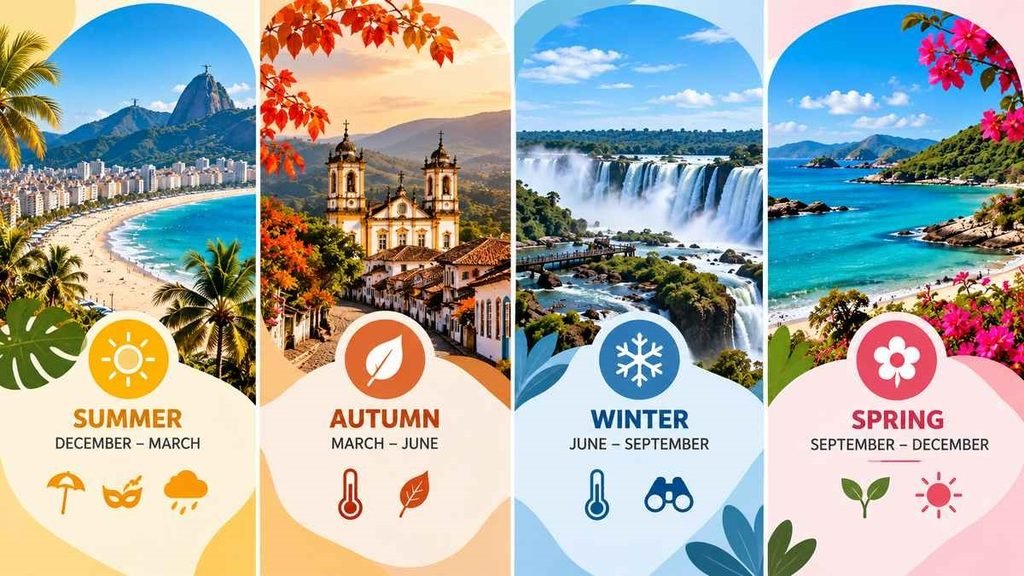
Brazil is in the Southern Hemisphere, so its seasons are opposite to those in North America and Europe.
According to Brazil’s official tourism website, the seasons are approximately: summer from December 21 to March 20, autumn from March 21 to June 20, winter from June 21 to September 20, and spring from September 21 to December 20.
| Season | Approximate Months | What to Expect |
| Summer | December–March | Hot weather, beach season, Carnival period, and greater rainfall in some regions |
| Autumn | March–June | Temperatures begin to moderate; Pantanal moves toward its dry season |
| Winter | June–September | Cooler conditions in southern and southeastern Brazil; good Pantanal wildlife period |
| Spring | September–December | Rising temperatures and attractive conditions in destinations such as Rio |
Brazil’s official tourism authority emphasizes that climate varies considerably by region. The Amazonian north remains hot and humid, while southern Brazil can experience cold winter weather, including frost in some areas.
What Is the Best Month to Visit Brazil?
There isn’t one universally ideal month because travelers visit Brazil for very different reasons.
For a multi-destination trip, August and September can provide a particularly useful balance. They fall within the drier Pantanal period, while Rio experiences comparatively mild temperatures. Audley highlights July and August for combining Rio, the Pantanal, and the Green Coast, and identifies August through October as particularly appealing for the Pantanal and Rio.
Your ideal month therefore depends on your priorities:
- Pantanal wildlife: generally the dry season, particularly the middle and later months
- Rio sightseeing: year-round, with spring and autumn offering appealing conditions
- Carnival: February or March, depending on the year’s calendar
- Beach vacation: warmer summer months can be attractive, depending on the coast
- Amazon: both higher- and lower-water periods provide different experiences
- Iguaçu Falls: accessible throughout the year, with seasonal differences in weather and water conditions
Rather than choosing a month for Brazil as a whole, start by deciding which regions you want to combine.
Visiting Brazil From January to March
January through March falls within Brazil’s summer and brings some of the year’s warmest conditions.
Audley notes that this period also coincides with increased rainfall in the Amazon and Pantanal.
It is nevertheless one of Brazil’s most exciting periods if festivals, beaches, and nightlife are high on your list.
Why Visit During This Period?
January through March works particularly well for travelers interested in:
- Summer atmosphere
- Beaches
- Rio nightlife
- Carnival
- Outdoor dining
- New Year celebrations around the beginning of the period
Expect heat and humidity, particularly in tropical areas.
What About Carnival?
Carnival is one of the biggest reasons travelers visit Brazil during summer.
The exact dates change each year because Carnival is linked to the Christian calendar. Audley notes that celebrations generally fall in February or March, with Rio hosting its famous samba parades and street festivities.
This is also a high-demand travel period. Travelers specifically planning for Carnival should arrange flights, accommodation, and major activities well ahead of time.
Visiting Brazil in April and May
April and May can be an excellent transition period for travelers who want warm conditions without the intensity of midsummer.
Audley notes that temperatures begin to decline from the previous hotter months and that the Pantanal starts moving into its dry season toward the end of April.
This makes the period useful for travelers combining cities and nature.
Potential advantages include:
- Moderating temperatures
- Improving conditions in the Pantanal
- City sightseeing
- Multi-region itineraries
- Fewer major holiday crowds than Carnival season
April can also coincide with Semana Santa depending on the calendar.
Visiting Brazil in June and July
June and July are Brazil’s winter months, but “winter” does not mean the same thing across this huge country.
Northern Brazil remains tropical, while destinations farther south can become substantially cooler.
Brazil’s tourism authority notes that southern Brazil can experience cold winter conditions, including frost and occasional snow in higher locations.
Is Rio Cold in June and July?
Rio becomes cooler compared with summer, but temperatures remain relatively mild.
Audley’s climate data lists average maximum temperatures around 77°F (25°C) for Rio in both June and July.
That can make sightseeing more comfortable for travelers who do not enjoy intense summer heat.
What About the Green Coast?
June and July can also work well for the Green Coast between Rio and São Paulo.
Audley describes the period as having cooler evenings and fresh conditions while the sea remains relatively warm.
Bahia, however, experiences more rain around this time, demonstrating why regional planning matters.
Visiting Brazil From August to October
August through October is one of the strongest periods for travelers interested in combining wildlife viewing in the Pantanal with sightseeing in Rio de Janeiro.
This is the period specifically highlighted in the reference article. Audley identifies August, September, and October as particularly attractive for the Pantanal and notes that spring conditions begin arriving in Rio, with temperatures increasing.
Why Visit the Pantanal From August to October?
The Pantanal is one of the world’s largest tropical wetlands, and its landscape changes dramatically between wet and dry periods.
During the dry season, water becomes concentrated in fewer locations and vegetation can become less dense. These conditions can improve opportunities for observing wildlife.
Brazil’s Ministry of Tourism has historically identified the dry period as particularly suitable for wildlife observation, noting increased chances of seeing animals such as jaguars.
Wildlife visitors may look for:
- Jaguars
- Capybaras
- Caimans
- Hyacinth macaws
- Monkeys
- Numerous bird species
However, October can become extremely hot in the Pantanal. Audley’s climate guide lists an average October maximum of about 95°F (35°C) for the region.
Therefore, travelers prioritizing somewhat milder conditions may prefer August or September.
Is August a Good Time to Visit Brazil?
Yes, especially for travelers combining several regions.
August offers particularly dry conditions in locations such as the Pantanal and Manaus compared with their wetter months, according to Audley’s climate data. Rio is also cooler than during summer.
This combination can work well for an itinerary involving wildlife, cities, and coastal scenery.
Is September a Good Time to Visit Brazil?
September marks the transition toward spring and can provide a useful balance for multi-stop vacations.
Rio remains relatively mild, while the Pantanal is still within its drier period. Brazil’s official tourism website also highlights spring and autumn as appealing seasons for destinations such as Rio de Janeiro and Iguaçu Falls.
What Is Brazil Like in October?
October brings warmer spring conditions.
It remains an attractive wildlife month in the Pantanal, although temperatures can rise substantially. Audley notes that thinner vegetation and remaining water sources can make wildlife easier to locate during dry conditions.
Rio also becomes warmer as summer approaches.
For travelers who want spring temperatures without arriving during the December holiday rush, October can be an appealing choice.
Visiting Brazil in November
November marks the approach of summer, with temperatures increasing across much of Brazil.
Audley describes November as the arrival of summer and a period of high temperatures across the country.
This can suit travelers looking for:
- Warmer beach weather
- City sightseeing
- A pre-holiday trip
- Rio and coastal destinations
Conditions in the Pantanal and Amazon, however, are changing as wetter weather becomes more influential.
If your itinerary focuses heavily on wildlife, research the conditions for your exact destination rather than assuming November behaves like September.
Visiting Brazil in December
December brings summer weather, Christmas travel, and one of Brazil’s most famous New Year’s celebrations.
Audley describes Rio as hot during December and notes that the city becomes particularly busy around Christmas and New Year. It also reports relatively low Amazon water levels during the month.
New Year’s Eve in Rio
Rio de Janeiro is especially famous for New Year’s Eve celebrations at Copacabana Beach.
Large crowds traditionally gather along the beachfront, with many people wearing white as part of the celebration.
Travelers visiting during this period should expect higher demand and plan accommodation well in advance.
Best Time to Visit Rio de Janeiro

Rio de Janeiro can be visited year-round, but March–April and September–October can offer a useful combination of pleasant weather and fewer peak-season crowds.
Audley’s Rio guide specifically identifies these periods for sunny, comfortable conditions, while December through February represents the busier high season. July and August bring the coolest temperatures.
| Period | Rio Experience |
|---|---|
| Dec–Feb | Hot, lively, and busy; summer high season |
| Mar–Apr | Warm conditions with fewer peak-season crowds |
| Jun–Aug | Cooler weather suitable for sightseeing |
| Sep–Oct | Spring weather and rising temperatures |
| Nov | Warmer as summer approaches |
If Carnival is the purpose of your trip, you will naturally need to visit according to that year’s festival dates rather than choosing solely for weather.
Best Time to Visit the Pantanal
The dry season is generally the preferred period for travelers primarily interested in wildlife observation in the Pantanal.
Audley identifies April through October as the drier months and particularly highlights August through October. Brazil’s official tourism website similarly notes that the Pantanal’s dry season is particularly suitable for spotting wildlife.
As wetlands shrink, animals often gather around remaining water sources, which can make wildlife encounters easier.
The wet season should not automatically be dismissed, though. Flooding transforms the landscape and creates a very different ecological experience.
Best Time to Visit the Amazon
There is no universally better Amazon season because higher- and lower-water periods create different experiences.
The Amazon remains hot and humid throughout the year. Brazil’s official tourism authority describes the north as having an equatorial climate, with hot and humid conditions year-round.
Around Manaus, Audley’s climate figures show considerably more rainfall during the early part of the year than in July through September.
Higher-water conditions can make flooded forest areas accessible by boat, whereas lower-water periods can reveal beaches and different walking opportunities.
When planning an Amazon trip, therefore, choose your season according to the activities and ecosystem experience you want rather than simply looking for the driest month.
Best Time to Visit Iguaçu Falls
Iguaçu Falls can be visited throughout the year, although temperature, rainfall, and water volume change seasonally.
Audley’s climate figures show warmer conditions around January and February and cooler temperatures around June and July.
Brazil’s official tourism website also highlights Iguaçu Falls as a destination that can be attractive during spring and autumn.
There is a trade-off when choosing when to visit: periods with more water can create a more powerful waterfall spectacle, while relatively drier conditions may make some outdoor activities more comfortable.
Best Time for Beaches in Brazil
Brazil’s enormous coastline means there is no single beach season covering every destination.
Summer, particularly December through March, brings hot conditions to many popular southeastern coastal destinations. However, the northeast has different rainfall patterns.
For example, Audley’s climate data shows relatively low rainfall around Recife and Olinda from roughly October through February, while rainfall rises considerably from April through July. Salvador similarly experiences some of its wetter conditions from April through July.
Always check the climate of the specific coastal region rather than using Rio’s weather as a guide for all Brazilian beaches.
When Is Carnival in Brazil?
Carnival generally takes place in February or March, with exact dates changing annually according to the Easter calendar.
Rio de Janeiro hosts the internationally famous samba-school parades, while celebrations also take place across numerous other Brazilian cities.
Carnival can be ideal if experiencing the festival is a major travel goal, but visitors should prepare for:
- Large crowds
- High demand for accommodation
- Busy transportation
- Advance reservations
- Increased prices in popular destinations
Travelers who primarily want sightseeing and beaches rather than festival events may prefer dates outside Carnival.
Brazil Weather by Region
Because Brazil covers such a vast geographical area, understanding regional climate is more useful than looking at one national temperature.
| Region | General Climate Consideration |
| Amazon/North | Hot and humid throughout the year; distinct rainfall and river-level cycles |
| Northeast | Warm coastline; rainfall patterns vary by destination |
| Pantanal/Central-West | Strong wet and dry seasons; dry months favor many wildlife trips |
| Rio/Southeast | Hot summers and milder winters |
| South | Greater seasonal temperature variation and potentially cold winters |
Brazil’s national tourism authority reports an overall annual average temperature around 25°C (77°F) but stresses substantial differences between regions.
Cheapest Time to Visit Brazil
There is no fixed cheapest month for the entire country because airfare and accommodation prices depend on the destination, booking date, holidays, festivals, and local demand.
However, travelers should expect strong demand around major events and holidays such as:
- Carnival
- Christmas
- New Year’s Eve
- Brazilian school vacation periods
- Major local festivals
Rio, for example, has a high season from December through February.
Travelers seeking lower prices can compare dates outside major celebrations and peak vacation periods. Rather than assuming a particular month will always be cheaper, compare the complete trip cost across several possible dates.
When Should You Avoid Visiting Brazil?
There is no month when travelers universally need to avoid Brazil. Instead, certain periods are less suitable for particular activities or destinations.
For example:
- Avoid Carnival dates if large crowds are a concern.
- Think carefully about the wetter season if your priority is classic dry-season Pantanal wildlife viewing.
- Avoid peak summer if you struggle with high heat and humidity.
- Consider Bahia’s rainfall patterns when planning a June or July beach-focused trip.
- Prepare for cooler temperatures when visiting southern Brazil during winter.
Audley similarly characterizes Brazil as a year-round destination despite the country’s climatic extremes.
How to Choose the Right Month for Your Brazil Trip

Start with your main travel goal rather than choosing a month first.
For wildlife: Prioritize the Pantanal’s dry season.
For Rio without peak summer: Consider March–April or September–October.
For Carnival: Travel according to the year’s festival calendar.
For Amazon exploration: Decide whether you prefer higher- or lower-water conditions.
For beaches: Check the rainfall pattern of the specific coastline you intend to visit.
For a multi-region vacation: August and September can be particularly practical when combining Rio and the Pantanal.
Brazil’s size means compromises are sometimes unavoidable. The best itinerary is usually one designed around the conditions in the regions most important to you.
Final Thoughts
The best time for a Brazil vacation comes down to where you want to go and what you want to experience. A beach trip to the northeast, an Amazon expedition, a Rio city break, and a Pantanal wildlife safari can each have different ideal travel windows.
For travelers interested in combining Rio with the Pantanal, August through October stands out, particularly because it overlaps with drier wildlife-viewing conditions and Rio’s transition toward spring. Those seeking beaches, Carnival, and a lively summer atmosphere may instead prefer the hotter months from December through March.
Before booking, check seasonal conditions for each stop on your itinerary rather than treating Brazil as having one national climate. That regional approach makes it much easier to choose dates that match the experiences you actually want.
Frequently Asked Questions
There is no single best period for every region. August through October is particularly attractive for combining the Pantanal and Rio, while December through March provides hotter summer conditions and major celebrations.
Yes. August is one of the drier months in the Pantanal and brings comparatively cool conditions to Rio, making it useful for a multi-region itinerary.
Yes. September can be especially useful for Pantanal wildlife trips while spring begins in destinations such as Rio.
October can be an excellent choice for Rio and the Pantanal, although the Pantanal can become very hot. Audley’s climate data lists an average maximum of approximately 95°F (35°C) there in October.
The answer varies by region, but Brazil’s summer runs approximately from late December through March. Audley identifies November through March as the warmer period across the country.
Rainy seasons vary considerably by region. The Amazon and Pantanal receive substantial summer rainfall, while parts of the northeastern coast experience wetter conditions around the middle of the year.
The drier months are particularly suitable for wildlife observation. Audley identifies April through October as the dry period and highlights August through October in particular.
Rio is a year-round destination. March–April and September–October can offer pleasant conditions and fewer crowds than the December-to-February high season.
Yes. Winter can mean comfortable sightseeing weather in Rio, good dry-season wildlife opportunities in the Pantanal, and cooler conditions on the Green Coast. Southern Brazil, however, can become considerably colder.
Carnival usually falls in February or March, with exact dates changing each year according to the Easter calendar.
Yes. The Amazon remains hot and humid throughout the year, but rainfall and river levels vary seasonally and affect which activities and landscapes travelers experience.