
How Can You Meet Credit Card Minimum Spending Goals?
Credit card minimum spending requirements can be met by using a new card for everyday purchases, recurring bills, travel bookings, and other planned expenses. The most effective approach is to redirect existing spending rather than make unnecessary purchases solely to earn a welcome bonus.
Many rewards credit cards offer introductory points, miles, or cash back after cardholders spend a specified amount within a limited period. Understanding which transactions qualify can help cardholders earn these bonuses without accumulating expensive debt.
Don’t Miss: Looking for the Best Airline Credit Card? Here Are the Top Picks
What Is a Credit Card Minimum Spending Requirement?
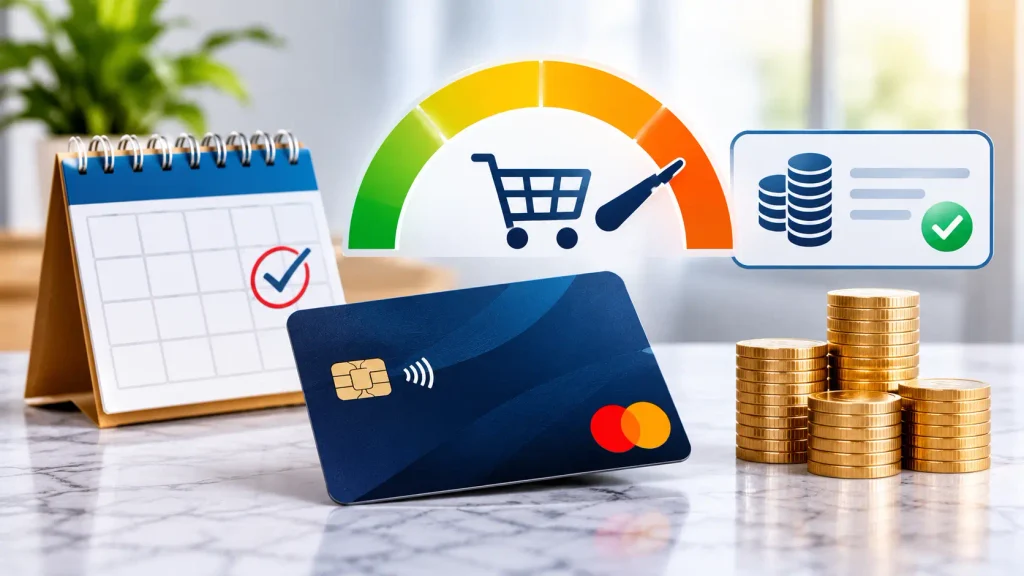
A credit card minimum spending requirement is the amount a cardholder must spend on eligible purchases within a specified period to qualify for a welcome bonus.
For example, a card might offer 60,000 bonus points after $4,000 in qualifying purchases during the first three months of account opening.
| Requirement | Example |
|---|---|
| Welcome bonus | 60,000 reward points |
| Minimum spending | $4,000 |
| Spending period | First 3 months |
| Average monthly spending needed | Approximately $1,333.33 |
| Qualifying transactions | Eligible purchases |
| Excluded transactions | Generally fees, cash advances, and balance transfers |
This is an illustrative offer rather than a current promotion. Actual requirements vary by issuer, card, and offer.
What Are the Best Ways to Meet Credit Card Minimum Spending Requirements?
Cardholders can use routine expenses and planned purchases to reach a welcome bonus threshold.
| Spending category | Examples | Important consideration |
|---|---|---|
| Groceries | Food and household essentials | Avoid buying unnecessary items |
| Transportation | Gas, parking, public transit | Check merchant acceptance |
| Utilities | Electricity, internet, phone bills | Processing fees may apply |
| Dining | Restaurants and food delivery | Stay within normal spending limits |
| Travel | Flights, hotels, car rentals | Review cancellation policies |
| Healthcare | Dental care, prescriptions, glasses | Confirm card acceptance |
| Home maintenance | Repairs and appliance purchases | Compare payment fees |
| Insurance | Auto and home premiums | Annual payment options may help |
| Gifts | Planned birthdays and holidays | Avoid excessive advance purchases |
| Taxes | Eligible tax payments | Processing charges apply |
These categories provide opportunities to earn rewards while covering expenses that would otherwise be paid using cash, debit cards, or bank transfers.
How Can Everyday Purchases Help Earn a Welcome Bonus?
Everyday spending is often the simplest way to meet a credit card’s minimum purchase requirement.
Groceries, fuel, transportation, restaurant bills, and household supplies can contribute steadily toward the required amount.
For example, a household spending $700 on groceries, $250 on transportation, and $300 on dining each month could generate $1,250 in qualifying monthly purchases.
Over three months, that would total $3,750 without requiring additional discretionary spending.
Must Explore: Best Credit Card Referral Bonuses to Know
Can Travel Bookings Help Meet Credit Card Spending Requirements?
Yes. Flights, hotel reservations, rental cars, and eligible vacation packages can contribute toward minimum spending requirements.
Travelers planning an upcoming vacation may find it convenient to use their new card for these purchases.
However, prepaid travel reservations may have cancellation restrictions. Cardholders should avoid booking nonrefundable travel solely to reach a spending threshold.
Can Annual Payments Help Cardholders Reach Spending Goals?
Annual payments can help cardholders reach spending requirements faster when they replace existing monthly obligations.
For example, paying an eligible insurance premium or subscription annually may create a larger qualifying transaction.
| Payment | Monthly arrangement | Annual arrangement |
|---|---|---|
| Subscription | $25 per month | $300 annually |
| Insurance | $150 per month | $1,800 annually |
| Membership | $40 per month | $480 annually |
These amounts are illustrative. Annual billing may offer savings, but cardholders should confirm affordability, refund policies, and whether the merchant accepts credit cards.
Essential Guide: Can You Pay Rent or a Mortgage With a Credit Card?
Which Credit Card Transactions Do Not Count Toward Minimum Spending?
Not every transaction contributes toward a welcome bonus. Card issuers generally exclude fees, cash-equivalent transactions, and certain account activities.
| Transaction | Generally counts? |
|---|---|
| Grocery purchases | Yes |
| Restaurant purchases | Yes |
| Airline tickets | Yes |
| Eligible utility payments | Yes |
| Annual credit card fee | No |
| Balance transfers | No |
| Cash advances | No |
| Interest charges | No |
| Money orders | No |
| Wire transfers | No |
| Refunded purchases | No |
| Cash-like transactions | Generally no |
Gift card purchases and transactions through third-party payment services require particular care because eligibility can vary by issuer and transaction type.
What Mistakes Should Cardholders Avoid When Earning Welcome Bonuses?
The biggest mistake is spending more than necessary or carrying an interest-bearing balance just to earn a bonus.
Other common problems include:
- Missing the introductory spending deadline.
- Assuming the annual fee counts toward qualifying spending.
- Ignoring processing fees on rent or tax payments.
- Returning purchases that helped meet the requirement.
- Buying unnecessary gift cards or merchandise.
- Failing to verify welcome bonus eligibility before applying.
A welcome bonus provides the greatest benefit when the cardholder can pay the statement balance in full and avoid interest charges.
Frequently Asked Questions About Credit Card Minimum Spending
No. Annual fees generally do not count toward the qualifying purchases required to earn a welcome bonus.
Yes. Eligible grocery purchases typically count toward minimum spending requirements and can help cardholders reach their targets through normal household expenses.
Yes. Eligible purchases made by authorized users generally contribute toward the primary account’s minimum spending requirement.
Potentially. Rent payments may qualify when processed as eligible purchases, but processing fees and issuer restrictions should be reviewed.
No. Refunds generally reduce qualifying spending. A cardholder may need additional purchases to maintain eligibility for the welcome bonus.