
Canada Travel Seasons: When Is the Best Time to Go?
The best time to visit Canada is generally from June to September, when many regions have warmer weather, longer daylight hours, and the widest range of outdoor activities. However, May, September, and October can be especially appealing for travelers seeking fewer crowds, seasonal scenery, or milder conditions. Canada is enormous, so the ideal month depends heavily on the destination and the type of trip being planned.
From the Rocky Mountains and Pacific coast to Québec’s historic cities and Ontario’s forests, Canada’s climate varies widely by region. Summer is generally the easiest season for a first-time trip across the country. At the same time, autumn is particularly attractive for foliage, winter suits skiing and snow-based activities, and spring offers a quieter transition between seasons.
This guide explains when to visit Canada by season and month, what the weather is typically like, where to go, which activities work best at different times of year, and what travelers should consider before booking.
What Is the Best Month to Visit Canada?
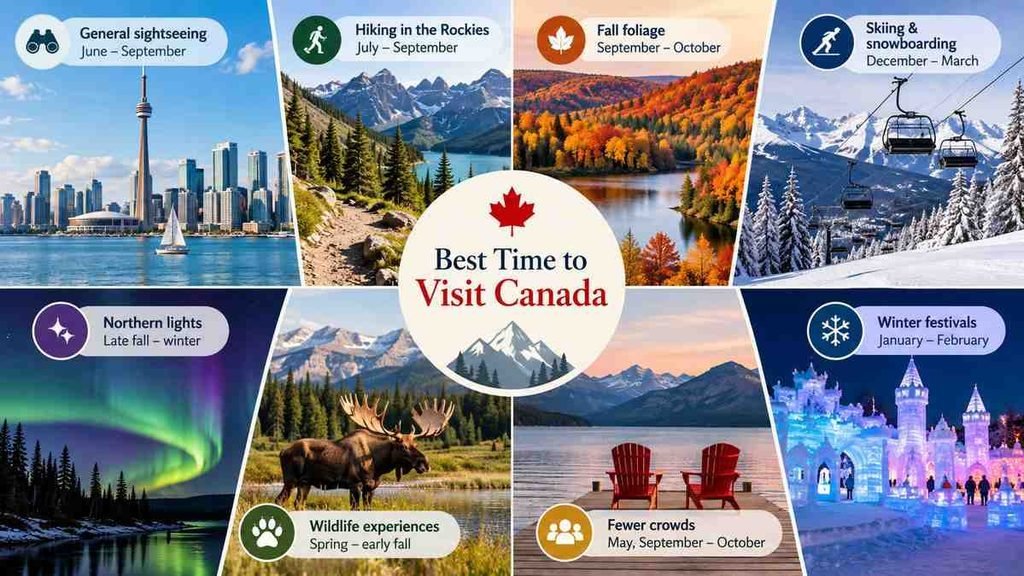
For many travelers, June is one of the most versatile months to visit Canada. Summer conditions are beginning to arrive, days are long, outdoor trails and waterways become more accessible, and peak-season crowds have not reached their highest levels everywhere.
However, the best month depends on the travel goal:
| Travel goal | Months to consider | Why |
| General sightseeing | June–September | Warm weather and long days |
| Hiking in the Rockies | July–September | Better access to higher-elevation trails |
| Fall foliage | September–October | Strong autumn colors in many eastern regions |
| Skiing and snowboarding | December–March | Reliable winter conditions in major mountain resorts |
| Northern lights | Late fall–winter | Long nights improve viewing opportunities |
| Wildlife experiences | Spring–early fall | Seasonal wildlife activity varies by region |
| Fewer crowds | May, September–October | Shoulder-season conditions in many destinations |
| Winter festivals | January–February | Snow, ice and seasonal events |
This table is a planning guide, not a nationwide rule. Canada’s regional climate means conditions can differ significantly between Vancouver, Toronto, Banff, Montréal, and the northern territories.
Canada Travel Seasons at a Glance
Canada has four distinct seasons, but they do not arrive with identical conditions across the country. Southern Ontario and Québec can have hot, humid summers and cold winters, while coastal British Columbia has milder winters and wetter conditions. The northern territories have much longer and colder winters.
Summer: June to August
Summer is the most straightforward season for travelers who want to combine cities, national parks, and outdoor activities. Daytime temperatures in many populated areas can reach roughly 20–30°C or higher, although mountain and coastal destinations can be cooler.
This is the season for:
- Hiking and sightseeing
- Camping
- Canoeing and kayaking
- Road trips
- Wildlife excursions
- City festivals
- Scenic rail journeys
- Coastal travel
The trade-off is demand. Popular destinations such as Banff and Lake Louise can become very busy in summer, and visitors may need reservations for accommodation, campsites, shuttles, and popular attractions. Parks Canada operates reservation systems for numerous destinations, with launch dates varying by location.
Autumn: September to October
Autumn can be one of Canada’s most visually distinctive seasons. Ontario’s fall season generally runs from early September through October and can sometimes extend into early November in southern areas.
September often provides a useful balance between summer activities and cooler weather. October brings stronger fall colors in many eastern areas but also shorter days and increasingly cool temperatures.
Autumn is particularly suitable for:
- Foliage viewing
- Scenic drives
- Photography
- Hiking
- City breaks
- Niagara Falls
- Québec and Ontario road trips
- Wildlife experiences
In western Canada, late August and September can also coincide with salmon runs that attract wildlife, including bears, in suitable viewing areas.
Winter: November to March
Winter transforms Canada into a destination for skiing, snowboarding, skating, snowshoeing, winter festivals and northern-lights trips. In much of the country, winter temperatures are often below freezing, and snow can remain on the ground from about December into March or April. Southwest British Columbia is a major exception, where winter precipitation is more often rain than snow at lower elevations.
Winter works particularly well for travelers visiting:
- Whistler
- Banff
- Lake Louise
- Québec City
- Montréal
- Yukon and the Northwest Territories for northern lights opportunities
Visitors should expect shorter daylight hours and potentially difficult road conditions. Winter travel also requires appropriate clothing, footwear, and flexibility for weather-related disruptions.
Spring: April to May
Spring is a transitional period. Snow begins to disappear in many southern areas, temperatures gradually rise and daylight increases, but weather can be unpredictable.
April can still feel wintry in some regions, particularly at higher elevations, while May generally brings more accessible trails, blooming landscapes,s and fewer visitors than the summer peak.
Spring can be a good option for:
- Lower-key city sightseeing
- Wildlife viewing
- Waterfalls and spring scenery
- Early-season hiking in suitable areas
- Whale watching in Atlantic Canada
- Visiting before summer crowds increase
When Is the Best Time to Visit Canada for Outdoor Activities?
For most outdoor activities, June through September offers the broadest range of possibilities, but high-elevation destinations require more specific planning.
In Banff National Park, for example, alpine hiking conditions can differ considerably from conditions in nearby towns. Lake Louise and Moraine Lake usually become free of winter ice toward late May, while the alpine hiking season generally begins in late June.
For travelers planning a Rocky Mountain itinerary, July through September is therefore a practical period for combining lakes, hiking and scenic drives, although trail conditions can change quickly.
Visitors should also remember that popular sites can have access restrictions. In 2026, for example, Moraine Lake Road remains closed to personal vehicles, with access provided through Parks Canada shuttles and licensed commercial operators during the operating season.
When Is the Best Time to Visit Canada for Hiking?
July through September is generally the best time for high-elevation hiking in the Canadian Rockies, although exact trail opening dates depend on snow and local conditions.
Summer brings longer days and better access to mountain trails, but travelers should not assume every route will be snow-free. Parks Canada advises visitors to check current trail conditions before heading out because conditions can change rapidly.
For example, someone planning a Lake Louise hiking day may find lower trails accessible while higher routes still have snow or other hazards. Checking the official park information immediately before the hike is more reliable than planning solely from historical averages.
When Is the Best Time to See Fall Colors in Canada?
September and October are the key months for fall foliage, particularly across Ontario and Québec, but the exact peak varies by location and weather.
Ontario’s fall season generally begins in early September, with many southern areas retaining color into October and sometimes early November.
Popular regions include:
- Muskoka
- Algonquin Provincial Park
- Haliburton Highlands
- Québec’s Laurentians
- Charlevoix
- Eastern Townships
For travelers whose priority is autumn scenery, flexibility is useful. A trip planned for the first week of October may encounter different foliage conditions from one scheduled for the third week because color changes progress geographically and vary with local weather.
When Is the Best Time to Visit Canada for Winter Sports?
For skiing and snowboarding, December through March is the core winter travel period, with conditions varying by resort and elevation.
The Canadian Rockies and British Columbia are particularly well known for winter sports. Whistler, Banff, and Lake Louise offer established winter infrastructure, while Québec provides a different mix of snow sports, winter culture, and historic-city experiences.
Winter also offers a chance to experience Canada beyond skiing. Ice skating, snowshoeing, winter festivals and snow-based excursions can form part of a city or nature itinerary.
Travelers should distinguish between winter scenery and winter accessibility. Snow and ice can affect mountain roads, and some hiking routes are unsuitable in winter because of avalanche hazards. Parks Canada specifically warns that certain Lake Louise-area summer hiking routes are not safe during the winter and spring months.
When Is the Best Time to See the Northern Lights in Canada?
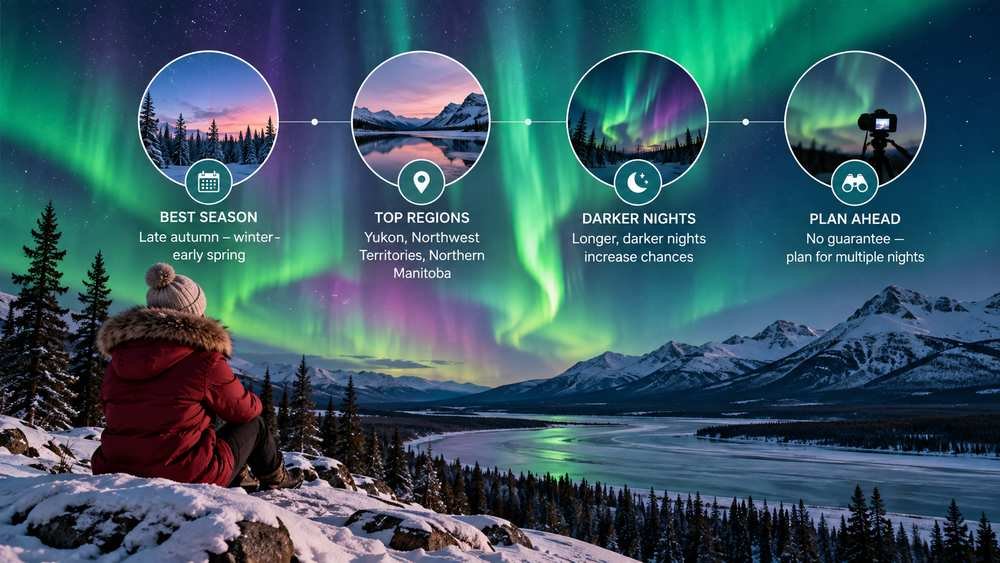
The northern lights can appear in Canada’s northern regions during periods of darkness year-round. Still, late autumn through winter and early spring provide longer, darker nights, making those seasons particularly practical for aurora-focused trips.
Destinations in Yukon, the Northwest Territories,s and northern Manitoba are commonly associated with aurora viewing. The farther north a traveler goes, the more important daylight patterns, cloud cover, and local tour operations become.
Aurora viewing is never guaranteed on a particular night. Travelers should plan for several nights rather than build an entire trip around a single evening.
When Is the Best Time to Visit Canada for Wildlife?
Wildlife viewing depends more on the species and region than on one universal Canadian travel season.
Bears and salmon runs
Late summer and early autumn can be especially interesting in parts of western Canada. Salmon return to rivers in large numbers, creating seasonal feeding opportunities for bears and other wildlife. The salmon run typically begins in late August and continues into September in relevant western regions.
Polar bears
October and November are significant months for polar-bear viewing around Churchill, Manitoba, as bears gather in anticipation of sea-ice formation. The precise timing depends on local environmental conditions.
Whales
Atlantic Canada and British Columbia both provide whale-watching opportunities, but the species, migration patterns, and viewing seasons differ by location. May can be a useful period for whale watching on the Atlantic coast, according to the seasonal guide consulted for this article.
Wildlife trips should always follow local regulations and operator guidance, particularly around bears and other large animals.
Best Time to Visit Canada’s Major Destinations
The ideal travel period changes considerably depending on where the itinerary is focused.
| Destination | Useful travel period | Main seasonal appeal |
| Vancouver | May–September | Mild weather, parks, coast and outdoor activities |
| Banff | June–September; December–March | Hiking and lakes in summer; skiing in winter |
| Lake Louise | June–September; winter for skiing | Alpine scenery, hiking and winter sports |
| Toronto | May–October | City sightseeing and outdoor attractions |
| Montréal | May–October; winter festivals | Food, culture, festivals and seasonal events |
| Québec City | June–October; January–February | Summer sightseeing and winter atmosphere |
| Niagara Falls | May–October | Comfortable sightseeing and outdoor access |
| Whistler | June–September; December–April | Summer hiking/biking and winter skiing |
| Yukon | Summer for road/outdoor trips; winter for aurora | Wilderness and seasonal northern experiences |
| Atlantic Canada | June–September | Coastal scenery, road trips and wildlife |
These are broad planning windows, not guarantees. Canada’s climate varies substantially by region, elevation, and proximity to the ocean.
Is Summer the Most Expensive or Busiest Time to Visit Canada?
Summer is generally the highest-demand period for many popular Canadian outdoor destinations, particularly during July and August. This is not a universal pricing rule, because accommodation and airfare depend on destination, dates, events, booking timing, and demand.
National parks can become particularly busy. Parks Canada notes that some popular locations fill quickly and recommends planning, while some parks actively encourage visitors to consider spring and fall for a quieter experience.
For example, Lake Louise and Moraine Lake can experience heavy summer visitation. Parks Canada states that parking is extremely limited and recommends public transit or shuttle reservations for these destinations.
Travelers who want a quieter experience can consider:
- Late May to mid-June
- September
- Early October
- Less-visited parks and towns
- Weekdays instead of weekends
Is May a Good Time to Visit Canada?
May can be an excellent shoulder-season option, especially for travelers who prefer fewer visitors and don’t require full summer conditions.
By May, many southern areas are warming up, although weather remains changeable. Some mountain destinations can still have snow, while higher hiking trails may not yet be fully accessible.
The advantage is that travelers can often experience spring landscapes before the busiest summer period. Parks Canada has also identified the weeks after the Victoria Day long weekend through mid-June as generally less busy in Jasper than later summer.
A May trip is therefore best planned around cities, lower-elevation nature and flexible outdoor activities rather than assuming every mountain attraction will be open.
Is September a Good Time to Visit Canada?
September is one of the most versatile months for a trip to Canada.
Summer conditions can continue into the month in many southern destinations, while temperatures gradually become cooler. Crowds may begin to ease after the main summer period, and autumn colors start appearing as the month progresses.
September can combine:
- Hiking
- Scenic drives
- Wildlife viewing
- National parks
- City sightseeing
- Early fall foliage
- Salmon-run experiences in western Canada
The timing is particularly useful for travelers who want outdoor activities without committing to the cold conditions of late autumn or winter.
Is October a Good Time to Visit Canada?
October is particularly attractive for fall foliage and scenic travel, especially in Ontario and Québec.
The drawback is that conditions become increasingly variable. Southern cities can remain comfortable during parts of the month, while northern and mountain areas can turn considerably colder.
Travelers visiting in October should pack layers and avoid assuming that conditions will resemble September. They should also check attraction operating schedules, as some seasonal facilities begin closing as autumn progresses.
When Should Travelers Avoid Visiting Canada?
No single period requires travelers to avoid Canada. The better approach is to match the season with the planned itinerary.
A traveler who dislikes cold and snow may find December through March challenging in much of the country. Someone planning high-altitude hiking may find April or early May too early for some Rocky Mountain trails. Conversely, a skier visiting in July would be planning around the wrong season for the activity.
Spring and late autumn can also bring transitional weather. Canada’s government describes spring and fall as changeable seasons, with rain and shifting temperatures common.
Weather hazards can occur in every season. Environment and Climate Change Canada provides current forecasts and warnings covering winter storms, extreme cold, thunderstorms, flooding, heat, and other hazards.
What Should Travelers Check Before Booking a Canada Trip?
The best travel month is only one part of the planning process. Before confirming flights and accommodation, travelers should check:
1. Regional weather
A single national forecast isn’t useful for a country Canada’s size. Check the specific city, park, or region on the itinerary.
2. Seasonal attraction access
Mountain lakes, hiking routes, scenic roads, ferries, and outdoor attractions can operate seasonally.
3. Park reservations
Popular Parks Canada destinations can require reservations for camping, accommodations, shuttles, or activities. Reservation launch dates vary by location.
4. Transportation restrictions
Some attractions are not accessible by private vehicle during busy seasons. Moraine Lake is a notable example, with personal vehicles prohibited on Moraine Lake Road.
5. Current weather alerts
Before driving between destinations, travelers should check current conditions, especially in winter and during severe weather.
6. Wildfire and environmental conditions
Summer travel can occasionally be affected by wildfire smoke or closures. Travelers should check official regional advisories shortly before visiting outdoor destinations rather than relying on conditions from previous years.
Canada Month-by-Month Travel Guide
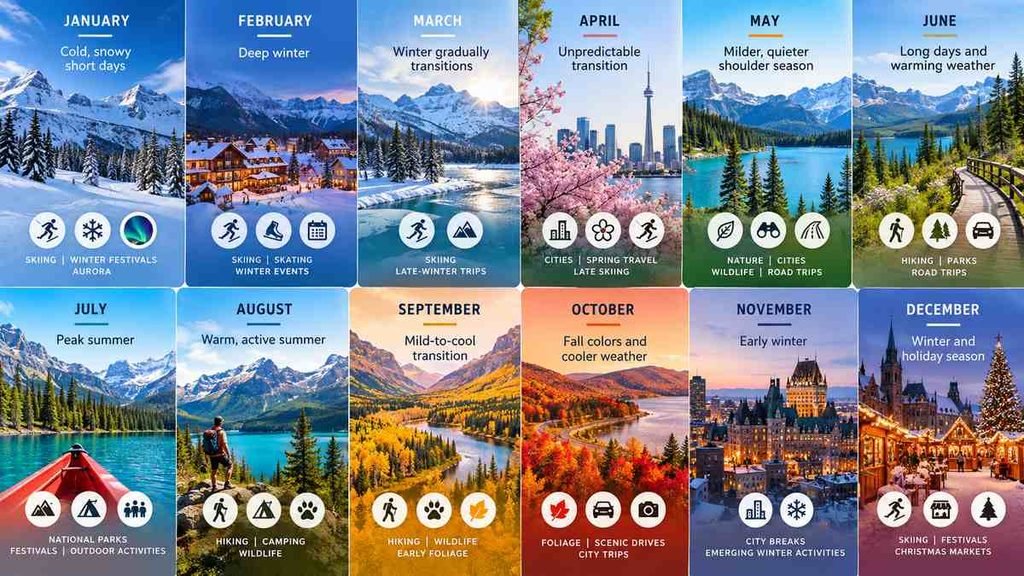
Canada offers distinct travel experiences year-round, from snowy winter adventures and spring sightseeing to warm summer road trips and colorful autumn landscapes. Weather varies significantly by region, so the ideal month depends on your destinations and planned activities. Summer generally brings warmer conditions across much of southern Canada, while September and October can offer cooler temperatures and fall scenery.
| Month | Typical travel character | Best suited to |
| January | Cold, snowy, short days | Skiing, winter festivals, aurora |
| February | Deep winter | Skiing, skating, winter events |
| March | Winter gradually transitions | Skiing and late-winter trips |
| April | Unpredictable transition | Cities, spring travel, late skiing |
| May | Milder, quieter shoulder season | Nature, cities, wildlife, road trips |
| June | Long days and warming weather | Hiking, parks, road trips |
| July | Peak summer | National parks, festivals, outdoor activities |
| August | Warm, active summer | Hiking, camping, wildlife |
| September | Mild-to-cool transition | Hiking, wildlife, early foliage |
| October | Fall colors and cooler weather | Foliage, scenic drives, city trips |
| November | Early winter | City breaks and emerging winter activities |
| December | Winter and holiday season | Skiing, festivals, Christmas markets |
The actual weather can differ significantly from these broad descriptions because Canada spans multiple climate zones and enormous distances.
Final Takeaway
For travelers seeking a broad mix of comfortable weather, outdoor activities, long days, and accessible attractions, June through September is the most practical overall window for visiting Canada. Those seeking autumn scenery should look toward September and October, while winter is the natural choice for skiing, snow activities, and aurora-focused travel.
The most important consideration is the region, not the country alone. A summer trip to Banff, a fall foliage journey through Québec, a winter ski holiday in Whistler, and a northern lights trip to Yukon all require different timing. Checking regional weather, seasonal attraction schedules, park reservations, and current travel advisories before booking will help ensure that the chosen month matches the actual itinerary.
Frequently Asked Questions
June through September is generally the easiest time for a first trip to Canada because many outdoor attractions are accessible, days are long, and temperatures are more comfortable in much of the country.
Both can work well, but they suit different priorities. June offers increasingly warm weather and long summer days, while September brings cooler temperatures, early autumn scenery, and, in some destinations, fewer visitors.
There is no single cheapest month nationwide. Airfares and hotel rates vary by destination, demand, holidays, and events. Shoulder seasons such as May and parts of September or October can offer more favorable availability than peak summer, but travelers should compare actual prices for their dates.
For a focused itinerary, 7–10 days can work for one region, such as Vancouver and the Canadian Rockies or Toronto and Québec. Canada is too large to cover comprehensively in a short trip, so choosing a region is usually more practical than trying to cross the entire country.
No. Snow is seasonal in most populated areas, although permanent or semi-permanent snow and ice occur at high elevations and in Arctic regions. Southwest British Columbia is considerably milder in winter than much of the country.
June through September is generally the most practical period for a broad Canadian road trip, particularly through the Rockies and other outdoor-focused regions. Travelers should check road conditions and seasonal closures before departure because some routes and facilities operate only during certain months.
Yes, particularly for travelers interested in skiing, snowboarding, skating, winter festivals, snowy landscapes, es or northern lights trips. Winter simply requires a different itinerary, appropriate clothing, and more attention to weather and transportation conditions.
September and October are the principal fall-color months, with timing varying by region. Ontario’s fall season generally runs from early September through October, sometimes extending into early November in southern areas.