
The Ultimate Guide to Central Park in New York City: Things to Do, Events, and Attractions
Central Park in New York City offers more than 840 acres of green space, famous landmarks, walking trails, lakes, gardens, playgrounds, and seasonal activities in the heart of Manhattan. Visitors can explore Bethesda Terrace, Bow Bridge, Strawberry Fields, Belvedere Castle, and the Central Park Zoo while enjoying a peaceful break from the city’s busy streets.
Stretching from 59th Street to 110th Street, the park attracts millions of visitors annually. Its landscape combines carefully designed natural scenery with cultural landmarks, recreational facilities, and public gathering spaces.
Central Park is free to enter and remains open throughout the year. However, certain attractions, guided experiences, and recreational activities require paid admission or reservations.
This guide covers the best things to do in Central Park, its most popular attractions, seasonal events, family-friendly activities, transportation options, and practical information for planning a visit.
Central Park in New York City at a Glance
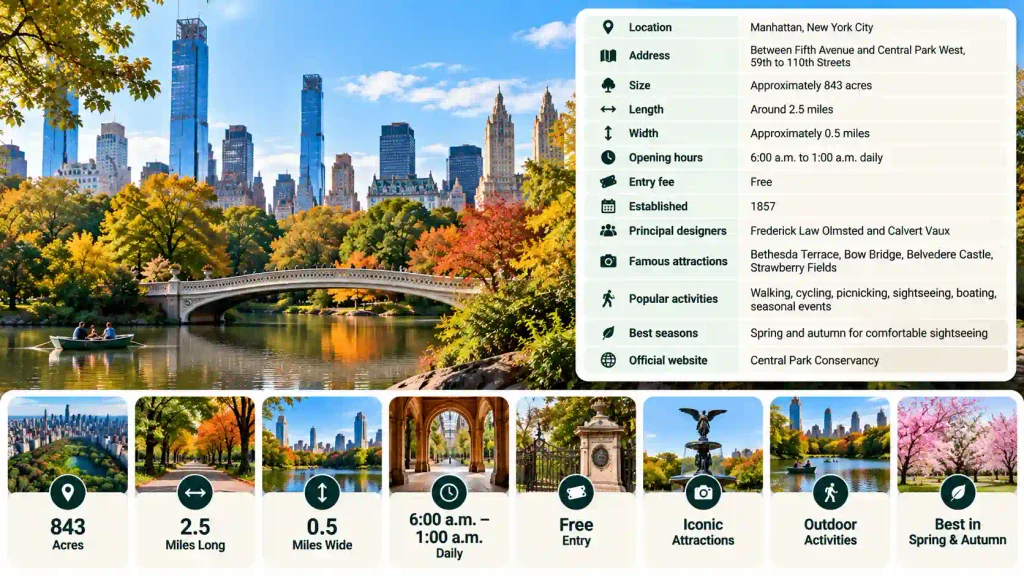
| Feature | Details |
| Location | Manhattan, New York City |
| Address | Between Fifth Avenue and Central Park West, 59th to 110th Streets |
| Size | Approximately 843 acres |
| Length | Around 2.5 miles |
| Width | Approximately 0.5 miles |
| Opening hours | 6:00 a.m. to 1:00 a.m. daily |
| Entry fee | Free |
| Established | 1857 |
| Principal designers | Frederick Law Olmsted and Calvert Vaux |
| Famous attractions | Bethesda Terrace, Bow Bridge, Belvedere Castle, Strawberry Fields |
| Popular activities | Walking, cycling, picnicking, sightseeing, boating, seasonal events |
| Best seasons | Spring and autumn for comfortable sightseeing |
| Official website | Central Park Conservancy |
Central Park is managed by the New York City Department of Parks & Recreation in partnership with the Central Park Conservancy, which plays a major role in its maintenance, restoration, and visitor programming.
Related: Places to Visit in Canada Best Cities, Parks & Natural Wonders
Where Is Central Park Located?
Central Park is located in Manhattan, bordered by Central Park South (59th Street), Central Park North (110th Street), Fifth Avenue to the east, and Central Park West to the west.
Its central location makes it accessible from several Manhattan neighborhoods, including the Upper East Side, Upper West Side, Midtown, and Harlem.
The park has numerous entrances rather than one main entrance. Visitors can choose an entry point based on the attractions they intend to see.
For example, the southeastern entrance near Fifth Avenue and 59th Street is convenient for reaching the Pond, Gapstow Bridge, and Central Park Zoo. The western entrance near 72nd Street provides access to Strawberry Fields and nearby walking paths.
What Are the Best Things to Do in Central Park?
Central Park offers activities for visitors with different interests, from sightseeing and outdoor recreation to cultural experiences and seasonal entertainment.
1. Visit Bethesda Terrace and Fountain
Bethesda Terrace is one of Central Park’s most recognizable architectural landmarks.
Located near the center of the park at approximately 72nd Street, the terrace features elaborate stonework, a distinctive tiled arcade, and views overlooking Bethesda Fountain and the Lake.
The fountain’s Angel of the Waters sculpture is a well-known symbol of Central Park.
The surrounding area is popular for photography, street performances, and relaxed sightseeing.
2. Walk Across Bow Bridge
Bow Bridge is a graceful cast-iron pedestrian bridge spanning part of the Lake.
Its curved design, waterside setting, and surrounding trees make it one of the park’s most photographed locations.
The bridge offers views of the water and nearby Manhattan buildings, particularly during spring and autumn.
Bow Bridge is best explored on foot, as cycling is not permitted on the bridge.
3. Explore Strawberry Fields
Strawberry Fields is a landscaped memorial dedicated to musician John Lennon.
Located near West 72nd Street, the memorial is especially known for its circular Imagine mosaic.
The area was designated as a quiet zone, encouraging visitors to appreciate its peaceful atmosphere.
Strawberry Fields is a popular stop for music enthusiasts and travelers interested in New York City’s cultural history.
4. Discover Belvedere Castle
Belvedere Castle is a picturesque stone structure near 79th Street.
Built in the 19th century, the castle offers elevated views of surrounding landscapes, including Turtle Pond and the Great Lawn.
Its architectural design makes it a distinctive landmark within the park.
The castle also serves as a visitor destination for learning about Central Park’s natural environment and history.
Access to the building may be affected by operating schedules, weather, or maintenance.
5. Visit the Central Park Zoo
Central Park Zoo is a family-friendly wildlife attraction near Fifth Avenue and East 64th Street.
Operated by the Wildlife Conservation Society, the zoo features animals from different habitats, including penguins, sea lions, and snow leopards.
Its relatively compact layout makes it suitable for families seeking an activity that does not require an entire day.
Unlike the park itself, the zoo charges admission. Ticket prices and operating hours vary by date and season.
6. Relax at Sheep Meadow
Sheep Meadow is a large open lawn on the park’s western side, generally between 66th and 69th Streets.
It is a popular location for picnics, sunbathing, reading, and relaxing on the grass.
The meadow offers broad views of the surrounding skyline, creating a contrast between open green space and Manhattan’s tall buildings.
The lawn operates seasonally and may close during wet conditions or maintenance periods to protect the grass.
7. Visit the Conservatory Garden
Conservatory Garden is a formal landscaped garden near Fifth Avenue and 105th Street.
The garden contains three distinct sections inspired by English, French, and Italian garden designs.
Visitors can see ornamental fountains, seasonal flower displays, carefully maintained paths, and decorative architectural features.
It is particularly appealing during spring, when flowering trees and garden beds create colorful displays.
As a designated quiet area, the garden is better suited to leisurely walks and photography than active recreation.
8. Explore the Ramble
The Ramble is a wooded landscape covering approximately 36 acres near the center of the park.
Its winding paths, rocky terrain, streams, and dense vegetation create a setting that feels different from the park’s formal lawns and promenades.
The area is especially popular among birdwatchers because it provides habitat for resident and migratory birds.
Visitors should remain on designated trails to protect the landscape and avoid becoming disoriented.
9. Walk Along the Mall and Literary Walk
The Mall is a broad pedestrian promenade lined with American elm trees.
Located in the southern half of the park, it connects visitors with several important attractions, including Bethesda Terrace.
A section known as Literary Walk features statues honoring notable writers and literary figures.
The tree-lined setting makes this route particularly appealing for leisurely walks and photography.
10. Enjoy the Views From Gapstow Bridge
Gapstow Bridge is a stone bridge near the Pond in the southeastern section of the park.
It offers a classic view of Central Park’s landscape framed by Manhattan skyscrapers.
The location is particularly attractive during autumn, when surrounding trees change color, and winter, when snow may cover the bridge and nearby paths.
Its proximity to the southern park entrances makes it a convenient stop for visitors with limited time.
Outdoor Activities in Central Park
Beyond its landmarks, Central Park offers recreational opportunities for visitors who prefer an active day outdoors.
Walking and Jogging
Walking is one of the easiest ways to experience Central Park. The park contains paved promenades, wooded trails, and scenic routes around its water features.
Popular routes include the Mall, the paths surrounding the Jacqueline Kennedy Onassis Reservoir, and the landscapes near Bethesda Terrace.
The Reservoir’s running track is approximately 1.58 miles long and attracts runners throughout the year.
Visitors looking for a longer walk can combine several attractions into a self-guided route.
Cycling Around Central Park
Cycling provides an efficient way to cover larger sections of the park.
The main loop is approximately 6.1 miles long, with shorter options available.
Cyclists must follow designated routes, travel counterclockwise on the park drives, obey traffic signals, and yield to pedestrians. Riding on ordinary pedestrian paths or landscaped areas is prohibited.
Bicycle rentals are available seasonally through authorized operators and nearby businesses.
Rowboating on the Lake
Rowboating is a popular warm-weather activity on Central Park’s Lake.
Visitors can rent rowboats through the Loeb Boathouse when the service is operating.
The experience offers a different perspective of Bow Bridge, surrounding trees, and the Manhattan skyline.
Boat rental availability, prices, operating hours, and weather restrictions should be checked before visiting.
Picnicking on the Lawns
Central Park has several areas suitable for picnics, including Sheep Meadow and the Great Lawn when open.
Visitors can bring prepared food and enjoy the park’s open spaces, but they must follow posted lawn restrictions and dispose of litter responsibly.
Barbecuing is subject to particularly strict rules and is not permitted as an everyday picnic activity.
Birdwatching and Nature Walks
Central Park is an important urban habitat for migratory and resident birds.
The Ramble, North Woods, and areas surrounding the Reservoir are particularly popular for observing wildlife.
Spring and autumn migration periods can be especially rewarding for birdwatchers.
Best Family-Friendly Things to Do in Central Park
Families visiting Central Park can choose from playgrounds, wildlife attractions, interactive activities, and spacious outdoor areas.
Visit the Playgrounds
Central Park has 21 playgrounds distributed throughout its grounds.
Some feature climbing structures, swings, slides, and water-play elements during warmer months.
Popular options include Heckscher Playground near the southern end of the park and Ancient Playground near the Metropolitan Museum of Art.
Watch Model Sailboats at Conservatory Water
Conservatory Water, near East 74th Street, is known for model sailboats.
When the seasonal rental service operates, visitors may be able to rent and sail model boats on the pond.
The surrounding paths also provide a pleasant area for families to walk and relax.
Ride the Central Park Carousel
The Central Park Carousel is a traditional amusement attraction near 65th Street.
Its carved horses and historic design make it especially popular with children.
Operating hours and admission charges are separate from general park access and may vary seasonally.
Explore the Swedish Cottage Marionette Theatre
The Swedish Cottage Marionette Theatre is a small performance venue featuring puppet productions designed for family audiences.
It offers an indoor cultural activity within the park, although performances take place according to a published schedule.
Advance ticket purchases may be required.
Central Park Events and Seasonal Activities
Central Park hosts concerts, performances, guided walks, recreational programs, and seasonal celebrations throughout the year.
Some events are free, while others require tickets or advance registration.
SummerStage Concerts
Capital One City Parks Foundation SummerStage is one of the best-known outdoor performance programs associated with Central Park.
Its flagship venue is Rumsey Playfield, near East 71st Street.
The 2026 season includes free and ticketed concerts featuring artists across genres such as jazz, pop, rock, hip-hop, and Latin music.
The schedule changes throughout the season, so visitors should consult the published lineup before making plans.
Shakespeare in the Park
Shakespeare in the Park is a longstanding New York theater tradition associated with the Delacorte Theater in Central Park.
The program presents outdoor theatrical productions, with performance schedules and ticket distribution methods announced by The Public Theater.
Availability can be limited for popular productions.
Visitors should check the current season rather than assuming performances take place every day during summer.
Outdoor Fitness and Guided Walks
Central Park Conservancy and other authorized organizations offer guided experiences and educational programs.
These may include nature walks, historical tours, family activities, and seasonal programs.
Some require advance booking, while others may be available without charge.
Ice Skating During Winter
Wollman Rink is a well-known seasonal ice-skating venue in the southern part of Central Park.
The rink generally operates during the colder months, although opening and closing dates depend on the season.
Admission and skate rental charges may apply.
Visitors should confirm the current schedule and available sessions before arriving.
Best Time to Visit Central Park
Central Park is open year-round, but each season offers a different experience.
| Season | Typical conditions | Best activities |
| Spring (March–May) | Blossoming trees, gradually warmer weather | Garden visits, walking, photography |
| Summer (June–August) | Warm weather and busy attractions | Picnics, boating, concerts |
| Autumn (September–November) | Cooler temperatures and colorful foliage | Scenic walks, cycling, photography |
| Winter (December–February) | Cold weather, occasional snow | Ice skating, winter scenery, quiet walks |
Spring: Flowers and Comfortable Walks
Spring is one of the most attractive periods for visiting Central Park.
Cherry blossoms, flowering trees, and seasonal gardens create colorful landscapes, particularly around the Reservoir and Conservatory Garden.
Flowering dates vary each year according to weather conditions.
Summer: Outdoor Events and Recreation
Summer offers long daylight hours and a wide selection of outdoor activities.
It is a popular season for picnics, boating, concerts, and family visits.
However, high temperatures and larger crowds can make midday sightseeing less comfortable.
Autumn: Fall Foliage and Photography
Autumn is especially popular for Central Park photography.
Trees surrounding the Lake, the Mall, and the Ramble display changing shades of yellow, orange, and red.
The exact timing of peak foliage varies annually, but late October through early November is often a useful planning window.
Winter: Ice Skating and Peaceful Landscapes
Winter brings quieter walking paths and the possibility of snow-covered scenery.
Wollman Rink is a major seasonal attraction, while bridges and wooded areas provide attractive winter photography opportunities.
Visitors should dress appropriately and check for weather-related closures.
How to Get to Central Park in New York City
Central Park is easily accessible by subway, bus, taxi, rideshare, and on foot. Public transportation is generally the most practical option because parking near the park can be expensive and limited.
Getting to Central Park by Subway
Several New York City subway lines serve stations within walking distance of the park.
| Subway lines | Useful stations | Nearby attractions |
| N, R, W | 5 Av/59 St | The Pond, Gapstow Bridge |
| A, B, C, D, 1 | 59 St–Columbus Circle | Southwestern park entrance |
| B, C | 72 St | Strawberry Fields, Sheep Meadow |
| B, C | 81 St–Museum of Natural History | The Ramble, Shakespeare Garden |
| 4, 5, 6 | 86 St | East-side park entrances |
| 2, 3 | Central Park North–110 St | Northern section of the park |
Subway service varies by time and day, particularly during construction and weekend maintenance. The latest information is available through the Metropolitan Transportation Authority.
Getting to Central Park by Bus
Several Manhattan bus routes operate along Fifth Avenue, Central Park West, and nearby crosstown streets.
Bus travel can be useful for visitors who prefer to avoid subway stairs or want to reach a specific entrance.
Travelers should check current MTA schedules and accessibility information before departure.
Getting to Central Park by Car or Taxi
Taxis and rideshare services can drop passengers near entrances along the park’s perimeter.
However, private vehicles are not permitted on Central Park’s internal recreational drives. Nearby garages may be available, but parking charges vary.
The park’s transverse roads provide crosstown vehicle connections without allowing general sightseeing traffic through its landscaped interior.
Central Park Attractions Map
The following map highlights the major landmarks discussed in this guide. Attractions are spread across several miles, so visiting every location in one short walk is not practical.
Suggested Central Park Itineraries
The amount of time required depends on the attractions selected and whether the visit includes paid activities.
Central Park in 2 Hours
A two-hour visit is suitable for travelers interested in seeing several famous landmarks without covering the entire park.
A practical route begins at the southeastern entrance near 59th Street, continues to Gapstow Bridge, passes through the Mall, and ends at Bethesda Terrace and Fountain.
This route focuses on the southern section of the park, where several popular landmarks are located relatively close together.
Central Park in Half a Day
A half-day itinerary allows more time for sightseeing and short breaks.
A suggested route includes:
- Gapstow Bridge and the Pond.
- The Mall and Literary Walk.
- Bethesda Terrace and Fountain.
- Bow Bridge.
- Strawberry Fields.
- Belvedere Castle, if time permits.
The route covers several well-known landmarks and provides opportunities for photography, refreshments, and leisurely walks.
Central Park in a Full Day
A full-day visit provides enough time to explore both popular attractions and quieter northern landscapes.
Visitors can spend the morning around the southern landmarks, continue through the Ramble and Reservoir area, and explore Conservatory Garden or the North Woods later in the day.
Families may prefer replacing part of the walking itinerary with the Central Park Zoo, playgrounds, or seasonal recreational activities.
Where to Eat in Central Park
Central Park has several dining options, ranging from casual snack stands to established restaurants.
Tavern on the Green
Tavern on the Green is a historic restaurant near West 67th Street.
It offers a sit-down dining experience in a setting overlooking the park.
Reservations may be advisable during busy periods, particularly on weekends and holidays.
The Loeb Boathouse
The Central Park Boathouse is located beside the Lake near East 72nd Street.
Its waterside setting makes it a popular dining destination.
Restaurant hours, menus, and seasonal services should be checked before visiting.
Cafés and Food Stands
Visitors can also find food carts and concession stands in various parts of the park.
These are useful for shorter visits when a full restaurant meal is unnecessary.
Bringing a picnic is another practical option, provided park rules and lawn restrictions are followed.
Essential Tips for Visiting Central Park
Central Park is a large urban park, and planning can make a substantial difference to the experience.
- Choose an entrance near the intended attractions. Entering at 59th Street is not ideal for someone planning to visit Conservatory Garden near 105th Street.
- Wear comfortable walking shoes. A visit covering multiple landmarks can involve several miles of walking.
- Check seasonal closures. Lawns, gardens, recreational facilities, and individual attractions may have different operating schedules.
- Carry water and weather-appropriate clothing. Conditions can change throughout the day.
- Use designated cycling routes. Bicycles are not permitted on ordinary pedestrian paths.
- Respect quiet areas. Locations such as Strawberry Fields and Conservatory Garden have restrictions intended to preserve their atmosphere.
- Check event schedules. Concerts, performances, and special programs may affect access to certain areas.
- Follow park rules. Smoking, drone operation, and several other activities are prohibited.
Is Central Park Safe for Tourists?
Central Park is a major public destination used by residents and tourists throughout the year.
As with other large urban public spaces, visitors should remain aware of their surroundings, protect valuables, and avoid isolated areas when visibility is poor.
The park is officially open from 6:00 a.m. until 1:00 a.m. daily. Visitors should remain within permitted areas and observe any temporary closures.
Check Out This Blog: Places to Visit in Canada: Best Cities, Parks & Natural Wonders
Final Thoughts!
Central Park offers a wide range of experiences, from historic landmarks and landscaped gardens to outdoor recreation, wildlife observation, and cultural performances.
First-time visitors can focus on the southern and central attractions, including Bethesda Terrace, Bow Bridge, Strawberry Fields, and the Mall. Travelers with more time can explore the Reservoir, Conservatory Garden, and the park’s quieter northern landscapes.
The best itinerary depends on the season, available time, and preferred activities. Before visiting, travelers should review the Central Park Conservancy website for updated attraction information, seasonal closures, and event schedules.
Frequently Asked Questions!
Yes. Central Park is free to enter. However, attractions such as the Central Park Zoo, certain performances, ice-skating sessions, and equipment rentals may require payment.
Approximately two to four hours is sufficient for several major landmarks. A full day is more suitable for visitors planning to explore different sections, participate in activities, or visit paid attractions.
Bethesda Terrace and Fountain is among the park’s most recognizable landmarks. Bow Bridge, Strawberry Fields, and Belvedere Castle are also particularly well known.
The park is open until 1:00 a.m. However, visitors should consider lighting, weather conditions, and personal safety when planning an evening visit.
Yes. Dogs are permitted in many areas, subject to leash restrictions. The usual on-leash period is 9:00 a.m. to 9:00 p.m., with designated off-leash hours and locations. Certain landscapes prohibit dogs entirely.
No. Recreational swimming is not permitted in Central Park’s lakes and ponds. Visitors interested in swimming should use authorized public swimming facilities.
Yes. Public restrooms are available at several locations throughout the park. Some are seasonal or operate according to facility-specific schedules.
Many major routes and attractions are accessible, although the park also contains steep paths, stairs, and uneven terrain. Visitors should consult accessibility information for specific routes and attractions.
The entrances near Fifth Avenue and 59th Street or Columbus Circle are convenient starting points for visitors exploring the southern section of Central Park.
Yes. Central Park hosts free concerts, educational programs, and other public activities. Some events require advance registration, and certain performances are ticketed.