
Caribbean Honeymoons: Where to Go, When to Visit & What to Do
Caribbean honeymoons offer couples a range of experiences, from secluded beaches and private-island stays to rainforest adventures, sailing, fine dining, and lively local culture. The right island depends on the kind of honeymoon you’re planning: Saint Lucia suits couples who want mountains and adventure, Antigua combines beaches with sailing and history, Barbados adds food and culture, and the British Virgin Islands are particularly suited to private-island and yacht experiences.
The Caribbean is not one uniform honeymoon destination. Each island has its own landscape, accommodation style, atmosphere and activities. Some are built around large resorts and extensive facilities, while others appeal to couples seeking small hotels, villas or secluded beaches.
This guide covers the major Caribbean honeymoon choices, what couples can do on each island, when to travel, how to choose accommodation, and the practical details that can make a honeymoon easier to plan.
Why Choose the Caribbean for a Honeymoon?
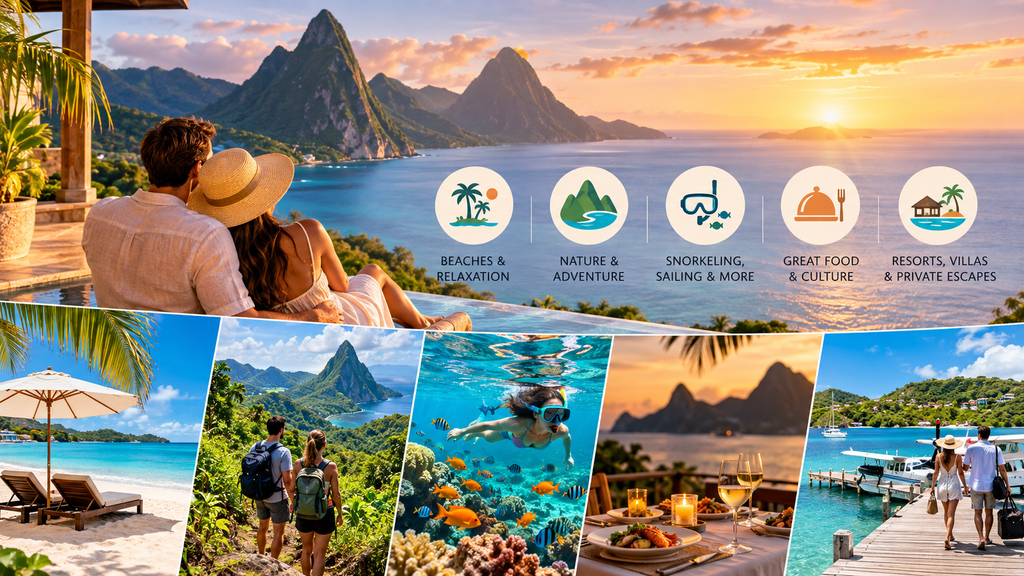
The Caribbean works particularly well for honeymoons because couples can combine relaxation with activities without necessarily changing countries or traveling long distances.
A honeymoon might include a few days by the sea, followed by rainforest hiking, snorkeling, sailing, or a food-focused excursion. The region also offers a wide range of accommodation, from all-inclusive resorts to boutique hotels, plantation-style properties, villas, and private-island retreats.
Another advantage is the variety of island experiences. For example, a couple who wants dramatic scenery may prefer Saint Lucia, while travelers interested in beaches, dining, and a broader choice of activities may look toward Barbados. Couples interested in sailing can consider Antigua or the British Virgin Islands.
For travelers who want more than one destination, regional flights and ferries can make an island-hopping honeymoon possible, but check schedules carefully before booking separate accommodations.
Caribbean Honeymoon Destinations at a Glance
Caribbean honeymoon destinations offer something for every couple, from Saint Lucia’s dramatic Pitons and Antigua’s sailing adventures to Barbados’ vibrant food scene and the Bahamas’ secluded cays. Travelers can choose islands for beaches, privacy, nature, marine activities, culture, or luxurious resorts, depending on their ideal honeymoon style.
| Destination | Particularly suited to | Notable experiences |
|---|---|---|
| Saint Lucia | Adventure and scenery | Pitons, rainforest, sailing, beaches |
| Antigua & Barbuda | Beaches and sailing | Coastal cruises, coves, historic English Harbor |
| Grenada | Nature and food | Grand Anse, rainforest, spices, chocolate |
| Saint Kitts & Nevis | History and relaxed stays | Forts, plantations, beaches, dining |
| Barbados | Food, culture and beaches | Oistins, snorkeling, heritage, dining |
| Bequia | Quiet island escapes | Beaches, sailing, village atmosphere |
| British Virgin Islands | Privacy and yachting | Private islands, snorkeling, yacht charters |
| The Bahamas | Beaches and island-hopping | Exuma Cays, sandbars, boating |
| Aruba | Beach relaxation and activities | Sunsets, sailing, beaches, nightlife |
| Cayman Islands | Beaches and marine activities | Seven Mile Beach, diving, snorkeling |
Saint Lucia: For Mountains, Rainforest and Romance
Saint Lucia is a particularly strong choice for couples who want a honeymoon that combines dramatic scenery, outdoor activities and time at a beach or resort.
The island’s defining landmarks are the Pitons, two volcanic peaks rising above the southwestern coast. The landscape around Soufrière also includes rainforest, waterfalls, volcanic attractions and coastal viewpoints.
The Saint Lucia Tourism Authority highlights the Pitons, Sulfur Springs, beaches, luxury resorts and villas, Creole cuisine, chocolate, and rainforest adventures among the island’s major attractions.
What can couples do in Saint Lucia?
A honeymoon itinerary can include:
- Hiking or guided walks around the Pitons
- Visiting Sulfur Springs
- Snorkeling and diving
- Sailing along the coast
- Exploring rainforest trails
- Visiting botanical gardens and waterfalls
- Enjoying Creole food and local chocolate
- Spending quiet days at a beach resort
Saint Lucia also has a useful balance between active excursions and resort-based relaxation. Couples can spend a morning hiking and return to a spa or private terrace in the afternoon.
The tourism authority actively promotes the island for romance, including ocean-view accommodations, private sailing excursions, and intimate experiences.
Who should choose Saint Lucia?
Saint Lucia is particularly suitable for couples who would find a week of beach lounging too repetitive and want scenery and activities built into the honeymoon.
It is also worth considering for couples who want a boutique or villa-style stay rather than only large all-inclusive properties.
Antigua & Barbuda: Beaches and Sailing
Antigua & Barbuda is a natural fit for honeymooners who prioritize beaches, boating and coastal scenery.
Antigua’s tourism authority promotes the destination’s beaches, secluded coves, beachfront resorts and private boat experiences as part of its romance offering.
Antigua is also strongly connected with sailing. English Harbour and Nelson’s Dockyard provide an interesting change from the beach, combining maritime history with restaurants, waterfront views and sailing activity.
A couple could spend one day relaxing at a beach, another on a sunset sailing excursion and another exploring historic areas around English Harbour.
Why Antigua works for couples
Antigua can suit travelers who want:
- A large choice of beaches
- Sailing and boat excursions
- Beachfront accommodation
- Historic attractions
- Restaurants and evening entertainment
- A relatively straightforward resort holiday
Barbuda, the smaller island within the country, provides a different experience and can be considered for travelers looking for a quieter addition to an Antigua itinerary.
Grenada: Nature, Spices and Local Flavor
Grenada offers a more nature-focused honeymoon, combining beaches with rainforest, waterfalls, spices, chocolate and local food.
Known as the “Spice Isle,” Grenada has a strong agricultural identity. Couples can visit spice-growing areas, explore rainforest landscapes, discover waterfalls or spend time along Grand Anse.
The Grenada Tourism Authority specifically promotes Grand Anse, the Grand Etang Forest Reserve, chocolate and the island’s resorts as attractions for couples.
A Grenada honeymoon can include
- Beach time at Grand Anse
- Rainforest walks
- Waterfall visits
- Chocolate and cocoa experiences
- Local food and rum experiences
- Snorkeling and diving
- Exploring St. George’s
Grenada is particularly appealing for couples who want their honeymoon to feel connected to the destination rather than entirely centered around a resort.
Saint Kitts & Nevis: History and a Slower Pace
Saint Kitts and Nevis is a good option for couples who want beaches alongside history, hiking and smaller-scale island experiences.
The two-island nation has historic fortifications, former sugar estates, volcanic landscapes and beaches. Saint Kitts generally offers more activity and sightseeing, while Nevis is known for a quieter atmosphere.
Couples can divide their time between the islands or choose one as a base.
Experiences for couples
Consider:
- Visiting Brimstone Hill Fortress National Park
- Exploring historic plantation properties
- Hiking around Nevis Peak
- Enjoying beach time
- Taking a boat excursion
- Dining at local restaurants
- Exploring Basseterre or Charlestown
This destination is especially useful for honeymooners who want a little history and sightseeing between relaxed beach days.
Barbados: Food, Beaches and Caribbean Culture
Barbados suits couples who want a honeymoon with beaches, restaurants, nightlife, heritage and water activities rather than a purely secluded resort stay.
The island offers a broad range of experiences. Its western and southern areas offer many popular beaches and tourist facilities, while the east coast has a more rugged Atlantic character.
The Barbados Tourism Marketing organization actively promotes weddings and romance, while its suggested romantic experiences include beaches, dining, and activities around the island.
Don’t make the honeymoon only about the resort
Couples can include:
- A beach day
- Snorkeling or sailing
- A restaurant evening
- Historic Bridgetown
- Local food experiences
- A visit to the east coast
- An evening around Oistins
Barbados can therefore work particularly well for couples who like having plenty of choices outside their hotel.
Bequia and St Vincent & the Grenadines: For a Quieter Escape
Bequia offers a smaller-scale Caribbean experience for couples who want beaches, sailing and a less developed island atmosphere.
Bequia is part of St Vincent and the Grenadines and is considerably smaller in scale than destinations such as Jamaica or Barbados. The island has beaches, a harbor, restaurants and a strong sailing identity.
Couples who enjoy being on the water can also consider exploring other islands in the Grenadines.
The attraction here is not a long list of major tourist attractions. Instead, the honeymoon can revolve around swimming, boating, village walks, relaxed meals and time away from crowded resort areas.
Who is Bequia best suited to?
It can work particularly well for couples who:
- Prefer smaller hotels
- Like sailing
- Want a quieter atmosphere
- Enjoy exploring on foot
- Prefer local restaurants to large resort complexes
- Want to spend more time outdoors
British Virgin Islands: Private Islands and Yacht Honeymoons
The British Virgin Islands are particularly attractive for couples who want privacy, sailing and a honeymoon built around the sea.
The archipelago consists of numerous islands and cays, making it possible to structure a trip around beaches, snorkeling and boating rather than remaining in one resort.
For couples with a larger honeymoon budget, a private-island stay or yacht charter can create a very different experience from a conventional resort vacation.
A yacht itinerary, for example, could allow a couple to wake up in one anchorage, snorkel during the day and reach another island for dinner. The exact route depends on the charter operator, weather and sailing conditions.
Things to consider
Yacht and private-island honeymoons require more planning than standard hotel stays. Couples should check:
- Charter inclusions
- Skipper and crew arrangements
- Meal arrangements
- Fuel and marina costs
- Cancellation terms
- Weather policies
- Transfers to and from the airport
This style of honeymoon is best considered as a specialized travel experience rather than simply a different type of hotel booking.
The Bahamas: Beaches, Cays and Island-Hopping
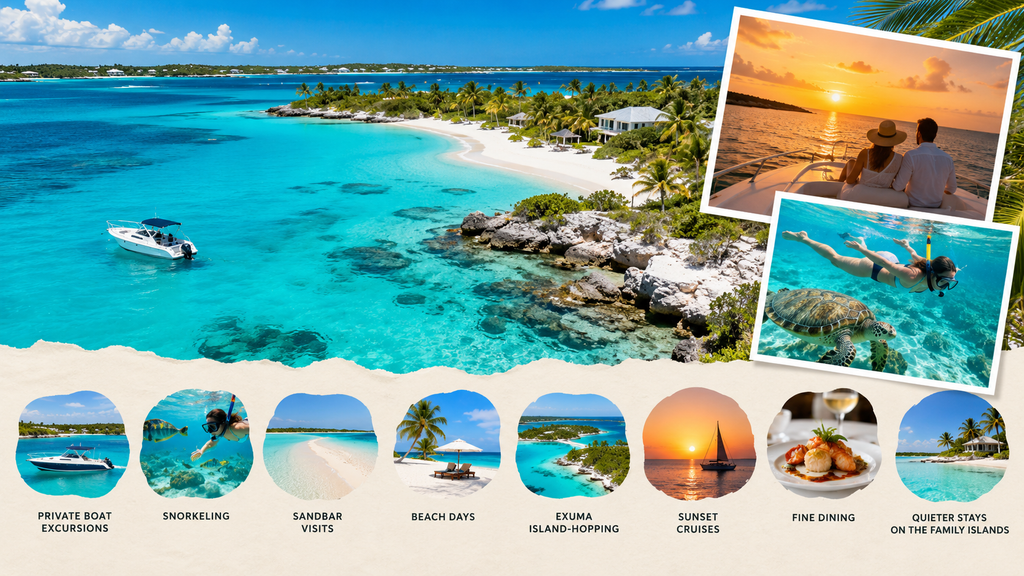
The Bahamas is particularly useful for couples who want to combine beach relaxation with boating, snorkeling and visits to different islands.
The destination consists of numerous islands and cays, each with its own character. Nassau offers a more developed base, while destinations such as Exuma, Eleuthera, and Harbor Island offer different combinations of beaches, boating, and privacy.
The official Bahamas tourism site specifically highlights romance, private sandbars, sunset cruises and island-hopping through the Exuma Cays.
The Bahamas also promotes marrying on one island and honeymooning on another, which can work well for couples extending their stay after a destination wedding.
A Bahamas honeymoon could include:
- A private boat excursion
- Snorkeling
- Sandbar visits
- Beach days
- Exuma island-hopping
- Sunset cruises
- Fine dining
- A quieter stay on one of the Family Islands
Before booking accommodation, couples should decide whether they want a resort-centered stay or a more mobile itinerary.
Aruba: Sun, Beaches and Evening Activities
Aruba suits couples who want beach time combined with sailing, dining, nightlife, and organized romantic activities.
The island’s tourism authority promotes sunset sails, private tours, beach dining, couples’ massages and other experiences aimed at couples.
Aruba can therefore suit honeymooners who want plenty of infrastructure and activities rather than an isolated retreat.
It is also geographically different from many of the islands farther north in the Caribbean and is generally associated with a drier climate. Couples planning a trip around specific dates should still check current weather conditions rather than assuming guaranteed sunshine.
Cayman Islands: Beaches and Marine Life
The Cayman Islands appeal to couples who want polished beach holidays with strong diving, snorkeling and marine experiences.
Grand Cayman is the most developed of the three main islands, while Cayman Brac and Little Cayman offer quieter settings.
Seven Mile Beach is the best-known stretch of coastline, while the smaller islands are particularly associated with diving and nature.
The Cayman Islands’ official tourism website specifically promotes honeymoon experiences around beaches, spa treatments, adventure and romantic dining.
For couples who want to combine a comfortable resort with underwater activities, the Cayman Islands are worth comparing with Aruba, Barbados and the Bahamas.
What Type of Caribbean Honeymoon Is Right for You?
Rather than selecting an island solely because it appears in a list of honeymoon destinations, couples should first decide what they want to do.
| Honeymoon style | Destinations to consider |
| Beach and resort | Antigua, Barbados, Aruba, Bahamas |
| Adventure and scenery | Saint Lucia, Grenada |
| Food and culture | Barbados, Jamaica, Grenada |
| Sailing | Antigua, British Virgin Islands, Bequia |
| Private-island experience | British Virgin Islands, Bahamas |
| Quiet and intimate | Bequia, Nevis, Grenada |
| Marine activities | Cayman Islands, Bahamas, British Virgin Islands |
| Island-hopping | Bahamas, British Virgin Islands, St Vincent and the Grenadines |
These are not rigid categories. A Saint Lucia honeymoon can be luxurious and relaxing, while a Barbados honeymoon can include hiking and adventure. The table is simply a starting point for narrowing down the choices.
All-Inclusive or Boutique Hotel?
The accommodation decision can change the entire feel of a honeymoon.
All-inclusive resorts
An all-inclusive property can simplify budgeting because accommodation, meals and selected activities are bundled into the rate. This is useful for couples who want to spend most of their time at the resort.
However, couples should check exactly what is included. “All-inclusive” does not necessarily mean every excursion, premium drink, spa treatment or motorized watersport is included.
Boutique hotels
Boutique properties can provide a more individual atmosphere and may be better suited to couples who expect to spend substantial time exploring the island.
A boutique hotel may also provide easier access to local restaurants and communities rather than keeping most activities within one resort.
Villas and private accommodations
Villas can be useful for couples who prioritize privacy, space and independent dining. They may make more sense for longer stays or couples who want a private pool or kitchen.
Before booking, check whether housekeeping, airport transfers, meals and other services are included.
What Is the Best Time for a Caribbean Honeymoon?
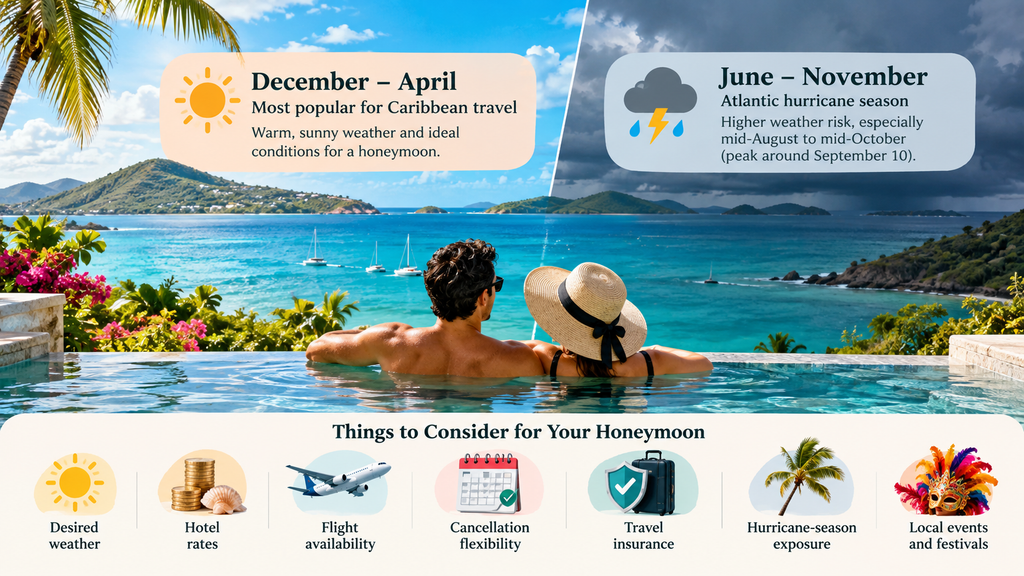
December through April is generally the most popular period for Caribbean travel, while June through November falls within the Atlantic hurricane season and requires more attention to weather risk.
The official Atlantic hurricane season runs from June 1 through November 30. The National Hurricane Center identifies September 10 as the climatological peak of the season, with most activity occurring between mid-August and mid-October.
That does not mean a honeymoon during the June-November period will necessarily be disrupted. Weather varies by island and year, and many travelers deliberately choose shoulder-season dates for potentially lower demand.
For a honeymoon, couples should consider:
- Desired weather
- Hotel rates
- Flight availability
- Cancellation flexibility
- Travel insurance
- Hurricane-season exposure
- Local events and festivals
If the wedding and honeymoon dates are fixed, flexible booking terms and appropriate travel insurance become especially important.
How Long Should a Caribbean Honeymoon Be?
Seven to ten nights is a practical length for many Caribbean honeymoons, although longer trips can make island-hopping more worthwhile.
A seven-night stay can work well for a single-island resort honeymoon. Couples staying for 10–14 nights can consider adding a second island if the flight or ferry connections are convenient.
For example, a couple might spend a week in Barbados followed by several nights in Bequia, or divide a longer trip between Saint Lucia and Grenada.
The key is to avoid an itinerary that turns the honeymoon into a sequence of airport and ferry transfers.
How Much Does a Caribbean Honeymoon Cost?
There is no single reliable price for a Caribbean honeymoon because costs vary widely by island, season, accommodation category, flights, meal plan, and activities.
A couple staying at an upscale all-inclusive resort during a high-demand period will have a very different budget from a couple using a boutique hotel, local restaurants, and independent excursions.
The major cost categories are:
- International flights
- Regional flights or ferries
- Accommodation
- Meals and drinks
- Airport transfers
- Excursions
- Spa treatments
- Water activities
- Travel insurance
- Taxes and resort charges where applicable
When comparing hotels, couples should compare the total trip cost, not just the advertised nightly rate.
For example, a lower room rate may not represent a cheaper honeymoon if meals, airport transfers and several activities have to be purchased separately.
What Should Couples Book Before Leaving?
Some honeymoon experiences are worth arranging in advance, particularly during busy travel periods.
Consider booking ahead:
- Accommodation
- International flights
- Regional flights
- Airport transfers
- Popular boat trips
- Private dining experiences
- Spa appointments
- Car rentals where necessary
Couples should also confirm passport validity, entry requirements, and any destination-specific documentation through official government or tourism sources before departure.
Should a Honeymoon Include More Than One Island?
A multi-island honeymoon can be worthwhile when the islands offer clearly different experiences, and the connections are straightforward.
For example, combining a larger island with a smaller one can provide contrast: a few days of restaurants and activities followed by several quieter nights on a smaller island.
However, two islands are usually easier to manage than three or four. Each additional transfer introduces another flight, ferry, airport journey, or potential weather disruption.
A useful rule is to stay at least three or four nights in each destination unless the transfer itself is part of the experience, such as a yacht-based itinerary.
Caribbean Honeymoon Planning Checklist
Before making the final booking, couples should confirm:
- Island: Does it match the preferred honeymoon style?
- Location: Is the hotel near the beaches and activities that matter most?
- Room: Does it include the view, balcony, plunge pool or privacy expected?
- Meal plan: Are meals and drinks included?
- Transfers: How long does it take to reach the accommodation from the airport?
- Activities: Are preferred excursions available during the travel dates?
- Weather: What are the seasonal conditions?
- Cancellation: What happens if flights or weather disrupt the trip?
- Documents: Are passports and entry requirements in order?
- Budget: What will the complete trip cost beyond the room rate?
Conclusion
A Caribbean honeymoon does not have to follow one formula. Saint Lucia offers dramatic landscapes and adventure, Antigua emphasizes beaches and sailing, Grenada brings nature and local flavors, Barbados combines beaches with food and culture, the Bahamas provides island-hopping and marine experiences, while the British Virgin Islands offer sailing and private-island possibilities.
The most useful starting point is to decide how the couple wants to spend most of the trip—at a resort, on the water, hiking, dining, exploring local communities, or moving between islands. From there, compare the island’s accommodation, airport connections, seasonal weather, and total costs before booking.
Frequently Asked Questions
Saint Lucia is particularly well suited to couples who want hiking, rainforest, volcanic landscapes, sailing, and beach time in one trip. Grenada is another option for couples interested in nature and outdoor activities.
The British Virgin Islands, smaller islands in the Grenadines, parts of the Bahamas, and some boutique areas of Antigua can suit couples prioritizing privacy. Accommodation type matters as much as the island itself.
It can be, especially for couples who want predictable meal and accommodation costs and plan to spend a lot of time at the property. Couples who want to explore local restaurants and attractions may prefer a boutique hotel or another flexible accommodation style.
Safety conditions vary by destination and can change. Couples should review current government travel advice, follow local guidance, and use normal precautions regarding valuables, transportation, and nighttime travel.
Yes, but June 1 through November 30 is the official Atlantic hurricane season. Couples traveling during this period should monitor forecasts, understand accommodation and airline change policies, and consider appropriate travel insurance.
Seven nights can work very well for a single-island honeymoon. Couples planning island-hopping will generally benefit from a longer stay so transportation doesn’t take up a large part of the trip.
Yes. Depending on flight schedules, couples can combine a Caribbean island with destinations in North America or Latin America. The practicality depends on international flight connections and the total length of the honeymoon.