
What Should Travelers Know Before Visiting the Great Wall?
The Great Wall of China is a historic network of defensive fortifications extending across northern China. Stretching over 21,000 kilometers, it attracts travelers with its mountain landscapes, ancient watchtowers, architectural heritage, and remarkable hiking opportunities.
Visitors can explore restored sections such as Badaling and Mutianyu or discover more rugged landscapes at Jinshanling. Choosing the right section, season, and transportation option can significantly improve the travel experience.
The History Behind the Great Wall of China
The Great Wall was constructed over several centuries by successive Chinese dynasties to protect northern territories against invasions. Emperor Qin Shi Huang connected earlier fortifications into a unified defensive network in the third century BC.
Most recognizable sections near Beijing were constructed or reinforced during the Ming dynasty. Watchtowers, military shelters, fortresses, and signaling stations formed an extensive border protection system.
Today, the Great Wall is a UNESCO World Heritage Site and one of China’s most significant cultural landmarks.
Great Wall of China: Quick Travel Information
| Travel information | Details |
|---|---|
| Location | Northern China |
| Total length | Approximately 21,196 km |
| Main gateway city | Beijing |
| Popular sections | Badaling, Mutianyu, Jinshanling and Simatai |
| Best visiting seasons | Spring and autumn |
| Suggested visit duration | Half-day to full-day |
| Entry requirements | Section-specific admission tickets |
| Main activities | Hiking, sightseeing and photography |
| Transportation | Trains, tourist buses and private transfers |
Which Section of the Great Wall Is Best to Visit?
Each section offers a different combination of historical architecture, natural scenery, accessibility, and hiking difficulty.
| Great Wall section | Best for | Difficulty |
|---|---|---|
| Badaling | First-time visitors and convenient transportation | Easy to moderate |
| Mutianyu | Families and scenic sightseeing | Easy to moderate |
| Jinshanling | Hiking and landscape photography | Moderate to challenging |
| Simatai | Night tours and traditional architecture | Moderate to challenging |
| Huanghuacheng | Lakeside scenery | Moderate |
| Shanhaiguan | Coastal landscapes and historical exploration | Easy to moderate |
Mutianyu offers a good balance between visitor facilities and mountain scenery, while Jinshanling is better suited to travelers seeking longer hiking experiences.
Check Out Our Blog: Air China Domestic Economy: Seats, Meals, and Booking
Best Time to Visit the Great Wall of China
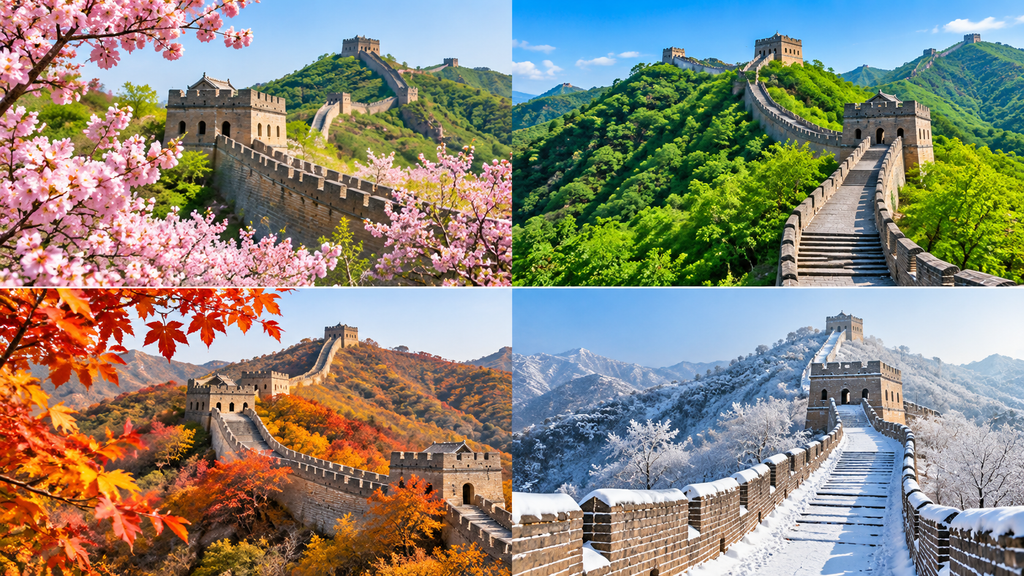
April, May, September, and October generally offer comfortable temperatures and favorable sightseeing conditions.
| Season | Travel experience |
|---|---|
| Spring (March–May) | Pleasant weather and flowering landscapes |
| Summer (June–August) | Green mountains, higher temperatures and larger crowds |
| Autumn (September–November) | Colorful foliage and comfortable hiking conditions |
| Winter (December–February) | Snow-covered landscapes and fewer visitors |
Travelers should avoid major Chinese public holidays when possible, particularly the May Day and National Day holiday periods.
How to Reach the Great Wall of China
Beijing serves as the primary gateway for international travelers visiting the most popular Great Wall sections.
Nearest Airports
| Airport | Airport code |
|---|---|
| Beijing Capital International Airport | PEK |
| Beijing Daxing International Airport | PKX |
Air China, China Eastern Airlines, Emirates, Qatar Airways, and other international carriers offer Beijing flights on selected routes.
Transportation From Beijing
| Great Wall section | Transportation options |
|---|---|
| Badaling | High-speed train, bus or private car |
| Mutianyu | Tourist shuttle, organized tour or private transfer |
| Jinshanling | Tourist bus, guided tour or private car |
| Simatai | Tourist bus or private transfer |
| Huanghuacheng | Road transportation or organized tour |
Travelers should confirm return transportation arrangements before visiting remote sections.
Things to Do at the Great Wall of China
The Great Wall offers several experiences beyond traditional sightseeing:
- Explore centuries-old watchtowers and defensive structures.
- Take a cable car ride at Mutianyu or Badaling.
- Hike along the publicly accessible sections of Jinshanling.
- Experience illuminated evening views at Simatai when available.
- Photograph mountain ridges and panoramic landscapes.
- Explore nearby villages and traditional Chinese cuisine.
Where to Stay When Visiting the Great Wall
Central Beijing is a convenient accommodation base for travelers planning a day trip to the Great Wall.
Guesthouses near Jinshanling and accommodations around Gubei Water Town provide opportunities for overnight stays. These options are particularly suitable for visitors interested in quieter surroundings, early-morning photography, and extended sightseeing.
Essential Travel Tips for Visiting the Great Wall
- Wear comfortable shoes with good grip.
- Carry sufficient drinking water, snacks, and sunscreen.
- Reserve admission and transportation in advance during peak seasons.
- Check weather forecasts before departure.
- Carry a passport for identity verification where required.
- Avoid closed, unstable, or unauthorized sections of the wall.
- Respect historical structures and avoid removing stones or bricks.
Frequently Asked Questions
The Great Wall extends approximately 21,196 kilometers, including defensive structures constructed during different historical periods.
Mutianyu and Badaling are excellent choices because of their restored pathways, visitor facilities, and convenient access from Beijing.
Most officially managed tourist sections require admission tickets. Cable cars, shuttle buses, and other facilities may involve additional charges.
A half-day is generally sufficient for Badaling or Mutianyu, while Jinshanling may require a full-day excursion, including transportation.
Yes. Popular restored sections can be explored independently, while guided tours can be helpful for more challenging, officially accessible hiking routes.