
Where Can Travelers Experience Europe’s Christmas Magic?
Europe’s best Christmas markets can be found in Vienna, Dresden, Strasbourg, Budapest, Colmar, Basel, and several other historic cities known for festive shopping, traditional food, and seasonal entertainment. These markets transform city squares into lively holiday destinations filled with decorated wooden stalls, illuminated streets, and local Christmas traditions.
For travelers planning a European winter vacation, choosing the right Christmas market depends on the preferred atmosphere, budget, weather, and activities. Some destinations are ideal for families, while others offer historic architecture, traditional crafts, or quieter festive experiences.
Read the Full Guide: Which European Destinations Should Travelers Visit First?
Which Christmas Markets in Europe Are Worth Visiting?
Europe offers Christmas markets ranging from centuries-old German celebrations to Alpine festivals and colorful markets in smaller historic towns.
| Destination | Main Christmas market location | Best for |
|---|---|---|
| Vienna, Austria | Rathausplatz | Grand architecture and festive entertainment |
| Dresden, Germany | Altmarkt | Traditional German Christmas crafts |
| Strasbourg, France | Place Broglie and cathedral area | Historic Alsatian Christmas atmosphere |
| Budapest, Hungary | St. Stephen’s Basilica | Illuminations and festive food |
| Colmar, France | Historic Old Town | Romantic streets and smaller markets |
| Basel, Switzerland | Barfüsserplatz and Münsterplatz | Swiss crafts and seasonal treats |
| Wrocław, Poland | Market Square | Family-friendly entertainment |
| Zagreb, Croatia | City center | Advent celebrations and skating |
| Trento, Italy | Piazza Fiera | Alpine traditions and local food |
| Tallinn, Estonia | Town Hall Square | Medieval setting and winter scenery |
Why Is Vienna One of Europe’s Best Christmas Market Destinations?
Vienna is known for its grand Christmas markets, particularly the Vienna Christmas Market at Rathausplatz, where decorated stalls stand in front of the impressive City Hall.
Visitors can explore seasonal gift stalls, sample Austrian pastries, and enjoy festive attractions. Other markets, including those near Schönbrunn Palace and Belvedere Palace, offer different architectural settings.
Best experiences: Traditional ornaments, roasted chestnuts, seasonal pastries, and illuminated historic buildings.
Suggested airlines: Austrian Airlines and Lufthansa.
What Makes Dresden’s Christmas Market Special?
Dresden’s Striezelmarkt is one of Germany’s oldest Christmas markets, with a history dating back to 1434.
Held at Altmarkt, the market is particularly famous for its traditional wooden crafts, Christmas pyramids, festive decorations, and Dresden Christstollen, a rich fruit bread associated with the city.
Families can enjoy the traditional atmosphere while exploring nearby historic landmarks.
Best experiences: Wooden toys, handcrafted ornaments, Christmas pyramids, and authentic German seasonal food.
Suggested airlines: Lufthansa and Eurowings, depending on available routes.
Why Should Travelers Visit Strasbourg at Christmas?
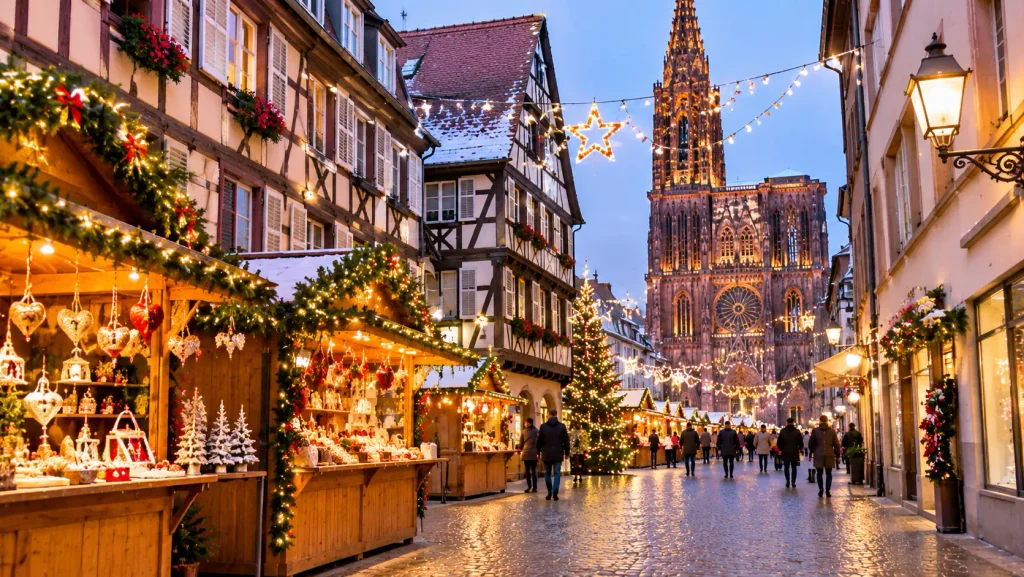
Strasbourg is among Europe’s most recognizable Christmas destinations, with markets spread across its historic center.
The city’s half-timbered buildings, decorated streets, and cathedral create a distinctive Alsatian holiday setting. Its traditional Christkindelsmärik is particularly well known.
Visitors can combine Christmas shopping with sightseeing in Petite France and the cathedral district.
Best experiences: Alsatian decorations, bredele Christmas biscuits, gingerbread, and traditional artisan gifts.
Suggested airlines: Air France and Lufthansa, depending on the itinerary.
Is Budapest a Good Destination for Christmas Markets?
Budapest offers an attractive combination of festive markets, historic architecture, and winter sightseeing.
The Advent market near St. Stephen’s Basilica is known for its illuminated setting, seasonal food stalls, and family-friendly attractions. Vörösmarty Square provides another popular market location.
Travelers can also explore the city’s thermal baths and Danube riverfront during their visit.
Best experiences: Hungarian chimney cake, traditional foods, light displays, and winter sightseeing.
Suggested airlines: Wizz Air and Lufthansa.
What Makes Colmar’s Christmas Markets Different?
Colmar offers a more intimate Christmas market experience than many large European capitals.
Several smaller markets are located throughout the town’s historic center, surrounded by colorful half-timbered houses, decorated streets, and picturesque canals.
The compact setting makes it possible to explore different market areas on foot.
Best experiences: Alsatian crafts, festive decorations, local specialties, and photography in the Old Town.
Suggested airlines: Air France and easyJet for nearby airport connections, subject to route availability.
Why Is Basel Popular for Christmas Market Shopping?
Basel is a popular Swiss Christmas destination, particularly for travelers interested in handmade gifts and traditional seasonal food.
Its main markets at Barfüsserplatz and Münsterplatz feature decorated stalls offering artisan products, Christmas decorations, and regional specialties.
The city’s historic streets and riverside setting add to the winter atmosphere.
Best experiences: Swiss raclette, Basler Läckerli, handcrafted ornaments, and historic architecture.
Suggested airlines: SWISS and easyJet, depending on the departure city.
Which Lesser-Known European Christmas Markets Are Worth Exploring?
Travelers looking beyond Europe’s most famous Christmas destinations can consider several smaller or less internationally prominent markets.
| Destination | What makes it distinctive |
|---|---|
| Wrocław, Poland | Colorful Market Square and festive family attractions |
| Trento, Italy | Alpine scenery and traditional regional food |
| Zagreb, Croatia | Citywide Advent activities and seasonal entertainment |
| Antwerp, Belgium | Historic squares and Belgian holiday treats |
| Tallinn, Estonia | Medieval architecture and traditional wooden stalls |
| Alberobello, Italy | Christmas decorations among distinctive trulli houses |
| Stockholm, Sweden | Traditional Swedish celebrations at Skansen |
These destinations can offer a different cultural experience, although popular dates may still attract significant crowds.
When Do Christmas Markets in Europe Usually Open?
Most European Christmas markets open in mid-to-late November and continue through December. Some close on Christmas Eve, while others remain open until the end of December or early January.
| Period | What travelers can expect |
|---|---|
| Mid-November | Selected early-opening markets |
| Late November | Many major Christmas markets begin |
| Early December | Most markets operating |
| Mid-December | Popular period for festive activities |
| December 24–26 | Some markets close or operate reduced hours |
| Late December–early January | Selected markets remain open |
Exact opening dates vary by destination and season. Travelers should confirm the official operating calendar before arranging flights and accommodation.
Related: Europe’s Best Christmas Markets for a Festive 2026 Trip
What Can Travelers Buy at European Christmas Markets?
European Christmas markets are popular for traditional handcrafted gifts, regional food products, and seasonal decorations.
Common purchases include:
- Hand-painted Christmas ornaments and glass decorations.
- Wooden nutcrackers and traditional Christmas pyramids.
- Handmade candles and beeswax products.
- Wool scarves, gloves, and winter accessories.
- Local chocolates, biscuits, and gingerbread.
- Traditional ceramics and handcrafted jewelry.
- Advent calendars and decorative candle arches.
Germany and Austria are particularly associated with wooden Christmas decorations, while French, Swiss, and Italian markets feature distinctive regional products.
Which Foods Should Travelers Try at European Christmas Markets?
Christmas markets offer regional dishes that are an important part of the holiday experience.
| Food or drink | Popular destinations |
|---|---|
| Lebkuchen (gingerbread) | Germany and Austria |
| Stollen (fruit bread) | Dresden, Germany |
| Glühwein (mulled wine) | Germany and Austria |
| Trdelník (chimney-style pastry) | Czech Republic and nearby destinations |
| Kartoffelpuffer (potato pancakes) | Germany |
| Raclette | Switzerland |
| Pierogi | Poland |
| Kürtőskalács (chimney cake) | Hungary |
| Vanillekipferl (vanilla crescent biscuits) | Austria |
Travelers with dietary restrictions should check ingredients, particularly in dishes containing dairy, nuts, meat, or alcohol.
Which European Christmas Markets Are Best for Families?
Vienna, Wrocław, Budapest, and Zagreb are appealing destinations for families because their seasonal celebrations may include entertainment beyond shopping.
Depending on the market and season, visitors may find ice-skating rinks, carousels, children’s workshops, seasonal performances, and festive light displays.
Families should check attraction availability, operating hours, and age restrictions before visiting.
How Can Travelers Visit European Christmas Markets on a Budget?
Travelers can reduce holiday expenses by booking transportation early, comparing accommodation outside central market districts, and visiting during weekdays.
Practical ways to save include:
- Compare flights to nearby airports rather than choosing only the closest airport.
- Visit during late November or early December when suitable.
- Use public transportation between airports, hotels, and market locations.
- Explore free-entry markets before purchasing optional attractions.
- Set a daily budget for food, gifts, and entertainment.
- Consider smaller destinations instead of staying exclusively in major capitals.
- Compare train connections when visiting multiple cities.
Many Christmas markets offer free general admission, although food, shopping, and activities cost extra.
What Should Travelers Wear to European Christmas Markets?
Travelers should wear warm layers, comfortable waterproof footwear, and weather-appropriate outerwear when visiting outdoor Christmas markets.
Winter conditions differ across Europe. Cities such as Tallinn and Stockholm may experience freezing temperatures and snow, while destinations in southern Europe can be milder.
Gloves, scarves, warm socks, and water-resistant jackets can make evening visits more comfortable.
Frequently Asked Questions
Germany is especially famous for its traditional Christmas markets, including Dresden and Nuremberg. Austria, France, Switzerland, and Poland also offer memorable festive destinations.
Strasbourg’s Christkindelsmärik, Vienna’s Rathausplatz market, and Dresden’s Striezelmarkt are among Europe’s best-known Christmas markets.
Many Christmas markets have free general admission. Visitors typically pay separately for food, drinks, gifts, and selected entertainment.
December is generally the best month for experiencing fully operating markets, while late November can be suitable for travelers hoping to avoid some peak-season crowds.
Costs vary by city. Major destinations can have higher accommodation and dining prices, while smaller cities may offer more affordable options.
Yes. Travelers can combine destinations such as Strasbourg, Colmar, and Basel or Vienna and Budapest using rail and other ground transportation.
Some do, but many traditional markets close on or before December 24. Visitors should confirm individual market dates.