
Panama Weather Guide: Find the Right Month for Your Vacation
January through March is generally the best time to visit Panama if you want the driest weather, particularly around Panama City and the Pacific coast. December and April can also work well, though they are transition months and conditions vary. If fewer visitors and lush landscapes appeal more than reliably sunny days, the rainy season is worth considering. The right dates depend on where you are going: Bocas del Toro and other Caribbean areas can receive rain even when the Pacific side is relatively dry.
Panama’s Seasons at a Glance
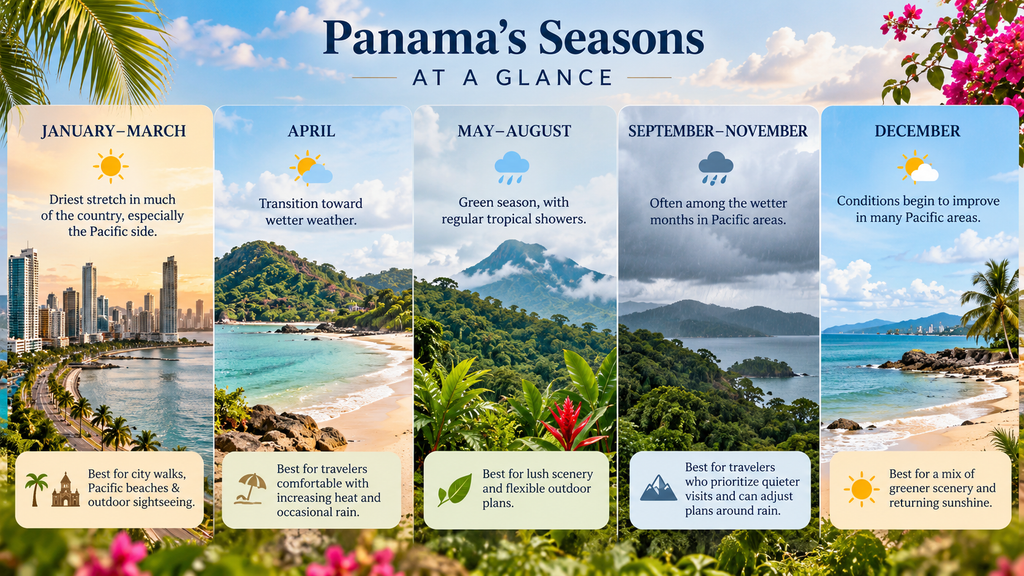
These are broad patterns, not a forecast for every destination. Panama’s Caribbean coast receives substantial rain throughout the year, and local conditions can differ from one side of the country to the other.
| Period | Typical conditions | Best suited to |
| January–March | Driest stretch in much of the country, especially the Pacific side | City walks, Pacific beaches, and outdoor sightseeing |
| April | Transition toward wetter weather | Travelers comfortable with increasing heat and occasional rain |
| May–August | Green season, with regular tropical showers | Lush scenery and flexible outdoor plans |
| September–November | Often among the wetter months in Pacific areas | Travelers who prioritize quieter visits and can adjust plans around rain |
| December | Conditions begin to improve in many Pacific areas | A mix of greener scenery and returning sunshine |
When Is Panama’s Dry Season?
Panama’s dry season generally runs from December into April, with January through March offering the most dependable stretch for a trip centered on Panama City or the Pacific coast. Clearer weather makes it easier to plan walking tours, beach time, and boat excursions without building every day around a likely shower. December and April sit near the seasonal change, so they may bring a mixture of dry and wet conditions.
This is also a popular time to travel. If your dates fall around a major holiday or you want a particular hotel or guided excursion, booking ahead is sensible. The dry season does not mean that every part of Panama will be rain-free: the Caribbean coast follows a less pronounced seasonal pattern.
What Is Panama Like From May to August?
From May onward, rain becomes a more regular part of travel in many areas. A shower may interrupt an afternoon without taking up the entire day, but the length and intensity of rainfall vary. The reward is greener scenery, particularly appealing if rainforests and inland landscapes are central to your trip.
Plan activities that depend on clear weather for times when conditions look favorable, and keep an indoor or flexible option available. For example, you could leave room to move a boat trip if the operator advises that conditions are unsuitable. Check the weather locally as your travel day approaches rather than relying only on a countrywide seasonal label.
Is September to November a Good Time to Visit Panama?
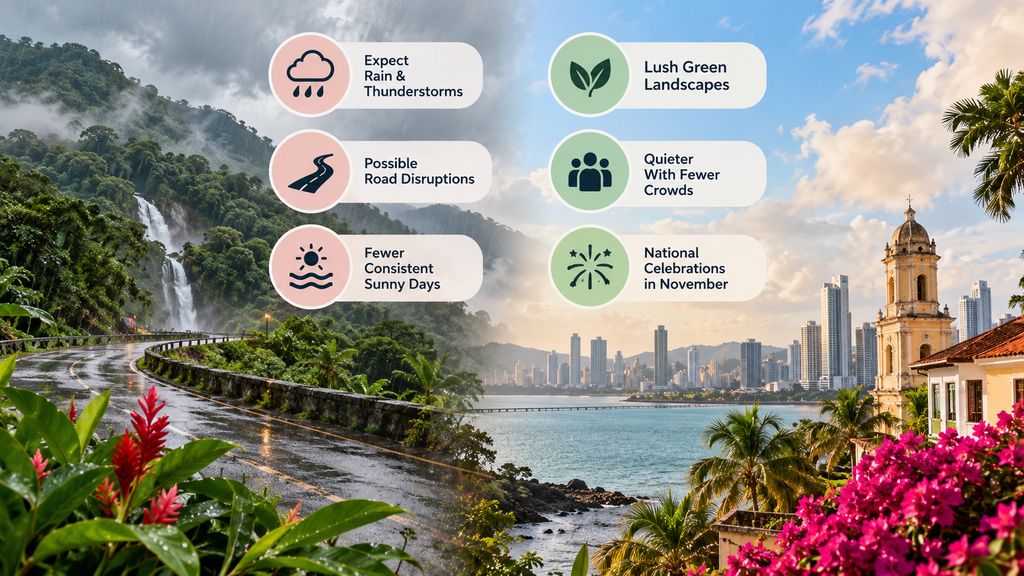
September through November can be a good choice if you are comfortable with rain and want a more flexible trip. It is a less suitable period if your plans depend on several consecutive sunny beach days or lengthy drives on rural roads. The reference guide describes these months as quiet for visitors but warns that strong thunderstorms can affect travel conditions. U.S. State Department guidance also notes that heavy rain can wash out roads or block streets, particularly in western Panama during the rainy season.
The advantage is a greener landscape and a chance to experience Panama during a different part of its annual cycle. November also brings national celebrations. If you travel then, allow extra time between destinations and check transport conditions shortly before setting out.
Does the Best Time Change by Destination?
Yes. The best time to visit Panama depends on which regions you plan to explore. Panama City and the Pacific coast have a more distinct dry season, while Bocas del Toro can receive rain throughout the year. Boquete’s higher elevation also brings cooler conditions than the lowlands. A month that works well for city sightseeing may therefore be less predictable for a Caribbean beach trip. Compare the weather for each stop on your itinerary before choosing your dates.
Panama City and the Pacific Coast
For sightseeing in Panama City and planning Pacific coast excursions, January through March is the easiest weather choice. The city’s rainy period broadly falls between April and November, although individual days can still be pleasant.
Bocas del Toro and the Caribbean Coast
Do not assume that Panama City’s driest months will bring the same weather to Bocas del Toro. The Caribbean side receives rain year-round, and sunshine, showers, wind, and sea conditions can change quickly. Choose dates with your intended activity in mind and check local guidance for snorkeling, surfing, or boat trips.
Boquete and the Highlands
If you plan to spend time in Boquete or other highland areas, pack for cooler conditions than you would expect on the coast and prepare for showers. Elevation changes Panama’s temperatures, so a light layer and rain protection are useful even if most of your itinerary is in warm lowlands.
How to Choose Your Travel Dates
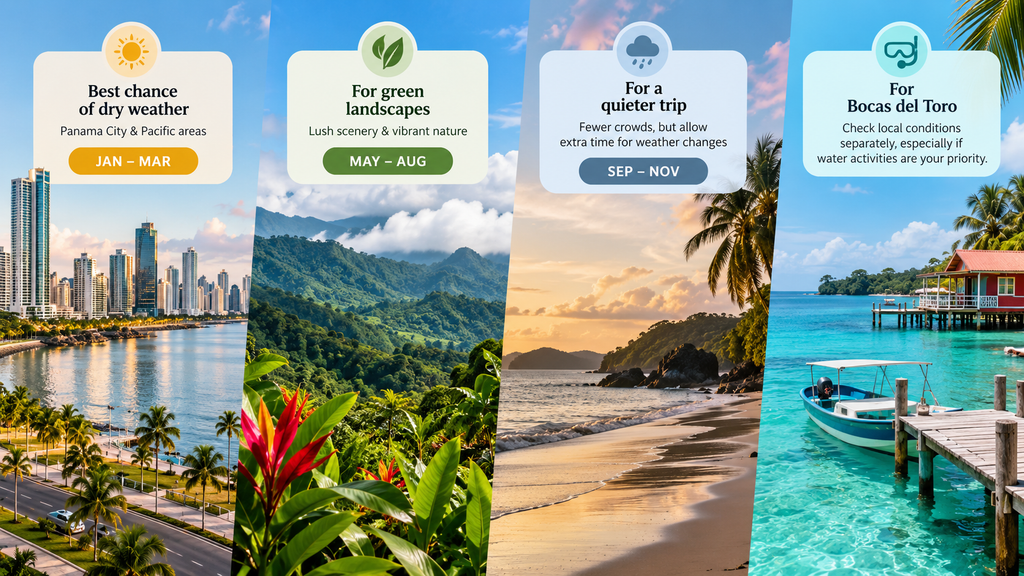
Start with the part of the trip you least want the weather to disrupt:
- For the best chance of dry weather in Panama City and Pacific areas: choose January, February, or March.
- For green landscapes: consider May through August and leave flexibility for showers.
- For a quieter trip in September through November: build in extra time for weather-related changes.
- For Bocas del Toro: assess its local conditions separately from the Pacific coast, especially if water activities are your priority.
Final Takeaway
For a first visit covering Panama City and Pacific destinations, January through March offers the simplest weather planning. September through November calls for more flexibility, but it can suit travelers drawn to green scenery and a quieter pace. Before booking, compare conditions for each stop on your itinerary—especially if it includes both coasts.
Frequently Asked Questions
There is no single driest month for every part of the country. January through March is the most dependable dry-weather window for Panama City and much of the Pacific side, while Caribbean destinations have a different rainfall pattern.
Yes, if your itinerary can accommodate showers. Rainy-season travel can be rewarding for people interested in green landscapes and a less crowded experience, but weather-sensitive excursions need flexibility.
November is a wetter month in many areas, so it is a riskier choice for a tightly scheduled outdoor trip. It can still appeal to visitors who want lush scenery and national celebrations. Check road and activity conditions near your travel dates.
No. Panama City follows a clearer dry and rainy season, while the Caribbean coast around Bocas del Toro receives substantial rainfall throughout the year.