
Best Time to Visit Vietnam – Temperature, Weather, Seasons & Monthly Guide
Vietnam is a year-round travel destination, but the best time to visit Vietnam depends largely on where you plan to go. Because the country stretches from north to south, its climate changes considerably between regions. Northern Vietnam can experience cool winters, Central Vietnam has its own rainy and dry periods, while Southern Vietnam remains warm throughout the year.
For travelers planning their first trip, March to May is generally considered one of the best periods to visit Vietnam, as the weather is favorable across much of the country. However, different destinations have different ideal travel windows.
Whether you want to cruise through Ha Long Bay, explore Hanoi’s Old Quarter, walk through Hoi An, relax on Da Nang’s beaches, trek in Sapa, or discover the Mekong Delta, understanding Vietnam’s weather and seasons can help you choose the right time for your trip.

Best Time to Visit Vietnam at a Glance
| Travel Factor | Best Time / Period |
|---|---|
| Best overall time to visit Vietnam | March to May |
| Best months for Northern Vietnam | April–June and September–November |
| Best time for Hanoi | April–June and September–December |
| Best time for Ha Long Bay | April–June and September–November |
| Best time for Sapa | April–May and September–October |
| Best time for Central Vietnam | February–August, depending on destination |
| Best time for Hoi An | February–August |
| Best time for Da Nang | March–May and September–October |
| Best time for Southern Vietnam | December–April |
| Best time for Ho Chi Minh City | December–April |
| Best time for Mekong Delta | November–April |
| Best time for Phu Quoc | October–June |
| Vietnam dry season | Varies by region |
| Vietnam rainy season | Varies by region |
| Coolest region | Northern mountains |
| Warmest conditions | Southern and some Central Vietnam destinations |
Vietnam Tourism notes that March through May offers some of the most favorable countrywide weather, although there is no single month that is perfect for every destination.
Vietnam Weather and Climate
Vietnam has a diverse climate because of its long north-to-south geography. Instead of having one uniform weather pattern, the country can broadly be divided into Northern Vietnam, Central Vietnam, and Southern Vietnam.
| Region | General Climate | Typical Weather Pattern |
|---|---|---|
| Northern Vietnam | Subtropical | Cool winters, hot summers, seasonal rainfall |
| Central Vietnam | Tropical/monsoonal | Hot, sunny periods and a distinct rainy season |
| Southern Vietnam | Tropical | Warm year-round with dry and wet seasons |
| Mountain regions | Cooler | Lower temperatures, especially during winter |
| Coastal areas | Warm and humid | Influenced by sea breezes and monsoon patterns |
This regional variation means that the best time to travel to Vietnam depends on your itinerary rather than simply choosing one month for the entire country.
Vietnam Seasons: When Should You Visit?
Vietnam can broadly be understood through four seasonal periods, although the timing and intensity vary by region.
| Season | Months | General Conditions | Best For |
|---|---|---|---|
| Spring | March–May | Warm, increasingly sunny | Nationwide travel |
| Summer | June–August | Hot, humid, rainy in many areas | Central beaches, selected northern destinations |
| Autumn | September–November | Cooler in the north; variable rainfall elsewhere | Hanoi, Sapa, northern Vietnam |
| Winter | December–February | Cool north; warm and dry south | Southern Vietnam, city trips |
March to May – Best Overall Time to Visit Vietnam
If you want to explore several regions during the same trip, March to May is one of the most convenient periods to visit Vietnam.
Northern destinations begin moving toward warmer and sunnier conditions, Central Vietnam generally offers favorable conditions, and Southern Vietnam is still within its drier period.
Vietnam Tourism specifically identifies March to May as a favorable period for weather across the country.
Why Visit Vietnam Between March and May?
- Pleasant conditions in many destinations
- Good period for sightseeing
- Favorable conditions in Central Vietnam
- Good opportunities for outdoor activities
- Increasingly sunny weather in northern areas
- Dry-season conditions in much of southern Vietnam
Temperature During March–May
Temperatures vary significantly by destination. Northern cities become warmer, Central Vietnam can become hot, while Southern Vietnam generally remains around the warm tropical range.
For travelers planning a multi-city itinerary, this period offers a useful balance between regional weather patterns.
Vietnam Weather by Region
Northern Vietnam Weather
Northern Vietnam includes destinations such as:
- Hanoi
- Ha Long Bay
- Sapa
- Ninh Binh
- Ha Giang
The north experiences greater seasonal variation than southern Vietnam.
| Period | Northern Vietnam Weather |
|---|---|
| December–March | Cool to cold, misty and sometimes cloudy |
| April–June | Warm to hot with increasing sunshine |
| June–August | Hot, humid and rainy |
| September–November | Cooler, clearer and generally pleasant |
Vietnam Tourism describes Hanoi’s late-year period as cooler and sunnier, while June through August can be particularly hot, humid and rainy.
Hanoi Weather
Hanoi is one of Vietnam’s most popular cultural destinations and can be visited throughout the year.
However, April–June and September–December are highlighted by Vietnam Tourism as favorable periods for visiting Hanoi. September to November can bring cooler temperatures and clearer conditions compared with the summer months.
| Months | Hanoi Conditions |
|---|---|
| January–March | Cool, cloudy and sometimes misty |
| April–May | Warm and increasingly sunny |
| June–August | Hot, humid and rainy |
| September–November | Cooler and generally pleasant |
| December | Cool and sometimes misty |
Best Time to Visit Hanoi
For comfortable sightseeing, September to November is particularly attractive for travelers who prefer cooler weather, while April to May can also provide favorable conditions.

Best Time to Visit Ha Long Bay
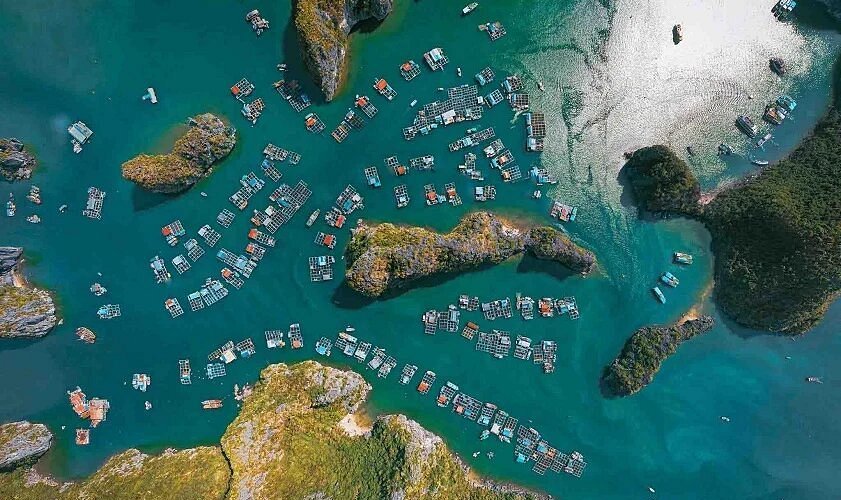
Ha Long Bay is famous for its limestone islands, cruises and spectacular coastal scenery.
The most favorable periods are generally April to June and September to November.
| Period | Ha Long Bay Weather |
|---|---|
| December–March | Cool, misty and cloudy |
| April–June | Warm, sunny and clearer |
| July–August | Hot, humid and stormier |
| September–November | Warm to cool with improving conditions |
During the wetter and stormier periods, weather conditions can occasionally affect cruise schedules, so travelers should check forecasts before departure.
Best Time to Visit Sapa
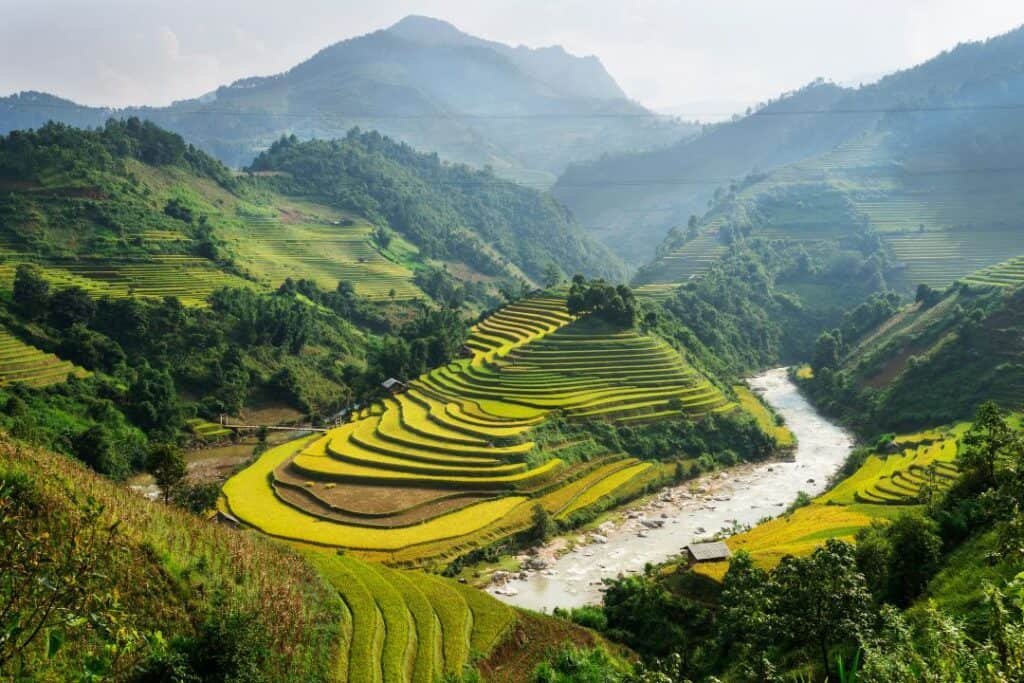
Sapa is located in northern Vietnam’s mountainous region and has a cooler climate than many other parts of the country.
| Period | Sapa Conditions |
|---|---|
| December–March | Chilly, misty and cloudy |
| April–June | Warm and relatively clear |
| June–August | Warm, humid and stormy |
| September–November | Cooler and generally drier |
Late April can be attractive for clear mountain scenery, while September and early October are notable for the region’s rice terraces and harvest landscapes.
Central Vietnam Weather
Central Vietnam includes:
- Da Nang
- Hoi An
- Hue
- Nha Trang
- Phong Nha
- Quy Nhon
The region can have substantial differences between coastal destinations and inland areas.
| Period | Central Vietnam |
|---|---|
| February–April | Generally warm and increasingly sunny |
| May–August | Hot and often suitable for beaches |
| September–November | Increasing rainfall in several areas |
| December–January | Cooler and wetter in some destinations |
Vietnam Tourism identifies February–August as a favorable period for North Central Vietnam, while Hoi An generally has warmer, sunnier conditions from February through August.
Best Time to Visit Hoi An
Hoi An is one of Vietnam’s most popular destinations for travelers interested in heritage, food, architecture and nearby beaches.

| Months | Hoi An Weather |
|---|---|
| January | Cool and potentially wet |
| February–April | Warm and generally sunny |
| May–August | Hot and suitable for beach activities |
| September–November | Rainier with possible flooding |
| December | Cooler and wet |
March is an especially appealing month for Hoi An, according to Vietnam Tourism’s monthly travel guide.
Best Time to Visit Da Nang
Da Nang combines beaches, mountains, food and easy access to Hoi An and other Central Vietnamese attractions.
Vietnam Tourism lists March–May and September–October as favorable periods, while June–August can also provide relatively dry conditions and calm seas.

| Period | Da Nang Weather |
|---|---|
| January–February | Mild to warm; some rain |
| March–May | Warm and generally favorable |
| June–August | Hot, relatively dry and beach-friendly |
| September–October | Warm with variable rainfall |
| November–December | Wetter |
Southern Vietnam Weather
Southern Vietnam includes:
- Ho Chi Minh City
- Mekong Delta
- Phu Quoc
- Can Tho
- Con Dao
Unlike northern Vietnam, southern Vietnam generally remains warm throughout the year.
| Period | Southern Vietnam Weather |
|---|---|
| December–April | Hot and relatively dry |
| May–November | Hot, humid and wetter |
| December–February | Often more comfortable for sightseeing |
| June–August | Hot with frequent rainfall |
Ho Chi Minh City and the Mekong Delta generally have their clearer, drier period from December to April, while May to November is wetter.
Best Time to Visit Ho Chi Minh City
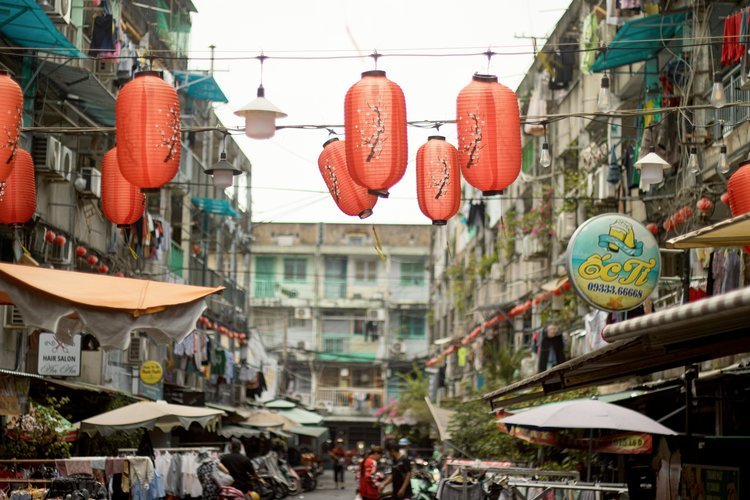
Ho Chi Minh City is a year-round destination, but travelers who prefer drier conditions may want to consider December through April.
| Months | Ho Chi Minh City Weather |
|---|---|
| December–February | Warm and relatively dry |
| March–April | Hot and dry |
| May–November | Hot, humid and rainy |
Rain during the wet season can often arrive as heavy showers rather than continuous rainfall throughout the day.
Best Time to Visit the Mekong Delta
The Mekong Delta is known for:
- Floating markets
- River cruises
- Fruit orchards
- Rural villages
- Traditional food
- Homestays

The broader southern region generally experiences its drier period from December to April, making these months useful for travelers planning outdoor excursions. Vietnam Tourism also highlights November–April for the Mekong Delta.
Best Time to Visit Phu Quoc
Phu Quoc is one of Vietnam’s most popular beach destinations.

| Period | Phu Quoc Weather |
|---|---|
| October–June | Generally hot and sunnier |
| December–January | Particularly attractive beach period |
| July–September | Hot, humid and stormier |
Vietnam Tourism recommends avoiding the peak rainy period of July through September if your primary objective is a beach holiday.
Vietnam Temperature by Month
Vietnam does not have one national temperature pattern, so the following table provides a general travel-planning overview rather than a single nationwide temperature range.
| Month | North Vietnam | Central Vietnam | South Vietnam |
|---|---|---|---|
| January | Cool | Mild/Cool | Warm and dry |
| February | Cool to mild | Warm | Warm and dry |
| March | Mild/Warm | Warm | Warm |
| April | Warm | Warm/Hot | Hot |
| May | Warm/Hot | Hot | Hot and humid |
| June | Hot/Humid | Hot | Hot and rainy |
| July | Hot/Humid | Hot | Hot and rainy |
| August | Hot/Humid | Hot | Hot and rainy |
| September | Warm | Wet in many areas | Warm and rainy |
| October | Pleasant/Cooler | Wetter in some destinations | Warm and rainy |
| November | Pleasant/Cooler | Wet in several areas | Warm |
| December | Cool | Cool/Mild | Warm and relatively dry |
Important: Actual temperatures vary by altitude, destination and year. Mountain destinations such as Sapa can be considerably cooler than coastal and southern cities.
Best Month to Visit Vietnam
There isn’t one perfect month for every traveler, but each part of the year has advantages.
| Month | Why Visit Vietnam? | Considerations |
|---|---|---|
| January | Southern beaches and cities | Northern Vietnam can be cold |
| February | Central Vietnam and southern destinations | Weather varies around Tet |
| March | Excellent all-round travel period | Some areas begin getting hotter |
| April | Good nationwide conditions | Can become hot |
| May | Good for many regions | Heat and humidity increase |
| June | Central beaches | Rain and heat in several areas |
| July | Central coast and beaches | Hot and humid |
| August | Sapa rice terraces and central beaches | Rain in several regions |
| September | Northern Vietnam | Rain remains possible in Central Vietnam |
| October | Northern Vietnam | Central Vietnam can be wet |
| November | Hanoi and northern destinations | Central Vietnam may experience heavy rain |
| December | Southern Vietnam and Phu Quoc | Northern Vietnam becomes cooler |
Is Vietnam Good to Visit During the Rainy Season?
Yes. The rainy season does not mean that the entire country experiences rain all day.
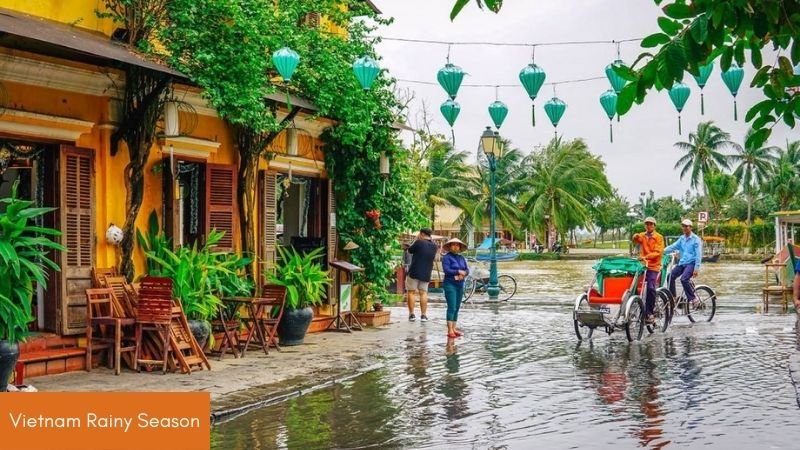
Vietnam’s rainy season differs between regions. Southern Vietnam typically experiences more rainfall between May and November, while Central Vietnam’s wetter period generally occurs later in the year. Northern Vietnam experiences substantial summer rainfall as well.
Rainy-season travel can have advantages:
- Fewer tourists at some attractions
- Potentially lower accommodation rates
- Lush green landscapes
- Dramatic scenery
- Short periods of intense rainfall rather than continuous rain in some locations
However, travelers should monitor local forecasts, particularly when planning cruises, mountain trips or outdoor activities.
Best Time to Visit Vietnam for Different Types of Trips
| Trip Type | Recommended Period | Suggested Destinations |
|---|---|---|
| First-time Vietnam trip | March–May | Hanoi, Ha Long Bay, Hoi An, Ho Chi Minh City |
| Beach holiday | March–August, depending on coast | Da Nang, Nha Trang |
| Northern Vietnam | April–June / September–November | Hanoi, Ha Long Bay, Sapa |
| Mountain trekking | April–May / September–October | Sapa |
| Cultural sightseeing | March–May / September–November | Hanoi, Hue, Hoi An |
| Southern Vietnam | December–April | Ho Chi Minh City, Mekong Delta |
| Phu Quoc beach vacation | October–June | Phu Quoc |
| Photography | Depends on region | Sapa, Ha Long Bay, Hoi An |
| Food-focused trip | Year-round | Hanoi, Hue, Hoi An, Ho Chi Minh City |
| Multi-region itinerary | March–May | North + Central + South |
What Is the Cheapest Time to Visit Vietnam?
Travel costs can change according to holidays, demand, destination and accommodation availability, so there isn’t one universally cheapest month.
Travelers looking for better-value trips can compare:
- Hotel prices
- Airfare
- Domestic flights
- Tour prices
- Cruise prices
- Holiday periods
- Local festivals
It is also worth checking prices around Tet, Vietnam’s Lunar New Year, because travel demand and business opening hours can change around the holiday period. Vietnam Tourism notes that some businesses may close during Tet.
What to Pack for Vietnam
Your packing list should depend on the region and month.
| Item | Why You Need It |
|---|---|
| Lightweight clothing | Useful in warm and humid conditions |
| Comfortable walking shoes | Ideal for cities and sightseeing |
| Rain jacket | Useful during wet periods |
| Compact umbrella | Helpful during sudden showers |
| Sunscreen | Important throughout the year |
| Hat/cap | Protection from strong sun |
| Light sweater | Useful in northern winter |
| Warm layers | Important for Sapa and northern mountains |
| Insect repellent | Useful for rural and tropical areas |
| Waterproof bag | Protects electronics during rain |
Tips for Choosing the Best Time to Visit Vietnam
1. Choose Your Destinations First
Don’t select travel dates before deciding whether you want to visit northern, central or southern Vietnam.
2. Consider Regional Weather
Vietnam’s climate varies considerably from north to south, so a month that works well for Hanoi may not be ideal for Hoi An or Phu Quoc.
3. Check the Forecast Before Outdoor Activities
Weather can change quickly, especially during rainy and stormy periods.
4. Pack for Multiple Conditions
If you’re traveling across the country, you may experience cool mountain weather, hot coastal conditions and tropical humidity during the same vacation.
5. Allow Some Flexibility
Flexible travelers can adjust their itinerary based on local weather conditions.
Frequently Asked Questions About the Best Time to Visit Vietnam
March to May is generally one of the best periods for a Vietnam-wide trip. However, the ideal month depends on your destination.
March, April and May are strong choices for travelers planning to visit multiple regions. Northern and southern destinations have additional favorable periods later in the year.
There is no single nationwide rainy season. Northern, Central and Southern Vietnam experience rainfall at different times.
Southern Vietnam is generally warm throughout the year, while Northern Vietnam has more noticeable seasonal temperature changes.
April–June and September–December are favorable periods, with September–November offering relatively cooler and pleasant conditions.
April–June and September–November are generally favorable periods for Ha Long Bay.
February–August generally offers warmer and sunnier conditions, with March being a particularly appealing month for exploring Hoi An.
March–May and September–October are highlighted as favorable months, although June–August can also be good for beach activities.
December–April generally offers the drier conditions preferred by many sightseeing travelers.
October–June generally offers better beach conditions, while July–September can be stormier and wetter.
Yes. Rainfall is regional and often occurs in showers. Travelers can still enjoy cities, food, culture and many attractions during wetter months.