
39 Marriott Bonvoy Brands From Select Hotels to Luxury Stays
Marriott Bonvoy’s current portfolio spans 39 lodging brands across Luxury, Premium, Select, Longer Stays, and Collections, giving travelers choices ranging from Ritz-Carlton resorts and St. Regis hotels to Courtyard properties, extended-stay apartments, outdoor retreats, and independent hotels. Marriott’s current consumer-facing brand directory uses these five groups rather than treating “Residences” as a separate hotel-brand category.
That distinction matters because the Marriott portfolio has changed considerably. Brands such as citizenM and Series by Marriott have joined the lineup, while Outdoor Collection by Marriott Bonvoy brings nature-oriented stays into the ecosystem.This guide breaks down all 39 Marriott brands, what type of stay each one is designed to provide, and how to choose among them.
Marriott Bonvoy Brands at a Glance
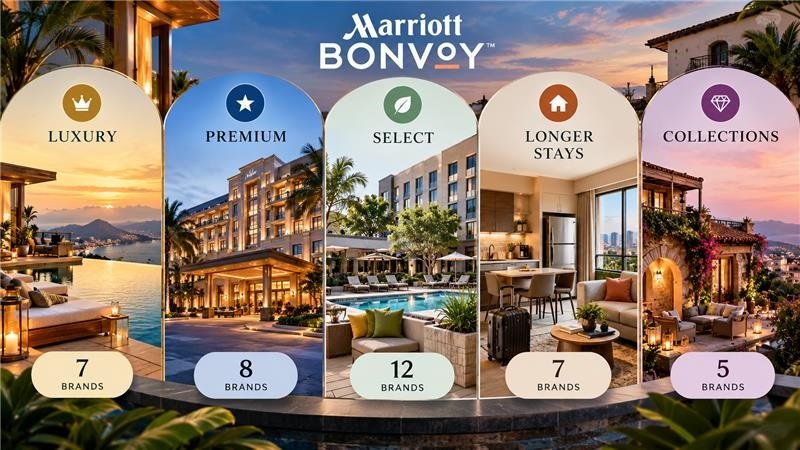
Marriott currently organizes its main brand directory into 5 categories: Luxury, Premium, Select, Longer Stays, and Collections.
| Marriott Category | Number of Brands | General Focus |
| Luxury | 7 | High-end service, distinctive destinations, luxury experiences |
| Premium | 8 | Full-service hotels, resorts, business and leisure travel |
| Select | 12 | Streamlined stays, lifestyle hotels and essential services |
| Longer Stays | 7 | Extended stays, apartments and home-style accommodation |
| Collections | 5 | Independent, distinctive and experience-led properties |
| Total | 39 | Broad range of travel styles |
Importantly, these categories describe the positioning of Marriott’s brands; they are not award categories. Marriott Bonvoy uses dynamic award pricing, so the number of points required for a stay varies rather than being determined by a fixed hotel category.
Marriott Bonvoy Luxury Brands
Marriott’s Luxury portfolio contains 7 brands, divided on its website between Luxury and Distinctive Luxury. These properties emphasize high-end service, destination experiences, sophisticated design, and premium amenities.
1. The Ritz-Carlton
The Ritz-Carlton is one of Marriott’s best-known luxury names. Its portfolio includes sophisticated urban hotels, beachfront resorts, golf destinations, and properties designed around highly personalized service.
For travelers, the brand is particularly relevant when the hotel itself is intended to be an important part of the vacation rather than simply somewhere to sleep.
2. St. Regis
St. Regis emphasizes refined luxury, immersive experiences, and personalized service. Marriott describes the brand around modern indulgence and sophisticated hospitality.
Its hotels often occupy prestigious city locations or resort destinations, making St. Regis particularly suited to travelers seeking a traditional luxury experience with a distinctive sense of occasion.
3. JW Marriott
JW Marriott takes a more understated approach to luxury, with an emphasis on well-being and giving guests space to focus on themselves.
Properties range from major business hotels to resorts, making the brand suitable for travelers who want luxury amenities without necessarily choosing the more formal style associated with some other high-end brands.
4. Ritz-Carlton Reserve
Ritz-Carlton Reserve represents a more exclusive interpretation of the Ritz-Carlton experience.
Marriott describes Reserve properties as rare estates set apart from the world. They generally emphasize privacy, distinctive locations, and highly destination-specific experiences rather than following a conventional large luxury-hotel formula.
5. The Luxury Collection
The Luxury Collection brings together distinctive high-end hotels that strongly reflect their destinations.
Rather than making every property look and feel identical, the collection emphasizes hotels with individual histories, architecture, culture, and local character. Marriott calls it a curated group of iconic hotels that help define their destinations.
6. W Hotels
W Hotels combines luxury accommodation with contemporary design, nightlife, social spaces, restaurants, bars, and energetic programming.
Marriott currently describes W as a luxury lifestyle brand centered on design, unexpected experiences, and highly activated spaces.
It therefore appeals to a somewhat different traveler from a traditional formal luxury hotel.
7. EDITION
EDITION blends luxury hospitality with lifestyle-focused design, dining, entertainment, and modern service.
The concept is particularly relevant to travelers who care as much about a hotel’s restaurants, atmosphere, architecture, and social spaces as its guest rooms.
Marriott Bonvoy Premium Brands
Marriott’s 8 Premium brands generally provide full-service accommodation with substantial facilities, dining, meeting spaces, or resort amenities. Marriott describes this portfolio as offering sophisticated stays with amenities ranging from lounges to on-property dining.
8. Marriott Hotels
Marriott Hotels is the company’s flagship namesake brand.
It combines full-service accommodation with contemporary rooms, restaurants, meeting facilities, business-oriented amenities, and leisure features that vary by property. Marriott positions the brand around thoughtful design, elevated experiences, and familiar hospitality.
9. Sheraton
Sheraton has a large international presence and focuses strongly on bringing people together through shared spaces.
The brand operates everything from business-oriented city properties to large leisure resorts. Marriott describes Sheraton as being rooted in hundreds of communities around the world and serving as a connection point for travelers.
10. The Marriott Vacation Clubs
The Marriott Vacation Clubs serves travelers interested in vacation ownership and resort-style stays.
It differs from a conventional hotel brand because its model is closely connected with vacation ownership while still providing resort experiences in destinations around the world. Marriott currently places it within its Premium portfolio.
11. Delta Hotels by Marriott
Delta Hotels aims to remove unnecessary complexity from a full-service hotel stay.
Properties generally serve both business and leisure travelers, with comfortable rooms, fitness facilities, dining, work areas, and meeting spaces depending on the location. Marriott summarizes its approach as “Simple Made Perfect.”
12. Westin Hotels & Resorts
Westin is built heavily around wellness.
The brand’s hotels incorporate fitness, sleep, food, and well-being concepts into the guest experience. Marriott says its well-being programming and revitalizing amenities are intended to help travelers leave feeling better than when they arrived.
13. Le Méridien
Le Méridien brings a European-inspired perspective to Marriott’s Premium portfolio.
Its hotels emphasize culture, food, design, and discovering the surrounding destination. Marriott describes the concept as celebrating destinations through a European spirit of enjoying the good life.
14. Renaissance Hotels
Renaissance Hotels is aimed at travelers who want to discover more of the destination beyond the hotel.
Rather than concentrating only on standardized business-hotel services, the brand encourages local discovery and spontaneous experiences.
15. Gaylord Hotels
Gaylord Hotels is especially notable for large-scale resorts, meetings, conventions, entertainment, dining, and family-oriented attractions.
Its properties can function almost like destinations themselves, with extensive event facilities and, at certain locations, elaborate atriums and water attractions. Marriott emphasizes gatherings, entertainment, dining, and large event spaces as important parts of the brand.
Marriott Bonvoy Select Brands
Marriott currently lists 12 Select brands. These range from familiar business-focused hotels to lifestyle concepts and newer midscale offerings.
16. Courtyard by Marriott
Courtyard is designed around practical accommodation for modern travelers, particularly those combining work and leisure.
Flexible public areas, workspaces, food and beverage options, and straightforward guest rooms are common elements, although exact amenities vary by hotel.
17. Four Points by Sheraton
Four Points focuses on uncomplicated accommodation with familiar comforts.
Marriott describes the concept around timeless style, essentials, local sports, and its Best Brews program.
It can be useful for travelers who want a recognizable Marriott-affiliated hotel without the extensive facilities of a full-service premium property.
18. SpringHill Suites
SpringHill Suites uses an all-suite concept that provides travelers with additional room to work, relax, or travel with family.
The brand sits within Marriott’s Select portfolio and emphasizes stylish accommodation and useful extras.
19. Fairfield by Marriott
Fairfield concentrates on straightforward comfort and value.
Its broad appeal comes from predictable accommodations and practical amenities rather than elaborate luxury features. Marriott positions Fairfield around inviting spaces and stress-free stays at a good value.
20. AC Hotels
AC Hotels has a distinctly modern, European-influenced approach.
Clean lines, streamlined rooms, carefully designed shared spaces, and an emphasis on the details travelers actually use distinguish it from more traditional hotel concepts. Marriott describes AC as balancing desired details with necessary services.
21. CitizenM
citizenM is one of the newer additions to Marriott’s portfolio.
Its concept revolves around tech-forward urban accommodation, typically combining compact rooms with large, design-conscious social and working spaces. Marriott currently describes citizenM as offering stylish stays in central city locations where guests can sleep, work, relax, and socialize.
22. Aloft Hotels
Aloft takes a youthful, lifestyle-focused approach to the Select category.
Its hotels commonly emphasize modern design and active communal areas. Marriott describes Aloft around urban-inspired spaces and vibrant social scenes.
23. Moxy Hotels
Moxy is another social, lifestyle-driven brand, but with a playful approach.
Rooms are generally streamlined while public areas receive considerable attention, encouraging guests to spend time in bars, lounges, games areas, and shared spaces. Marriott describes Moxy as pairing cozy rooms with social spaces at an accessible price point.
24. Protea Hotels
Protea Hotels gives Marriott a particularly important footprint across Africa.
The brand combines practical accommodation with locally influenced design and service. Marriott describes Protea as the largest hospitality brand in Africa.
25. City Express
City Express focuses on convenient, efficient accommodation, particularly for travelers seeking essential facilities in practical locations.
The broader City Express family has historically included several formats designed for different traveler needs. Marriott now lists City Express within its Select portfolio.
26. Four Points Flex by Sheraton
Four Points Flex strips the hotel experience down further to the essentials.
Marriott describes it as providing smart, efficient stays focused on core traveler needs. It is particularly relevant for travelers who care more about location, a comfortable room, and practical facilities than a long list of full-service amenities.
27. Series by Marriott
Series by Marriott is designed to bring established regional hotel brands into Marriott’s global ecosystem while allowing them to retain much of their existing identity.
Marriott says Series properties focus on quality, value, trust, good locations, comfortable accommodations, and Marriott Bonvoy benefits.
This model is different from simply converting every participating hotel into a conventional Marriott-branded property.
Marriott Bonvoy Longer Stays Brands
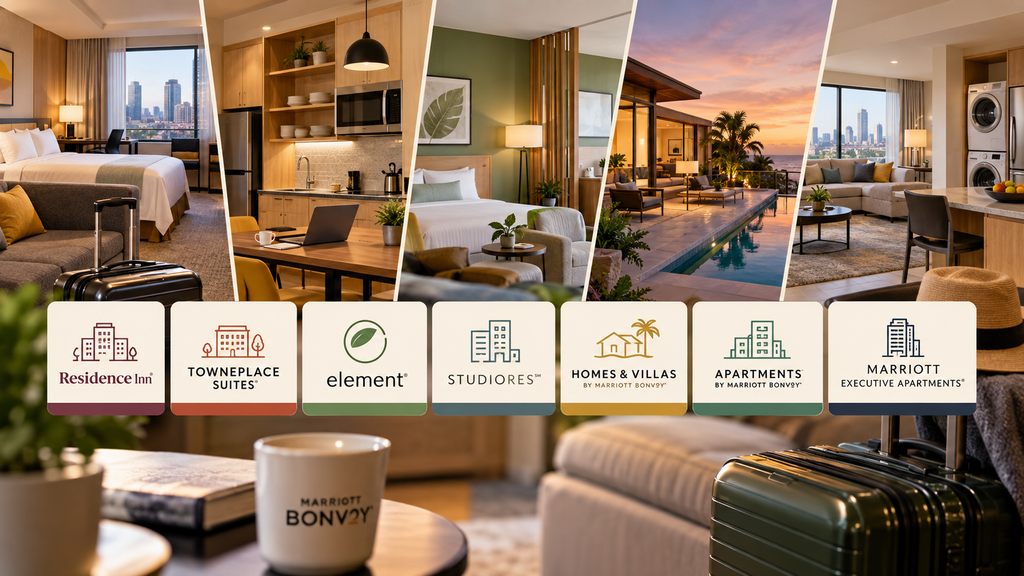
Marriott currently groups 7 offerings under Longer Stays, designed for travelers who need more residential features, extra space, kitchens, or accommodation suited to longer trips.
28. Residence Inn
Residence Inn is Marriott’s established extended-stay concept.
Its suite-style accommodations are designed to make longer visits practical, particularly for business assignments, relocations, and travelers who simply want more room than a conventional hotel provides.
29. TownePlace Suites
TownePlace Suites also targets extended stays but focuses on flexible, functional suites that allow travelers to maintain everyday routines.
Marriott describes the rooms as cleverly designed to help guests remain productive during longer trips.
30. Element Hotels
Element approaches extended stays through modern design and a wellness-oriented philosophy.
Open spaces, healthier choices, and residential-style elements make it a useful alternative for travelers who want an extended-stay hotel without a traditional long-term-accommodation feel.
31. StudioRes
StudioRes is Marriott’s streamlined extended-stay concept.
Rooms incorporate features intended to help guests settle in and maintain daily routines, including kitchenette-style facilities at the brand level. Marriott describes the concept around smart design, flexibility, and making the space feel like your own.
32. Homes & Villas by Marriott Bonvoy
Homes & Villas moves beyond conventional hotels altogether.
It provides access to curated premium and luxury vacation homes, giving travelers options that can work particularly well for families, groups, or trips where private living areas and home-style facilities are useful.
33. Apartments by Marriott Bonvoy
Apartments by Marriott Bonvoy combines residential living with Marriott-affiliated hospitality.
The accommodation format includes private bedrooms, separate living rooms, full kitchens, and in-unit washers and dryers, making it substantially different from a standard hotel room.
34. Marriott Executive Apartments
Marriott Executive Apartments is geared particularly toward longer international assignments and extended business travel.
Marriott describes the properties as fully equipped apartments intended to make longer overseas stays more comfortable.
Marriott Bonvoy Collections
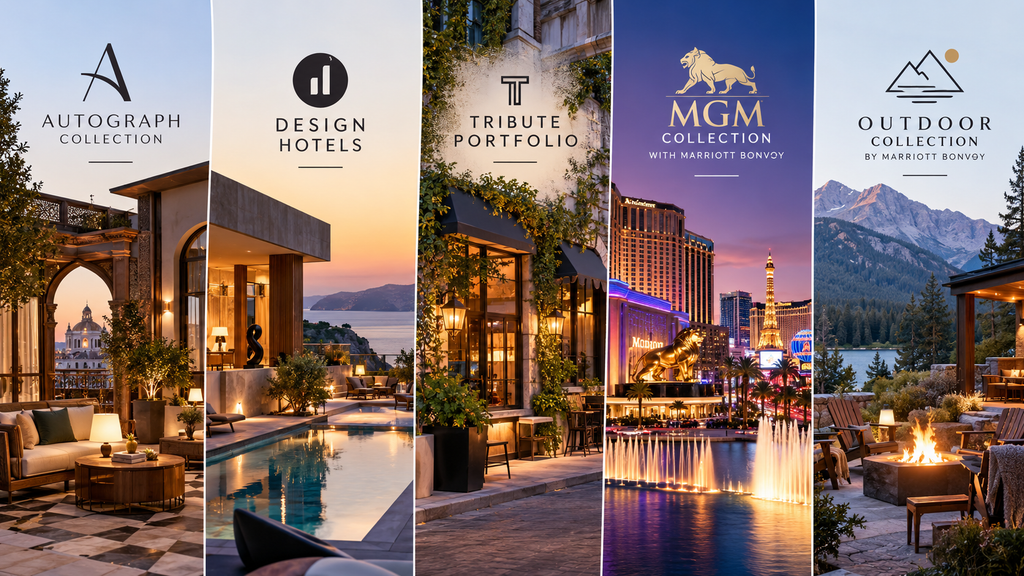
Marriott’s 5 Collections allow travelers to stay at properties with stronger individual identities rather than choosing a hotel designed around a rigid brand template. Marriott says these collections are intended to deliver original experiences and distinctive design.
35. Autograph Collection
Autograph Collection consists of hand-selected independent hotels ranging from boutique properties to luxury stays.
Individual hotels maintain distinct personalities, architecture, and design rather than trying to look identical across destinations.
36. Design Hotels
Design Hotels places particular emphasis on architecture, originality, cultural authenticity, and creative hospitality concepts.
For travelers who actively choose hotels based on design and individuality, it can feel quite different from Marriott’s standardized brands.
37. Tribute Portfolio
Tribute Portfolio brings together independent hotels and resorts with distinctive personalities.
Marriott’s description emphasizes the ability of participating properties to retain their independent spirit.
38. MGM Collection with Marriott Bonvoy
MGM Collection connects participating MGM Resorts properties with Marriott Bonvoy.
The collection is particularly significant for travelers visiting destinations such as Las Vegas, where large casino resorts, entertainment, dining, and nightlife are central to the hotel experience. Marriott officially places MGM Collection within its Collections category.
39. Outdoor Collection by Marriott Bonvoy
Outdoor Collection is aimed at travelers who want nature and outdoor adventure without abandoning comfortable accommodation.
Marriott describes it as a collection of retreats where outdoor activities can be followed by comforts such as a hot shower and cozy bed.
Where Do Marriott Residences Fit?
Marriott residences are not currently displayed as a sixth hotel-brand category alongside Luxury, Premium, Select, Longer Stays, and Collections on Marriott’s main consumer brand directory. Marriott nevertheless has a separate residences business, and residential offerings can carry names associated with hotel brands. Marriott’s main navigation also provides a dedicated Residences section.
This distinction is useful when searching for accommodation. A branded residence and a room at the associated hotel are not automatically the same product, and ownership, rental availability, services, amenities, and Bonvoy participation can differ.
Travelers should therefore check the individual property’s terms rather than assuming every Marriott-branded residence functions exactly like a Marriott hotel.
What About Bulgari Hotels & Resorts?
Bulgari Hotels & Resorts has a relationship with Marriott, but it should not be treated as an ordinary Marriott Bonvoy redemption brand.
Bulgari Hotels & Resorts does not participate in Marriott Bonvoy.
This is a good example of why “associated with Marriott International” and “participates fully in Marriott Bonvoy” are not always interchangeable statements.
Which Marriott Brand Should You Choose?
The most useful way to choose is to start with the type of trip rather than the Marriott name.
| If You Want… | Brands Worth Comparing |
| Traditional luxury | The Ritz-Carlton, St. Regis, JW Marriott |
| Distinctive luxury | Ritz-Carlton Reserve, The Luxury Collection, W, EDITION |
| Full-service business/leisure hotel | Marriott Hotels, Sheraton, Delta |
| Wellness-focused stay | Westin |
| Local discovery | Renaissance |
| Practical business trip | Courtyard, AC Hotels, Four Points |
| Lifestyle city hotel | citizenM, Aloft, Moxy |
| Straightforward value | Fairfield, City Express, Four Points Flex |
| Longer stay | Residence Inn, TownePlace Suites, Element, StudioRes |
| Apartment-style accommodation | Apartments by Marriott Bonvoy, Marriott Executive Apartments |
| Private vacation home | Homes & Villas by Marriott Bonvoy |
| Independent hotel | Autograph Collection, Tribute Portfolio, Design Hotels |
| Outdoor-focused getaway | Outdoor Collection by Marriott Bonvoy |
Always compare the individual property, not merely the brand. Facilities can vary significantly even between hotels carrying the same flag, particularly when comparing resorts, city hotels, converted properties, and independent collection members.
Does Every Marriott Brand Participate in Marriott Bonvoy the Same Way?
Not necessarily.
Marriott Bonvoy is the loyalty ecosystem connecting much of Marriott’s portfolio, but travelers should avoid assuming that earning, redemption, elite benefits, breakfast, lounge access, upgrades, or other benefits work identically everywhere.
Some benefits depend on the brand, property, elite status, rate, region, or specific program terms. Newly integrated brands can also have transitional arrangements.
Before booking specifically for points or elite benefits, check the current Marriott Bonvoy terms and the individual hotel’s participation details.
Final Thoughts
Marriott’s 39-brand portfolio covers a much wider range of accommodation than the Marriott name alone might suggest. A traveler can move from a Ritz-Carlton luxury resort to a practical Courtyard, spend several weeks at a Residence Inn, book an independent Autograph Collection property, rent a private home, or choose an outdoor retreat while remaining within Marriott’s broader ecosystem.
The most important point is that brand categories are a starting point, not a guarantee that every property offers identical facilities or Bonvoy benefits. Compare the specific hotel, location, room type, rate conditions, amenities, and current loyalty-program rules before booking.
Often Raised Queries
Marriott’s current consumer brand directory contains 39 brands or lodging offerings across Luxury, Premium, Select, Longer Stays, and Collections.
The current Luxury portfolio includes The Ritz-Carlton, St. Regis, JW Marriott, Ritz-Carlton Reserve, The Luxury Collection, W Hotels, and EDITION.
Luxury brands emphasize high-end service, exclusivity, design, and destination experiences. Premium brands generally provide sophisticated full-service stays with substantial amenities such as restaurants, lounges, meeting spaces, wellness facilities, or resort features.
Yes. Marriott currently lists citizenM as a Select brand and describes it as offering stylish, tech-forward accommodation in central urban locations.
Series by Marriott is a collection-oriented Select concept that brings established regional hotel brands into Marriott’s ecosystem while allowing them to maintain their regional identities. Participating hotels offer Marriott Bonvoy points and benefits.
Marriott’s Longer Stays section currently includes Residence Inn, TownePlace Suites, Element Hotels, StudioRes, Homes & Villas by Marriott Bonvoy, Apartments by Marriott Bonvoy, and Marriott Executive Apartments.
No. Although Bulgari Hotels & Resorts has a relationship with Marriott, it does not participate in Marriott Bonvoy.
Not necessarily. Marriott has branded residential offerings, but a residence can have a different ownership and operating structure from a conventional hotel. Travelers should verify whether a particular residence can be booked as transient accommodation and what Bonvoy benefits apply.
Do not assume so. Participation and redemption rules can differ, particularly for associated businesses, residences, newer integrations, and special collections. Check the individual property and current Bonvoy terms before transferring points or making plans around a redemption.