
When Is the Best Time to Visit Jamaica? Key Tips
The best time to visit Jamaica is generally from mid-December through April, when the island is warm, relatively dry, and outside most of the Atlantic hurricane season. However, November and May to early June can offer a useful balance of weather, crowds, and value. Jamaica remains a year-round destination, but the ideal month depends on whether you prioritize beach weather, lower prices, festivals, outdoor adventures, or fewer visitors.
For travelers planning a Jamaican vacation, timing matters more than it might initially appear. December through April brings the island’s main tourism season, while May through November generally brings more rainfall and greater tropical-weather risk. Yet the wetter months can also mean fewer visitors, lower accommodation prices, lush landscapes, and major cultural events.
This guide breaks down Jamaica’s weather by season and month, explains the best time for different types of trips, and covers what travelers should know about hurricanes, crowds, prices, beaches, waterfalls, and regional differences.
Jamaica’s Weather at a Glance
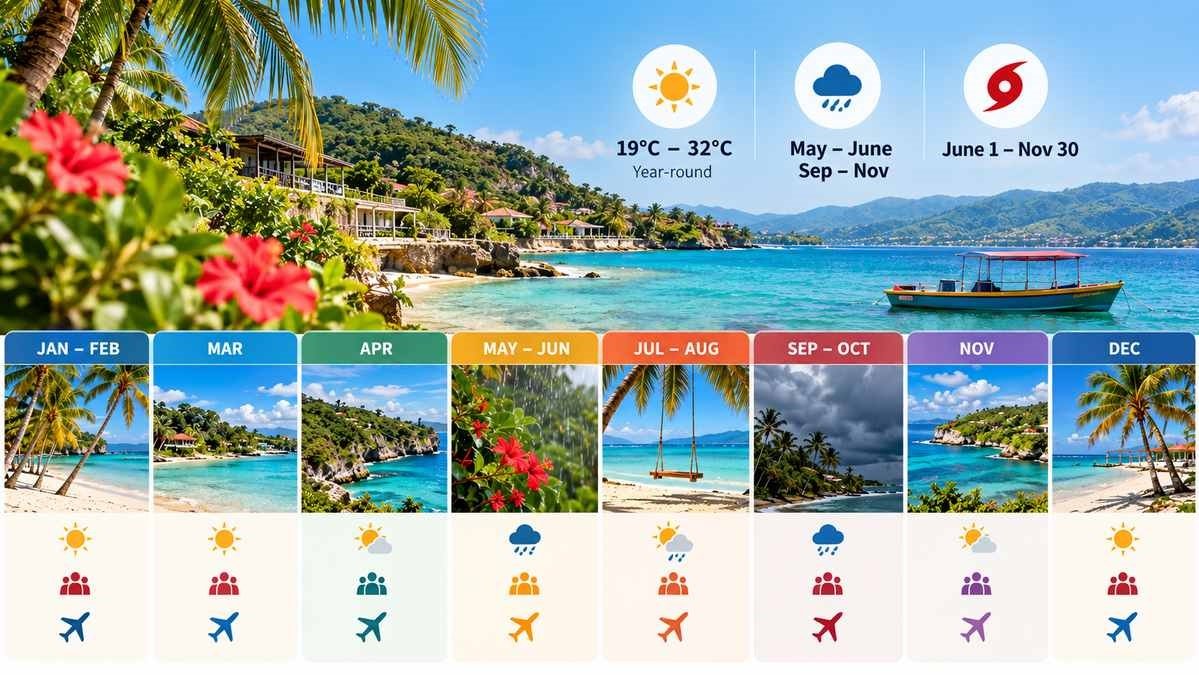
Jamaica has a warm tropical climate year-round, with relatively modest seasonal temperature changes. The Jamaica Tourist Board describes temperatures generally ranging from about 19°C (66°F) to 32°C (99°F), while rainfall follows a more pronounced seasonal pattern. Jamaica has two commonly recognized rainy periods, around May-June and September-November, although local rainfall varies considerably by location.
The country’s official hurricane season runs from June 1 through November 30. That does not mean Jamaica experiences hurricanes throughout those six months, but travelers visiting during this period should monitor forecasts and understand their airline, hotel, and travel-insurance policies.
| Travel period | Typical conditions | Crowd level | Best suited to |
| January-February | Warm, relatively dry, cooler nights | High | Beach vacations, winter escapes |
| March | Warm and generally sunny | High | Beaches, outdoor activities |
| April | Warm; rainfall gradually increases | Moderate-high | Beaches, culture, outdoor trips |
| May-June | Hotter, humid, more showers | Lower | Value-focused trips |
| July-August | Hot, humid, tropical showers | Lower-moderate | Festivals, relaxed vacations |
| September-October | Wetter, hurricane risk higher | Low | Flexible travelers |
| November | Improving weather, fewer crowds | Low-moderate | Shoulder-season travel |
| December | Dry-season conditions develop; holiday demand rises | High by mid-month | Christmas and winter sun |
The exact experience varies by coast and elevation, so travelers should not treat one monthly forecast as representative of the entire island.
When Is Jamaica’s Dry Season?
Jamaica’s broadly defined dry season runs from December through April, making this the most popular period for traditional beach vacations. Visit Jamaica identifies December-April as the dry season, while government climate information shows that February and March are among the driest months.
This period is particularly attractive to travelers escaping winter elsewhere. Days are warm enough for swimming, snorkeling, and sightseeing, while evenings can feel more comfortable than during the humid summer months.
The trade-off is demand. Jamaica’s tourism season officially runs from December 15 through April, according to Jamaica’s Ministry of Tourism.
January and February
January and February are among Jamaica’s coolest months, although “cool” remains relative in a tropical destination. Audley’s climate guide lists average daily temperatures around 25°C (77°F) with nighttime lows around 21°C (70°F). These months are also among the busiest.
They work particularly well for:
- Beach resorts and all-inclusive vacations
- Couples seeking reliable winter sun
- Outdoor sightseeing
- Hiking in the mountains without peak summer heat
- Travelers who prefer lower humidity
February also has cultural appeal, including Bob Marley Week, centered around Kingston and Montego Bay.
Because January and February fall in the island’s busy season, travelers should expect greater demand for popular hotels and should consider booking flights and accommodations well ahead of departure.
Is March a Good Month to Visit Jamaica?
March is one of the strongest months for warm-weather travel to Jamaica, with generally sunny conditions and warm temperatures. The principal consideration is demand: spring-break travel can increase visitor numbers, particularly around popular resort areas.
March is a good fit for travelers who want to combine beach time with excursions. The weather can be suitable for:
- Dunn’s River Falls
- Snorkeling and diving
- Rafting
- Blue Mountains excursions
- Golf
- Coastal sightseeing
Travelers considering March should check their spring break timing and departure dates because accommodation availability and prices can change substantially around high-demand dates.
What About April in Jamaica?
April sits near the transition between Jamaica’s drier and wetter periods. Early April can still offer excellent beach conditions, while temperatures and rainfall generally become more noticeable toward the end of the month.
April can therefore suit travelers who want warm weather but would rather avoid the peak winter period. It is also an interesting month for visitors interested in cultural events, including Jamaica’s Carnival celebrations.
For a vacation centered almost entirely on guaranteed-looking beach days, the earlier part of April is generally more attractive than late April. For travelers with flexible itineraries, occasional showers are less problematic because Jamaica offers plenty of indoor, cultural, culinary, and nature-based alternatives.
May and June: A Useful Shoulder Season
May and early June can appeal to travelers who prioritize value and smaller crowds over the driest possible weather. Temperatures rise, humidity becomes more noticeable, and afternoon showers become more common.
The upside is that visitor numbers generally decrease after the main winter season. That can make beaches, restaurants, and attractions feel less crowded.
Travelers should also understand that a lower-demand period can affect operations. Some properties and businesses may reduce operations or close temporarily for maintenance, so it is worth checking hotel and attraction availability before booking.
May and June work particularly well for:
- Couples looking for quieter resorts
- Travelers with flexible schedules
- Longer Jamaican stays
- Travelers comparing accommodation prices
- Visitors more interested in local culture than perfect beach weather
A short tropical shower does not necessarily disrupt an entire day. Jamaica’s tourism authority notes that showers are often brief, offering a break from the heat rather than lasting all day.
July and August: Hot Weather and Major Events
July and August are among Jamaica’s hottest and most humid months. They also fall within the Atlantic hurricane season, so travelers should check tropical-weather forecasts when planning trips.
At the same time, summer brings some of Jamaica’s most recognizable cultural events. Reggae Sumfest takes place annually in July, while Jamaica’s Independence celebrations take place around August 6, alongside events connected with Emancipation Day on August 1.
This makes July and August particularly interesting for travelers who want more than a resort holiday.
A summer itinerary might combine:
- Several days around Montego Bay or Negril.
- A music or cultural event.
- A visit to Kingston.
- A Blue Mountains excursion.
- Water activities and beach time.
The main compromise is weather uncertainty. A trip scheduled around a specific event should leave some flexibility rather than relying on every day being suitable for outdoor activities.
September and October: Jamaica’s Wettest Period
September and October are generally the most weather-sensitive months for a Jamaica vacation. Jamaica’s climate data identifies October as one of the island’s wettest months, while the North Atlantic hurricane season reappears around mid-August through late October.
This does not mean that a September or October trip will be a washout. Tropical rainfall can be intermittent, and conditions can vary substantially from one part of Jamaica to another.
However, travelers should be prepared for:
- Higher rainfall potential
- Greater tropical-storm and hurricane uncertainty
- Possible changes to outdoor excursions
- Seasonal hotel maintenance or closures
- Greater importance of flexible reservations
The advantage is price and availability. Audley notes that September and October can bring some of the lowest prices of the year, although some hotels may close or undergo renovations.
For a traveler whose main goal is a low-cost resort break and who can tolerate weather uncertainty, these months may be worth considering. For a first-time visitor with a fixed itinerary and limited vacation days, the risk-reward calculation is different.
Is November a Good Time to Visit Jamaica?
November is one of the most interesting shoulder-season choices. Rainfall generally begins to ease, temperatures remain warm, and visitor numbers can remain relatively modest before the main winter rush begins.
There is one important qualification: the official hurricane season does not end until November 30. Therefore, November should not be described as completely outside hurricane season.
The middle and latter part of November can be particularly appealing for travelers seeking a quieter Caribbean vacation. Hotels, restaurants and attractions are generally moving back toward the busier winter operating pattern.
For example, someone planning a seven-night trip in November could spend several days on the west coast around Negril or Montego Bay and then add Kingston or the Blue Mountains without dealing with peak-season crowds.
December: When Jamaica Starts Getting Busy
December has a split personality.
The first half can offer a relatively relaxed transition into the dry season. By mid-December, Jamaica’s main tourist season begins, and demand increases, particularly around Christmas and New Year.
Christmas is also an important cultural period in Jamaica, with traditional food, gatherings and celebrations taking place across the island.
Travelers planning a holiday-season trip should book earlier than they would for a shoulder-season visit, particularly if they want a specific resort, beachfront room or popular all-inclusive property.
Best Time to Visit Jamaica for Beaches
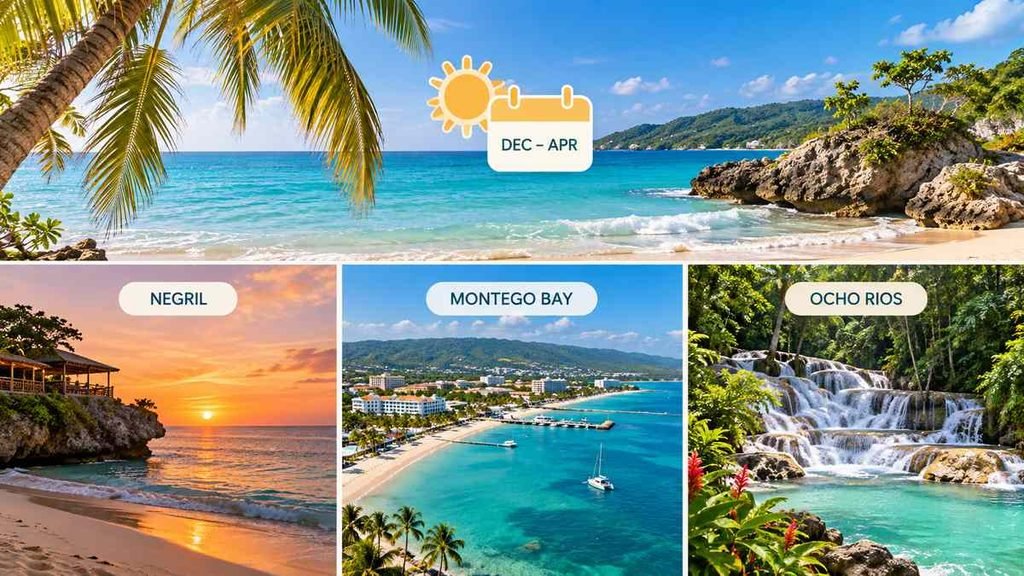
For travelers who simply want sunny beach days, December through April is the most straightforward choice because it overlaps with Jamaica’s drier season.
Popular beach destinations include:
Negril
Negril is best known for Seven Mile Beach and sunset views. Its western location makes it a natural choice for travelers who want to prioritize long beach days and relaxed coastal evenings.
Montego Bay
Montego Bay combines beaches with restaurants, nightlife, resorts, and access to excursions. It is also an important arrival point for many international visitors because of Sangster International Airport. Visit Jamaica describes the area as offering everything from all-inclusive resorts to boutique accommodations.
Ocho Rios
Ocho Rios is useful for travelers who want to combine beach time with waterfalls, rivers, and other outdoor attractions. Jamaica’s tourism authority highlights the region’s access to natural experiences and river activities.
Best Time to Visit Jamaica for Waterfalls and Outdoor Adventures
The “best” weather for waterfalls depends on the experience being sought.
Jamaica’s tourism authority notes that May through November can produce particularly impressive waterfall flows, while December through April tends to provide clearer and calmer river conditions that can be preferable for activities such as tubing and rafting.
That creates an interesting distinction:
- For hiking and general outdoor sightseeing: December-April can provide more comfortable conditions.
- For dramatic waterfall flow: wetter months can be rewarding.
- For river activities: conditions should be checked locally because rainfall can affect water levels and currents.
- For mountain hiking: weather can change quickly with elevation.
The Blue and John Crow Mountains are particularly worthwhile for travelers interested in hiking, birdwatching, coffee, and Jamaica’s natural environment. The national park covers roughly 100,000 acres and has UNESCO World Heritage status.
Best Time to Visit Jamaica for Fewer Crowds
If avoiding crowds matters more than the driest possible weather, consider May, early June, and November.
September and October can be even quieter, but they come with more rainfall and hurricane-season uncertainty.
A shoulder-season trip can also provide a different experience of Jamaica. Instead of planning every day around major resort attractions, travelers may have more flexibility to visit local restaurants, cultural sites, smaller communities, and less crowded beaches.
Best Time to Visit Jamaica on a Budget
There is no single low-price month across every Jamaican hotel, flight and resort because prices depend on demand, school holidays, events, room inventory and booking timing.
However, late spring and parts of the late-summer/fall period generally offer more opportunities for lower accommodation rates than the peak winter season. Audley’s month-by-month guide specifically identifies September and October as periods when prices can be at their lowest.
Travelers comparing prices should look beyond the headline room rate. A cheaper hotel that requires expensive transfers or offers limited dining options may not result in a cheaper overall vacation.
Does Jamaica Have a Hurricane Season?
Yes. Jamaica’s official hurricane season is June 1 through November 30. The period can bring tropical storms, hurricanes, heavy rainfall, and strong winds, although the presence of hurricane season does not mean a hurricane will affect Jamaica during every trip.
The climatological peak of the North Atlantic hurricane season falls around mid-August through late October.
Travelers visiting during this period should:
- Check weather forecasts shortly before departure.
- Consider travel insurance that addresses relevant weather disruptions.
- Review airline change and cancellation conditions.
- Check the hotel’s hurricane or severe-weather policy.
- Keep several indoor or flexible activities in the itinerary.
- Avoid making tight connections between separate bookings.
A seasonal outlook should also not be interpreted as a prediction that Jamaica itself will be hit. Jamaica’s Meteorological Service has emphasized that hurricane-season outlooks describe overall activity rather than predicting landfall at a specific location.
Where Should Travelers Go in Jamaica Based on the Season?
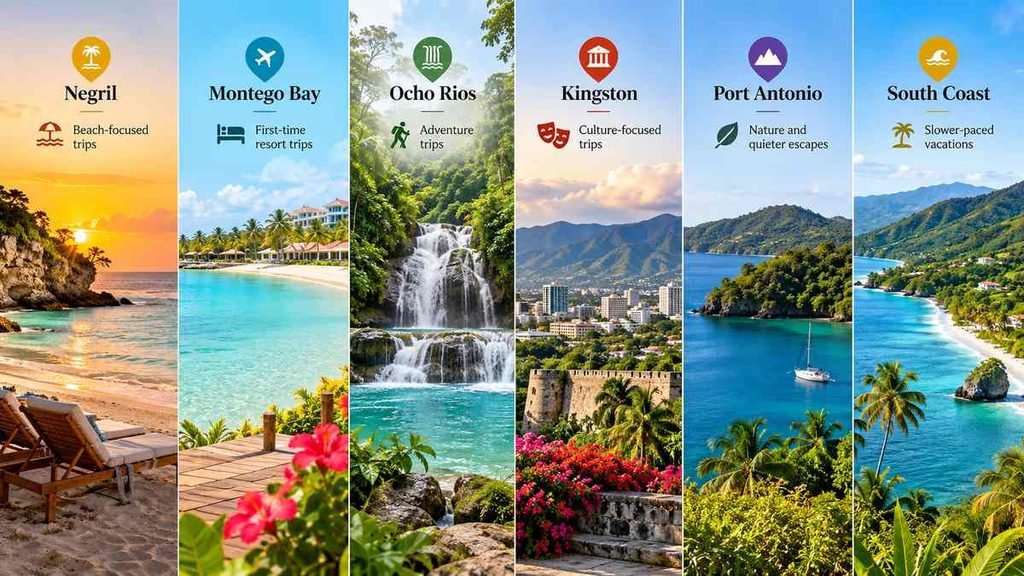
| Destination | Best fit | Why |
| Negril | Beach-focused trips | Seven Mile Beach, sunsets, relaxed atmosphere |
| Montego Bay | First-time resort trips | Beaches, dining, nightlife and convenient airport access |
| Ocho Rios | Adventure trips | Waterfalls, rivers and outdoor excursions |
| Kingston | Culture-focused trips | Music, history, museums, dining and access to the mountains |
| Port Antonio | Nature and quieter escapes | Scenic coastline, mountains and outdoor activities |
| South Coast | Slower-paced vacations | Nature, rural communities and coastal scenery |
Kingston also provides a strong base for travelers interested in the Blue Mountains, coffee plantations, hiking and cultural experiences.
What Is the Best Month to Visit Jamaica?
For travelers who want a simple answer, March is a strong all-around choice for warm weather and generally favorable conditions, although spring-break demand can make some areas busier.
For a broader window, mid-December through April is the most dependable period for a classic dry-season vacation. November and May to early June suit travelers seeking a quieter trip or potentially better value, while September and October require greater tolerance for rain and tropical-weather uncertainty.
The right choice ultimately depends on the type of Jamaica trip being planned:
- Best for dry weather: February-April
- Best for winter sun: January-March
- Best for beaches: December-April
- Best for fewer crowds: May-June and November
- Best for potential lower prices: September-October, with weather caveats
- Best for major music and cultural events: July-August
- Best for a quieter shoulder-season experience: November
Final Takeaway
For the classic Jamaica vacation warm beaches, relatively dry weather and comfortable conditions—mid-December through April is the safest seasonal choice. Travelers willing to trade some weather certainty for quieter surroundings can look at May, early June or November, while September and October can offer lower prices but require more flexibility because rainfall and tropical-weather risks are higher.
Before booking, travelers should compare the specific destination, hotel availability, expected weather, event calendar, and cancellation terms rather than choosing a month based solely on average temperature. Jamaica’s attractions range from Negril’s beaches to the Blue Mountains, Kingston’s cultural sites and Ocho Rios’ waterfalls, so the best travel window can change depending on what the trip is actually designed to do.
Frequently Asked Questions
It can be. December through April overlaps with Jamaica’s main tourist season, and demand generally rises around Christmas, New Year, and other high-demand travel periods. Booking earlier can give you more accommodation and flight options.
Rainfall varies by location, but October is among Jamaica’s wettest months, and May is also notably wet in the island’s broader rainfall pattern. Montego Bay’s climate data, for example, lists October at about 210 mm of rainfall in Audley’s climate table.
Yes. Jamaica operates normally during much of the hurricane season, but travelers from June through November should monitor tropical-weather forecasts and understand the cancellation, change, and insurance conditions attached to their bookings. The official season runs from June 1 to November 30.
Often, especially before mid-December. Jamaica’s tourism season begins December 15, and holiday demand increases around Christmas and New Year. November can therefore provide a useful transition period, although it remains technically within hurricane season until November 30.
Yes, particularly for travelers interested in festivals, culture, and a quieter resort atmosphere. July and August are hot and humid, and tropical-weather risk is higher than during the dry season, so plan flexibly. Jamaica’s annual calendar includes events such as Reggae Sumfest and Independence celebrations during this period.
A week is a practical starting point for a first visit, particularly if the itinerary combines a resort area with one or two excursions. Longer stays make it easier to combine destinations such as Negril, Montego Bay, Ocho Rios, Kingston or the Blue Mountains without rushing.