
Tulum, Mexico Travel Guide: Practical Tips for Your Visit
Tulum is worth visiting for its rare combination of Maya ruins overlooking the Caribbean Sea, beaches, cenotes and access to protected natural areas. It works well as a short stop on a Yucatán Peninsula itinerary or as a longer beach stay. The key planning decision is where to base yourself: Tulum’s town and beachfront offer different experiences, and getting between them takes more time than the map might suggest.
What Are the Best Things to Do in Tulum?

Tulum offers more than a beach stay. You can walk through a Maya city overlooking the Caribbean, cool off in a freshwater cenote, or spend a day discovering the region’s protected landscapes. The experiences below are a good starting point for building an itinerary that balances sightseeing with time to relax.
Visit the Tulum archaeological site
The coastal ruins are Tulum’s defining sight. This former walled Maya settlement served as a trading port, and its best-known structure, El Castillo, stands above the sea. Allow time to walk the site and take in the coastline rather than treating it as a quick photo stop.
Mexico’s National Institute of Anthropology and History lists the archaeological zone’s hours as 8 a.m. to 5 p.m. Access arrangements and charges can change, particularly because the site is associated with Jaguar Park. Check the official listing shortly before your visit, and aim for the morning to avoid the strongest midday heat.
Spend time at the beach
Tulum’s beachfront is suited to a slower day of swimming, walking and relaxing. Before booking a beach club or hotel primarily for the sea, check recent beach conditions: wind, waves and seaweed can affect the experience on a particular day. The coast can be especially windy from December through March.
Swim in a cenote
Cenotes are freshwater pools formed in the peninsula’s limestone landscape. They make a useful change of pace from the beach, especially on a warm afternoon. Conditions differ from one cenote to another: some have open swimming areas, while others have steps, caves or deeper water. Check the site’s swimming rules, facilities and access before setting out. Never enter a cave system without an appropriately qualified guide.
Consider a nature or archaeology day trip
The Sian Ka’an Biosphere Reserve is an option for travelers interested in coastal ecosystems and wildlife. Choose an established operator and follow the protected area’s visitor rules; access and activities depend on the route you take. For another archaeological outing, Muyil lies southwest of Tulum along Federal Highway 307.
Where Should You Stay in Tulum?
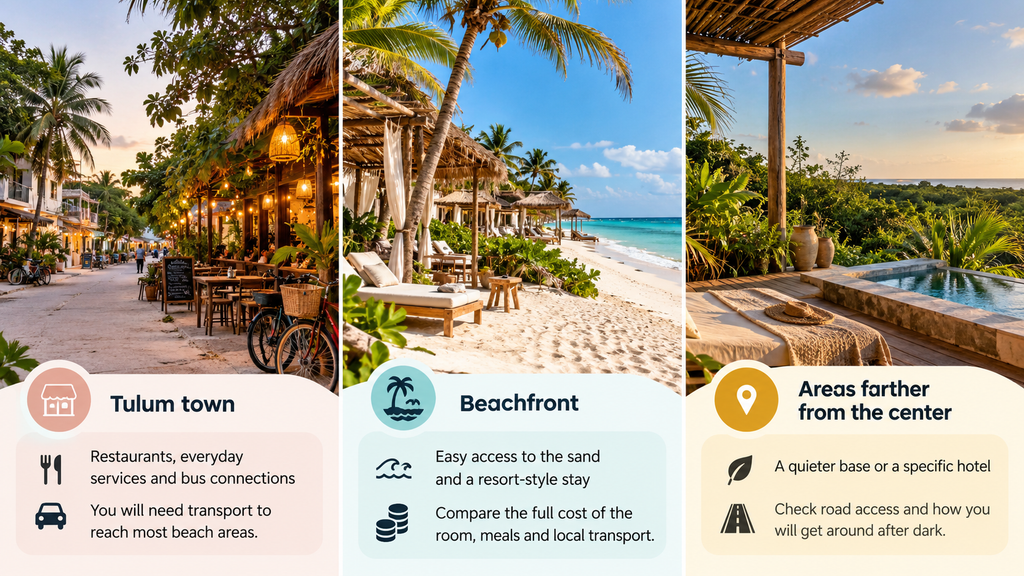
Choose accommodation around what you plan to do each day. If your main goal is to spend mornings and evenings by the sea, beachfront access may justify the cost. If you expect several excursions, compare the location and transport arrangements before committing to a hotel.
| Area | Best for | What to consider |
| Tulum town | Restaurants, everyday services and bus connections | You will need transport to reach most beach areas. |
| Beachfront | Easy access to the sand and a resort-style stay | Compare the full cost of the room, meals and local transport. |
| Areas farther from the center | A quieter base or a specific hotel | Check road access and how you will get around after dark. |
How Do You Get to Tulum?
You can compare flights into Tulum International Airport (TQO) and Cancún International Airport (CUN). TQO serves the Tulum area, while Cancún may offer a different selection of flights. Compare the whole journey—airfare, arrival time and transfer to your accommodation—before choosing an airport.
From Cancún Airport, options include a prearranged transfer, rental car and ADO bus service to Tulum. ADO lists a Cancún Airport Terminal 4–Tulum route, but schedules and the terminal serving your flight should be checked for your travel date. Its Tulum bus terminal also connects with other destinations in the region.
For either airport, confirm the exact drop-off point. A ride to Tulum town and a ride to a beachfront hotel may have different prices and travel times.
When Is the Best Time to Visit Tulum?
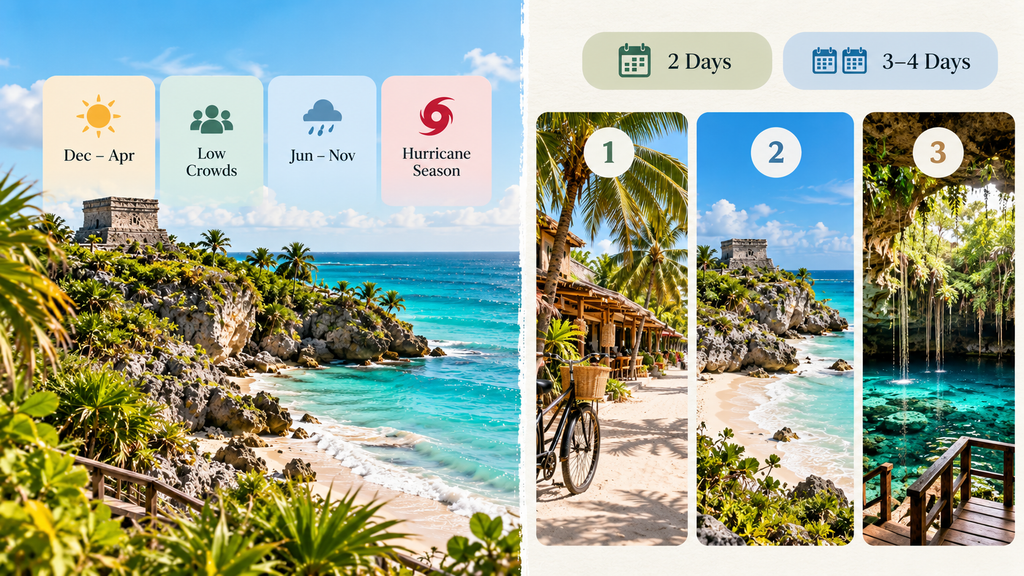
Choose your dates according to whether beach weather, lower crowds or flexibility matters most. The drier part of the year is generally appealing for outdoor plans, while the warmer, wetter months call for a more flexible itinerary. The Atlantic hurricane season officially runs June 1 through November 30; that describes a seasonal risk, not a prediction that a storm will affect your trip. Check the forecast close to departure, especially if you have nonrefundable bookings.
How Many Days Do You Need in Tulum?
Two full days give you time for the ruins, a beach visit and a cenote without packing every hour. Three or four days make more sense if you want a nature excursion, a slower beach day or room to adjust plans around the weather.
A simple three-day outline is:
- Day one: Arrive, settle in and get to know your neighborhood.
- Day two: Visit the archaeological site in the morning, then spend the afternoon at the beach.
- Day three: Visit a cenote or take a guided nature excursion.
Practical Tips Before You Go
A little preparation can make your Tulum trip easier, especially when your plans include beaches, archaeological sites and excursions in different areas. Before you leave, confirm how you will get around and check the latest visitor information for the places you want to see. These tips will help you plan each day with fewer surprises.
- Check attraction details directly. Hours, entry arrangements and access routes can change.
- Plan each transfer. Confirm whether your hotel, excursion and airport ride include pickup at your actual accommodation.
- Pack for heat and sun. Bring water, a hat and comfortable walking shoes for the ruins.
- Follow site rules. Protected areas and individual cenotes may restrict products or activities to protect the water and wildlife.
- Leave some flexibility. A second possible beach or excursion day helps if conditions change.
Conclusion
A Tulum trip is easiest to plan when you decide where you want to spend most of your time. Stay near the beach for a coastal break, or choose town if you expect to make frequent excursions. Give the ruins a morning of their own, leave room for a cenote or nature visit, and compare airport transfers before booking. Finally, check current site access and beach conditions so your plans match what is available during your stay.
Frequently Asked Questions
Yes. Airport transfers, buses and arranged excursions can cover a trip centered on Tulum. A car becomes more useful if you plan to visit several spread-out sites independently.
It can be, particularly if your main aim is to see the ruins. An overnight stay gives you more time for the beach or a cenote without spending much of the day in transit.
Stay by the beach if easy sea access is the priority. Choose town if bus connections and everyday services matter more. Compare the total accommodation and transport cost for each option.
Yes. Families can combine a morning at the ruins with beach time and a visit to a cenote. Check each cenote’s depth, access steps and swimming rules before visiting with children, and plan outdoor activities for the cooler part of the day.
Do not assume that the beach beside the archaeological site is open for swimming. Access arrangements can change, so check the site’s current rules before your visit. If swimming is a priority, set aside time for another beach.
Choose the airport that gives you the best combination of flight schedule, fare and transfer to your hotel. Tulum International Airport (TQO) serves the area, while Cancún International Airport (CUN) is another option with onward bus and road connections.
Yes, but keep your plans flexible and check the forecast before outdoor excursions. The Atlantic hurricane season runs from June 1 through November 30, so travelers visiting during those months should also review their booking terms and monitor weather updates.
You can visit independently if you prefer to walk at your own pace. A qualified guide can add historical context to the structures and the former port. Check the archaeological site’s current entry arrangements separately from any tour booking.