
Pacific Northwest Trip: Best Places & Highlights
The Pacific Northwest is best known for its dramatic combination of mountains, evergreen forests, Pacific coastline, waterfalls, wine country, and distinctive cities such as Seattle and Portland, making Washington and Oregon especially well suited to road trips that combine urban sightseeing with outdoor adventures.
A Pacific Northwest trip can be as varied as a morning spent at a farmers market in Seattle followed by an afternoon beside Puget Sound, a hike through an old-growth rainforest on the Olympic Peninsula, or a drive along Oregon’s rugged coast. The region also brings together volcanic peaks, fertile valleys, craft breweries, seafood, coffee culture, and some of the United States’ most accessible wilderness.
For travelers planning a first visit, the challenge isn’t finding things to do; it’s deciding how much can realistically fit into one itinerary. This guide highlights the places, landscapes, and experiences that make the Pacific Northwest distinctive, and explains how to plan a practical trip.
What Is the Pacific Northwest?
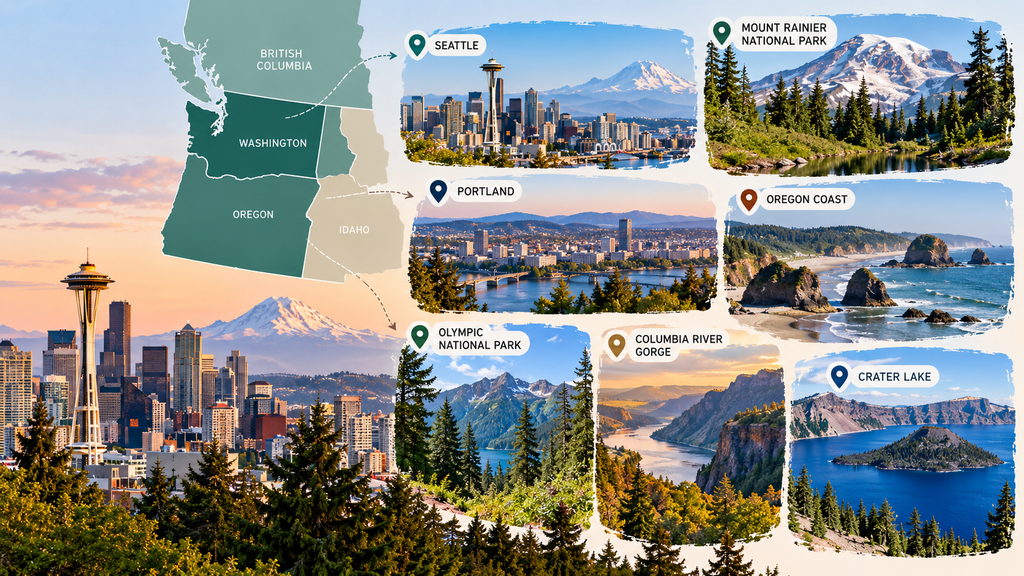
The Pacific Northwest is a geographic region, not a single state or administrative area. In travel terms, a classic Pacific Northwest itinerary usually focuses on Washington and Oregon, although definitions can extend into British Columbia in Canada and parts of Idaho.
For a U.S. vacation, Seattle and Portland are the two major urban gateways, while destinations such as Olympic National Park, Mount Rainier National Park, the Columbia River Gorge, the Oregon Coast, and Crater Lake provide the region’s major outdoor highlights.
The geography changes rapidly. A traveler can move from a large city to a forested mountain landscape within a few hours, although driving times can be longer than a map suggests because mountain roads, coastal routes, and park access points add distance.
Seattle: Start With the Puget Sound
Seattle is a natural starting point for a Pacific Northwest trip because it combines waterfront scenery, major attractions, markets, museums, and access to Washington’s surrounding landscapes.
The city’s relationship with Puget Sound is central to its character. Visitors can spend time along the waterfront, take a ferry for views across the sound, or use the city as a base before heading toward the Olympic Peninsula or Mount Rainier.
Pike Place Market
Pike Place Market remains one of Seattle’s defining attractions. Established in 1907, it is one of the country’s oldest continuously operating farmers markets and now includes hundreds of vendors, restaurants, shops, and craftspeople.
A visit is about more than buying produce. Travelers can browse specialty food stalls, flowers, handmade goods, and restaurants while experiencing one of the city’s most active public spaces.
Space Needle and Seattle Center
The Space Needle offers a classic Seattle skyline view, while the surrounding Seattle Center includes attractions such as Chihuly Garden and Glass and the Museum of Pop Culture.
Museum-goers can also visit the Museum of Flight, while families may prefer the Seattle Aquarium or other waterfront attractions. Visit Seattle currently lists the Space Needle and Pike Place Market as signature sightseeing experiences.
Ferry views across Puget Sound
A ferry ride is worth considering even when it is not required for the itinerary. Washington State Ferries connect communities around Puget Sound and provide changing views of the water, islands, and surrounding mountains.
For example, a traveler can use a ferry as part of a journey to the Olympic Peninsula rather than treating the crossing as simple transportation.
Olympic National Park: Rainforest, Mountains and Coast
Olympic National Park is one of the Pacific Northwest’s most diverse destinations because it combines temperate rainforest, glacier-capped mountains, and more than 70 miles of wild Pacific coastline within one protected area.
That diversity makes the Olympic Peninsula especially valuable for travelers who want several landscapes without visiting multiple national parks.
Hoh Rain Forest
The Hoh Rain Forest is one of the park’s best-known areas. Dense vegetation, moss-covered trees, and enormous old-growth forest create a landscape very different from the drier forests found elsewhere in the Pacific Northwest.
Rainfall varies dramatically across the Olympic Peninsula, which helps explain the park’s unusual concentration of ecosystems.
Pacific Coast
The Olympic coast provides a completely different experience. Beaches such as Ruby Beach and Rialto Beach feature sea stacks, driftwood, rocky shoreline, and tide pools.
The National Park Service describes the coastline as a wilderness coast with rocky headlands, beaches, tide pools, and offshore sea stacks.
Travelers should check tide information when exploring coastal areas. A route accessible at one point in the tide cycle may become difficult or unsafe later.
Hurricane Ridge
For mountain scenery, Hurricane Ridge provides access to the Olympic Mountains and high-elevation viewpoints. Conditions can change substantially with the season, so travelers should check current road and weather information before driving into the mountains.
Lake Crescent
Lake Crescent provides another change of scenery, with clear water surrounded by forested mountains. It works particularly well as a stopping point between the peninsula’s coastal and mountain attractions.
Because Olympic National Park is large, travelers should avoid treating it as a quick side trip from Seattle. Overnight stays on or around the peninsula can make the experience considerably more practical.
Mount Rainier: The Iconic Volcano
Mount Rainier National Park is one of the Pacific Northwest’s signature highlights, combining a massive glaciated volcano with alpine meadows, forests, waterfalls, and hiking trails.
The park’s Paradise area is particularly famous for mountain views and summer wildflowers. The National Park Service notes that wildflower timing varies with weather and precipitation. However, many flowers typically bloom by mid-July, and the meadows can be particularly impressive in early August.
Paradise
Paradise is a main visitor area and offers trails through subalpine meadows. The Skyline Trail is among the area’s best-known hikes, with views toward Mount Rainier, glaciers, and the surrounding ranges.
The landscape changes dramatically in winter, when the area receives heavy snowfall and becomes a destination for snow-based activities.
Sunrise
Sunrise provides another major high-elevation viewpoint and trail network. Summer access is seasonal, and visitors should always check road conditions before setting out.
Planning a 2026 Mount Rainier visit
A useful current detail for travelers: Mount Rainier National Park does not require timed-entry reservations in 2026. Instead, the National Park Service is managing congestion through parking and traffic strategies. Visitors are encouraged to visit earlier or later, and on weekdays during busy periods.
This policy is specific to 2026 and should be rechecked if you plan your trip for a later year.
Portland: Food, Neighborhoods and Urban Green Space
Portland brings a different side of the Pacific Northwest, with food carts, independent businesses, walkable neighborhoods, gardens, parks, and easy access to outdoor attractions.
The city is divided into six geographical sections—North, Northeast, Northwest, Southwest, Southeast, and South and has more than 90 formally recognized neighborhoods.
This neighborhood structure helps travelers because Portland’s personality changes considerably from one part of the city to another.
Portland food scene
Food is one of the city’s major attractions. Portland’s official tourism organization currently lists more than 500 food carts across the city, alongside restaurants ranging from casual neighborhood establishments to fine dining.
Travelers can build an entire afternoon around food carts, coffee shops, bakeries, and neighborhood restaurants.
Southeast Portland is particularly known for food, drink, and independent businesses, while areas such as the Jade District offer opportunities to experience one of the city’s diverse immigrant communities and food cultures.
Washington Park
Washington Park brings museums, gardens, and green space close to central Portland. It pairs well with a city day without a long drive.
Portland is also a useful base for excursions toward the Columbia River Gorge, Mount Hood, and the northern Oregon Coast.
Columbia River Gorge: Waterfalls and Scenic Drives
The Columbia River Gorge is one of the easiest places to add dramatic scenery to a Portland itinerary, with a broad river valley, cliffs, waterfalls, forests, and viewpoints.
The gorge follows the Columbia River east of Portland and forms part of the Oregon-Washington border. The Historic Columbia River Highway provides access to several viewpoints and waterfall areas on the Oregon side.
Multnomah Falls
Multnomah Falls is the area’s most recognizable waterfall and one of Oregon’s most photographed natural attractions.
A common mistake is to treat the gorge as a single viewpoint. Travelers can instead combine waterfalls, short hikes, scenic overlooks, and riverside stops over a half or full day.
Because the gorge can become busy during peak periods, visitors should check current parking, trail, and road conditions before traveling.
Oregon Wine Country: Willamette Valley
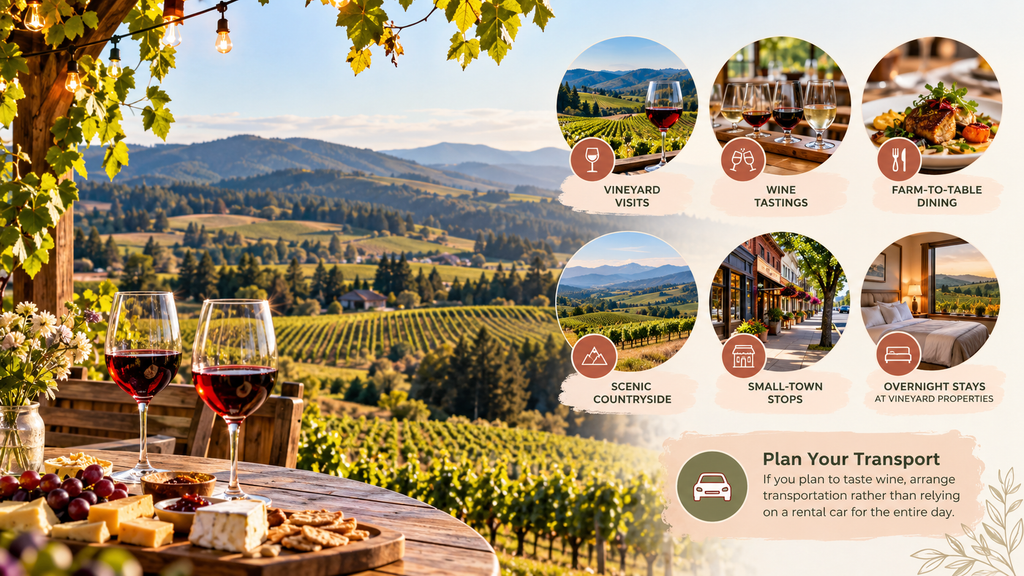
Willamette Valley is the Pacific Northwest’s major wine-country highlight, particularly known for Pinot Noir and its vineyard landscapes.
The valley stretches south from the Portland area and includes numerous wineries and small communities. Its proximity to Portland makes it practical for travelers who want to add wine tasting without dedicating an entire trip to vineyards.
A wine-country day can combine:
- Vineyard visits
- Wine tastings
- Farm-to-table dining
- Scenic countryside
- Small-town stops
- Overnight stays at vineyard properties
Travelers who plan to taste wine should arrange transportation rather than assuming a rental car is appropriate for the entire day.
Oregon Coast: One of the Region’s Essential Road Trips
The Oregon Coast is one of the Pacific Northwest’s defining road-trip experiences, with beaches, sea stacks, forested headlands, dunes, and small coastal communities spread along U.S. Highway 101.
The coast is not simply a collection of beaches. Its appeal comes from the constantly changing scenery.
Cannon Beach
Cannon Beach is one of the best-known coastal stops, with Haystack Rock rising offshore. The town pairs easily with a Portland itinerary because of its location on the northern coast.
Central and Southern Oregon Coast
Travelers with more time can continue south through places such as Newport, Florence, Bandon, and other coastal communities.
The further south you go, the more worthwhile it becomes to slow down rather than try to cover the entire coastline in a single day.
What makes the Oregon Coast different?
The Pacific Northwest coastline can be cool, windy, and atmospheric even during summer. Don’t approach it like a conventional warm-weather beach destination.
A coastal road trip is more about:
- Scenic walks
- Tide pools
- Sea stacks
- Lighthouses
- Wildlife
- Seafood
- Coastal forests
- Photography
Weather can change quickly, so waterproof layers are useful even during the warmer months.
Crater Lake National Park
Crater Lake is Oregon’s major high-elevation lake destination and is particularly notable for its deep blue water and volcanic landscape.
The lake occupies the caldera of Mount Mazama, creating a landscape unlike the coastal and forest scenery farther north.
Crater Lake National Park is open year-round, but snow heavily affects roads, trails, and facilities. The National Park Service notes that the park receives substantial snowfall and that seasonal closures are normal.
Current 2026 considerations
For travelers visiting in 2026, the National Park Service currently lists several open roads and visitor facilities but also notes construction-related restrictions and the Cleetwood Cove Trail closure for the season.
This is an important example of why travelers should check official park conditions shortly before visiting rather than relying on an older itinerary.
Mount Hood and the Cascade Mountains
The Cascade Range gives the Pacific Northwest its distinctive volcanic skyline. Mount Hood is especially easy to add to an Oregon road trip from Portland.
The mountain supports outdoor recreation in different seasons, while surrounding forests, lakes, and viewpoints offer options for travelers who are not planning a demanding hike.
The broader Cascade landscape also connects the region’s major destinations geographically. Mount Rainier, Mount St. Helens, Mount Hood, and other volcanic peaks illustrate the area’s active geological history.
Wildlife and Nature Experiences
Wildlife is another major part of a Pacific Northwest trip, although sightings are never guaranteed.
Olympic National Park protects habitat for species including Roosevelt elk and numerous marine and forest animals. The park’s varied ecosystems support wildlife from coastal environments through rainforest and alpine areas.
Travelers may encounter:
- Roosevelt elk
- Black bears
- Bald eagles
- Marmots
- Seabirds
- Marine mammals
- Salmon and other fish
Always observe wildlife from a safe distance. In national parks, food storage and animal-safety rules are especially important.
Pacific Northwest Food and Drink Highlights
The region’s food culture reflects its geography and agricultural production.
Seafood
Pacific Northwest menus commonly feature salmon, Dungeness crab, oysters, and other seafood. Coastal towns provide opportunities to eat locally sourced seafood, while Seattle’s markets offer a convenient introduction.
Coffee
Seattle’s coffee culture is deeply established, and independent cafés are widespread throughout both Seattle and Portland.
Wine
Oregon’s Willamette Valley is the region’s best-known wine destination, while Washington State has a substantial wine industry, particularly east of the Cascade Range.
Craft beer
Both Portland and Seattle have strong craft-beer scenes. Portland’s neighborhood structure makes brewery-hopping particularly easy to combine with restaurants and other local businesses.
How Long Do You Need in the Pacific Northwest?
Two weeks is a good starting point for a first Pacific Northwest road trip, though shorter trips can work if the itinerary focuses on one state or geographic area.
| Trip length | Practical focus |
| 5–7 days | Seattle + one major nature destination |
| 8–10 days | Seattle + Olympic Peninsula or Mount Rainier + Portland |
| 12–14 days | Seattle, Olympic Peninsula, Portland, Columbia River Gorge and Oregon Coast |
| 15+ days | Add Willamette Valley, Mount Hood and Crater Lake |
Trying to visit Seattle, Olympic National Park, Mount Rainier, Portland, the Oregon Coast, and Crater Lake in a week can lead to long driving days and little time at each destination.
A two-week itinerary gives travelers more flexibility and lets them adjust for weather changes.
When Is the Best Time to Visit the Pacific Northwest?
Summer generally offers the most convenient conditions for a classic Pacific Northwest road trip, especially from July through September. Still, the ideal month depends on your destinations and activities.
Summer
Summer is generally the easiest season for mountain roads, hiking, and coastal driving. Higher-elevation areas can still have lingering snow early in the season.
Fall
September and October can bring autumn colors and fewer visitors in some locations, although mountain and park conditions become more variable.
Winter
Winter suits travelers specifically interested in snow, skiing, winter landscapes, and city-based trips. Mountain roads can require winter equipment or become temporarily inaccessible.
Spring
Spring can bring waterfalls, greenery, and lower-elevation flowers, but higher trails may remain snow-covered.
The key is to plan around elevation, not just the calendar. A sunny day in Portland does not mean a high-elevation trail in the Cascades will be snow-free.
Driving in the Pacific Northwest
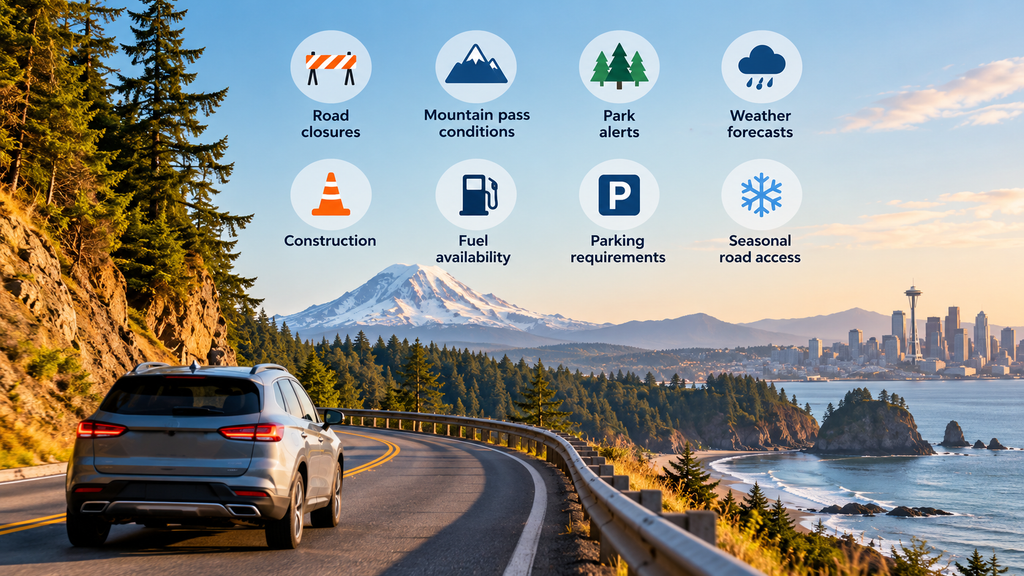
A rental car is highly useful for a multi-destination Pacific Northwest itinerary, particularly when visiting national parks and the Oregon Coast.
However, travelers should not assume every route is equally easy.
Before driving, check:
- Road closures
- Mountain pass conditions
- Park alerts
- Weather forecasts
- Construction
- Fuel availability
- Parking requirements
- Seasonal road access
For example, Crater Lake’s winter conditions can differ dramatically from summer conditions, while Mount Rainier can have seasonal road closures and changing trail conditions.
Within central Seattle and Portland, travelers may find public transportation more convenient than driving and parking.
Suggested 14-Day Pacific Northwest Itinerary
A balanced first-time itinerary could look like this:
| Days | Destination | Main highlights |
| 1–2 | Seattle | Pike Place, waterfront, museums |
| 3 | Mount Rainier | Paradise, mountain scenery, hiking |
| 4–5 | Olympic Peninsula | Rainforest, Lake Crescent, coast |
| 6 | Olympic Coast | Beaches, sea stacks, coastal drive |
| 7 | Portland | Neighborhoods, food, gardens |
| 8 | Columbia River Gorge | Waterfalls, viewpoints, hiking |
| 9 | Willamette Valley | Vineyards and countryside |
| 10–11 | Oregon Coast | Cannon Beach and coastal communities |
| 12 | Central Oregon | Scenic drive and mountain landscapes |
| 13 | Crater Lake | Rim viewpoints and trails |
| 14 | Return journey | Departure or additional city time |
This is a framework rather than a fixed route. Travelers should adjust it based on flight times, park conditions, hiking ability, and preferred accommodation locations.
Pacific Northwest Trip Planning Tips
A few practical decisions can make the itinerary considerably easier.
Book popular accommodation early.
Hotels around Seattle, Portland, national parks,s and popular Oregon Coast communities can become expensive or limited during peak travel periods.
Do not underestimate distance.s
A destination that looks close on a map can take several hours to reach once you factor in mountain roads and park access.
Build weather flexibility into outdoor days.
If Mount Rainier is covered by clouds, for example, a scenic viewpoint may not deliver the experience expected in photos. Having a second activity or alternative day can improve the itinerary.
Pack layers
The Pacific Northwest can shift from cool and wet on the coast to warm inland and cold at high elevations on the same day.
Check official park information.n
National park conditions can change rapidly. Mount Rainier’s 2026 timed-entry policy and Crater Lake’s current construction and trail conditions demonstrate why older travel guides should not be treated as the final word.
Conclusion
A Pacific Northwest trip works best when it combines city experiences with enough time outdoors. Seattle provides waterfront culture and major attractions, Olympic National Park adds rainforest and wild coastline, Mount Rainier brings alpine scenery, Portland contributes food and neighborhood culture, and Oregon’s Columbia River Gorge, wine country, and coastline create a natural road-trip progression.
The most important planning step is matching the route to the season and allowing enough time for driving. Travelers should check current national park alerts, road conditions, and seasonal access shortly before departure, particularly when visiting Mount Rainier or Crater Lake. With those practical details in place, the region offers an unusually broad range of landscapes and experiences in one U.S. trip.
Frequently Asked Questions
The Pacific Northwest is known for evergreen forests, volcanic mountains, Pacific coastline, waterfalls, national parks, coffee, seafood, wine, craft beer, and cities such as Seattle and Portland.
They serve different purposes. Seattle offers easy access to Puget Sound, the Olympic Peninsula, and Mount Rainier. Portland is also particularly convenient for the Columbia River Gorge, Willamette Valley, Mount Hood, and the northern Oregon Coast.
Five to seven days can cover a focused itinerary, while around two weeks lets travelers combine Seattle, major Washington landscapes, and several Oregon highlights without moving every day.
Costs depend on season, accommodation, transportation, and activities. Major cities and popular coastal destinations can be expensive during peak periods, while travelers can control costs through advance lodging reservations, self-catering, and carefully planned driving routes.
Yes, particularly if the trip focuses on Seattle and Portland. However, a rental car is considerably more useful for national parks, the Oregon Coast, wine country, and rural destinations.
No. The region has substantial seasonal and geographic variation. Western Washington and Oregon are wetter, especially outside summer, while areas east of the Cascades are considerably drier. Mountain weather can differ sharply from conditions in nearby cities.
Mount Rainier National Park and Olympic National Park are two of the most distinctive Washington highlights. Crater Lake National Park is an important Oregon addition for travelers continuing south and inland.